REVIEW · DUBLIN
Dublin: Boyne Valley with Newgrange and Bru Na Boinne Entry
Book on GetYourGuide →Operated by Hilltoptreks · Bookable on GetYourGuide
You’re heading to Ireland’s oldest wow-factor. This day trip turns Newgrange and Bru Na Boinne into a guided story you can follow, then tops it with the Battle of the Boyne Visitor Centre and Monasterboice’s famous crosses. It’s the kind of loop that makes one long day feel packed, but not rushed.
Two things I really like: the tour includes skip-the-queue entry, so you spend less time waiting and more time looking. And the guides (I’ve seen names like Matt, Kevin, and Richard in action) do a great job of explaining what you’re seeing in plain language, not just reciting dates.
One thing to consider: food is not included, and the lunch option at the Newgrange Visitor Centre can be limited. Bring snacks or plan to buy something simple so you’re not stuck with microwave-heated disappointment.
In This Review
- Key highlights at a glance
- Boyne Valley from Dublin: what this 8-hour day trip really gives you
- Meeting at the Molly Malone Statue and getting a smooth start
- Newgrange: how a Neolithic tomb became a sky-and-ritual landmark
- Bru Na Boinne: Neolithic complex time, with a winter reality check
- Battle of the Boyne Visitor Centre: the 1690 story and why it still matters
- Monasterboice: round tower views and Muiredach’s High Cross
- Timing and pacing: how the day stays enjoyable
- Price and value: what $96 buys you in real terms
- What to pack and wear so the day feels easy
- Who this tour suits best (and who might want to think twice)
- Should you book Hilltoptreks for Newgrange and Bru Na Boinne?
- FAQ
- How long is the tour?
- Where do I meet the tour?
- What’s included in the price?
- Is food included?
- Do I need to bring anything?
- What sites will I visit?
- Is Knowth always accessible on this trip?
- What time will I be back in Dublin?
Key highlights at a glance
- Skip-the-queue entry into Newgrange and Bru Na Boinne saves you time in peak hours
- Newgrange gets a guided visit that connects the site to ceremony and the sky
- Battle of the Boyne Visitor Centre adds political context to a major turning point in 1690
- Monasterboice includes a tall round tower and some of Ireland’s best high crosses
- Winter note: Knowth is not accessible between Nov 1 and Mar 1, so the Bru Na Boinne stop is shorter
- Easy Dublin logistics: meet at the Molly Malone statue; return around 5 pm
Boyne Valley from Dublin: what this 8-hour day trip really gives you
This is a classic Dublin day trip with a serious payoff. You leave the city, get dropped into the Boyne Valley, and spend your day moving between three different kinds of Ireland: Neolithic wonder, early Christian architecture, and a 17th-century battle that still echoes in modern politics.
The value is in how the day is structured. Instead of hopping between sites with zero context, you get guided visits plus enough driving time to see the countryside. At the end, you’re back around 5:00 PM, which matters if you have dinner plans or limited time in Dublin.
And yes, the sites are naturally impressive on their own. But what makes this tour worth your day is the way the stories line up: prehistoric builders, later religious traditions, then the Battle of the Boyne explaining why July 12 is still marked by the Loyalist community.
You can also read our reviews of more tours and experiences in Dublin.


Meeting at the Molly Malone Statue and getting a smooth start
You meet at the Molly Malone statue on Suffolk Street, about 10 minutes before departure. Your transport is a small white minibus with the HilltopTreks sign, which is easy to spot once you know what you’re looking for.
This matters more than you’d think. Dublin pickups can be chaotic if you show up at the last minute. Here, being early helps you avoid that awkward stand-in-the-wind feeling while everyone else files past you.
The drive out of Dublin is part of the experience. You’re not stuck in a silent bus for the whole trip. The guides use the time en route to set scenes and connect what you’ll see next, so you arrive already oriented.
Newgrange: how a Neolithic tomb became a sky-and-ritual landmark
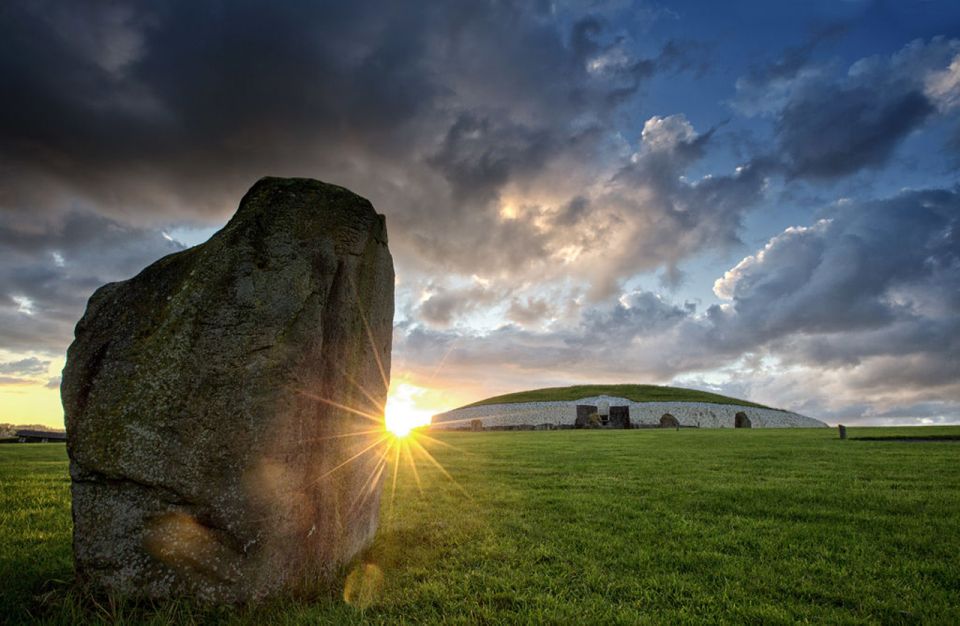
Newgrange is the headliner, and for good reason. You’ll get a photo stop and then a guided visit that takes about 3 hours total. Plan on a mix of walking, listening, and looking—this is not just a quick glance from a viewpoint.
What you’re learning matters. Newgrange isn’t only about “ancient rocks.” It’s tied to astrological, religious, and ceremonial importance, which is the key to understanding why people still feel something here. Even if you’re not a history nerd, the guided framing helps you notice patterns you’d otherwise miss.
Also, you’re there with skip-the-queue entry. That’s a real luxury at sites like this, where lines can soak up your best daylight. The time you save buys you more attention inside the experience itself.
A practical note: Newgrange and its visitor area can be damp and windy, depending on the season. Bring an umbrella and wear comfortable shoes you trust for uneven ground and indoor/outdoor transitions.
Bru Na Boinne: Neolithic complex time, with a winter reality check
After Newgrange, the tour continues into the larger Boyne Valley megalith landscape at Bru Na Boinne. This is where you start to feel the scale of the whole region’s prehistoric importance.
One important detail: between Nov 1 and Mar 1, Knowth is not accessible, so the Bru Na Boinne visit becomes slightly shorter. If your trip falls in that window, don’t worry—your day still covers the key highlights, but you’ll experience less of the complex.
Why it’s still worth going even if you can’t reach Knowth in winter: you’ll still be absorbing the broader idea that this wasn’t random construction. These tombs belong to a planned cultural landscape. With guided interpretation, the sites feel connected instead of separate attractions.
If you like structure, this part of the day delivers. You’re guided through what to notice and why it mattered, and you’re given time to see the area rather than being rushed like a conveyor belt.
Battle of the Boyne Visitor Centre: the 1690 story and why it still matters
From prehistory, you shift sharply into 1690. The Battle of the Boyne Visitor Centre stop is about 1.5 hours, with a mix of break time, photo opportunities, and visit time.
This is the stop where the tour does more than show you a museum. It explains why the Battle of the Boyne isn’t treated like a closed book. The conflict is presented as a turning point not only for ruling powers in Ireland and Britain, but also for Europe, and it connects to why July 12 is still celebrated by the Loyalist community.
The tour also frames the battle as a struggle over the English throne: Catholic King James II versus Protestant King of Holland, William of Orange. That gives you a clearer sense of why this battle became such a lasting symbol.
And you’ll hear how the battle eventually contributed to displacement of Irish Celts and their culture across the island of Ireland. That’s a heavy theme, but it’s presented in a way that helps you understand the long arc, not just the date.
One small tip: if you tend to tune out when museums get lecture-y, this is still worth it because it’s paced and tied back to the larger Irish story. You’ll come away with better context for what you see elsewhere later in your trip.


Monasterboice: round tower views and Muiredach’s High Cross
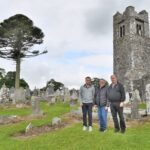
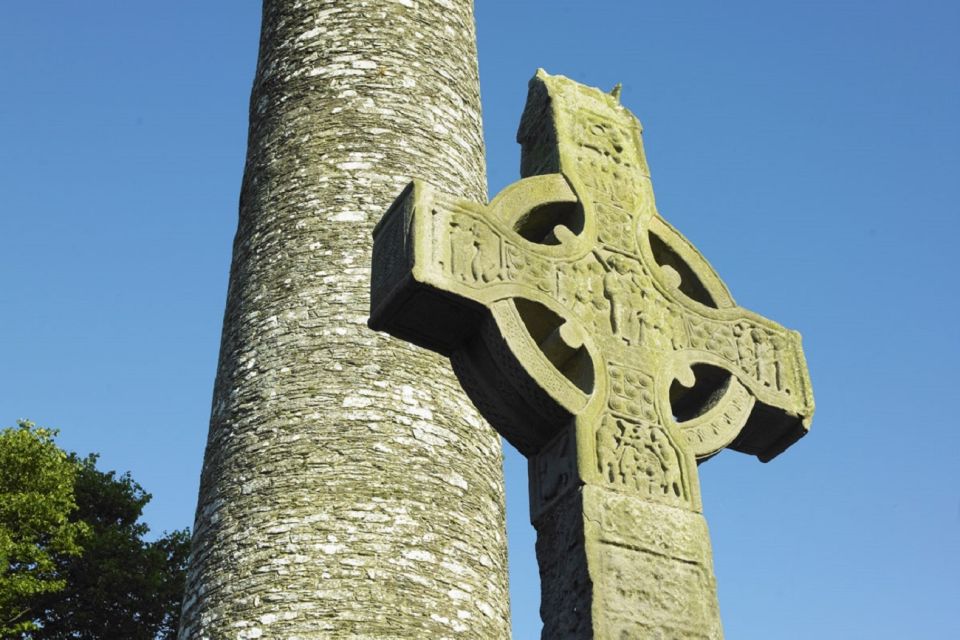
Next comes Monasterboice, a 5th-century monastic site often summed up by its Celtic High Crosses, but it’s more than that. You get around a 45-minute stop, with photo time and a guided visit.
Here’s what stands out. You’ll see a round tower about 28 meters tall, in very good condition. The tour explains it was likely built shortly after 968 and that it was damaged in a fire in 1098, which gives you a sense of how much history has survived here despite everything.
Then come the crosses. The three high crosses date from the 10th century and are described as part of a scriptural group showing biblical scenes. One cross is singled out as the finest high cross in all of Ireland: Muiredach’s High Cross, measuring about 5.5 meters.
The carvings are another big reason to like this stop. The tour highlights biblical carvings from both the Old and New Testaments. You also get a name to attach to the monument—Muiredach mac Domhnaill, an abbot who died in 923—which makes the history feel more personal than just “medieval art.”
Even in a short visit, this is the kind of place where you can stand, look, and slowly start seeing details. If you enjoy early Christian Ireland, Monasterboice is a strong payoff.
Timing and pacing: how the day stays enjoyable
This is an 8-hour tour with a return around 5:00 PM. That’s a sweet spot. Long enough to get real value out of Newgrange and Bru Na Boinne, but short enough that you’re not stranded in the countryside all evening.
The order also helps. Neolithic first, then the battle story, then early Christian art. Each stop resets your brain, so the day doesn’t turn into one long history lecture.
Guides also do a noticeable job with pacing. People tend to praise that they do not make you feel herded, and that the timing across stops is managed well. One day can include a late start and still recover, with adjustments to keep everything on track, which is exactly what you want from a group tour.
A key part of pacing is the space between stops. Even when you’re in transit, you’re not just watching scenery in silence. The narration is used to “frame” each site so you’re looking for the right things when you arrive.
Price and value: what $96 buys you in real terms
At about $96 per person, this tour is not a bargain, but it also isn’t priced like a luxury private guide day. Where it earns its keep is what’s included.
You get transport from Dublin, a live English-speaking guide, and entrance fees. Most importantly for your day: the tour includes skip-the-queue access into Newgrange and Bru Na Boinne.
That matters because these sites can be capacity-managed. If you had to buy tickets separately, you’d still likely deal with delays or timed constraints. Here, you remove a lot of friction.
The trade-off is food. Food and drinks are not included, and the lunch options at the Newgrange Visitor Centre can be underwhelming if you’re expecting more variety. If you’re picky about lunch, plan ahead with a snack pack before you leave Dublin, or budget time for a quick buy and then move on.
You’re also paying for context. On a site like Newgrange, interpretation changes how long you stay interested. The best guides don’t just tell you what the site is—they give you a way to read it.
What to pack and wear so the day feels easy
Do yourself a favor and travel for comfort first.
Bring comfortable shoes. You’ll be walking at multiple sites, and some areas can be uneven. Pack an umbrella because the Boyne Valley can be breezy and damp.
If you’re the kind of person who likes to have options, consider a small snack. Even if you’ll buy lunch, having a backup keeps you from getting cranky if the available choices are limited.
Who this tour suits best (and who might want to think twice)
This tour is ideal if you want a guided day from Dublin with top-name sites: Newgrange, Bru Na Boinne, Battle of the Boyne Visitor Centre, and Monasterboice.
It also suits you if you’re the kind of traveler who likes to learn while moving. People who usually avoid tours often still enjoy this one because it’s paced, and the guide’s storytelling helps you feel connected to the sites instead of just passing through them.
You might want to think twice if:
- You’re very sensitive to lunch quality and you don’t want to bring snacks
- You prefer lots of free time at sites rather than structured visits
- You’re traveling in the Nov 1 to Mar 1 window and expected every Bru Na Boinne component, since Knowth won’t be accessible
Should you book Hilltoptreks for Newgrange and Bru Na Boinne?
If you want one day that hits multiple major chapters of Irish history—prehistoric, early Christian, and political—this is a strong choice. The skip-the-queue entry saves time, and the guides (often named Matt, Kevin, and Richard) tend to make the explanations clear, paced, and easy to follow.
Book it if you’re excited by the idea of seeing Newgrange as more than a postcard. The guided framing is what makes the day feel worth it, and the return timing works well for a short stay in Dublin.
If your biggest priority is flexible independent wandering or a great sit-down lunch, you may prefer a less structured option. But for most people, this is a well-sized, high-impact day.
FAQ
How long is the tour?
The total duration is about 8 hours.
Where do I meet the tour?
You meet at the Molly Malone statue on Suffolk Street, about 10 minutes before departure. Look for a small white minibus with the HilltopTreks sign.
What’s included in the price?
Transport from Dublin, a live English tour guide, entrance fees, and skip-the-queue entry into Newgrange and Bru Na Boinne are included.
Is food included?
No. Food and drinks are not included.
Do I need to bring anything?
You should bring comfortable shoes and an umbrella.
What sites will I visit?
You’ll visit Newgrange, Bru Na Boinne, the Battle of the Boyne Visitor Centre, and Monasterboice.
Is Knowth always accessible on this trip?
Between Nov 1 and Mar 1, Knowth is not accessible, so the Bru Na Boinne portion of the tour is slightly shorter.
What time will I be back in Dublin?
You’ll return to the meeting point around 5:00 PM.