REVIEW · ST PATRICK S CATHEDRAL DUBLIN
St Patrick’s Cathedral: Self-Guided Cathedral Admission
Book on GetYourGuide →Operated by Saint Patrick's Cathedral · Bookable on GetYourGuide
Dublin’s oldest big secret sits under your feet. St Patrick’s Cathedral in the heart of Dublin mixes serious pilgrimage energy with smart, modern self-guided tools like an included audio guide and an on-site Discovery Space.
I loved two things most: the way Jonathan Swift’s story comes alive right where he is buried, and the cathedral’s stained glass details you can actually understand instead of just admire. Add the Door of Reconciliation and the interactive stations, and your visit feels more like a guided experience than a walk-through.
One caution: this cathedral can get busy, especially around midday on popular days. If you want a very quiet, slow visit, plan your timing and be ready to work around crowds.
In This Review
- Key highlights to look for
- St Patrick’s Cathedral: why this Dublin stop matters
- Price and logistics: getting in fast and keeping control
- Entering the cathedral: where the audio guide actually earns its keep
- Swift’s burial and the dean who turned Dublin literary
- The Door of Reconciliation: language you’ll recognize immediately
- Discovery Space: iPads, touch screens, and brass rubbings
- Gothic architecture and stained glass you can read
- Timing and crowd control: how to avoid the mid-day squeeze
- Practical on-site comforts: toilets, shop stops, and staying in the mood
- Who this self-guided admission is best for
- Should you book this St Patrick’s Cathedral self-guided admission?
- FAQ
- Is this admission self-guided?
- What’s included with the ticket?
- What languages are the audio guides available in?
- How long is the visit valid?
- Are there guided tours during the visit?
- Do I need my own headphones?
- Is Saint Patrick’s Cathedral wheelchair accessible?
- Are there rules for minors?
- Can I cancel?
Key highlights to look for

- Swift’s burial spot and the dean-era artifacts that connect the building to literature and Dublin life
- Handheld audio at key stops in English, French, German, Italian, Spanish, and Irish
- Door of Reconciliation, tied to the Irish phrase to chance your arm
- Discovery Space with iPads/touchscreens and a brass-rubbing activity
- Stained glass storytelling, including a window showing Saint Patrick’s life in 39 images
- Gothic architecture that reads better once you slow down and use the audio stops
St Patrick’s Cathedral: why this Dublin stop matters
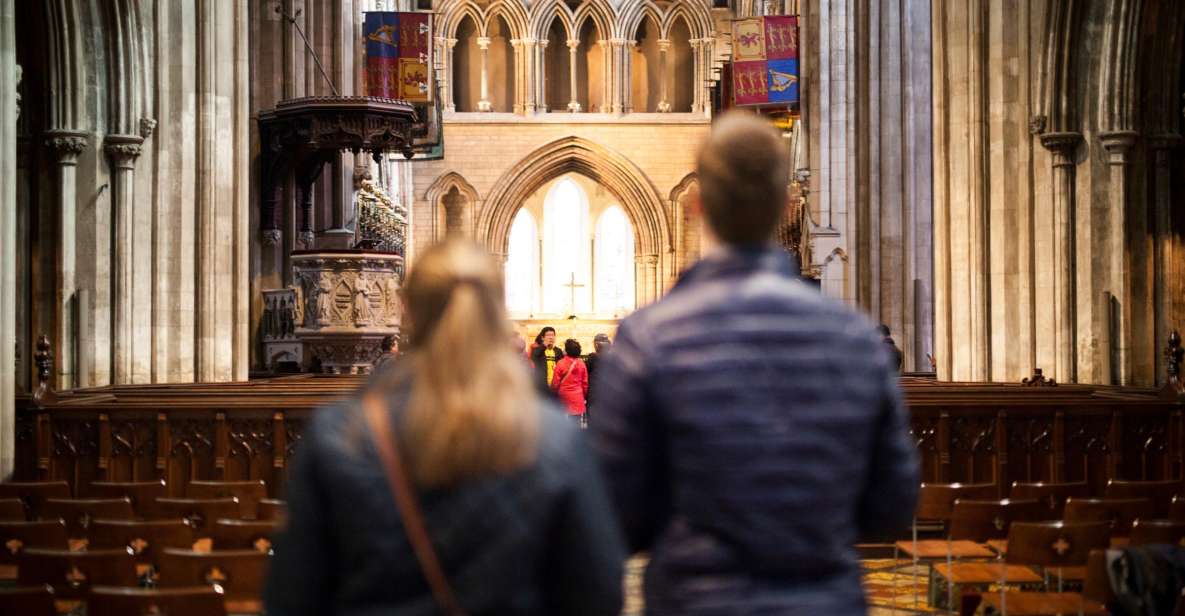
St Patrick’s Cathedral is one of Ireland’s most important pilgrimage sites, and it’s also very much part of everyday Dublin life. It’s the largest cathedral in Ireland and has been at the center of Irish history and culture for more than 800 years.
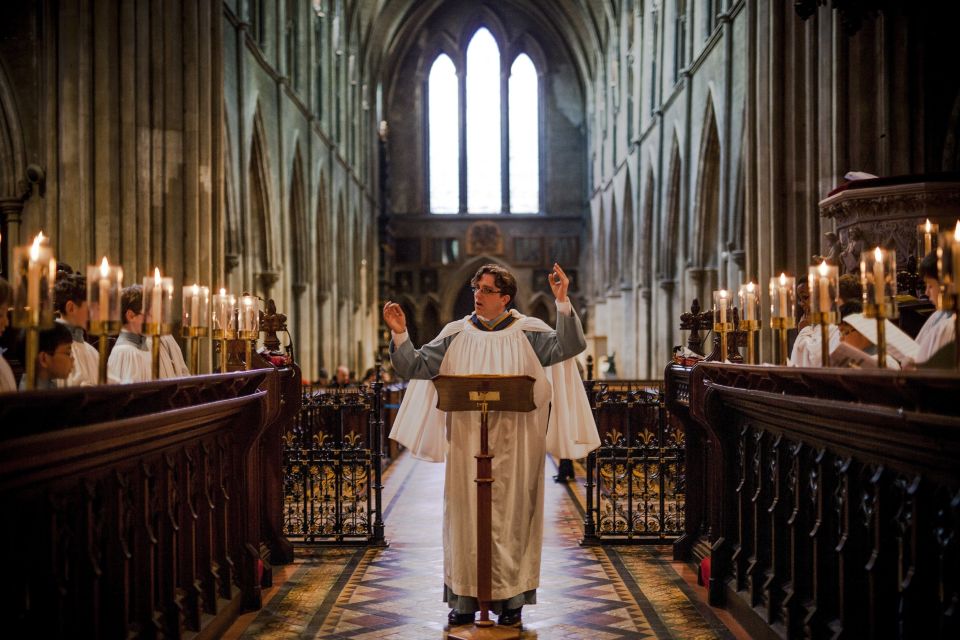
This is a cathedral built for worship, not just sightseeing. It’s the National Cathedral of the Church of Ireland, with sung services scheduled twice daily from Sunday through Friday. Even when you’re self-guided, you’ll feel that rhythm in the space—like the building is still doing its job.
There’s also a Dublin legend attached to the location: the cathedral sits adjacent to the well where tradition says Saint Patrick baptized converts when he visited the city. You don’t need to be religious to appreciate what that means for the place. It’s a site where faith, language, and local identity all overlap.
Price and logistics: getting in fast and keeping control
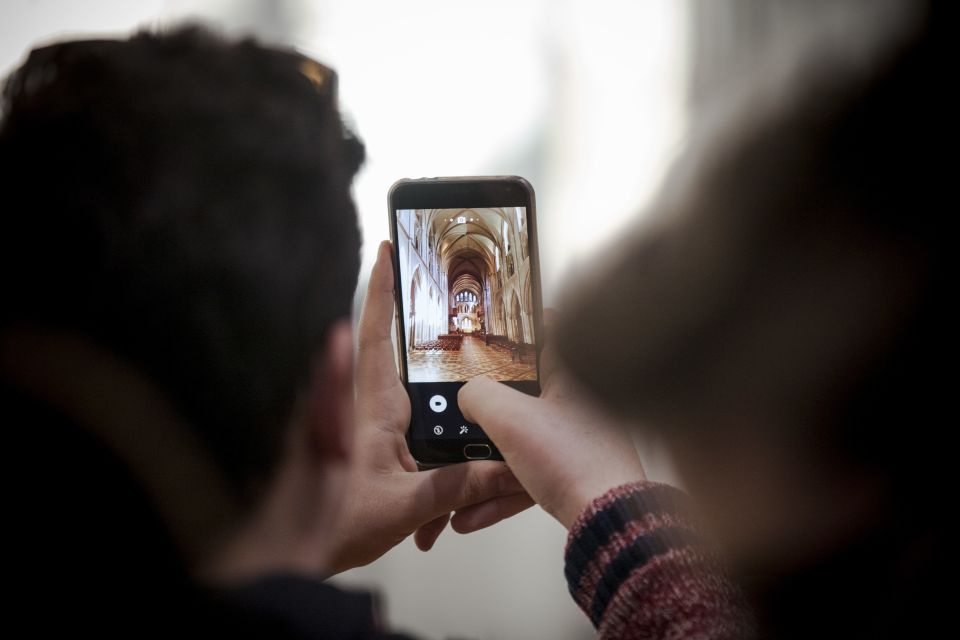
The self-guided admission price is $12 per person, and it’s valid for 1 day. Starting times depend on availability, so check your exact day and slot before you build the rest of your schedule.
You’ll also want to know this visit is designed so you don’t get stuck waiting. The ticket includes skip the ticket line, which matters in a busy downtown cathedral area. Instead of joining a full group tour, you move at your own pace using the included audio.
Even though this is self-guided, there’s live interpretation available at intervals. Some guided tours run about every 15 minutes, which is helpful if you want a human explanation for a portion of the visit and then drift back into self-guided mode afterward.
If you’re the kind of traveler who hates getting herded, this works well. If you’re the kind who loves a structured itinerary, you can still grab a live tour at one of those scheduled times and then fill in the gaps with audio.
Entering the cathedral: where the audio guide actually earns its keep
The included audio guide is handheld and meant to be used on-site. You’ll find audio content at stations around the cathedral, so you’re not wandering in the dark trying to connect the dots yourself.
One practical tip that really helps: bring your own headphones if you prefer a cleaner sound and less fiddling. If you’d rather not use the handheld headset, you may be able to connect via your phone depending on the setup available during your visit. Either way, plan to keep your device/ear comfort in mind because you’ll likely spend enough time here to want better listening.
English is included, along with French, German, Italian, Spanish, and Irish. That language range is a big deal for a self-guided experience—when you understand what you’re seeing, the cathedral stops being just beautiful and becomes meaningful.
Also, the audio isn’t a single long lecture. It’s presented so you can pick the moments you care about—architecture, saints, artifacts, and stories tied to specific stops.
Swift’s burial and the dean who turned Dublin literary
One of the strongest reasons to come here is the connection to Jonathan Swift. He’s buried in the cathedral, and the visit includes artifacts tied to him, plus context about his years as dean from 1713 to 1745.
Swift is famous beyond Ireland for Gulliver’s Travels, but in Dublin he’s not just a name on a book cover. The cathedral gives you a physical sense of his presence—this isn’t abstract literary history. It’s a place where the story lives in stone, documents, and curated displays.
What I like about this angle is that it works even if you don’t read Swift or English literature on vacation. The cathedral uses his presence to explain Dublin’s intellectual life in an era when church leadership and public influence were intertwined. If you enjoy connections between art, writing, and real locations, this stop is a highlight.
The Door of Reconciliation: language you’ll recognize immediately
The cathedral’s Door of Reconciliation is one of those details that feels small until you learn what it represents. It gave rise to the Irish expression to chance your arm.
That kind of link is exactly why I prefer self-guided audio in historic places. You’re not just seeing a door. You’re learning a phrase you’ve heard before (maybe in an Irish context, maybe in a movie or conversation) and suddenly the meaning clicks.
In a country full of story-building traditions, this is the kind of cultural breadcrumb that makes the visit feel personal. It’s also an easy stop to enjoy without needing a long attention span. Look, listen, and move on.
Discovery Space: iPads, touch screens, and brass rubbings
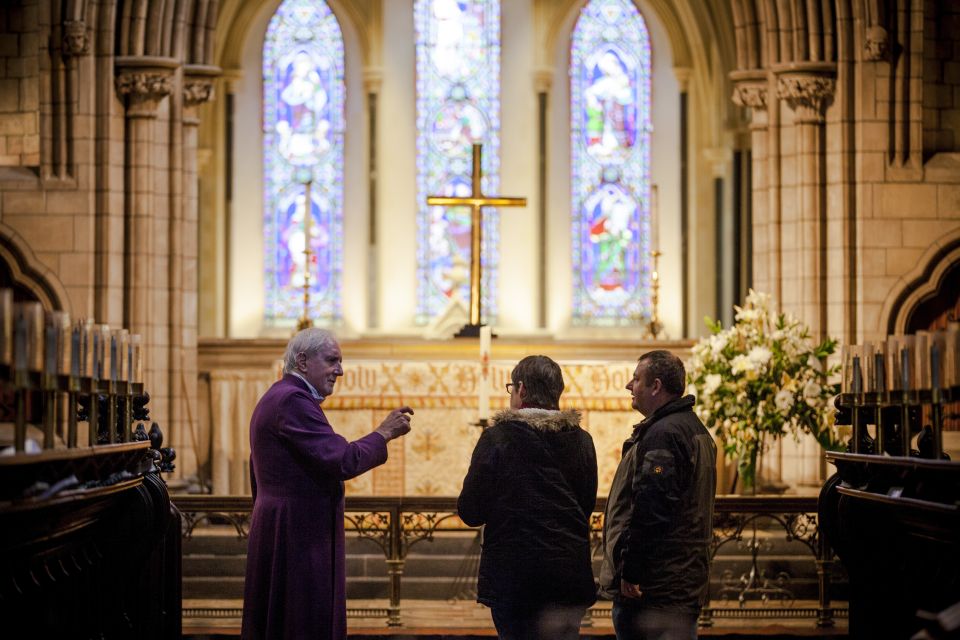
The cathedral’s newer Discovery Space is built for learning without turning the visit into a classroom. You’ll find interactive touch screens and iPads showing samples of the cathedral choir. It’s a practical way to connect the building to sound, worship, and history.
There’s also a brass rubbing in the Discovery Space. Even if you don’t consider yourself crafty, it’s a hands-on break from purely looking. It gives your visit a memory you can take with you: a tactile souvenir of a specific moment in the cathedral’s story.
For many visitors, the Discovery Space helps solve a common problem with old churches: the architecture and artwork can feel like they’re speaking a different language. The tech stations act like a translator. You walk back into the main cathedral space with better context, so the stained glass and carved details make more sense.
If you like interactive exhibits (and if you’re traveling with kids), you’ll likely appreciate that it’s included in the admission price rather than sold as an extra ticket.
Gothic architecture and stained glass you can read

St Patrick’s Cathedral is a Gothic showpiece, and the real trick is seeing it in layers. Up close, you notice stonework, shapes, and structure. With audio, you start to understand why certain elements were used and what they were meant to convey.
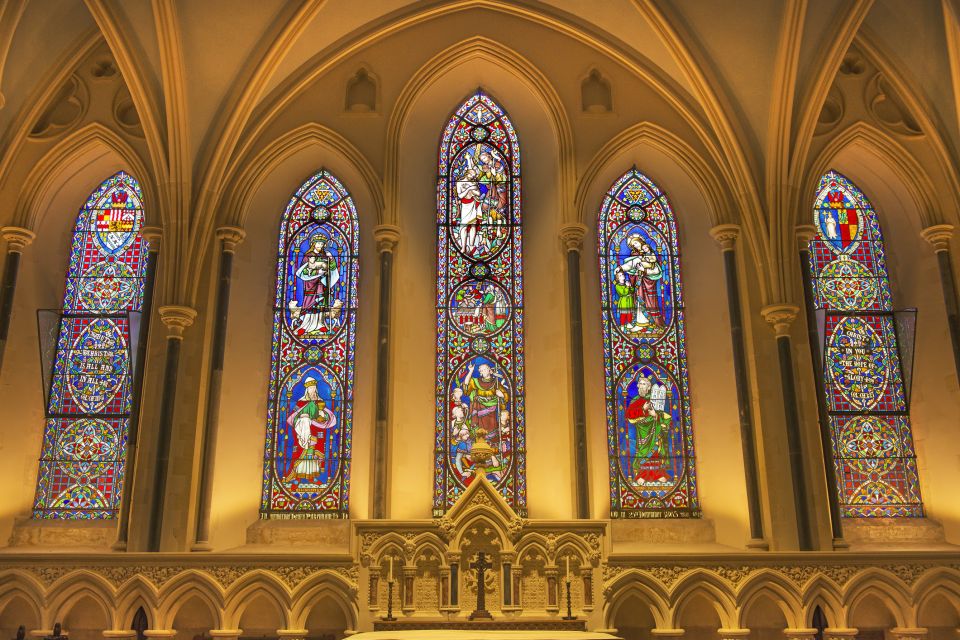
The stained glass is a major reason people slow down here. The windows aren’t random decoration. One window includes the life of Saint Patrick told in 39 images. That’s not just pretty; it’s structured storytelling in light and color.
I recommend using the audio for stained glass moments, because the value is in the interpretation. If you just glance at the panels, you’ll miss the narrative thread. With the guide playing, the windows become like a visual timeline.
Also keep an eye out for what’s happening around you. On some visits, there may be choir activity in the space, and you might even spot film-making in the area outside. None of that is guaranteed, but if you see it, treat it as part of the cathedral’s role as a living venue, not a museum set.
Timing and crowd control: how to avoid the mid-day squeeze
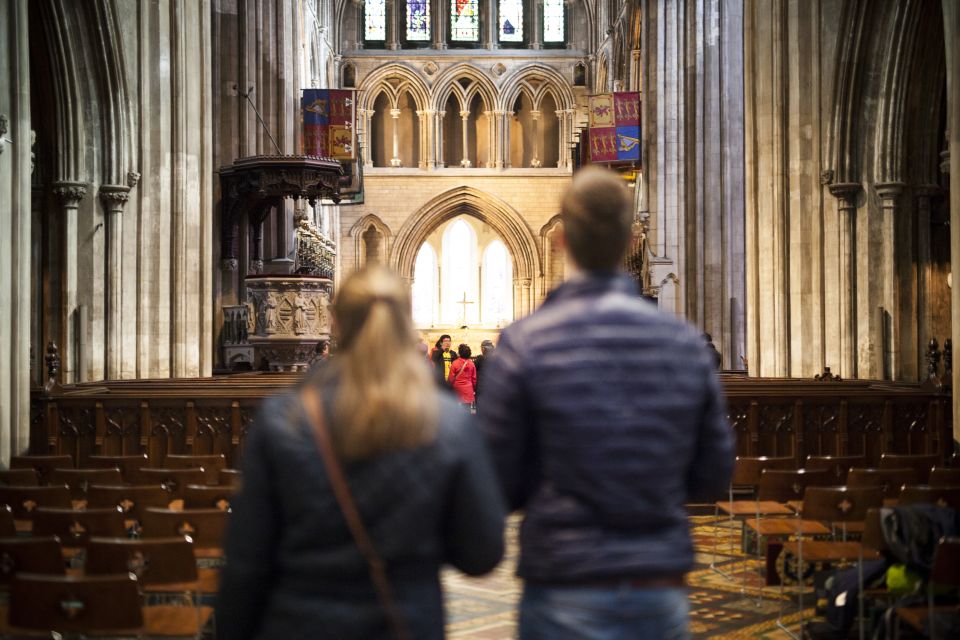
Crowds are the biggest variable. This is a top Dublin attraction, and you’ll likely encounter peak-time busyness. Some visitors note it can be crowded around midday, even on a Monday in June.
So here’s the practical strategy I’d use: plan to enter with a buffer and expect some bottlenecks near popular stops. The good news is that the cathedral does crowd management well, so you typically don’t feel completely trapped.
Since this is self-guided, you can also work around the busiest moments. Spend a little longer at stops that feel quieter (like the Swift-related displays and the story doors) and then tackle stained glass after the initial rush.
Another small but helpful detail: you can take your time. The experience is designed so you’re not constantly being pulled along. If you hit a noisy cluster, you can move a bit, listen to your audio, and regroup.
Practical on-site comforts: toilets, shop stops, and staying in the mood
This cathedral visit includes an on-site toilet, described as being in a transportable building outside the cathedral. It’s not a “right next to the altar” situation, but it’s available when you need it, which is rare enough in older venues.
There’s also a shop at the end. Some visitors feel it’s a bit twee and can disrupt the solemn mood if you rush into it. If you’re sensitive to the atmosphere, I’d treat shopping as optional. Step out, breathe, then come back if you want a post-visit browse for books or souvenirs.
Finally, manage your expectations around printed materials. One common wish is for more book-style explanations of stained glass and building history. The audio and Discovery Space do the heavy lifting, so if you’re the kind of person who likes a take-home reference, you might want to check what’s available in the shop before you leave.
Who this self-guided admission is best for
This is a smart fit for:
- First-time Dublin visitors who want a major landmark without signing up for a full guided tour
- People who like cathedral architecture but also want the story behind it
- Travelers who enjoy self-paced experiences with built-in interpretation
- Families, since there’s a hands-on brass rubbing in the Discovery Space
It’s also wheelchair accessible, so you can plan a comfortable route without giving up access.
If you’re traveling with under 18s, the rule is straightforward: they must be accompanied by a parent or guardian.
And if you’re multilingual or bringing friends with different language preferences, the audio guide coverage is a clear advantage. Everyone gets to understand the stops at their own comfort level.
Should you book this St Patrick’s Cathedral self-guided admission?
Yes, I’d book it if you want one of Dublin’s most meaningful cathedral visits without the pressure of a tight group schedule. For $12, you get more than entry: you get an audio system, interactive Discovery Space elements, and guided stops that make the cathedral’s art and stories feel understandable.
Book it especially if:
- you care about Jonathan Swift, Irish language connections, or stained glass storytelling
- you want a cathedral visit you can shape around your own pace
- you like using an audio guide at specific points rather than listening to one long tour
Skip or reconsider if you:
- hate crowds and only want quiet, empty interiors
- prefer heavy printed guides over audio and interactive stations
If you’re flexible on timing and you’re happy using headphones and tech at key moments, this is excellent value and a very Dublin kind of experience.
FAQ
Is this admission self-guided?
Yes. This is self-guided cathedral admission, starting and ending at Saint Patrick’s Cathedral.
What’s included with the ticket?
Your admission includes self-guided access and audio guides.
What languages are the audio guides available in?
Audio guides are available in English, French, German, Italian, Spanish, and Irish.
How long is the visit valid?
The ticket is valid for 1 day. You’ll need to check availability to see the starting times for your chosen date.
Are there guided tours during the visit?
Guided tours operate at set times in addition to the self-guided option, with guided tours running about every 15 minutes.
Do I need my own headphones?
The provided headset/audio setup is designed to be easy to use, and it can help to bring your own wired headphones or connect via phone if that option is available for you on-site.
Is Saint Patrick’s Cathedral wheelchair accessible?
Yes, it is wheelchair accessible.
Are there rules for minors?
Yes. Anyone under 18 must be accompanied by a parent or guardian.
Can I cancel?
You can cancel up to 24 hours in advance for a full refund.