REVIEW · DUBLIN
The Dublin Private Walking Tour
Book on Viator →Operated by Travelling Ireland · Bookable on Viator
Dublin gets better with context. This private 3-hour walk pulls together music history, politics, and beloved city legends from Temple Bar to Merrion Square. I like that it’s really personalized for your group and built around walkable stops with photo moments, but one thing to consider is that it’s a lot of ground on foot, so you’ll want decent shoes.
My favorite part is the way the tour turns famous places into stories you can remember. You’ll also get practical guidance for where to eat, drink, and wander next, plus small pacing tweaks if you’re traveling with family or you want extra time at a favorite stop.
In This Review
- Highlights at a Glance
- Starting in Temple Bar: A Private Walk That Finds Your Feet Fast
- Claddagh Records and the Wall of Fame: Music History You Can Point To
- Temple Bar Pub and Ha’penny Bridge: River Stories and Cobblestone Charm
- College Green and Trinity College Dublin: Parliament Outside, Old Learning Inside
- Molly Malone, Grafton Street, and St Stephen’s Green: Folklore Meets Everyday Dublin
- Edward Delaney’s Famine Memorial and Theobald Wolfe Tone: The Dark Chapter That Explains the City
- Department of the Taoiseach and Leinster House: Reading Dublin’s Government Architecture
- Oscar Wilde in Merrion Square: A Literary Ending in Georgian Streets
- What You Get Beyond the Sights: Tips, Breaks, and Real-World Help
- Price and Value: Is $163.26 per Person Fair?
- Should You Book This Dublin Private Walking Tour?
- FAQ
- How long is the Dublin Private Walking Tour?
- Where does the tour start and end?
- Is the tour private?
- What’s included in the tour price?
- Are umbrellas provided?
- Are the stops admission-free?
- Is this tour family friendly?
- Is free cancellation available?
Highlights at a Glance
- Private, your-group-only pacing: tell your guide what you’re into and keep moving at a comfortable rhythm
- Music-first stops: Claddagh Records and the Wall of Fame connect Dublin with artists you already know
- Classic photo route: Temple Bar cobblestones, Ha’penny Bridge, and Merrion Square all land great in photos
- Family friendly with breaks built in: umbrellas provided and room for rest/toilet breaks if needed
- Turns Ireland into meaning: the Great Famine memorial and government buildings explain why Dublin looks the way it does
Starting in Temple Bar: A Private Walk That Finds Your Feet Fast
You meet at Travelling Ireland’s office in Temple Bar, 8 Cecilia St. From there, the tour walks a clear path through central Dublin—dense, historic, and easy to navigate on foot. If this is your first day in town, I like how quickly it gives you orientation. If it’s not your first day, it still works because it fills in the why behind what you’re already seeing.
The big “private” advantage is simple: you don’t get stuck with a one-size-fits-all script. This is just your group. That matters when you want more time at Trinity College Dublin, or you’d rather slow down for street performers and photos on Grafton Street.
Timing is flexible too. You can choose from different departure times, which is a big deal in a city where weather can change fast. Umbrellas are provided, so a light drizzle doesn’t force you to retreat indoors with your plans intact.
One more note on effort: it’s about 3 hours, with multiple stops clustered in central Dublin. Most people can participate, and it’s family friendly, but you’ll still want shoes that handle cobblestones and uneven pavement without complaining.
You can also read our reviews of more walking tours in Dublin



Claddagh Records and the Wall of Fame: Music History You Can Point To
The tour opens with Claddagh Records, an easy entry point into Irish culture if you don’t know where to start. The guide shares a quick intro to Ireland and connects it to the music scene. You’ll also hear about the famous Claddagh ring—because in Dublin, symbols aren’t just jewelry. They’re shorthand for identity, loyalty, and love stories people keep passing down.
Next comes the Wall of Fame, where music legends get turned into something you can physically walk past. You’ll see names tied to Dublin’s pop and rock legacy: U2, Phil Lynott, Van Morrison, Sinéad O’Connor, and The Cranberries. Even if you only know a couple of those artists, the stop works because it frames Dublin as a city that exports sound as well as stories.
What I like about these first two stops is momentum. You start with things you recognize. Then the guide uses them as a bridge into deeper context—so the rest of the walk feels less like sightseeing and more like you’re learning how the city talks.
Temple Bar Pub and Ha’penny Bridge: River Stories and Cobblestone Charm
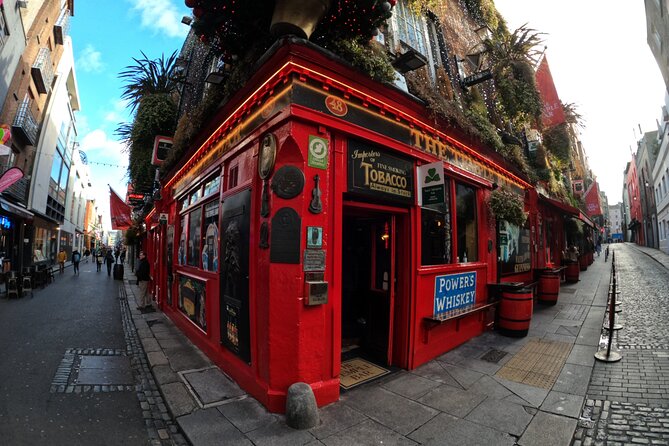
From the music angle, the tour pivots into the classic Dublin lanes. You walk through the Temple Bar area and hear the history of the famous district, including the Temple Bar Pub, established in 1840. The guide doesn’t just say it’s historic—they connect it to the way Dublin’s nightlife and street culture grew up around this spot.
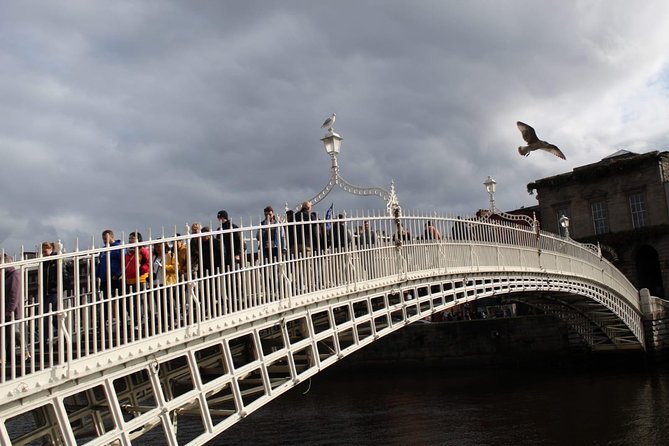
Then you move to Ha’penny Bridge. This is one of those places that looks straightforward until you hear the backstory. You’ll get historic details of the bridge, plus context about the River Liffey and Dublin’s socioeconomic angles—how the city’s geography and economy shaped daily life.
I’d call Ha’penny Bridge your “take a breath” moment on the walk. It’s a perfect pause for photos, and it’s also a natural spot to regroup—especially if you want to ask questions and keep the pace relaxed.
College Green and Trinity College Dublin: Parliament Outside, Old Learning Inside
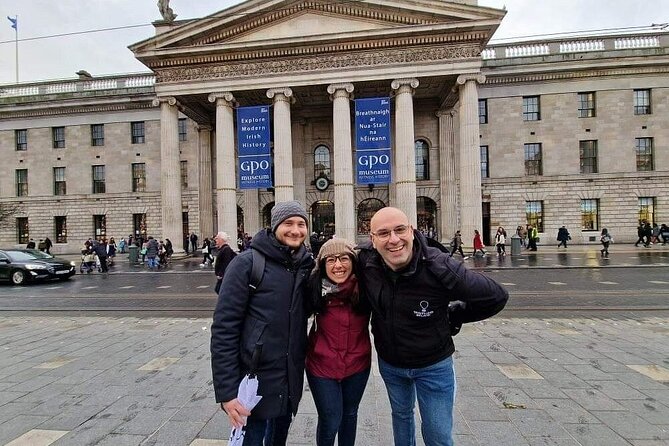
College Green is where the tour helps you read the city like a map with footnotes. You’ll learn that Bank of Ireland was once Ireland’s Parliament House, and that it served until 1800. Standing there, it’s easier to imagine Dublin as a power center—not only a place to visit, but a place that made decisions that echoed.
From College Green, the walk connects you to Trinity College Dublin. You don’t just see the outside view. You get time to stroll inside the campus, with discussion about Trinity’s role as the oldest college in Ireland and how it fits the present day.
This portion is especially valuable if you like history but hate when tours turn into lecture mode for 3 straight hours. Here, the guide keeps the flow practical: buildings, function, and meaning. It helps you understand why certain streets feel “official” and why others feel like local hangouts.
If you’re traveling with kids, this is also a good segment. It’s visual, it’s walkable, and it’s easy to point out what you’d be missing if you arrived without any story.
Molly Malone, Grafton Street, and St Stephen’s Green: Folklore Meets Everyday Dublin
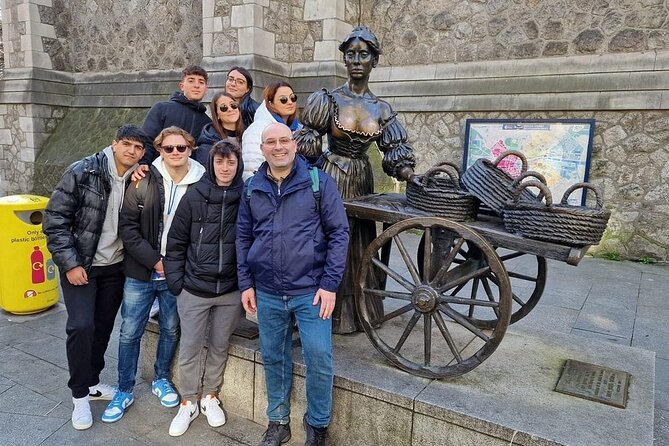
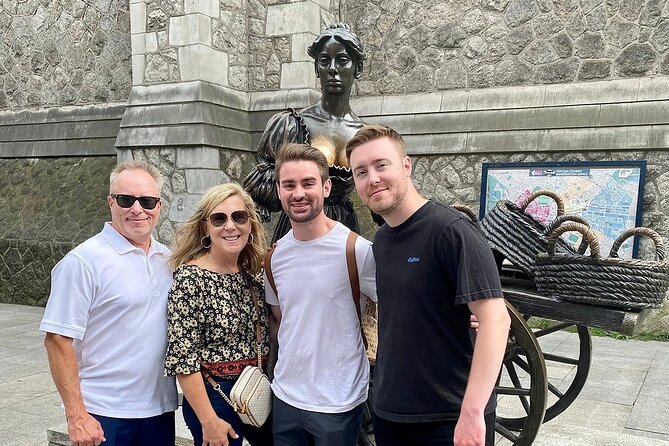
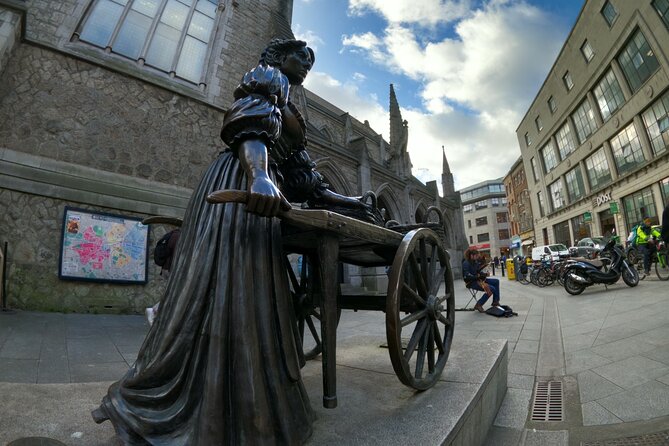
You’ll next hit Molly Malone Statue, tied to folklore and the famous Dubliners song. This stop works because it teaches you how Dublin turns real people and legends into a shared memory. You’ll also hear the connection near St Andrew’s church, which helps ground the statue in its actual setting rather than treating it like a random tourist photo.
After that comes Grafton Street, one of Europe’s busiest shopping streets. It’s home to Brown Thomas, which carries luxury brands, but the street isn’t only about shopping. You’ll see performers—musicians, poets, and more—showing how street culture lives here, not just in guidebooks. St Stephen’s Green is also at the top end of the street, which sets up a nice contrast between shopping energy and park calm.
St Stephen’s Green is that calm. You walk through the park and the guide points out Dublin’s central green space, including wildlife like swans and ducks. This stop is a nice palate cleanser after the busier lanes, and it’s also a smart time to slow down. If you’ve been snapping photos like a sport, you’ll appreciate the open space.
I like this trio because it hits three layers of Dublin at once: story (Molly Malone), street life (Grafton Street), and a breather (St Stephen’s Green).
You can also read our reviews of more private tours in Dublin






Edward Delaney’s Famine Memorial and Theobald Wolfe Tone: The Dark Chapter That Explains the City
Then the mood shifts—in a good way. Edward Delaney’s Famine Memorial gives you a physical reminder of the Irish Great Famine. The sculpture shows thin, struggling figures meant to represent hunger and hardship. It’s not a “fun” stop, but it’s an important one because it helps you understand why Irish history isn’t just dates. It’s trauma, resilience, and memory that still affects how people talk about their country.
From there, you’ll see Theobald Wolfe Tone statue. You’ll learn that he’s widely regarded as the father of Irish Republicanism. The location matters here too: the statue sits in front of the Shelbourne Hotel area, so it’s not tucked away in a quiet museum. It’s part of the city’s public everyday view.
If you want a tour that treats Irish history like a living thread instead of a checklist, this is where that happens. You walk a few minutes, but you come away with meaning.
Department of the Taoiseach and Leinster House: Reading Dublin’s Government Architecture
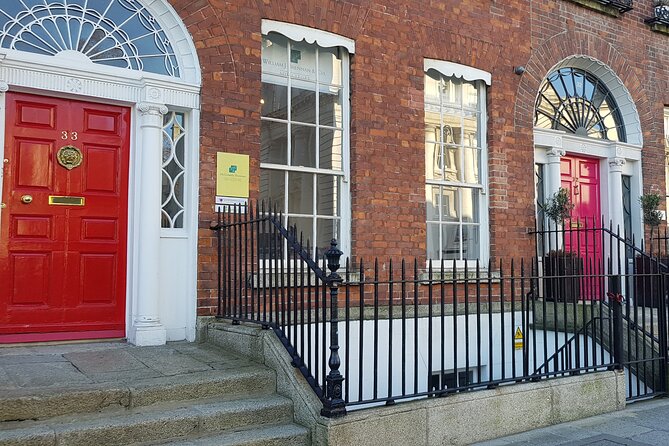
Now you move from monuments and folklore into the built world of politics. The Department of the Taoiseach stop focuses on the government department and the Georgian buildings around it. You’ll hear architecture and history—basically, why certain blocks in Dublin feel formal and weighty, and how style and power got linked.
Next is Leinster House. You’ll learn it was the former ducal residence of the Duke of Leinster, and that since 1922 it has served as the parliament building of the Irish Free State. Again, the guide doesn’t keep it abstract. You’ll understand what the building is in your present moment, and how it evolved to get there.
This section is a strong choice for people who want more than pub stories and shopping streets. It’s also useful if you plan to visit government-related attractions afterward. You’ll be able to connect what you see to the wider political timeline the guide shares.
Oscar Wilde in Merrion Square: A Literary Ending in Georgian Streets
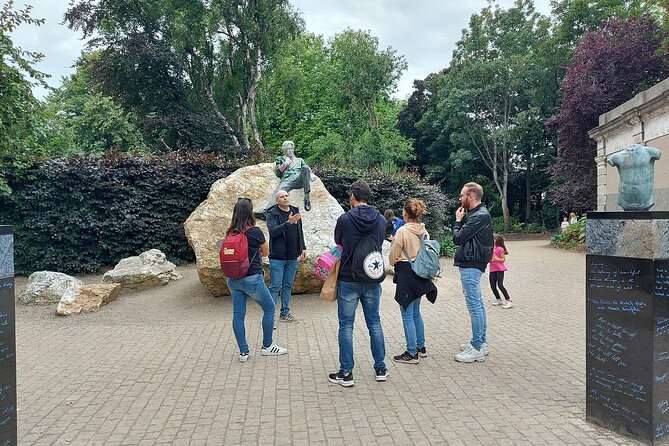
The tour finishes at the Monument to Oscar Wilde in Merrion Square North. You’ll stop for the Oscar Wilde memorial statue and learn about his 18th-century home connection. Merrion Square Park is also part of the setting—Georgian urban design that makes Dublin feel planned in a way you don’t always notice while walking quickly.
This ending point feels right. By the time you reach it, you’ve walked through music pride, street legend, hardship memory, and government power. Wilde is the final cultural thread: literature and personality as Dublin’s “soft power.”
If you want an easy wrap-up, you’ll have one last neat landmark to anchor your photos and your stories before you head back to dinner.
What You Get Beyond the Sights: Tips, Breaks, and Real-World Help
The included stuff is small but smart. You get an experienced and licensed tour guide, plus a private guided tour for your group only. Umbrellas are provided, and the tour is designed for all age groups, with family friendly pacing.
You’ll also get restaurant, pub, and shop recommendations. This is the kind of help that actually saves time. Instead of guessing where to go after you’ve been walking for hours, your guide can steer you to places that fit your day’s mood.
Photo opportunities are built into the flow, and there are rest/toilet breaks if needed. That matters more than people think. A walking tour can feel great when it’s handled well—or exhausting when nobody accounts for real human needs.
And because this is a mobile ticket setup, you’re not stuck digging through paperwork mid-trip.
Price and Value: Is $163.26 per Person Fair?
At $163.26 per person for about 3 hours, this sits in the mid-to-higher range. The value comes from two main things: privacy and time efficiency.
If you’re traveling as a small group, private guiding usually means fewer delays and more tailoring. You’re paying to have someone handle the connections—why Ha’penny Bridge matters, how College Green ties to parliament history, and what Wolfe Tone represents—while you keep moving.
The route is also packed with stops that are admission ticket free. That helps you avoid the “pay again and again” feeling that some tours create when you’re forced into paid entries at every corner.
Finally, guides on this tour are described as warm and personable, and they tend to keep the pace smooth. Some guides also add extra small touches like being flexible with what you want to spend time on, and capturing photos at each stop. That’s not just entertainment—it’s part of why private walking tours feel like a memory you don’t have to build from scratch afterward.
My bottom line: if you want your first Dublin walk to be more than a checklist, and you like having local guidance that goes beyond facts, the price can feel fair.
Should You Book This Dublin Private Walking Tour?
Book it if:
- You want a first-day orientation to central Dublin without spending hours researching streets and stories
- Music, politics, and city legends matter to you at least a little
- You’d rather walk with a guide than follow a self-guided route that can’t answer your questions on the spot
- You’re traveling with a group that benefits from private pacing, like families or friends with mixed interests
Skip it (or pair it with something else) if:
- You dislike walking for 3 hours total and want a lighter, more stop-and-sit itinerary
- You only want modern Dublin and none of the historic context
If your goal is to get your bearings fast and leave with a Dublin story you can repeat, this tour does the job.
FAQ
How long is the Dublin Private Walking Tour?
It’s about 3 hours.
Where does the tour start and end?
It starts at Travelling Ireland Viaggiare in Irlanda, 8 Cecilia St, Temple Bar, Dublin, and ends at the Oscar Wilde Monument at Merrion Square North, Dublin.
Is the tour private?
Yes. It’s a private tour, and only your group participates.
What’s included in the tour price?
An experienced and licensed tour guide, your private guided tour, umbrellas, restaurant/pub/shop recommendations, rest/toilet breaks if needed, photo opportunities, and local tips and tricks.
Are umbrellas provided?
Yes, umbrellas are provided.
Are the stops admission-free?
The provided stop details list admission as ticket free for the sights on the route.
Is this tour family friendly?
Yes. It’s described as family friendly and offered for all age groups, and most travelers can participate.
Is free cancellation available?
Yes. You can cancel up to 24 hours in advance for a full refund.