REVIEW · DUBLIN
1916 Rebellion Walking Tour
Book on Viator →Operated by 1916 Rebellion Walking Tour · Bookable on Viator
1916 Rebellion in Dublin can feel distant. This 2-hour walk makes it close, street level, and human. You’ll start at the International Bar with Lorcan Collins, then move site to site through the days that led to the Rising. I love that the tour builds context fast, from the 1840s Great Hunger to Easter Week 1916, so you’re not just memorizing dates.
Two things I really like: first, you see major places up close, including the GPO and Dublin Castle, without needing a museum day. Second, the experience is built for questions and conversation, so your guide can fill in what you need as you walk. One consideration: the route and pacing still depend on time and weather, so plan for a solid walking session rather than a casual stroll.
In This Review
- Key things to love about the 1916 Rebellion Walk
- Starting at the International Bar, where the story begins
- The context lesson: from the Great Hunger to Easter Week
- City Hall: Easter Week through the Irish Citizen Army lens
- Dublin Castle: the British administration, and why it mattered
- Four Courts from the River Liffey: seeing the role without climbing
- O’Connell Monument: bullet holes that turn history into a chill
- Jim Larkin Statue: the working-class voice in the revolutionary period
- The GPO: where the Proclamation was read
- Moore Street: the last stand near the GPO garrison
- Bank of Ireland (the Old Parliament) and the Trinity College neighbor
- Route variety: why your walk might not match someone else’s
- Group size, pacing, and hearing every word
- Price and value: $27.81 for a focused Dublin education
- Practical tips so you enjoy the walk more
- Should you book the 1916 Rebellion Walking Tour?
- FAQ
- Where does the 1916 Rebellion Walking Tour start?
- How long is the tour?
- What is included in the price?
- Are alcoholic drinks available during the tour?
- What landmarks will we visit?
- Do I need prior knowledge of Irish history?
- Is the tour offered in English?
- What’s the group size limit?
- Is the tour dependent on weather?
Key things to love about the 1916 Rebellion Walk

- International Bar meetup with real roots: Lorcan Collins has been running the 1916 tour since 1996
- Fast context for non-experts: the story runs from the Great Hunger through the road to rebellion
- Landmarks you can actually see up close: stops around City Hall, Dublin Castle, and the GPO area
- Chilling details at street-level: bullet holes you can still spot at key monuments
- A Q-and-A style tour: you’re encouraged to ask questions as you go
- Alcohol available nearby: drinks aren’t included, but you can buy them before and during the vibe
Starting at the International Bar, where the story begins
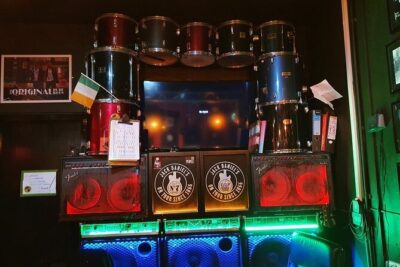
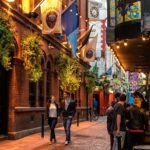
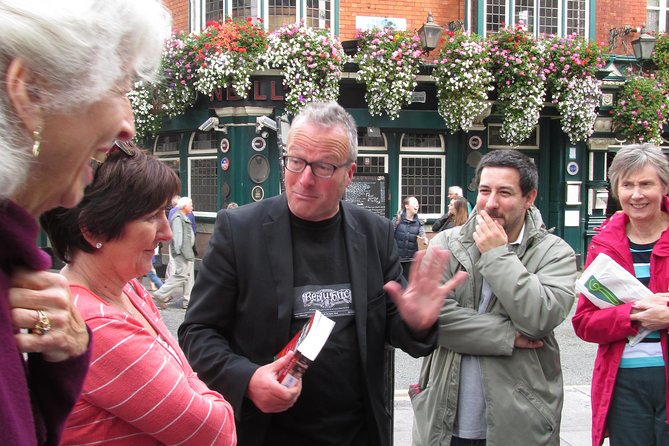
You meet at 23 Wicklow St, at the International Bar—an easy place to find and hard to forget once you’re there. The tour is anchored in a setting that feels like part of Dublin’s everyday life, not a sealed-off attraction. If you arrive early, you can grab a drink and read the introductory literature your guide provides.
I like how the start is set up to calm your brain down before the heavy stuff. You don’t just jump into guns and slogans. You get a short runway into the revolutionary period and a chance to get to know your guide before the first real stop.
You can also read our reviews of more walking tours in Dublin
The context lesson: from the Great Hunger to Easter Week
This walk doesn’t treat 1916 like it appeared out of nowhere. The guide starts with the build up to the revolutionary period, beginning with the Great Hunger in the 1840s. Then the story steadily moves forward until Easter 1916, so you understand why so many people felt trapped by politics and poverty.
That matters because the Rising is often covered like a movie. Here, you get the motivations and pressure points. It’s also a nice reset if you only know a few names or dates. You’ll still come away with a clearer timeline and a sense of what was already simmering.
City Hall: Easter Week through the Irish Citizen Army lens
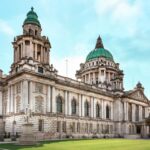
One of your first landmark stops is City Hall. During the 1916 Rising, it was occupied by the Irish Citizen Army, and that’s the focus of this short pause. You’ll take in the building from the street and get a focused explanation of what that meant during Easter Week 1916.
A good stop like this is more than a photo moment. It helps you connect the Rising to real power centers in the city—places that mattered for authority, movement, and visibility. Even if you’re not a history person, the guide keeps the story grounded.
Dublin Castle: the British administration, and why it mattered
Next up is Dublin Castle, the British administration hub that controlled Ireland. The tour ties the castle directly to what happened in 1916 and also to the War of Independence that followed. If you’ve seen the Michael Collins movie, Dublin Castle may already feel familiar, but the tour gives you the real-world sense of why it was such a symbol.
One practical note: you won’t need to read a plaque to understand this stop. The guide explains the role it played and how the conflict shifted over time. That makes the location feel less like architecture and more like a chess piece.
Four Courts from the River Liffey: seeing the role without climbing
The Four Courts is another key stop. It was occupied by revolutionaries in 1916 and again during the build up to the Irish Civil War in 1922. The tour makes a smart choice here: you’ll view it best from a bridge over the River Liffey instead of trekking up to the building.
I like this approach because it saves time and keeps the walk flowing. You still get the meaning of the site, but you’re not forced into a long detour. The guide also explains how the Four Courts ties into the specific twists of the Civil War—exactly the kind of detail that’s hard to piece together from quick reading alone.

O’Connell Monument: bullet holes that turn history into a chill
At O’Connell’s Memorial, you get one of the most striking visuals on the route. The tour points out bullet holes from the Rising and walks you through the positions occupied by the British and the Irish in 1916.
This is the kind of moment that sticks. A story about ideology becomes something physical—marks on stone that refuse to be forgotten. It’s also a reminder that the conflict wasn’t abstract. People were in real places with real consequences.
Jim Larkin Statue: the working-class voice in the revolutionary period
You’ll stop at the Jim Larkin statue next. Big Jim Larkin was a union man from Liverpool and a close comrade of James Connolly. The tour uses this stop to explain his contribution to the revolutionary period and the role working-class organizing played in shaping momentum.
I’m glad this isn’t a tour that only spotlights leaders. Larkin’s inclusion widens the story. It helps you see that the Rising had social roots, not just political ones, and that Dublin’s labor movement mattered.
The GPO: where the Proclamation was read
The General Post Office (GPO) is the tour’s headline stop. It served as HQ for the revolutionaries in Dublin and is one of the most important sites tied to Easter 1916. This is where Patrick Henry Pearse read the Proclamation, and the guide uses that fact to explain what unfolded in the hours and days around the Rising.
You also spend more time here than at most other stops—about 30 minutes—because the GPO needs room for the story. The guide connects the building to Ireland’s national psyche and gives you the emotional weight behind why this location is so powerful even today.
If you want a clear sense of how a single address can become a symbol, this is where you’ll get it.
Moore Street: the last stand near the GPO garrison
After the GPO, the route may include Moore Street. When time allows, the guide shows where the GPO garrison made their last stand during Easter Week. This stop is short, but it adds a sharper edge to the narrative.
Without this, it’s easy to think of the Rising as the heroic beginning. Moore Street nudges you toward the endgame—what happened after the Proclamation and the early moments. It’s a reminder that courage and collapse can be part of the same sequence.
Bank of Ireland (the Old Parliament) and the Trinity College neighbor
Depending on the day, you may also examine the Bank of Ireland, which is more colloquially known as the Old Parliament. The guide explains its role in Irish history and often connects it to nearby Trinity College.
This is a good example of how the tour uses geography to explain politics. Even if you only see the buildings from the street, the guide ties the physical setting to the story of power and governance. It helps you understand why certain streets and institutions became unavoidable in 1916.
Route variety: why your walk might not match someone else’s
The tour uses a walking route that can vary. The stops stay true to the theme, but the guide may adjust the exact path so the experience doesn’t get stale. That’s actually a plus for repeat visitors and for people who like their tours to feel tailored to the day.
It also means you should keep an open mind if your route includes Moore Street or if it’s swapped for another nearby segment. Either way, you’ll be hitting the same core locations that define the Easter Rising story in Dublin.
Group size, pacing, and hearing every word
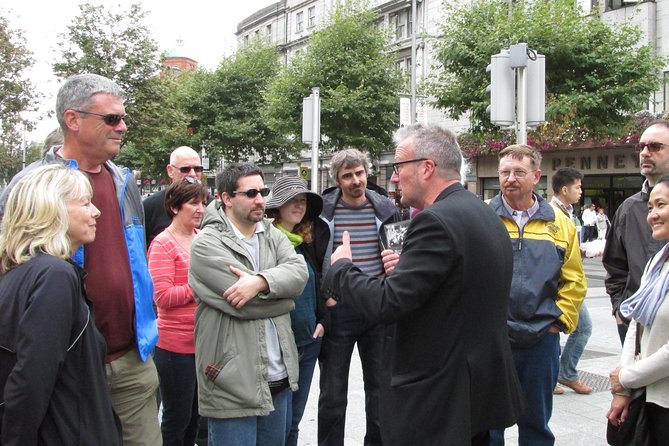
The maximum group size is 30 travelers, which is big enough to feel social but small enough for most guides to keep control. The pacing is built around short stops and quick explanations, which is ideal for a 2-hour experience when you want to cover serious ground without turning the day into a marathon.
The reviews praise guides for clear speaking and handling questions, and that matches what the format suggests: you’re walking, pausing, listening, then moving again. A tour like this works best when the guide treats it like a conversation. If you like asking why something happened—not just what happened—you’ll get a lot out of that style.
Price and value: $27.81 for a focused Dublin education
At $27.81 per person, this tour is priced like a practical, high-value introduction to a period that’s otherwise easy to misunderstand. You’re paying for one thing: a professional guide to connect multiple sites into a coherent story.
You also get a lot of built-in value from the structure. The time is concentrated (about 2 hours), the focus is on major landmarks, and the route includes stops that are visually memorable—like the bullet-hole details. Since the tour is walking-based, you avoid the common trap of spending extra time commuting between far-flung sights.
Drinks are not included, but that’s part of the deal. You can buy one if you want the full International Bar feel, and skip it if you want to stay fully focused.
Practical tips so you enjoy the walk more
A few small things can make this kind of tour feel effortless instead of tiring:
- Wear comfortable walking shoes. You’ll be covering several Dublin blocks and stopping often.
- Bring a light layer. Dublin weather can change fast, and the tour requires good weather.
- If you have questions, ask early. The guide’s intro period at the start is a good time to set the tone.
- If you plan to drink, do it lightly before you start. The tour is still a walking experience.
Should you book the 1916 Rebellion Walking Tour?
If you want a short, guided way to understand the Easter Rising and its lead-up, I think you should book it. This is ideal for history buffs who want landmarks close up, but it’s also approachable if you’re new—because the guide builds the story from the Great Hunger onward instead of assuming you already know the cast.
Book it especially if you like street-level details, like bullet holes you can still see, and if you want a guide who can answer questions rather than recite facts at you. The main reason to hesitate is simple: if you hate walking tours or don’t enjoy political history, the tone might not match your idea of a casual Dublin afternoon. For most people, though, it’s one of the smartest ways to turn Dublin’s streets into understanding.
FAQ
Where does the 1916 Rebellion Walking Tour start?
It starts at 23 Wicklow St, Dublin (D02 VH59), Ireland, at the International Bar area.
How long is the tour?
It runs for about 2 hours.
What is included in the price?
The tour includes a professional guide. Alcoholic drinks are not included.
Are alcoholic drinks available during the tour?
Yes. You can purchase alcoholic drinks (for example, you’re welcome to have one when you arrive early).
What landmarks will we visit?
You’ll stop at major sites tied to the Rising, including City Hall, Dublin Castle, Four Courts (viewed from a bridge over the River Liffey), O’Connell’s Memorial, Jim Larkin Statue, the GPO, and possibly Moore Street and the Bank of Ireland area.
Do I need prior knowledge of Irish history?
No. The tour is designed so prior knowledge isn’t required, and the guide gives background to help you follow the timeline.
Is the tour offered in English?
Yes, it’s offered in English.
What’s the group size limit?
The tour has a maximum of 30 travelers.
Is the tour dependent on weather?
Yes. The experience requires good weather, and if it’s canceled due to poor weather, you’ll be offered a different date or a full refund.