REVIEW · DUBLIN
90 Minute Dublin Walking tour and Sightseeing tips
Book on Viator →Operated by Finn McCools Tours · Bookable on Viator
Dublin gets louder when you walk it. This 90-minute tour gives you a sharp, on-foot intro to the city’s story, starting with Viking Dublin (around 988 AD) and ending near Christ Church Cathedral. I especially like the tight route that hits big landmarks without dragging, and I also like how your guide keeps questions welcome so the walk turns into a two-way conversation, not a lecture.
The one thing to keep in mind is that this is a weather-dependent walking experience. You’ll be outside for long stretches, and you’re moving at a steady city pace, so if you’re sensitive to wind or rain, plan for it.
In This Review
- Key things to know before you go
- A 90-minute Dublin primer built for first-time bearings
- Starting at Aston Quay: a fast meet-and-greet that sets the tone
- O’Connell Street’s political power: from wide boulevard to broken-pillar drama
- The An Post General Post Office: rebellion, myth, and a ceiling you might see up close
- Trinity College Dublin and College Green: shifting from St Patrick stories to student life
- Temple Bar: tips from locals, plus a quick opinion check
- City Hall, Dublin Castle, and the lost Viking settlement story
- Christ Church Cathedral finish: Vikings in the shadows and final questions
- What to wear, bring, and plan for (so the walk stays fun)
- Is this tour worth $21.77?
- Should you book this Dublin walking tour?
- FAQ
- How long is the Dublin walking tour?
- How much does it cost?
- What’s included in the price?
- Are any food or drinks included?
- Where does the tour start and where does it end?
- Is the tour suitable for kids?
- What happens if the weather is bad?
Key things to know before you go
- Small groups, guided: capped at 25 travelers, which keeps it conversational.
- Mobile ticket: you’ll use your phone for check-in.
- Big stops in 90 minutes: Grand Post Office, Trinity College area, Temple Bar, Dublin Castle zone, and Christ Church.
- Local history, not just dates: you’ll connect events across centuries on the same streets.
- English guide and Q&A friendly: you can ask questions right at the start and along the way.
- Moderate walking fitness: best if you’re comfortable walking downtown.
A 90-minute Dublin primer built for first-time bearings
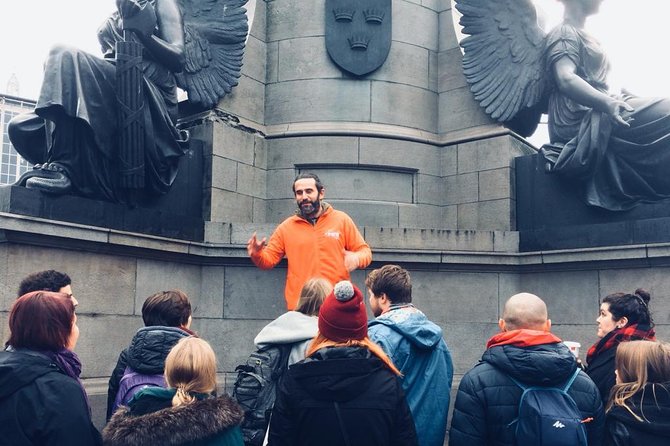
This tour works because it’s short and focused. In about 1 hour 45 minutes, you get a “start here” Dublin map made of real landmarks and real streets, not a random list of photo spots. The route is designed to spark ideas for what to chase next, whether you want more politics, more architecture, or just more atmosphere.
It also keeps you moving. That matters in Dublin, where the center is compact but the footpaths can add up fast. If you want a tour that helps you see the city as locals see it, this one is built for that: you’ll walk from the founding-era stories through independence-era drama and into modern city life.
The price also feels sensible for what’s included. At $21.77 per person, you’re paying for a guided, high-density overview with a professional guide, local guide support, and the walking route between key sites. Food isn’t included, and that’s normal for a tour this length, but it does mean you should plan your meals around it.
You can also read our reviews of more walking tours in Dublin


Starting at Aston Quay: a fast meet-and-greet that sets the tone
You begin at 12 Aston Quay (meeting point at ThingsToDoDublin). The first step is a quick meet & greet with your guide. This isn’t a long briefing that wastes time. It’s more like a warm-up: say hi, get oriented, and ask what you actually care about.
This matters because the tour is Q&A friendly. Guides are willing to respond to curiosity in real time, and you’re not stuck waiting until the end. From past groups, guides like Alex and Sam are known for being engaging and happy to tailor answers to what people are into.
What to expect here
- A short intro and the chance to ask questions before you start walking.
- A prompt to flag interests so the guide can lean into them during the route.
- A quick start so you’re not standing around too long before the story begins.
A small practical tip: arrive a few minutes early so the group doesn’t lose momentum.
O’Connell Street’s political power: from wide boulevard to broken-pillar drama
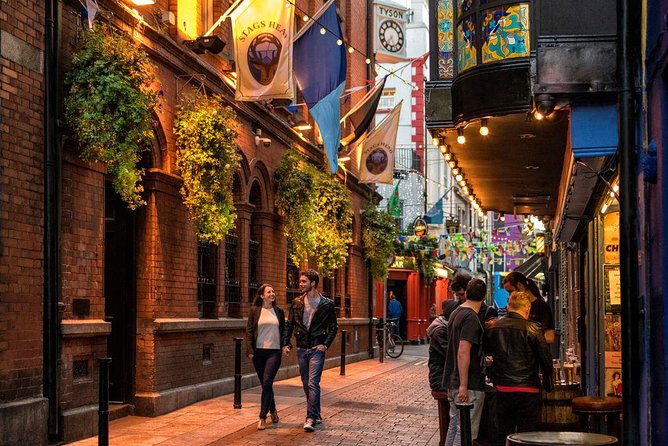
After you set off from Aston Quay, the walk brings you toward O’Connell Street, famously described as the widest street in Ireland. This stretch becomes your timeline highway. You hear why the street ended up with its current name after being renamed twice, and you hear how it became a stage for Irish political conflict.
This is the stop where the tour leans into “dark to determined.” You’ll cover events connected to the Irish War for Independence and the Irish Civil War that followed quickly after independence was established. Then you’ll get the story of Nelson’s Pillar and the street-level chaos that happened all at once, with windows broken together.
Why this stop is valuable
O’Connell Street is one of those places you can walk down and still miss what it meant. With a guide, you start seeing it as a sequence of events, not just a busy downtown corridor.
What to watch for
This area is active. You might hear city noise, especially around traffic and footfall. If you’re hoping for quiet concentration the whole time, it won’t feel like that—but it does make the history feel grounded in real life.
The An Post General Post Office: rebellion, myth, and a ceiling you might see up close
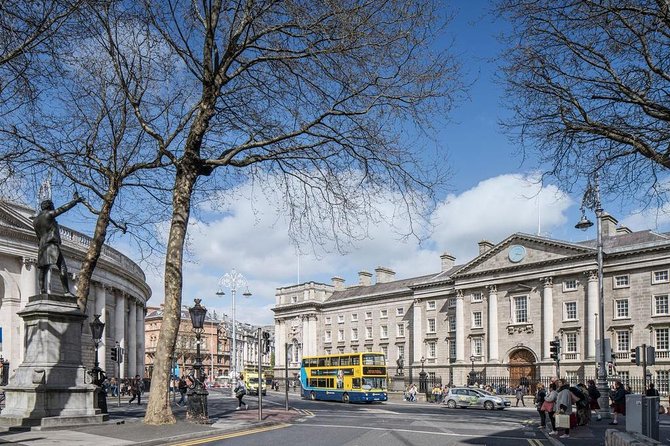
Next you head to the An Post General Post Office (the Grand Post Office story). This stop is a mix of political events and symbolic details, and it often becomes a highlight because the building itself carries the narrative.
You’ll hear about the Battle of O’Connell Street, including the rebels’ actions and how the Gunboat Helga sailed up the River Liffey. The story continues through the bombardment of Dublin city centre, then moves to what happened to the rebels afterward and how those executions affected the revolution to come.
There’s also a chance to experience the space more directly. The tour notes that you might get to walk underneath the high ceilinged roof of the post office itself. If you don’t get that moment, you can still see evidence on the exterior from bullet impacts fired more than a century ago.
Then the tour shifts to Irish mythology with the statue titled The Death of Cú Chulainn, cast in 1935 by Oliver Sheppard. It’s a strong reminder that Dublin doesn’t separate politics and myth. They sit side by side on the same streets.
How to make the most of this stop
- Slow down, look up, and listen for the way the guide connects events to specific features you can actually see.
- Ask one question you’d never think to ask from a brochure. This is where Q&A tends to pay off.
Trinity College Dublin and College Green: shifting from St Patrick stories to student life

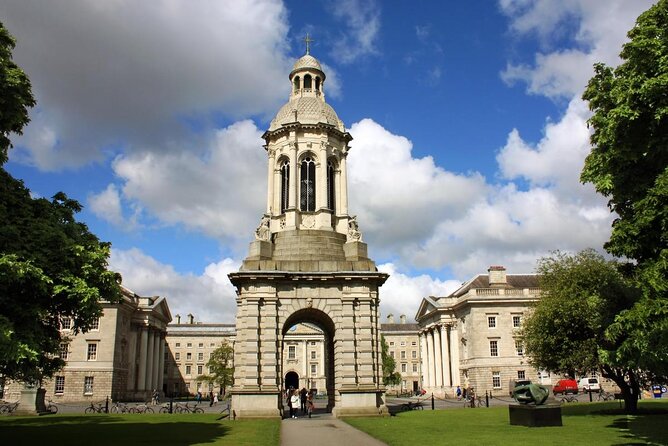
From the post office area, you work around toward Trinity College and College Green. This section is about how Dublin changes without moving away from itself. You go from one center of the city to another, from the North side toward the South side, and your guide uses that shift to explain how the area has layered meanings over time.
You’ll hear about an old monastery said to have been where St Patrick converted some early pagan Celts. From there, the tour moves forward to early Christians and the rituals of the past, then forward again to the buildings of Trinity College and the day-to-day rhythms of modern Trinity students.
What I like about this pacing
It’s not just “this happened, then that happened.” The guide uses location as a thread. You’re walking through a place that has been repurposed again and again, and the story follows the layers.
A realistic note
This stop is fairly short, so expect it as a guided orientation more than a detailed campus visit. You’ll get the narrative anchor points you can later explore on your own.






Temple Bar: tips from locals, plus a quick opinion check
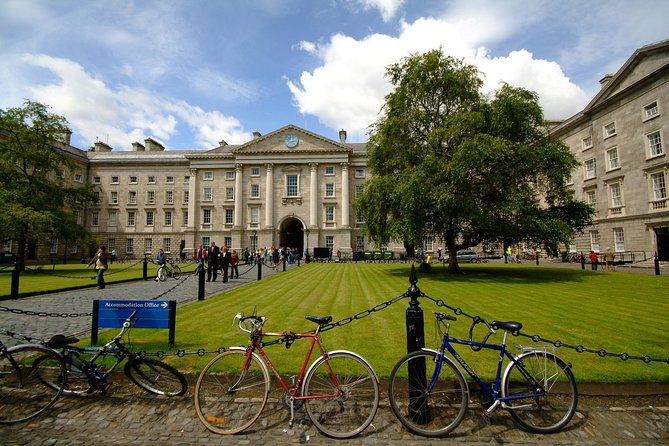
Next comes Temple Bar, with a brief meet at Meeting House Square. Temple Bar is famous, but the tour’s goal isn’t to sell hype. It’s to give you local-style insight into what the area is like beyond the postcards.
You’ll get practical tips for where to find the best Guinness pint, and you’ll also hear where to catch good Irish music. The guide also brings in commentary on what locals think of the neighborhood, so you’re not just receiving the tourist version.
Why this stop helps
If you’re only in Dublin for a couple days, Temple Bar can either become a must-do… or a letdown. With the right guidance, it becomes a useful starting point for your evenings, not a trap you fell into because it looked famous.
Photo note
You’ll likely want quick snapshots, but keep moving. The tour is designed to stack meaningful stops rather than linger at each one.
City Hall, Dublin Castle, and the lost Viking settlement story
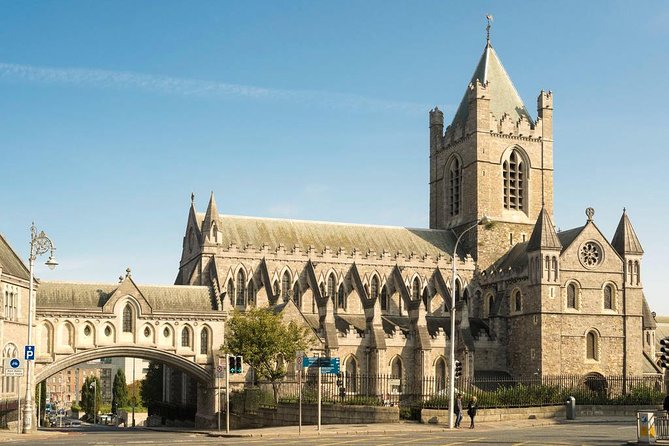
From Temple Bar, you pass through the area on the way toward Dublin Castle, with an important historical bridge: the original Viking settlement of Dubhlinn. The tour explains how Dubhlinn became Dublin, and how that settlement was lost, rediscovered, then buried and built over.
That’s a powerful concept for this city. Dublin’s history isn’t always in a museum case. Sometimes it’s under your feet.
From there, you get an eclectic rundown of the kinds of cultural moments that have filled the broader castle area, including references to Shakespeare’s Hamlet and Handel’s Messiah. You might also hear about old soap factories mentioned as part of the castle-zone mix. It’s a reminder that places used for power can later become settings for culture and ordinary industry.
Dublin Castle specifics
You’ll stop at Dublin Castle and learn that it was once the center of authority for governance on the island of Ireland, with the Lord Lieutenants living there until 1922. Construction is said to have finished around 1230 under the orders of King John of England.
Then the guide connects the timeline from those medieval origins through many rulers and events, including kings, soldiers, and rebels. It’s a dense topic, but the tour is built to keep it understandable by linking each era to a feature you can visualize.
You’ll also hear about areas behind the scenes, including the Dubh Linn Gardens and the Chester Beatty Library, all within the broader castle experience.
One drawback to plan for
Because this is an overview walk, you may not get long, inside-time at each site. You’re collecting context and sightlines, not finishing a museum day. If you want that, you’ll know what to book next after the tour points you in the right direction.
Christ Church Cathedral finish: Vikings in the shadows and final questions
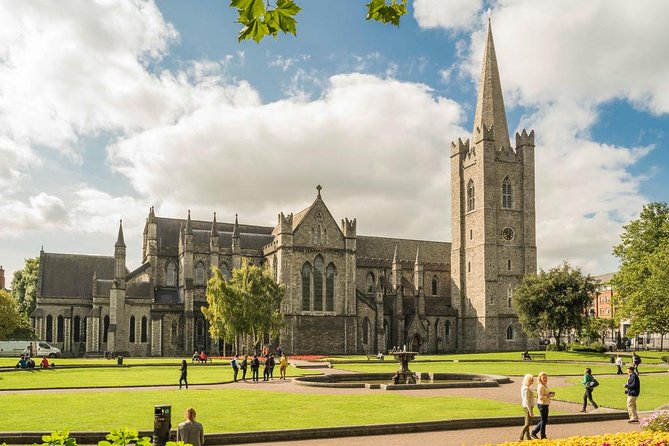
The walk ends at Christ Church Cathedral, near the River Liffey. This is a fitting last stop because the cathedral sits inside a long timeline of Dublin’s maritime and Viking connections.
You’ll hear that Christ Church was founded by King Sigtrygg Silkbeard, a Viking king who ruled for over 40 years before defeat at the Battle of Clontarf. Then the guide ties the cathedral’s long presence by referencing the River Liffey scene: Viking longships at earlier moments, and later the Guinness barges heading toward Dublin Harbour.
When you’re standing in the cathedral’s shadow, the tour gives you a chance to ask final questions. That part matters. If you’ve been too shy to ask something earlier, this is when the guide can steer you toward next steps based on what you found interesting.
You’ll also leave ready to explore Dublin like a local, meaning the guide typically gives you suggestions for what to look for after the walk ends.
What to wear, bring, and plan for (so the walk stays fun)
This tour is simple, but it’s also city walking. If you want it to feel enjoyable, plan like it’s a downtown stroll with history stops.
- Wear shoes that handle uneven sidewalks and any wet patches.
- Bring a small water bottle. Food and drinks aren’t included.
- Keep your phone charged enough for a mobile ticket.
- If it’s windy or rainy, expect that to affect the experience. The tour requires good weather, and if it can’t run due to poor weather, you’ll be offered another date or a full refund.
If you’re traveling in winter, pack for cold and wind. One review note that the guide worked to keep the group moving and out of the worst gusts, which is exactly what you’d want from your guide on a tough-weather day.
Is this tour worth $21.77?
For me, value comes down to density and usefulness. This is a high-density “see it, then understand it” route that strings together Dublin’s major storylines: Viking origins, independence-era conflict, education and religion, and modern neighborhood life.
You’re also getting more than a narration. You’re getting a guide who invites questions and ties events to places you can still stand in today. Guides like Alex and Sam have a reputation for engaging storytelling and strong pacing, and the tour length is short enough that you’re unlikely to feel stuck for hours.
The biggest reason not to book would be if you already know the basics and want deep museum time. This is an orientation walk. It’s designed to point you toward what you should explore next.
Should you book this Dublin walking tour?
Book it if you want a fast, guided overview of Dublin that helps you see the city with purpose. It’s a great first activity after arriving, especially if you’re staying centrally and want your bearings fast.
Skip it if you hate walking in traffic-heavy downtown areas, or if you’re looking for long indoor time at every stop. This tour is built around outdoor sightlines and quick, meaningful stops, not a slow crawl with museum tickets.
If you do book, go in with one question ready. Ask what your guide thinks you should see next after Christ Church, based on your interests.
FAQ
How long is the Dublin walking tour?
It runs for about 1 hour 45 minutes.
How much does it cost?
The price is listed as $21.77 per person.
What’s included in the price?
You get a local guide and a professional guide, and the price includes taxes, fees, and handling charges.
Are any food or drinks included?
No. Food and drinks, including lunch, are not included.
Where does the tour start and where does it end?
It starts at ThingsToDoDublin, 12 Aston Quay (Temple Bar area). It ends at Christ Church Cathedral on Christchurch Pl, Wood Quay.
Is the tour suitable for kids?
Children must be accompanied by an adult.
What happens if the weather is bad?
The tour requires good weather. If it’s canceled due to poor weather, you’ll be offered a different date or a full refund.