Irish tunes in cozy rooms beat random pub hopping. This evening is a two-stop, moving concert with reserved seating in private rooms, guided by Irish musicians who turn classic songs into living stories. You get live sets in each pub, plus English commentary on where the music comes from and why it matters.
My favorite part is how the guides make the songs make sense fast. If you want an Irish pub night with context, not just background noise, this works. One thing to consider: you only go to two pubs, so it is closer to a guided concert with a short stroll than a full-on bar hopping marathon.
In This Review
- Key highlights worth knowing
- How a two-pub concert in Dublin keeps the music front and center
- Price and value: what $31.38 buys you (and what it doesn’t)
- Meeting at Ha’penny Bridge: start time, location, and why it’s smart
- The first stop: from Ha’penny Bridge into traditional song stories
- The middle part: the short walk and how to protect your best seats
- The second stop: Flanagan’s or Brannigan’s on O’Connell Street
- What the musicians teach you: Irish music origins, instruments, and sing-alongs
- Drinks and food: how to plan your night without surprises
- Who this tour is best for (and when it might not be your thing)
- Booking strategy: when to go and how to get the most from your seats
- Should you book this Dublin Traditional Irish Musical Pub Crawl?
- FAQ
- How long is the Traditional Irish Musical Pub Crawl?
- What is the price per person?
- What does my ticket include?
- Are drinks included?
- Is food included?
- How many pubs do you visit?
- What time does the tour start and where do I meet?
- Where does the tour end?
- Do I need hotel pickup or drop-off?
- Is there free cancellation?
- What group size should I expect?
Key highlights worth knowing
- Two professional musician guides escort you and explain the music in English
- Reserved seating in private rooms beats the usual Dublin scramble
- Live performance at each stop keeps the energy up throughout the evening
- Learn the song basics with stories behind reels, jigs, and sing-alongs
- Food is available for purchase at both bars so you can eat without leaving
How a two-pub concert in Dublin keeps the music front and center
Let’s be honest: Dublin pub nights can turn into a lot of standing. You arrive, you find a gap somewhere near the door, and you spend the whole time checking whether your view is about to vanish. This tour avoids that problem in a very practical way. Instead of zig-zagging through five or six places, you and your group settle into private areas where seating is handled for the evening.
The format feels like a live show that just happens to be staged inside classic Irish pubs. There’s still a sense of movement. You walk together between venues. But the heart of the experience stays in the music room.
Also, the group size is capped at 60, which matters more than it sounds. In a city where space is tight, smaller groups mean you’re more likely to actually hear the musicians instead of just catching the occasional chorus.
You can also read our reviews of more nightlife experiences in Dublin
Price and value: what $31.38 buys you (and what it doesn’t)
At $31.38 per person, you’re paying for four things: time, seats, music, and storytelling. You get about 2 hours 15 minutes of a guided evening built around live performance at two pubs. You also get commentary in English, delivered by musicians who know the material.
What’s not included is equally important. Drinks aren’t part of the price, and food is only available to buy on your own at the bars. If you show up hungry or thirsty, you will be able to order. You just won’t have it covered by the ticket price.
So is it good value? For many people, yes, because Dublin’s pubs can be hard to enter and even harder to sit in. This tour’s biggest selling point is the seating guarantee in private rooms, which is the part you can’t reliably recreate on your own in peak evening hours.
Meeting at Ha’penny Bridge: start time, location, and why it’s smart
You meet at the Ha’penny Bridge Inn, at 42 Wellington Quay, Temple Bar, Dublin 2. The tour starts at 6:00 pm, so plan to arrive a bit early, not at the last second.
Here’s a cool detail tied to the meeting spot: the Ha’penny Bridge is a cast-iron pedestrian bridge built in May 1816 over the River Liffey, cast in Shropshire, England. You’re not just starting near a famous landmark. You’re starting in the middle of Dublin’s pub-and-street energy, right by the river.
Since the tour begins in central Dublin and you’ll be near public transportation, you don’t need complicated planning to get there. You’ll just want to time it so you can settle in before music begins.
The first stop: from Ha’penny Bridge into traditional song stories
The first venue is the Ha’penny Bridge Inn, and the pacing is geared toward getting you up to speed immediately. This isn’t a sit-and-watch situation where you struggle to connect dots. The musicians guide the group through what you’re hearing and why it matters.
You can expect a mix of traditional pieces—often jigs and reels—plus songs that tell bigger stories about Irish life. Part of the value here is the explanation. When a musician shares where a tune comes from or how a song functioned in the culture, the music lands differently. It also helps if you’re not a lifelong Irish-music nerd. You’ll still follow along.
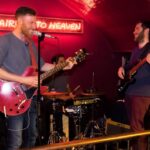
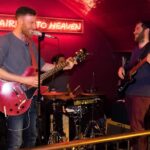
You might also hear a range of instruments depending on the duo on your night. Some guides have been listed as a fiddle player and a guitar player, and the performances have included lively tunes and slower love songs. Even if your exact mix varies by evening, the structure stays the same: music first, then context, then an audience moment.
The middle part: the short walk and how to protect your best seats
Between the two pubs, you walk together as a group. This is not a huge trek, but it is still a movement component. It’s also one reason arriving early helps. Dublin pubs are old. They have stairs. They have uneven layouts. And most likely, not every spot is equally easy to reach.
A key practical tip: even though the tour includes private seating, the best spots can still be a first-come situation once everyone arrives. If you want the closest view or the easiest standing/sitting angle, aim to get moving promptly at each handoff.
If you have mobility concerns, plan with the physical reality in mind. Older buildings often mean stairs, and there may be limited lift access in and around historic pub spaces. The walk between venues is short, but you should expect it to be quick enough that the group can settle into the rooms without losing time.
You can also read our reviews of more drinking tours in Dublin

The second stop: Flanagan’s or Brannigan’s on O’Connell Street
The tour ends at O’Connell Street area pubs, with two possible route endings depending on your departure time.
- Earlier tour: it finishes at Flanagan’s Bar & Restaurant for dinner.
- Later tour: it ends at Brannigan’s off O’Connell Street.
Why does this matter? Because O’Connell Street is different from Temple Bar. It’s still central Dublin, but the feel shifts. Flanagan’s ending also nudges you toward the dinner plan. If you choose the earlier slot, you can treat the show as your pre-dinner entertainment and then stay for food without scrambling for a reservation.
As for what happens at the second venue: you get another live performance set in the private room. That means the pacing doesn’t drop after the first stop. You’re not left with an awkward half-night where the group disperses and everyone tries to find a vibe on their own.
If you like the kind of Irish pub night where the room participates—clapping, singing along, shouting encouragement—this format is built for it. The musicians do the heavy lifting to get you involved without making it feel forced.
What the musicians teach you: Irish music origins, instruments, and sing-alongs
The tour is led by two professional musicians who provide “extensive commentary” in English. That commentary is not just facts tossed in between songs. It’s part of the performance.
You’ll learn about why certain tunes became important, how songs connect to Irish identity, and how different rhythms and forms work in practice. For example, the difference between a reel and a jig is specifically part of the learning experience on these evenings. Once you hear that explanation, it’s easier to tell why one tune feels bouncier while another leans into a more lyrical flow.
You’ll also likely hear how songs travel through time—how tunes and stories are passed from generation to generation, and how pub culture turned music into a social glue. That’s a big reason this works for first-timers. You walk out understanding what you heard, not just that it sounded good.
And yes, sing-alongs are part of the energy. Some evenings have included group favorites like Johnny Jump Up, with musicians prompting the crowd to join in.
Drinks and food: how to plan your night without surprises
Here’s the clean rule: food is available to purchase at both bars, and you should plan to buy your own drinks too.
That means two things for your planning:
- If you want dinner, the earlier tour ending at Flanagan’s can make that easier.
- If you’re going on the later tour, you’ll still have food options at the venue, but your timeline might shift a bit depending on what you order and how hungry you are.
If you’re sensitive about timing (some people get a little restless when they’re waiting between places), treat the show as your schedule anchor. You’re not eating before you start, you’re eating around the performance flow.
Who this tour is best for (and when it might not be your thing)
This tour fits you best if you want an authentic Irish music evening with structure. It’s especially good for:
- First-time visitors who want a clear introduction to traditional Irish music
- People who love live performance but don’t want to hunt for seats in crowded pubs
- Groups who enjoy interaction, storytelling, and audience participation
It may be less ideal if your main goal is maximum pub count. If you’re expecting a longer circuit—four, five, six pubs in one night—set your expectation for two stops. The upside is quality and comfort. The tradeoff is fewer venues to hop between.
It also works well for couples, solo travelers, and small-to-medium groups. The capped group size helps keep the experience personal rather than chaotic.
Booking strategy: when to go and how to get the most from your seats
This tour is commonly booked about 44 days in advance on average, so it’s not always a last-minute impulse thing—especially for popular evenings. If you’re visiting during high season or on a busy weekday/weekend mix, it’s smart to lock it in earlier.
Once you book, choose the tour time based on your night plan:
- Want dinner wrapped into the experience? Pick the option that ends at Flanagan’s.
- Want a later start with an O’Connell Street landing spot? Choose the option that ends at Brannigan’s.
On the night itself, arrive early. Even with the seating arrangement advantage, good spots can still fill. If you want a great view and an easy position, don’t roll up right at the start time.
Also, keep a little flexibility. You’ll be walking to two locations and settling into rooms. That’s normal for a “moving concert,” not a museum tour.
Should you book this Dublin Traditional Irish Musical Pub Crawl?
Book it if you want a true Irish music night with live performances, musician-led explanations in English, and the practical benefit of reserved seating in private pub rooms. For the price, that combination is hard to beat in Dublin, where standing room can be the default.
Skip it or think twice if you’re chasing the maximum “pub crawl” feeling—lots of stops, lots of wandering, lots of change. This is two venues with a stronger show focus.
If you want your Dublin evening to start with a landmark moment at Ha’penny Bridge and end with Irish music fresh in your ears—this is a very solid choice.
FAQ
How long is the Traditional Irish Musical Pub Crawl?
The tour runs for about 2 hours 15 minutes.
What is the price per person?
It costs $31.38 per person.
What does my ticket include?
Your ticket includes private booking and seating in two bars, escorted guidance by two professional musicians, and commentary in English about the origins and importance of songs.
Are drinks included?
No. Drinks are not included, though you can purchase them at the pubs.
Is food included?
Food is not included in the ticket price, but food is available to purchase in both bars visited.
How many pubs do you visit?
You visit two pubs/bar stops on the night.
What time does the tour start and where do I meet?
The tour starts at 6:00 pm at the Ha’penny Bridge Inn, 42 Wellington Quay, Temple Bar, Dublin 2.
Where does the tour end?
It ends in central Dublin on O’Connell Street. Depending on the tour time, it finishes at Flanagan’s for an earlier option or Brannigan’s off O’Connell Street for a later option.
Do I need hotel pickup or drop-off?
No. Hotel pickup and drop-off are not included.
Is there free cancellation?
Yes. You can cancel up to 24 hours in advance for a full refund.
What group size should I expect?
The tour has a maximum of 60 travelers.