REVIEW · DUBLIN
A Self-Guided Stroll Along Dún Laoghaire’s East Pier
Book on Viator →Operated by VoiceMap Audio Tours · Bookable on Viator
Pier views and Irish stories, at your own pace. This self-guided VoiceMap stroll turns Dún Laoghaire into a lesson you can walk through, with audio you can download for later. I like the way it strings together church, monuments, memorials, and sea air along one easy route.
Two things I’d highlight right away: you get offline access to audio, maps, and geodata, so you’re not chained to cell service, and you’ll end with big-sky views toward Dublin Bay and the East Pier Lighthouse area. One drawback to plan for: it’s self-guided, so you’ll need your own smartphone plus headphones—those aren’t included.
In This Review
- Key Highlights You’ll Care About
- St Michael’s Church to Your First Stories on the East Pier
- Pavilion Theatre and King George IV Monument: Old School Meets New Culture
- The RMS Leinster Memorial: When the Walk Turns Serious
- The Metals Promenade: Old Railway Track to a People Path
- Dún Laoghaire Pier to the East Pier Lighthouse: Big Views Pay Off
- Carlisle Pier, the Forgotten Irish Memorial, and Sea-Weary Architecture
- A Russian Cannon and a Crimean War Eagle Motif
- Roger Casement Statue: Closing on Irish Revolutionary Spirit
- Using VoiceMap Well (So You Don’t Miss Anything)
- Price and Value: Why $8.99 Can Make Sense
- Who This Walk Is For (and Who Might Want Something Else)
- Should You Book This East Pier Stroll?
- FAQ
- How long does the self-guided East Pier walk take?
- Where do I start and where does it end?
- What does it cost?
- Is it available only in person with a guide?
- What do I need to bring?
- Can I use it without cell service?
- What language is the tour offered in?
- What about accessibility for service animals?
- Is it refundable?
- Is it open every day?
Key Highlights You’ll Care About
- Offline VoiceMap audio with maps and geodata, built for starting in the moment
- Dún Laoghaire landmarks in a tight loop, from St Michael’s Church to the Roger Casement Statue area
- Memorial stops that shift the mood at RMS Leinster and the Forgotten Irish Memorial
- The Metals promenade, where remnants of an old railway track become a walking path
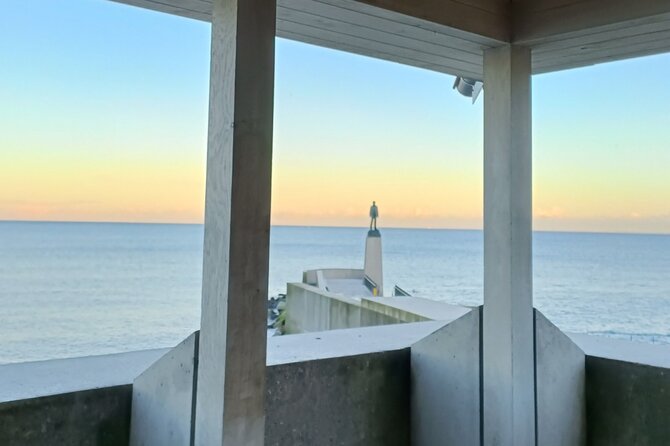
- East Pier Lighthouse viewpoints over Dublin Bay and toward the city
St Michael’s Church to Your First Stories on the East Pier
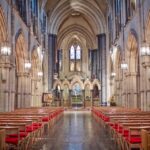
Start at St Michael’s Church on Marine Road in Dún Laoghaire. The church dates to the 1820s, and that early landmark works well as a mental reset: this isn’t just a seaside stroll, it’s a walk through how this town grew and changed.
You’ll also get an audio-guided sense of place fast. The tone of the tour is practical—enough context to understand what you’re seeing, not so much that you lose the walk to reading. If you like your history delivered while your legs do the traveling, this format fits.
Tip: if you’re prone to “I’ll start the audio later,” don’t. Hit play when you arrive so the nearby landmarks make sense immediately.
You can also read our reviews of more guided tours in Dublin



Pavilion Theatre and King George IV Monument: Old School Meets New Culture
Next up is a contrast that Dún Laoghaire does well: the modern Pavilion Theatre alongside monuments that look back toward empire and public life. Even if you’re not catching a show, it’s a useful stop because it shows the town isn’t stuck in the past. It keeps building cultural space while the coast remembers.
Then the route brings you to the King George IV Monument and the RMS Leinster Memorial area. These stops can feel like two different books—royal commemoration on one side, maritime tragedy on the other—but together they explain why the waterfront matters here. People didn’t just live near the sea; they depended on it, feared it, and remembered it.
Consider this shift as you walk: if you want photos, do them before the memorial tone gets heavy. It’s easier to switch gears at a calmer moment than mid-lesson.
The RMS Leinster Memorial: When the Walk Turns Serious
One of the most powerful parts of this stroll is how it uses the coastline as a setting for remembrance. The RMS Leinster Memorial marks the sinking of the ship during World War I, commemorating lives lost in one of Ireland’s deadliest maritime disasters.
You’re not required to do anything dramatic—no ceremonies are mentioned—but the audio framing helps you slow down. It also helps you understand why maritime memorials belong on the pier, not in a museum basement. The town lived with what happened on the water, and the waterfront is where that history stays visible.
Practical tip: if you’re visiting on a windy day, bring a layer. Your ears and your phone battery both do better when you’re not fighting the weather.
The Metals Promenade: Old Railway Track to a People Path
After the memorial mood, you move onto the route called the Metals—remnants of an old railway track turned into a promenade. This is one of those “only in a good city” transformations: industrial leftovers made usable for walking and lingering.
What I like here is the tour’s timing. It breaks up the heavier stops with something more stroll-friendly. You’ll get stories tied to how Dún Laoghaire evolved from fishing village to bustling port, and the walkway itself helps those changes feel physical.
If you’re thinking about pacing, this is the easiest segment to speed up a bit. It’s also a good place to grab a quick photo looking back or forward along the water.
Dún Laoghaire Pier to the East Pier Lighthouse: Big Views Pay Off
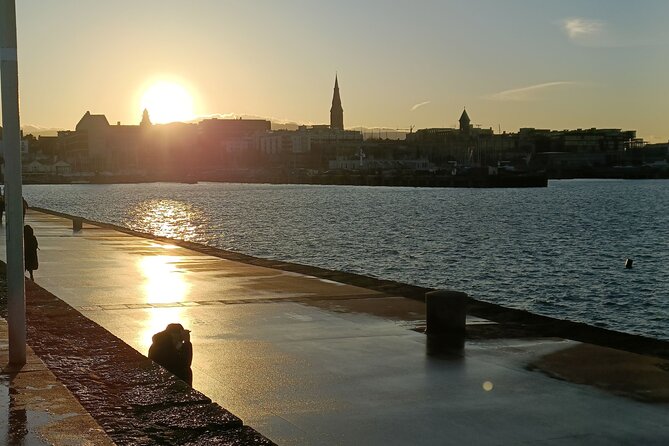
Now the walk opens up. You’ll continue along the Dún Laoghaire Pier toward the East Pier Lighthouse, and the payoff is panoramic views of Dublin Bay and the city.
The audio doesn’t just point at the view; it gives you context about the harbor’s construction and the role it played in shaping Ireland’s maritime story. That means your photos aren’t only pretty—they’re tied to why people built and expanded this harbor in the first place.
A tip that matters: choose your side of the pier based on wind. If one direction is gusty, shift to the calmer side rather than fighting it. Also, try to keep your phone screen dimmer when the sun hits; it’s easier to read audio instructions if you don’t have to squint.
You can also read our reviews of more tours and experiences in Dublin




Carlisle Pier, the Forgotten Irish Memorial, and Sea-Weary Architecture
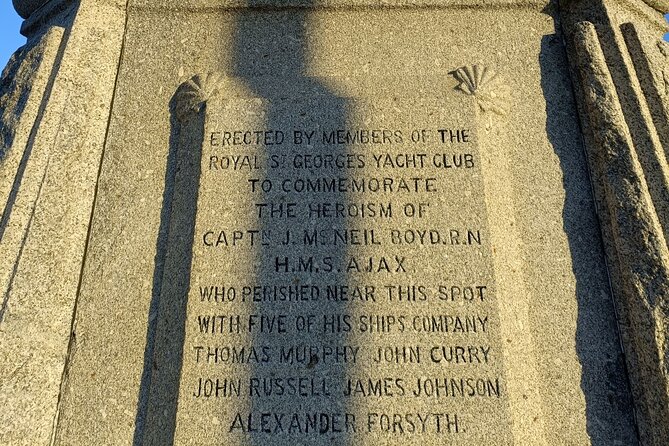
The route then connects you to Carlisle Pier, which dates back to the 1820s. Like St Michael’s Church, it’s an anchor point in time. You can look at this pier and feel how long maritime life has shaped Dún Laoghaire’s rhythm.
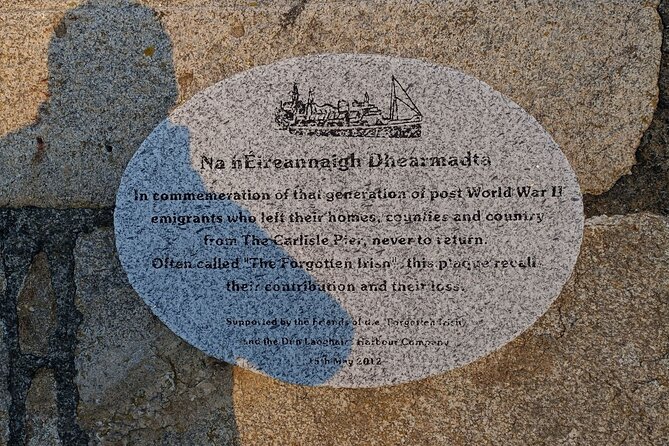
From there, the audio turns to the Forgotten Irish Memorial, honoring Irish emigrants and their resilience. The emphasis is on people who left home for new opportunities and faced the hard work of building lives far away.
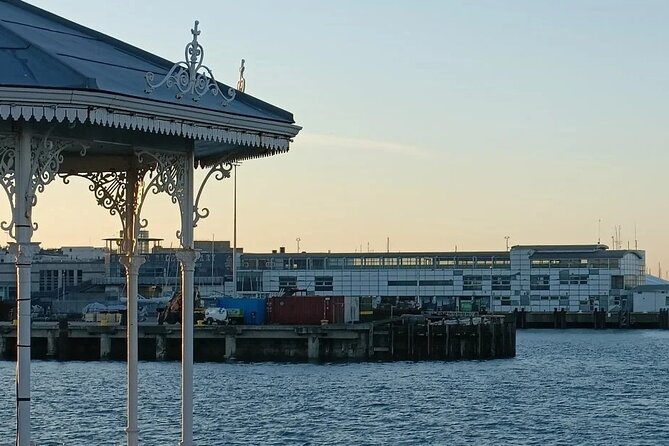
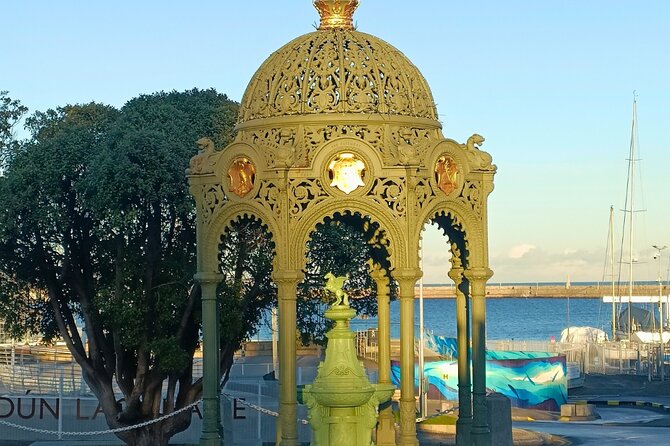
Then there’s another interesting design moment: the East Pier Bandstand Sun Shelter. It’s included for a reason—the architecture gives the pier a civic, almost theatrical feel, like the waterfront was built not only for trade, but also for gathering and public moments.
This is a great stretch if you want variety. You’ll move between sea views, commemorations, and built details without the walk turning into a single-note museum trip.
A Russian Cannon and a Crimean War Eagle Motif
One of the more unusual stops is the cannon connected with the Crimean War. The route calls out the eagle motif of the Romanov family and the story of a Russian cannon that ended up in Dublin.
This is the kind of detail that makes self-guided tours feel smarter than a generic sightseeing walk. It’s not just “look at the cannon.” You get a specific motif and a specific backstory, which makes it easier to notice what you’d otherwise miss.
If you’re the type who likes oddball history (the good kind), this is your moment. It also helps break the walking day into smaller “wins,” so you don’t feel like you’re waiting for the lighthouse at the end.
Roger Casement Statue: Closing on Irish Revolutionary Spirit
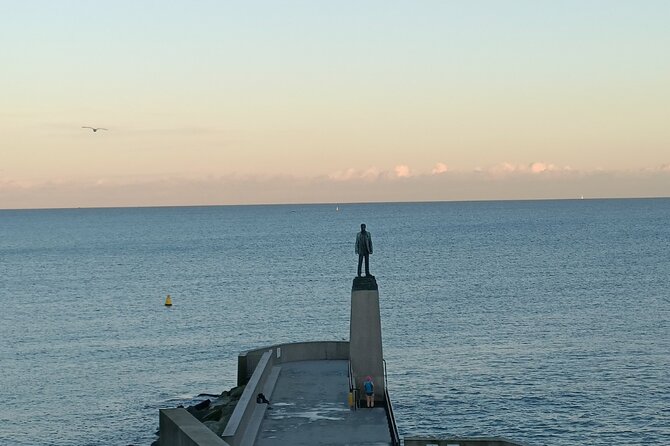
You’ll finish near the Roger Casement Statue, honoring the Irish Revolutionary. It’s a fitting end point for a route that moves from royal monuments to memorials to emigration stories and war losses. The theme is plain: Dún Laoghaire’s coast has witnessed big forces, and the town remembers them.
Once you’re done, you’ll be back at the meeting point area. This matters because it keeps the day simple. No transit shuffle to “get back to the start.” You can pair the walk with a meal in the area right after, while the sea air still feels fresh.
Using VoiceMap Well (So You Don’t Miss Anything)
This tour runs through the VoiceMap app on Android and iOS. You also get offline access to audio, maps, and geodata, which is the best kind of insurance in Ireland—service can be patchy near waterfronts.
You’ll want to plan around the equipment you bring:
- Your smartphone (required)
- Headphones (required)
- A charged battery (the usual common-sense move)
Because it’s offered in English and your time window is roughly 1 hour to 1 hour 15 minutes, I’d treat it like a planned block, not a “whenever” activity. If you start late or stop for long breaks, you’ll drift past the intended pacing.
Also note: it’s listed as open Monday through Sunday, 12:00 AM to 11:59 PM during the provided date range. So you’re not trapped into a midday-only schedule—just pick a time when the lighting feels right for the pier.
Price and Value: Why $8.99 Can Make Sense
At $8.99 per person, the price is low enough that you can justify it even if you’re already spending on other Dublin sights. The real value isn’t the discount; it’s what you get for that money.
You’re paying for:
- Lifetime access to the tour in English
- Offline VoiceMap audio + maps + geodata
- A guided route that strings together many different kinds of stops, from churches and monuments to memorials and seafront architecture
If you like structure but don’t want a bus or a group meeting time, this is the kind of deal that works. It’s also private in the sense that only your group participates, so you’re not sharing the “quiet moment” at a memorial with strangers nearby.
One more practical point: since transportation and food aren’t included, plan a simple meal afterward and use the tour as your paid “experience core.” That’s how the math tends to feel best.
Who This Walk Is For (and Who Might Want Something Else)
This stroll is a strong fit for you if you:
- Like walking at your own speed
- Want history tied to real places along the coast
- Enjoy memorials and monuments as part of understanding a town, not as background scenery
It’s also a good choice if you’re traveling light and want something you can do at almost any hour, as long as you have a phone and headphones.
If you hate audio tours and you prefer guided lectures with a live guide, you may find this approach less satisfying. The experience relies on you pressing play at the right moments.
Should You Book This East Pier Stroll?
Yes, if you want an easy, one-hour experience that gives you meaning behind what you’re seeing. The best reasons to book are offline VoiceMap access, the tight route that links several major sites, and the mix of viewpoints with commemoration stops that actually change your mood as you walk.
Skip it only if you’re determined to do Dún Laoghaire with no phone-based guidance at all. Otherwise, for the price, it’s a smart way to turn a pier walk into a story you can replay anytime.
FAQ
How long does the self-guided East Pier walk take?
The route is listed as about 1 hour to 1 hour 15 minutes.
Where do I start and where does it end?
You start at St Michael’s Church on Marine Road, Dún Laoghaire. The activity ends back at the meeting point.
What does it cost?
It’s priced at $8.99 per person.
Is it available only in person with a guide?
No. It’s a self-guided experience using the VoiceMap app.
What do I need to bring?
You need your smartphone and headphones. Transportation and food/drink are not included.
Can I use it without cell service?
Yes. Offline access to audio, maps, and geodata is included.
What language is the tour offered in?
The tour is offered in English.
What about accessibility for service animals?
Service animals are allowed.
Is it refundable?
No. The experience is non-refundable and cannot be changed for any reason.
Is it open every day?
It’s listed as open Monday through Sunday from 12:00 AM to 11:59 PM during the provided date range.