REVIEW · DUBLIN
Dublin Ghost Hunt Exploration Game and Tour
Book on Viator →Operated by Questo · Bookable on Viator
Ghosts and puzzles make Dublin feel different. This self-paced, private walking game gamifies classic sights with audio narration and short clue challenges, all while you can start and pause when you want. One thing to keep in mind: some spot access can be tricky later in the day, and the app can be picky about exact answers.
I like that it’s built for real life. You’re not stuck with a rigid group schedule, and you’re moving through places you’d otherwise skim past on a typical stroll. If you care about stories—Vikings, revolutions, and darker church lore—this format turns them into something you actively hunt for, not just read once.
Also, it’s cheap enough that it works as a smart time-filler. The downside is the experience depends on your phone and the app doing its job, so bring a charged battery and expect you may need a little patience.
In This Review
- Key things I’d focus on before you go
- First impressions: what a Dublin ghost-hunt game feels like
- National Museum of Ireland (Archaeology): the Bog Men and Viking gold
- Theobald Wolfe Tone statue: Irish republicanism with a mystery twist
- St. Ann’s Church: Oscar Wilde and Bram Stoker, plus a darker story
- Olympia Theatre: David Bowie-like fantasy and theatre mystery
- Dublin City Hall: Georgian architecture and a hidden Viking message
- River Liffey finale: the last piece near the city’s heartbeat
- How the private, flexible format changes the experience
- Price and value: why $6.01 per person can work
- Using the app without getting frustrated
- Night walking: fun option, but plan smart
- Who should book this Dublin ghost hunt game
- The fine print you should not ignore
- Should you book this Dublin Ghost Hunt Exploration Game?
- FAQ
- How long is the Dublin Ghost Hunt Exploration Game and Tour?
- Where does the experience start and end?
- Is this a private tour?
- Can I choose my start time and take breaks?
- What’s included with the experience?
- Is there a physical tour guide with you?
- What if I’m traveling in a group larger than 15 people?
- Do kids get free entry?
- How does the cancellation work?
- Is it offered in English?
Key things I’d focus on before you go
- Totally private route: only your group, no joining other people and no waiting on stragglers
- Audio-driven clues: the narration keeps you moving and gives context at each stop
- Self-paced by design: start when you want, take breaks, then resume later without rescheduling
- Six major Dublin landmarks: museum, Wolfe Tone statue, St. Ann’s Church, Olympia Theatre, City Hall, and the River Liffey
- Worth it for the price: it’s built to feel like a “game,” not just another walking tour
First impressions: what a Dublin ghost-hunt game feels like
This is a walking experience in Dublin that acts like an exploration game. You follow a location-based story, hear audio prompts, and answer clue questions as you move from one famous spot to the next.
The big practical win is how low-pressure it feels. You’re not shepherded. If you want to linger at a doorway, step aside to read a plaque, or take a breather, you can. That makes it a good match for travelers who want structure without being stuck in someone else’s pace.
The “ghost hunt” part is really about mixing atmosphere with history. You’ll get classic city stops, but each one comes with a mystery angle—like a warning about bog dangers, a revolutionary death story, or a darker church tale. That blend is why it can feel more fun than a standard walk.
You can also read our reviews of more tours and experiences in Dublin



National Museum of Ireland (Archaeology): the Bog Men and Viking gold

Your route begins at the National Museum of Ireland, Archaeology branch on Kildare Street (35A Kildare St). This is a strong start because it sets the tone fast.
The storyline pulls you through time—Stone Age to Late Middle Ages—and points you toward real exhibits. You’ll encounter references to gold treasures, Viking exhibits, and the eerie history of the Bog Men. Even if you only catch a slice of what the museum holds, the game uses it like a living prologue: you’re given a cautionary tip and a question that nudges you to look around instead of just walking on.
A small consideration: museums can have internal flow and security rules, so don’t assume every corner is viewable at all times. But as a first stop, this works well because you’re not guessing where to begin—you’re starting at a landmark where the story makes immediate sense.
Theobald Wolfe Tone statue: Irish republicanism with a mystery twist

Next you’ll head to the Theobald Wolfe Tone statue. This stop isn’t just about a person carved in bronze. The game connects Tone to the Irish republican movement and turns his story into a mini investigation.
You’re asked to consider him as a founding father of Irish republicanism. The key historical thread is tied to 1791, when Tone and others formed the Society of United Irishmen—a revolutionary movement aiming to overthrow British rule in Ireland and open the door to independence. Then the story pivots to his capture by British forces and a death described as mysterious.
What I like about this stop is the way it makes you “look again” at a familiar public monument. Instead of treating the statue as scenery, you’re trying to piece together what you’re meant to notice and how it relates to the clue.
Practical tip: statues and monuments are usually easy to approach, but make sure you step back and read what you’re meant to see. Clue questions tend to reward the exact angle or detail the prompt is hinting at.
St. Ann’s Church: Oscar Wilde and Bram Stoker, plus a darker story

Your next checkpoint is St. Ann’s Church, right in the heart of Dublin. This one adds literary Dublin to the mix, and it’s a nice shift in mood after the revolutionary tone.
The game ties St. Ann’s to major figures in Irish literary life. It references Oscar Wilde and Bram Stoker—not as ghosts, but through the kinds of life events churches are linked with, like baptisms and marriages. Then the story line pushes you toward the “darker” side of the site: each place has a secret angle, and here it’s presented as a clue you’ll need to decode.
Why this works well: it gives you a reason to slow down at religious architecture. You’re not just admiring stonework. You’re actively searching for the part of the story that matches the clue.
Possible drawback: depending on when you play, churches may have limited opening access or controlled entry areas. If doors are shut, you may need to rely on what you can see from outside. That doesn’t automatically break the game, but it can make clues harder if the prompt assumes you can view a specific spot.
Olympia Theatre: David Bowie-like fantasy and theatre mystery
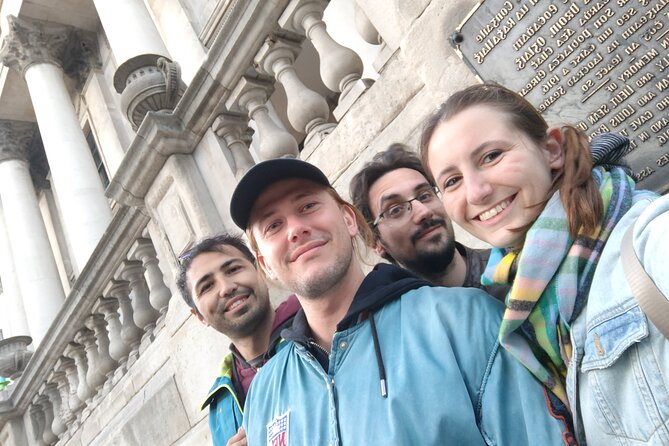
After prayer and pondering, the route moves to Olympia Theatre. This is where the game leans into imagination and performance energy.
The narration plays with visual associations: you might look at the theatre and get a Bowie-type concert vibe, or it could prompt a Charlie Chaplin-style cinematic connection. The core task is the same—find the missing clue tied to the venue’s mystery and move on.
This stop is fun because it’s not overly solemn. It brings a “what if” layer to Dublin landmarks. Even if you don’t know everything about the theatre’s past, the clue prompts should keep you engaged.
One more practical note: theatres can have busy schedules, signage, and viewing angles. Keep your eyes on the instruction in the app and be ready to answer based on what’s visible where you’re standing.






Dublin City Hall: Georgian architecture and a hidden Viking message
From Olympia, you head to Dublin City Hall on Parliament Street. This is a Georgian landmark, and the game connects it to the bigger sweep of Dublin’s story.
You’ll be pointed toward an interactive multimedia exhibition inside, framed as a way to understand the city’s timeline—starting with early Viking arrival and stretching to the present. Then comes the playful part: the app pushes you to check around because the Vikings may have left a hidden message.
What I like here is the blend of style and content. City Hall is visually impressive on its own. When the game nudges you toward a Viking-related clue, it makes the building feel like a puzzle box instead of just a formal facade.
If you’re the kind of traveler who enjoys architecture details—windows, street-level markings, and the way buildings are laid out—this stop is a good fit. It encourages you to notice instead of pass by.
River Liffey finale: the last piece near the city’s heartbeat

Your walk finishes near the River Liffey. The Liffey runs through the center of Dublin and acts like a divider between North and South, so it’s naturally a strong place to end a city exploration.
The game frames this as your “become a Dubliner” moment: you’ll either cruise the river or walk alongside its banks. And like all the best endings to mystery walks, the challenge isn’t far away—it’s presented as being right next to you, not at some impossible distance.
This is also a good ending because the environment can help you reset. Even if the clues were intense, you’re now in a more open, scenic zone where it’s easier to think through the final question.
Practical tip: decide ahead of time what route you’ll take after you finish. The end point is at 20 Bridge St. Lower, Usher’s Quay, so map the walk to your hotel or next stop while you still have daylight energy.
How the private, flexible format changes the experience
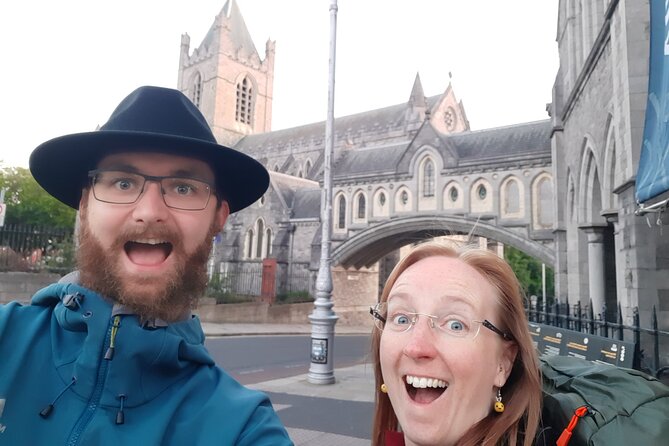
Most walking tours force you into one rhythm. This one doesn’t. You can start at any hour, take breaks, and resume later without needing a new appointment.
That matters because Dublin is full of distractions that are hard to resist: a pub that looks warmer than your plans, a side street with photo potential, or a quiet corner where you want to read slowly. This game format lets you give in to those moments without worrying you’re falling behind.
It also helps if you’re traveling with mixed energy levels. One person might want to keep moving; another might want to pause often. With a self-paced story, you can match the pace to the group.
And because it’s totally private, you avoid the common walking-tour problem: the group that’s always late. It’s just your group, your phones, and the street.
Price and value: why $6.01 per person can work
At $6.01 per person, this is priced like a low-risk adventure. The value comes from what you’re buying: not a long lecture, but an interactive format that turns paid time into a game you can actually finish.
A few things make the price feel reasonable:
- Audio stories reduce the need for a live guide
- Mobile ticket keeps it simple once you’re on your route
- Group discounts are offered
- Kids are free, which can be a big deal for families
- The duration is about 1 hour 30 minutes, which makes it easy to fit into a travel day
One thing to be honest about: the experience is only as smooth as your device and app. If the app stalls, or if answers don’t accept what you enter, you might lose momentum. Still, at this price point, it’s a fun gamble—especially if you’re comfortable using your phone as part of the sightseeing.
Using the app without getting frustrated
This experience is designed to be played using the app. There is no physical tour guide included, so the phone is your guide, audio player, and clue book in one.
That has two sides.
On the good side, the app helps you keep moving. Audio narration and clue questions can make it feel like you’re in a guided story without waiting for anyone.
On the tricky side, app-based games can be strict. Some people have had issues with answers needing exact formatting, including capitalization or spaces, and there have also been problems reported with app behavior when using multiple phones (like progress not saving as expected). I can’t tell you how your phone will behave, but I can tell you how to protect the experience:
- bring a fully charged battery
- keep one phone as the main device when possible
- if you see a clue, take your time before submitting an answer
If you’re playing late in the day, you might run into locked doors at some spots. That can make clue viewing harder. If your goal is maximum ease, plan to start earlier rather than at the end of the day.
Night walking: fun option, but plan smart
Dublin at night can be excellent for this kind of game. The streets feel atmospheric, monuments look dramatic, and you can naturally build in pub breaks if you want.
But night adds real-world concerns. You’re relying on phone light and situational awareness, so I recommend sticking to a sensible route back to your accommodation. One good habit: plan the post-finish walk using main roads rather than cutting through unknown back lanes.
Also, if you’re visiting with anyone who gets cold easily, Dublin nights can shift quickly. Dress like you’ll be standing around in a few key spots longer than you think.
Who should book this Dublin ghost hunt game
This is a great match if you:
- want a private way to explore without joining a crowd
- like history when it’s delivered through puzzles, not slides
- enjoy night walking (and you’re comfortable navigating on your own)
- have a group that wants to do something different from the usual guided tour
It’s also a smart choice for couples and friends who want a shared challenge. The app format gives you something to talk about: what clue means, why a location matters, and how you’re progressing.
If you’re traveling with younger kids, note that kids are free. Still, keep in mind it’s a walking game, so plan breaks and pace yourself.
The fine print you should not ignore
A few logistical details can shape your experience:
- The route starts at the National Museum of Ireland on Kildare Street and ends at a bridge-area spot near Usher’s Quay.
- It’s offered in English.
- It can be played at any time after booking without rescheduling.
- It’s near public transportation, which is useful if you need a quick reset.
- If your group is larger than 15, you’ll need multiple bookings rather than one mega-group entry.
Should you book this Dublin Ghost Hunt Exploration Game?
I’d book it if you want Dublin sightseeing that feels like an actual activity. The private setup, the audio narration, and the mix of museum-and-monument stops make it a strong value at $6.01 per person. It’s also a flexible option when your day has loose edges and you want control over timing.
Skip it or approach with caution if you hate app-based experiences, don’t like exact answer entry, or you plan to play late when some locations might be shut. If you can start earlier and you’re comfortable solving clue questions with your phone, you’ll likely find it a fun, memorable way to see Dublin in about 90 minutes.
If your goal is classic Dublin in a new wrapper—this is a solid choice.
FAQ
How long is the Dublin Ghost Hunt Exploration Game and Tour?
It runs for about 1 hour 30 minutes (approx.). Plan for a little extra time if you stop to read or take breaks.
Where does the experience start and end?
It starts at National Museum of Ireland, Archaeology branch (35A Kildare St, Dublin 2, D02 YK38). It ends at 20 Bridge St. Lower, Usher’s Quay, Dublin 8 (D08 WC64).
Is this a private tour?
Yes. This is listed as a private tour/activity, meaning only your group participates.
Can I choose my start time and take breaks?
Yes. You get full flexibility: you can start at any hour, take a break, and resume later. You can also play it anytime after booking without rescheduling.
What’s included with the experience?
Included features are audio stories and a mobile ticket, with free entry for kids. The experience is designed to be played in English.
Is there a physical tour guide with you?
No. The experience does not include a physical tour guide.
What if I’m traveling in a group larger than 15 people?
If your group is larger than 15, the guidance is to make multiple bookings.
Do kids get free entry?
Yes. The experience is free for kids.
How does the cancellation work?
You can cancel for a full refund if you cancel at least 24 hours before the experience’s start time. If you cancel less than 24 hours before, the amount paid won’t be refunded.
Is it offered in English?
Yes. The experience is offered in English.