REVIEW · DUBLIN
Dublin: Guided Delicious Donut Tour with Tastings
Book on GetYourGuide →Operated by Underground Donut Tour · Bookable on GetYourGuide
Dublin tastes better with a map. This guided doughnut tour turns St. Stephen’s Green, Temple Bar, and the River Liffey into a sweet little route with tastings and stories. You get the smell of coffee and fresh fried dough at each stop, plus a guided walk that helps the city make sense fast.
I especially like the way the tour starts at The Rolling Donut, one of Dublin’s original doughnut shops. The first bites set the tone, and the guide then layers in local neighborhood context as you move.
One thing to think about: at $70 for two hours, it’s a splurge compared with buying a single box of pastries on your own. If you’re not a serious sweet-tooth, you may feel the price more than you do the variety.
In This Review
- Key highlights you’ll actually feel
- How the St. Stephen’s Green to Temple Bar route works in real life
- Stop 1: The Rolling Donut for first bites and neighborhood context
- Grafton Street and Molly Malone: the city story behind the selfie spot
- Stop 2: Irish churros in Dublin, and why that twist works
- Temple Bar donut tasting: smell first, then flavor comparisons
- River Liffey finish at Offbeat Donuts: the walk’s payoff
- Price and value: what $70 buys beyond doughnuts
- The guide makes or breaks it: Erin, Karen, Aaron, and company
- What to eat and how to pace your appetite
- Who this tour suits (and who might want something different)
- Practical notes so the walk stays fun
- FAQ
- FAQ
- Where does the Dublin donut tour start?
- How long is the tour?
- How many shops will we stop at?
- What tastings are included?
- What languages are the guides?
- Do I need to bring identification?
- Is alcohol allowed during the tour?
- Is the tour wheelchair accessible?
- Should you book this Dublin Delicious Donut Tour with Tastings?
Key highlights you’ll actually feel
- Four tasting stops near St. Stephen’s Green and Temple Bar, ending back near where you started
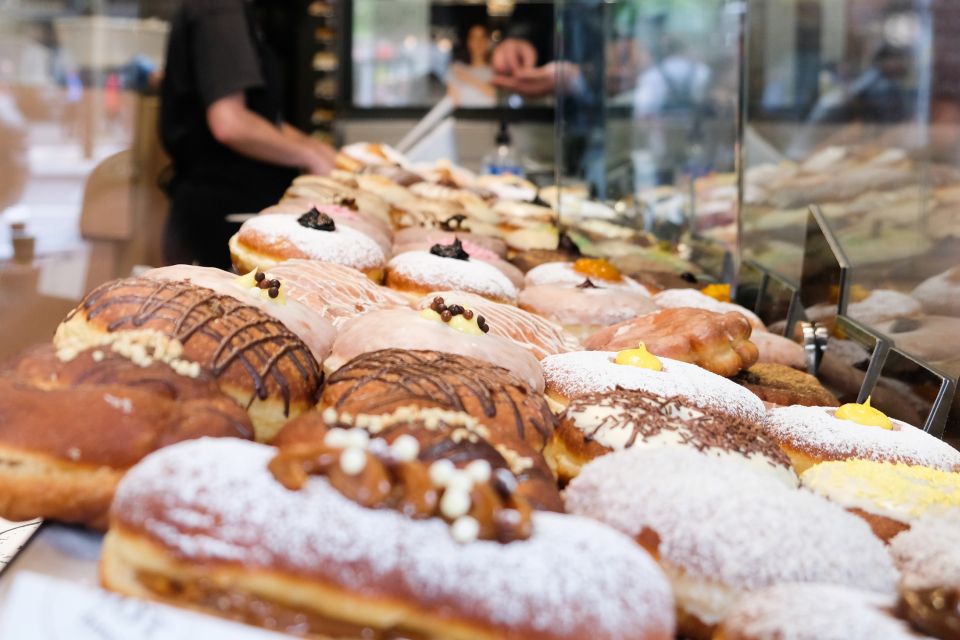
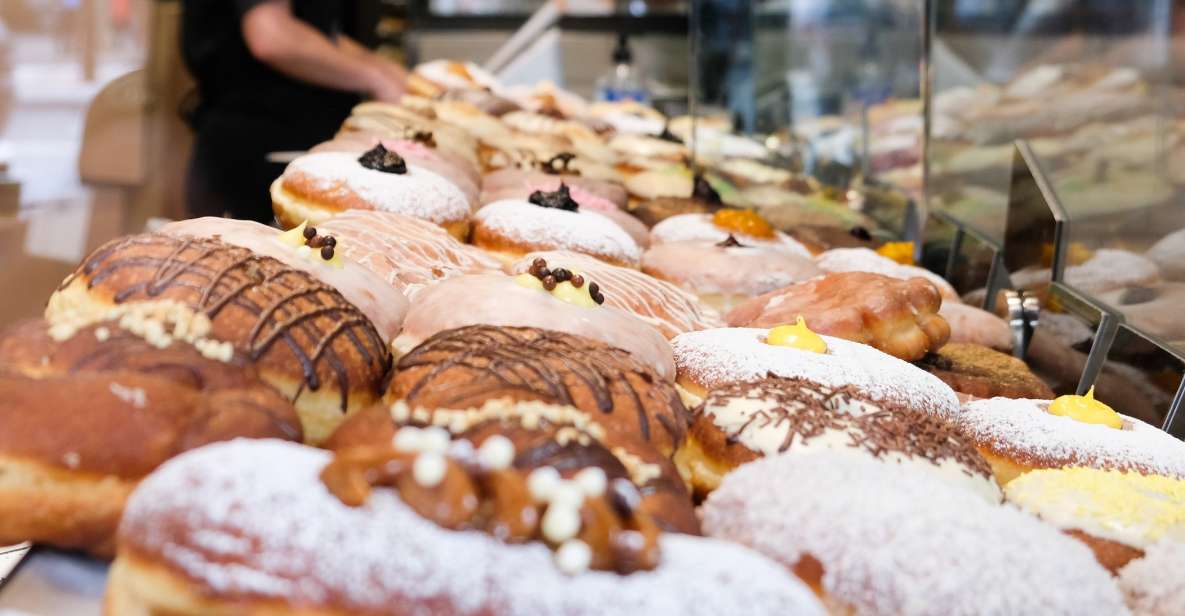
- Old-meets-new donuts: classic glazed and chocolate styles plus other rotating flavors
- Unexpected Irish churros at the second stop, which keeps the tour from feeling repetitive
- Temple Bar pacing: a reminder to slow down so you can enjoy the last tastings
- River Liffey finish at Offbeat Donuts, with scenery along the water
How the St. Stephen’s Green to Temple Bar route works in real life
This tour is built for a tight schedule. In about two hours, you walk through some of central Dublin’s most recognizable areas while tasting at four bakeries/doughnut shops. It’s not a sit-and-eat class; it’s a moving snack tour with short story stops that help you connect the food to the streets.
The meeting point is near St. Stephen’s Green at The Rolling Donut, and the tour ends back at that same spot. That loop matters because you aren’t left figuring out where you are after dessert.
You can also read our reviews of more guided tours in Dublin



Stop 1: The Rolling Donut for first bites and neighborhood context
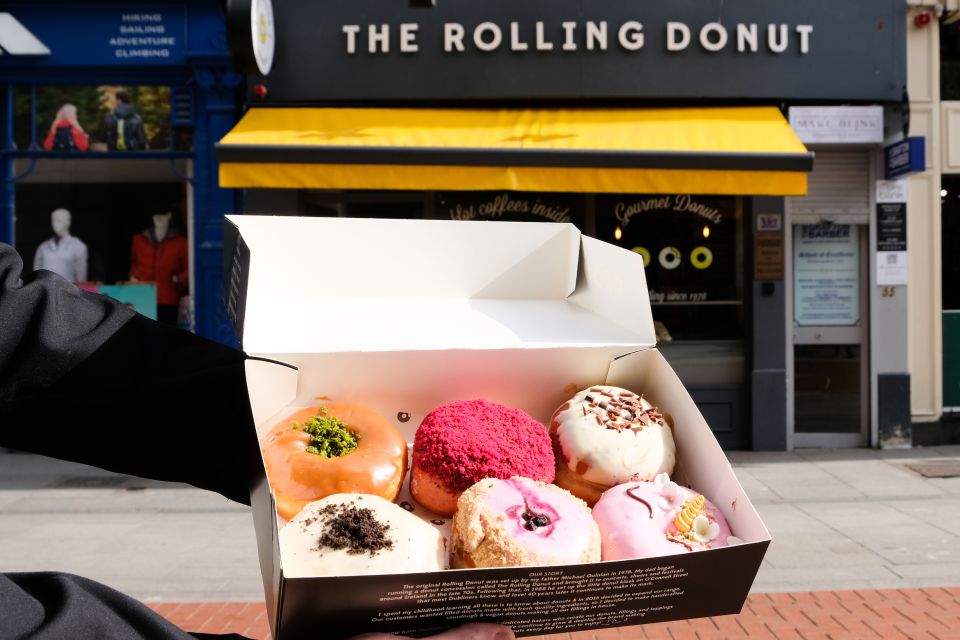
Your tour kicks off at The Rolling Donut, and it’s a smart choice. Starting with a shop that’s been around gives you an immediate sense of what Dublin’s doughnut scene looks like when it isn’t just trending.
Here, you’ll sample signature flavors and classic styles like glazed and chocolate. The guide also uses this first stop to talk about the local neighborhood around St. Stephen’s Green, which sets you up for the rest of the walk.
If you’re sensitive to crowds or you prefer an easier start, this is the place you’ll be happiest arriving hungry. Your first tastings are your baseline, so later comparisons make more sense.
Grafton Street and Molly Malone: the city story behind the selfie spot
After The Rolling Donut, you head toward Grafton Street on the way to Molly Malone. The guide isn’t just pointing out a famous figure; the point is how she connects to Dublin’s cultural memory.
Why this matters on a food tour: it’s one of the quickest ways to add meaning to a neighborhood. Even if you’ve seen photos of Molly Malone before, you’ll get a clearer sense of why she shows up in Dublin storytelling again and again.
This is also where the tour shifts from pure tasting to “walking with purpose.” It keeps the route from feeling like four random donut shops lined up on a map.
Stop 2: Irish churros in Dublin, and why that twist works

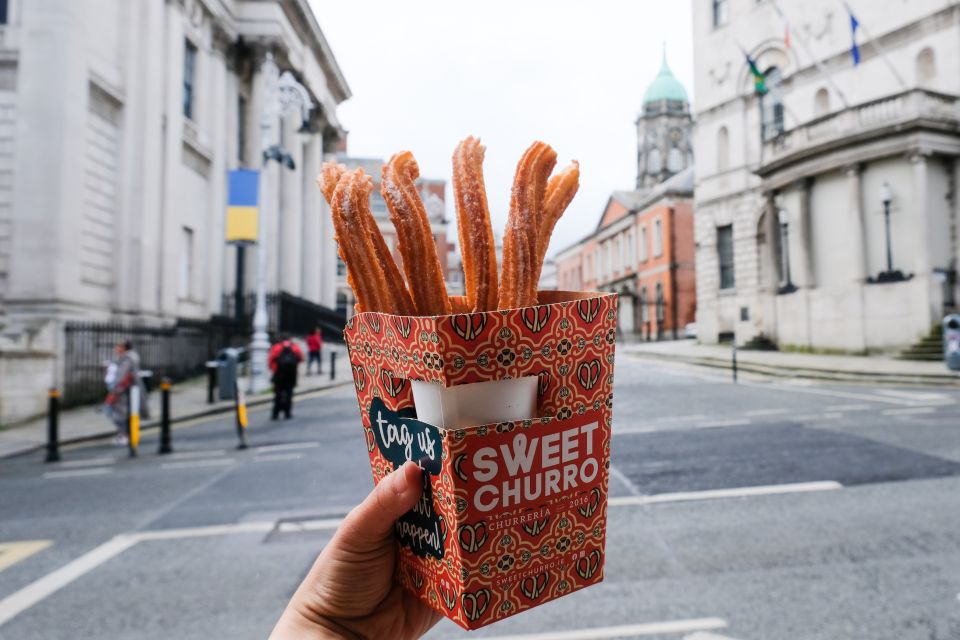
The second tasting stop includes traditional Irish churros. That sounds like a contrast on paper, but it works on the ground because it’s still part of the same comfort-food category as doughnuts.
You’ll find that this stop changes the rhythm of the tour. Instead of only comparing donut textures, you get another fried dough experience with its own flavor and bite. And because the churros are a surprise for many people, the tour stays fresh instead of turning into a repeat of the same sweet.
You’ll want to pace yourself here. This tour doesn’t list exact portions, but it’s clearly designed so you keep going and still enjoy the final two stops.
Temple Bar donut tasting: smell first, then flavor comparisons
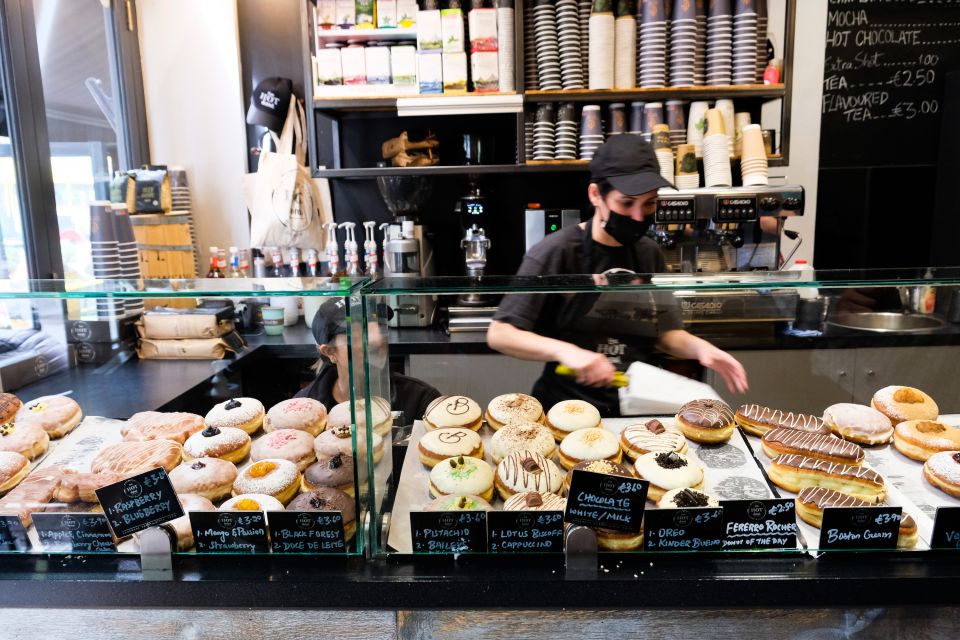
Walking through Temple Bar, you’ll reach the third stop: one of the best doughnut shops you’ll visit during the tour. This is where the variety becomes the main event. You’ll likely see more than one style, including the classic glazed and chocolate ideas, plus other flavors the shops are known for.
This is also the point where the guide’s pacing matters. The itinerary specifically encourages you to pace yourself, because you still have one last stop after Temple Bar and the River Liffey.
If you like comparing flavors, this is the sweet spot. The tour is set up so each stop gives you a new data point, and Temple Bar is where those comparisons start to feel obvious.






River Liffey finish at Offbeat Donuts: the walk’s payoff
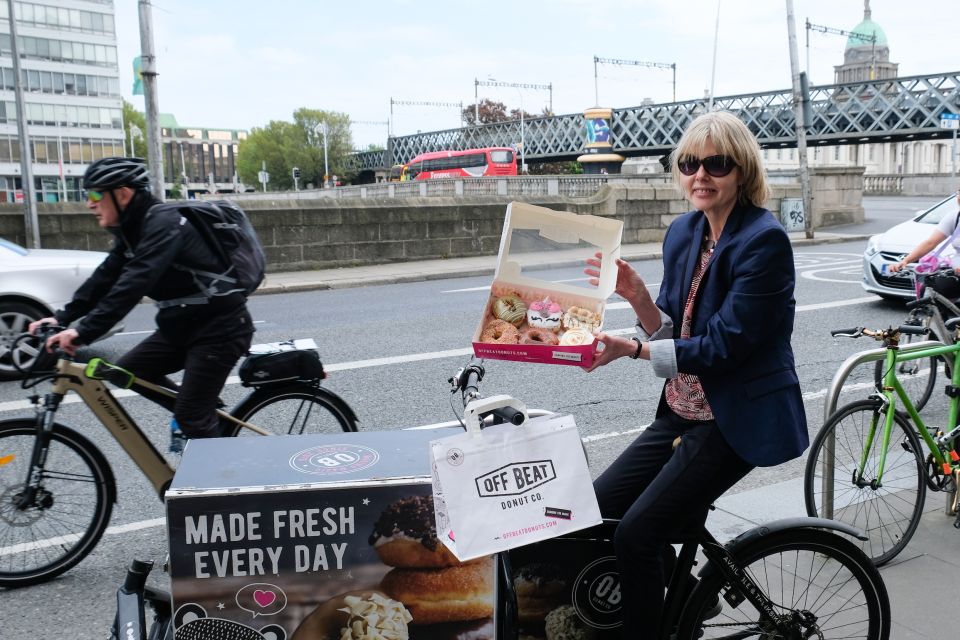
After Temple Bar, you cross the River Liffey and take in the riverside scenery along the way. This is more than a scenic break. It turns the tour from “just dessert” into a quick orientation walk across the middle of the city.
Your last stop is at Offbeat Donuts. The finish matters because it gives you a final tasting that feels like a reward for getting through the earlier sweetness without rushing.
By the time you’re near the end, you’re usually more aware of what you like: lighter vs. richer dough, sweeter vs. less sweet glazes, and which flavors actually work together with coffee.
Price and value: what $70 buys beyond doughnuts

$70 per person is not the cheapest way to eat sugar in Dublin. The positive side is that you’re paying for a guided walking route plus multiple tastings across four stops, not just one pastry and a loose route you could replicate.
Two hours is short enough to fit into a busy day, and the itinerary covers three big Dublin zones: St. Stephen’s Green, Temple Bar, and the River Liffey. That combination is part of the value. You’re not only sampling doughnuts; you’re also getting a “where am I and why is it here” feel for the streets.
The downside is also clear from real-world expectations: people who want cheap dessert will feel this as pricey. If you’re comparing to self-guided browsing, it costs more. If you like guided context and a planned tasting route, it starts to feel fair.
The guide makes or breaks it: Erin, Karen, Aaron, and company
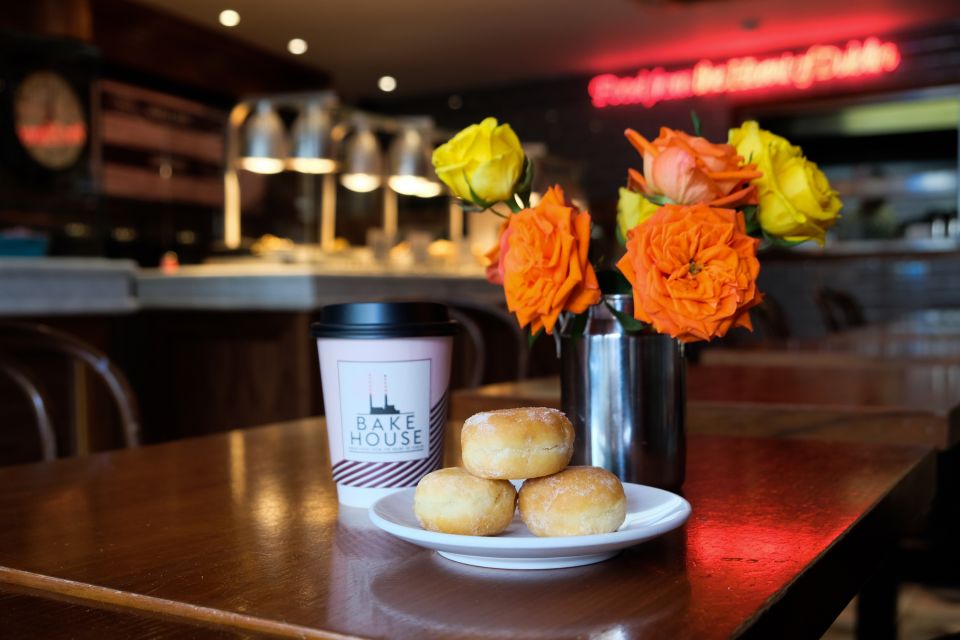
This tour lives on the guide. The most consistently praised part is how friendly and clear the storytelling feels, with humor and solid Dublin facts folded in as you walk.
Guides you may hear named include Erin, Karen, Aaron, Angie, and Angelica. A standout pattern from the experience is that the guide doesn’t treat the history as homework. They keep it conversational, and they mix in details that make landmarks feel connected.
If you’re traveling solo, there’s also often a bonus here. One-person tours tend to get more personal attention, like help taking photos, and more time for questions. That matters because you’re learning while you’re walking, not waiting at a museum bench.
The only hiccup you might encounter: sometimes there can be extra voices involved, and a bit of off-tour chatter can distract during the walk. If you’re the type who wants quiet, you may find that annoying.
What to eat and how to pace your appetite
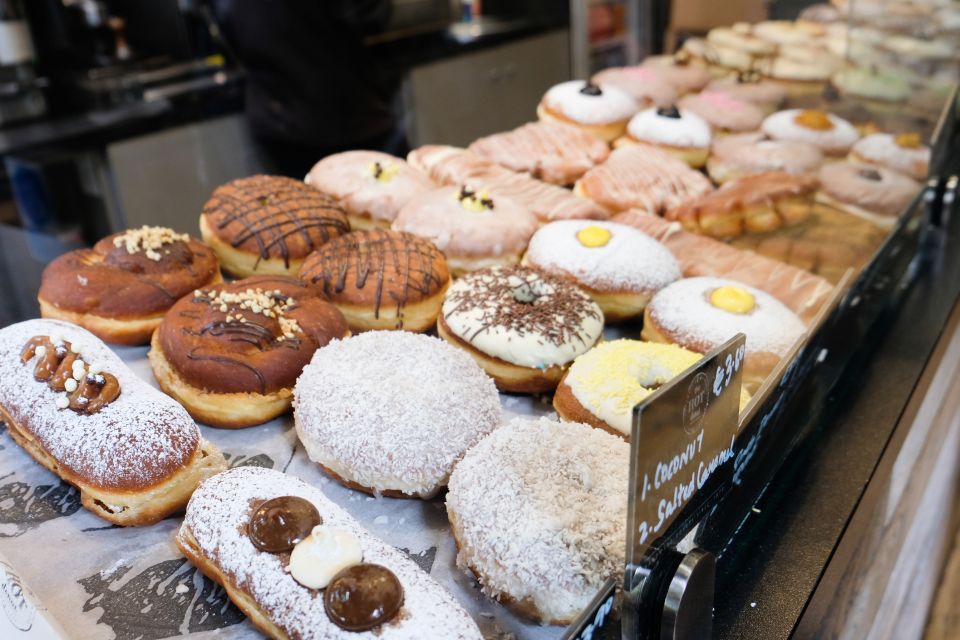
This is a pacing tour, whether you realize it or not. You’re trying multiple styles across four stops, plus churros, and the overall flow strongly suggests you’ll keep eating through the end.
Here’s how I’d handle it:
- Eat slowly and take sips between bites, since donuts can get heavy fast.
- Expect variety: some flavors will be classics, others will be seasonal or house specialties.
- If churros are not your thing, take smaller bites there and save your focus for the donut styles you like best.
One more practical angle: coffee is part of the tour vibe. You’ll likely get that classic coffee-and-doughnuts pairing feel that Dublin is good at, and it helps reset your taste buds for the next shop.
Who this tour suits (and who might want something different)
This works best for you if:
- You want a short, guided walking experience instead of a long museum day
- You like dessert enough to enjoy more than one stop
- You enjoy quick Dublin history tied to places you can actually see
It may not be the best match if:
- You need fully accessible route details for mobility constraints. The activity is listed as wheelchair accessible in one place, but it’s also noted as not suitable for people with mobility impairments. If this affects you, it’s worth checking directly with the operator before booking.
- You hate crowds or prefer silent sightseeing. Temple Bar is central and lively, and the tour keeps moving.
Also, this is a good choice for a first visit to Dublin. You get a guided path through recognizable central areas without spending your whole day commuting or hunting for your next stop.
Practical notes so the walk stays fun
Bring passport or ID card. That’s explicitly required.
Plan your timing: it’s 2 hours, so wear walking shoes you’re comfortable in. You’ll be on your feet moving from stop to stop around central Dublin.
Also keep a few safety rules in mind. The tour doesn’t allow alcohol and drugs, and it bans weapons or sharp objects as well as fireworks/explosive substances. That’s standard for guided city activities, but it’s good to know.
Languages are English and Spanish, so it’s a friendly option if you want a guided experience without struggling through a language barrier.
FAQ
FAQ
Where does the Dublin donut tour start?
It starts near St. Stephen’s Green at The Rolling Donut.
How long is the tour?
The tour is 2 hours.
How many shops will we stop at?
The experience includes tastings at four bakeries/doughnut shops near St. Stephen’s Green and Temple Bar.
What tastings are included?
You’ll have a curated doughnut tasting and also try traditional Irish churros, with coffee mentioned as part of the sweet-and-coffee experience.
What languages are the guides?
The live tour guide speaks Spanish and English.
Do I need to bring identification?
Yes. You should bring a passport or ID card.
Is alcohol allowed during the tour?
No. Alcohol and drugs are not allowed during the activity.
Is the tour wheelchair accessible?
The activity is listed as wheelchair accessible, but it’s also noted as not suitable for people with mobility impairments, so it’s smart to confirm fit before booking if you have mobility needs.
Should you book this Dublin Delicious Donut Tour with Tastings?
If you want a guided way to eat your way through central Dublin, I’d book it. The best part is the mix: four tasting stops plus a walk that links St. Stephen’s Green, Temple Bar, and the River Liffey to Dublin stories. You’re paying for convenience and guidance, not just sugar.
Skip it only if you’re hoping for the cheapest dessert in town or you’re worried about mobility fit. If that doesn’t apply, this is a fun, memorable way to see Dublin with your stomach and your eyes working together.