REVIEW · DUBLIN
From Dublin: Blarney, Rock of Cashel and Cahir Castles Tour
Book on GetYourGuide →Operated by EI Travel Group · Bookable on GetYourGuide
Castles, stone, and a long bus day. This tour strings together Rock of Cashel and Cahir Castle with the Blarney Stone in about 12 hours, so you get Ireland’s biggest icons without juggling rentals. I like the air-conditioned coach with USB charging, and I love having a driver-guide who explains what you’re seeing so each stop feels connected instead of random.
The biggest catch is physical: steep steps at Blarney Castle can be tough, and the tour is not suitable for wheelchair users.
In This Review
- Key highlights you’ll actually feel on the day
- Dublin to County Tipperary: the ride that turns into a real day
- Rock of Cashel: medieval buildings on a hill, and time to take it in
- Blarney Castle and the Blarney Stone: gardens, the Wishing Steps, and real stairs
- Cahir Castle on the River Suir: a defensive fortress you can still feel
- Timing, pacing, and the reality of a 12-hour day
- Price and value: what the $96 buys you in real terms
- Should you book this Dublin day trip to Blarney, Rock of Cashel, and Cahir?
- FAQ
- Where is the tour meeting point in Dublin?
- How long is the tour from start to finish?
- What are the main stops on this tour?
- What’s included in the price?
- Is lunch included?
- Is this tour suitable for wheelchair users?
Key highlights you’ll actually feel on the day
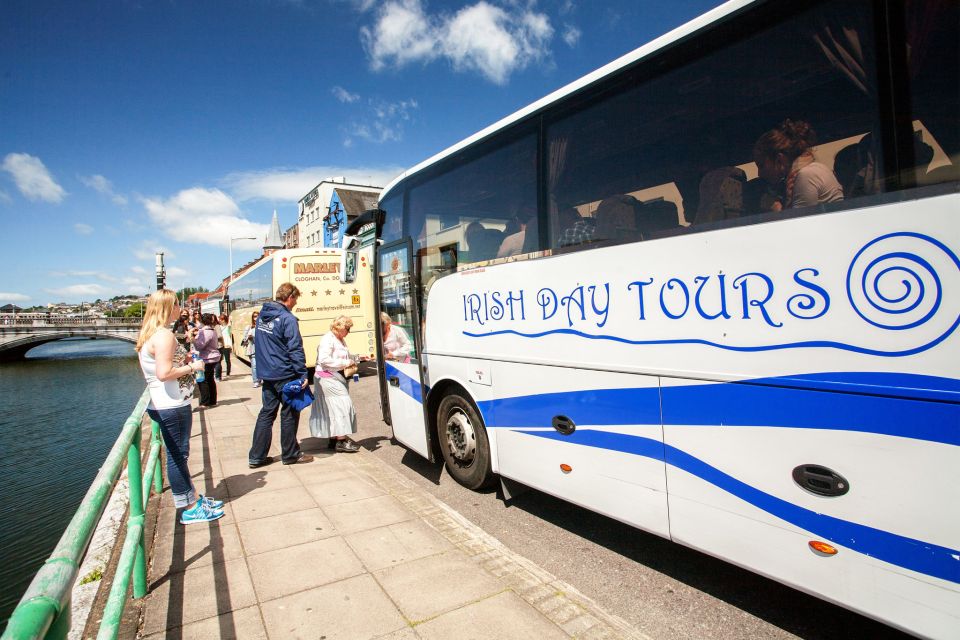
- Air-conditioned coach with USB ports for a long Dublin-to-Tipperary ride
- Guided time at Rock of Cashel and Cahir Castle so the medieval sites make sense
- Two full hours at Blarney Castle for kissing the Stone, gardens, and lunch on your own
- Cahir Castle’s dramatic setting on the River Suir plus a guided tour with audiovisual support
- Charging built into your seats helps you keep phones ready for photos
- A tight-but-not-rushed route that fits a big history day into one day away from Dublin
Dublin to County Tipperary: the ride that turns into a real day
The day starts at the Molly Malone statue outside the old stone church on Suffolk Street (Dublin 2). Plan to arrive about 10 minutes early so you’re not sprinting for the departure. Once you’re on board, you get a comfortable, air-conditioned coach with USB ports—a small thing that matters when you’re taking photos, checking maps, and keeping your phone alive for the long haul.
What I like most is how the scenery changes as the miles add up. You start in Dublin’s urban rhythm, then the countryside takes over—rolling green fields, scattered towns, and those big Irish road views that make you feel like you’re actually leaving the city behind. You’ll also pass through meaningful waypoints along the way, including the Irish National Stud area and the Curragh in County Kildare, and you’ll travel by the Galtee Mountains region before the day’s sights begin.
The driver-guide is a big part of the experience. This isn’t just a shuttle between attractions; it’s a commentary-heavy day where guides like Philip and Adrian (and other well-reviewed driver-guides) tend to keep the tone light while sharing stories that help you recognize what you’re looking at later. If you’re the type who wants context—why these sites mattered, what the architecture is showing—this style fits you.
One practical note: it’s still a full day. You’re away from Dublin long enough that you’ll want to bring snacks and water, wear comfortable shoes, and be ready to move a bit at each stop.
You can also read our reviews of more tours and experiences in Dublin.


Rock of Cashel: medieval buildings on a hill, and time to take it in
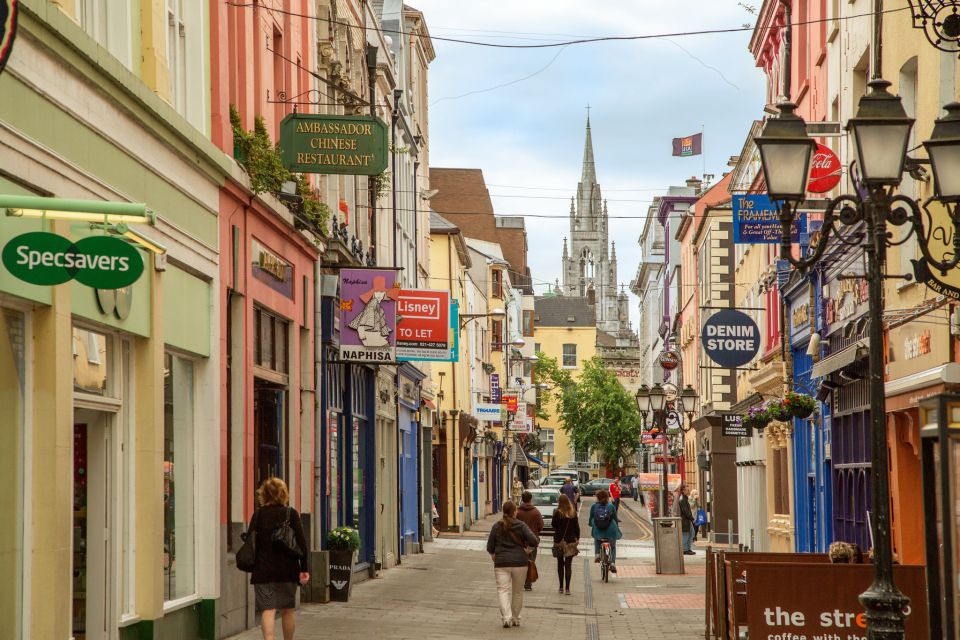
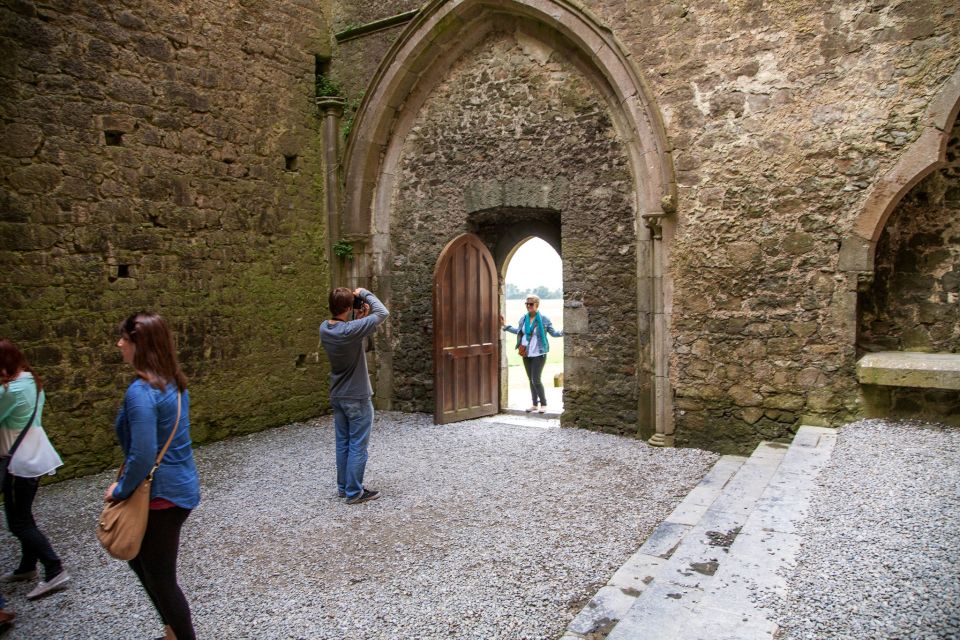
The Rock of Cashel is the kind of place that shows up on postcards for a reason. You’re not just looking at one monument—you’re seeing a cluster of medieval structures packed into a dramatic setting, and it’s the perfect stop to understand Ireland’s historical layers in a single hour.
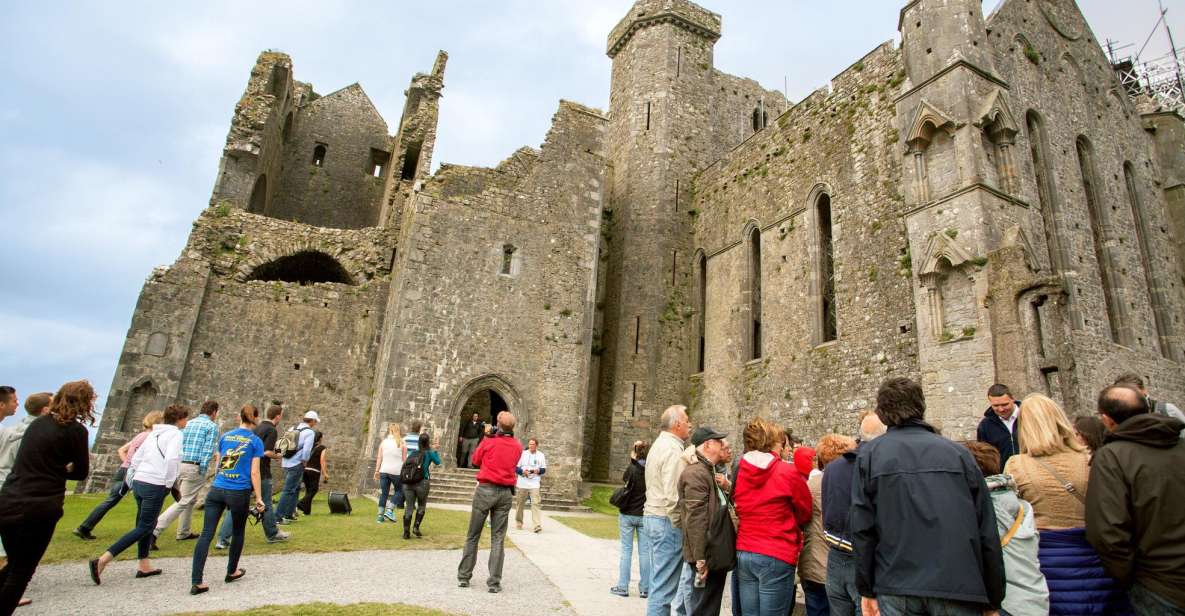
At this stop, you get both a photo moment and then guided time. The complex includes standout elements like a high cross, a round tower, an abbey, a Romanesque chapel, a Gothic cathedral, and a 15th-century tower house. That list sounds like an architecture student’s checklist, but here’s the value: when someone walks you through what each piece is, your brain stops treating it like a backdrop and starts reading it like a story.
This is also a good break from bus time. You’re up on the rock, walking around, and taking photos with better angles than you’d get from a flat, streetside viewpoint. Because the guide is with you, you’re less likely to miss details like how the buildings relate to each other and why the site looks so iconic from afar.
My advice for this stop: use the guided portion to get your bearings, then use your remaining time to circle back for photos from different angles. And yes—keep an eye out for weather. A cloudy day can be great for photos, but rain gear is still worth packing.
Blarney Castle and the Blarney Stone: gardens, the Wishing Steps, and real stairs
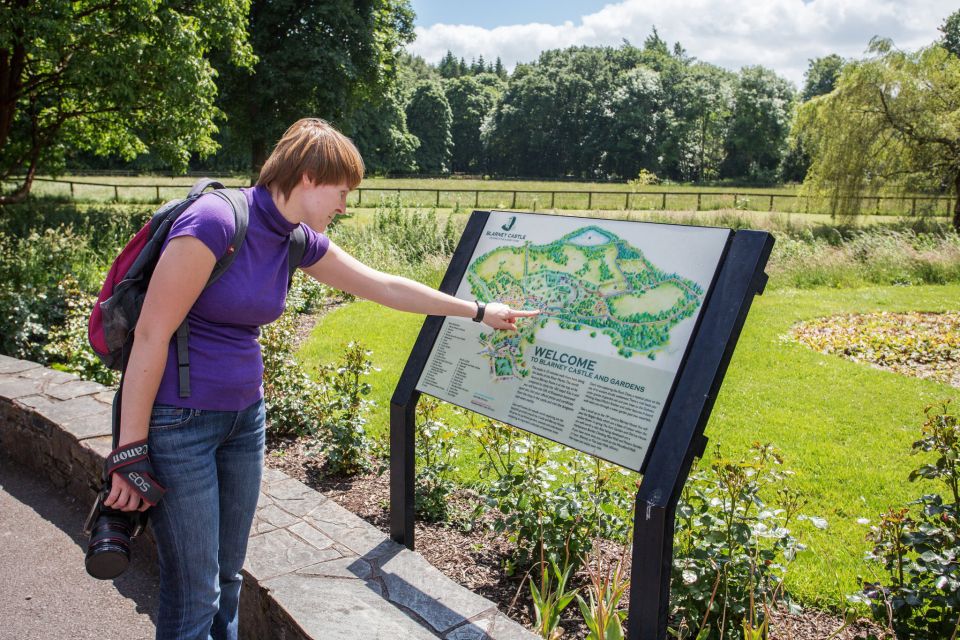
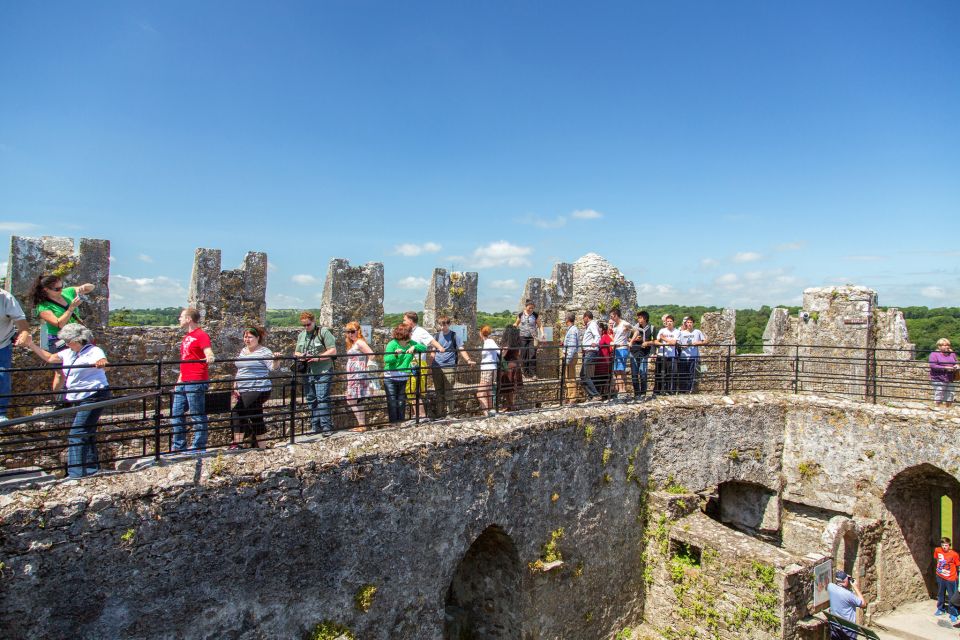
If you’re coming for just one thing, it’s probably the Blarney Stone. At Blarney Castle, you’ll have about two hours total, which is one of the smartest parts of this tour: it gives you enough time to do the “must” moment without feeling like you’re sprinting through the grounds.
You’ll handle it in your own rhythm. There’s time for a photo stop, time to explore, and time to enjoy the setting. The famous part is kissing the Stone for the gift of gab, but the day works best if you treat Blarney as more than a single photo. This is where the castle grounds shine.
You’ll also find enchanted gardens, including mystical waterfalls and ancient ferns. That’s the escape-your-bus moment. Instead of thinking about schedules, you can slow down and wander at garden pace, then return when you’re ready.
Don’t miss the Wishing Steps, either. They’re a fun Irish tradition-style stop—quick to find, easy to photograph, and a nice counterbalance to the more intense climb you associate with the Blarney Stone area.
Food is on your own here. Lunch isn’t included, but there are restaurants on-site and options in the surrounding castle complex area. If you want flexibility, grab something simple and keep moving; this is a busy day and you don’t want to waste time in a long sit-down meal.
Now, the key consideration: Blarney Castle has steep steps, and this portion of the tour may not be suitable if you have limited mobility. Even if you can manage stairs, it’s smart to wear shoes with grip and keep your umbrella handy. Rain isn’t rare, and wet stone can make a steep place feel steeper.
Cahir Castle on the River Suir: a defensive fortress you can still feel
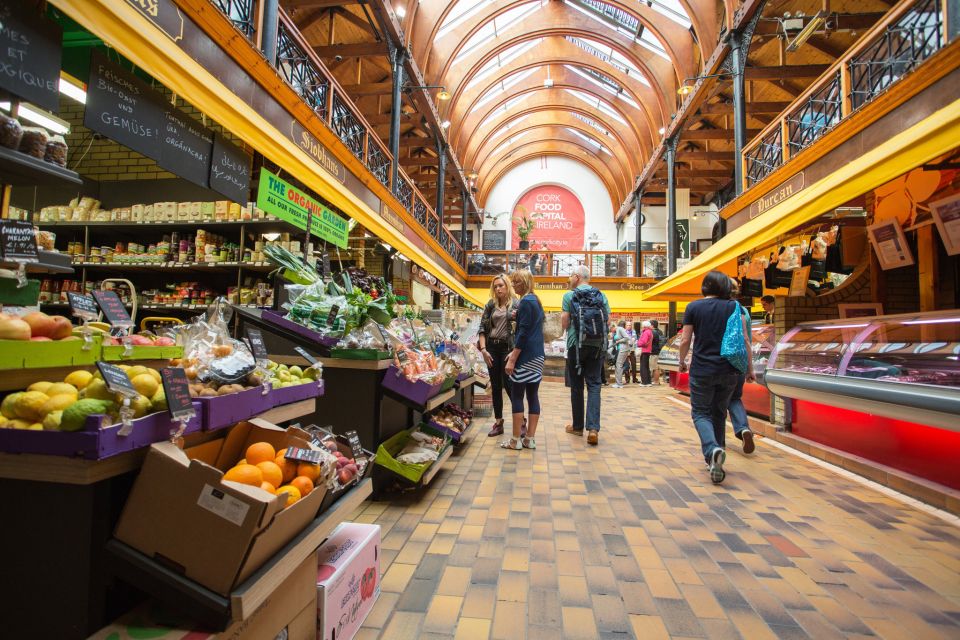
The last major stop is Cahir Castle, perched atop a rocky island in the River Suir. This is one of Ireland’s largest and best-preserved castles, and the setting alone is worth the trip—you’ll feel that “fortress” vibe even before you get into the details.
You’ll get a photo stop, and then you’ll have guided time—about an hour. The focus here is not just what the castle looks like, but how it works defensively. It was constructed by the Butler family in the thirteenth century, and it has a history filled with sieges and conflicts. The castle’s defensive architecture is the main character, and the tour style uses both a guided walk-through and audiovisual presentations to bring the place to life.
In a practical sense, this stop is valuable because you can compare it to Blarney and Rock of Cashel. Different locations, different eras, different purposes—but the stone patterns make sense once you’ve had a guide translate them for you.
What I’d do here: move at the pace your legs allow, but don’t skip the viewing areas where you can see the castle’s relationship to the river. Even if you’re not a castle superfan, the way the setting reinforces the defensive design is usually the moment it clicks.
If you like specific details, keep your eyes open for guided pointer moments around the walls and preserved features. For example, you might be shown a cannon-ball mark still visible on the castle wall, the kind of concrete detail that turns a “cool building” into something more real.
Timing, pacing, and the reality of a 12-hour day
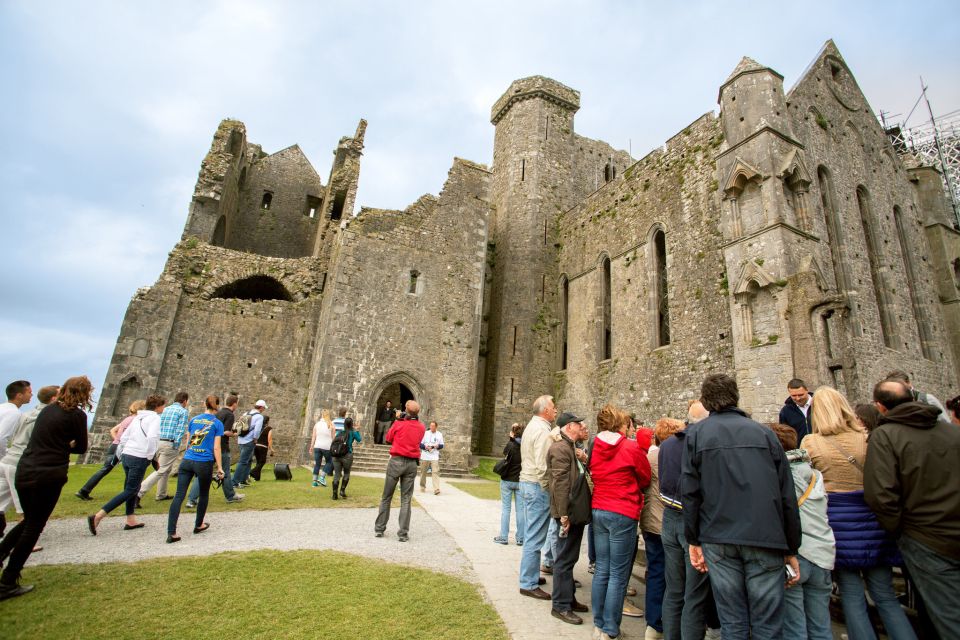
This is a 12-hour experience, and that matters. You’re not doing “three castles at a leisurely pace.” You’re doing a structured day where driving, guided time, and self-guided time all have to fit.
The schedule breaks down roughly like this: you’ll spend around 2.5 hours on the first bus stretch, then one hour at Rock of Cashel with guidance, then about two hours at Blarney Castle, then one hour at Cahir Castle with guidance, then another 2.33 hours back toward Dublin. The rest of the time includes the in-between moments—arrival windows, photos, walking to meet up points, and the inevitable breaks that keep a day trip from turning sour.
The good news is that the tour doesn’t feel like a race. The structure gives you time to enjoy each place, and you’re not stuck in a full-day queue at one location. Plus, the bus comfort helps a lot—USB ports mean you can keep your phone ready for GPS and photo check-ins.
If you’re planning your day around this, I’d treat it like a full-day outing with early morning momentum and an evening return that still lets you go out in Dublin. This is also a great option if you’re on a tight schedule and want more than one “big ticket” site without changing hotels.
My practical checklist:
- Wear comfortable shoes with grip
- Bring an umbrella and rain gear
- Pack snacks and plan for lunch on your own
- Make sure your smartphone is charged (then top it up on the bus)


Price and value: what the $96 buys you in real terms
At $96 per person, the value comes from what’s included. You’re paying for transportation by an air-conditioned vehicle with USB ports, plus a driver-guide, and—this part is key—admission fees for all three main stops: Rock of Cashel, Blarney Castle & Gardens, and Cahir Castle.
Lunch isn’t included, so you’ll need to budget for food, but the tour covers the expensive “entry ticket” side so you’re not doing on-the-spot math in three different places. For many people, that’s the difference between feeling efficient and feeling stressed.
You’re also getting a guide, not just a bus ride. Guided time at Rock of Cashel and Cahir Castle is where that money shows up. Without guidance, you’d still have great scenery, but the architecture can blur together. With guidance, you walk away with a clearer sense of what you saw and why it’s significant.
Finally, the coach aspect matters more than you might think. Doing these sites independently from Dublin means long drives and more planning. This tour handles the route and timing, so you can focus on the experience rather than logistics.
Should you book this Dublin day trip to Blarney, Rock of Cashel, and Cahir?
Book it if you want a high-value, one-day tour that hits three of Ireland’s most recognizable historic stops with guided explanation and included admissions. It’s especially worth it if you’re staying in Dublin and you don’t want to spend your limited time coordinating transport between rural sites.
Skip or reconsider if stairs are a problem. Blarney Castle’s steep steps can be a deal-breaker, and the tour is not suitable for wheelchair users. If you can handle uneven ground and stair steps, you’ll likely find this a satisfying day: enough time to enjoy the grounds, plus guided context that makes the castles feel more than postcard scenery.
If you do book, pack for weather and comfort, bring snacks for the long day, and plan to treat lunch as a “grab-and-go” moment at Blarney so you can keep your energy for the full route.
FAQ
Where is the tour meeting point in Dublin?
The tour departs from the Molly Malone statue outside the old stone church on Suffolk Street, Dublin 2.
How long is the tour from start to finish?
The total duration is 12 hours.
What are the main stops on this tour?
You’ll visit Rock of Cashel, Blarney Castle & Gardens, and Cahir Castle, with travel between each by coach.
What’s included in the price?
The price includes transportation by an air-conditioned vehicle with USB ports, a driver/guide, and admission to Rock of Cashel, Blarney Castle & Gardens, and Cahir Castle.
Is lunch included?
No. Lunch is not included.
Is this tour suitable for wheelchair users?
No. It is not suitable for wheelchair users, and it includes steep steps at Blarney Castle.