Three hours, and Dublin clicks into place. This private walking tour is built to help you connect the big sights with the small stories, from medieval power to modern Irish identity, all with a guide doing the heavy explaining. You start at the Molly Malone statue area and end near College Green, so you’re not zigzagging all day.
What I like most is the one-on-one attention. It stays focused on your pace and questions, and you also get practical orientation tips plus a digital PDF with café, pub, and traditional music ideas.
One thing to consider: it’s primarily a walking-and-sight tour with mostly exterior views, and entrance to paid sites isn’t included. If your dream Dublin day is lots of museums and ticketed interiors, you may want to plan those separately.
Key things to know before you go
- Private, licensed guide for your group so you don’t share the experience with strangers
- Fact-rich storytelling with songs and photos that make the city feel more human
- A smart route that links Dublin Castle, Trinity, Temple Bar, major bridges, and key parks
- Off-the-radar stops like Powerscourt Townhouse Centre, Dubh Linn Gardens, and Dame Lane
- Major historic moments including the Great Irish Famine memorial and the Easter Rising proclamation area
- Easy start point at Molly Malone on Suffolk Street with pickup options if you want
In This Review
- Why This 3-Hour Private Dublin Walk Works So Well
- Starting at Molly Malone, Ending Near College Green
- Dublin Castle Exterior: Where Medieval Power Leaves Traces
- Molly Malone Statue: More Than a Pretty Photo Spot
- Trinity College Dublin and College Green: The University-City Link
- Temple Bar and Ha’penny Bridge: Icons With Real Context
- Powerscourt Townhouse Centre: A Quiet Stop Most People Miss
- St Stephen’s Green: An Urban Pause With Garden-Scale
- Dubh Linn Gardens: Small-Scale Detail That Sinks In
- Edward Delaney’s Famine Memorial: A Serious Stop You’ll Remember
- Parliament House and the House of Lords Interior Moment
- Wall of Fame, Wolfe Tone, and Dame Lane: Politics and Music in the Same Footsteps
- What Makes the Guide Experience Matter (David’s Style)
- Price and Value: Is $144.03 per Person Worth It?
- Who Should Book This Dublin Private Tour
- Should You Book This Dublin Private Walking Tour?
- FAQ
- Where does the tour start and end?
- How long is the Dublin private walking tour?
- Is pickup available?
- Is this tour private?
- What’s included, and what isn’t?
- Can I cancel for a full refund?
Why This 3-Hour Private Dublin Walk Works So Well

Dublin has a way of looking simple—then you learn one detail and suddenly the whole city changes. This tour is designed for that moment. In about three hours, you get the timeline (medieval to modern), the geography (where everything sits and why it matters), and the human side (songs, slogans, and people you’ll keep remembering).
The big value is the private format. Instead of tuning out between crowd barriers, you can ask what you care about—politics, architecture, literature, music, or plain city navigation. And because your guide also includes city orientation and a PDF of recommendations, the walk turns into a map for the rest of your trip.
The route is mostly in central Dublin, so it’s ideal if you want a first-day “set your bearings fast” experience or a later-day refresh after you’ve already done a few stops on your own.
Starting at Molly Malone, Ending Near College Green
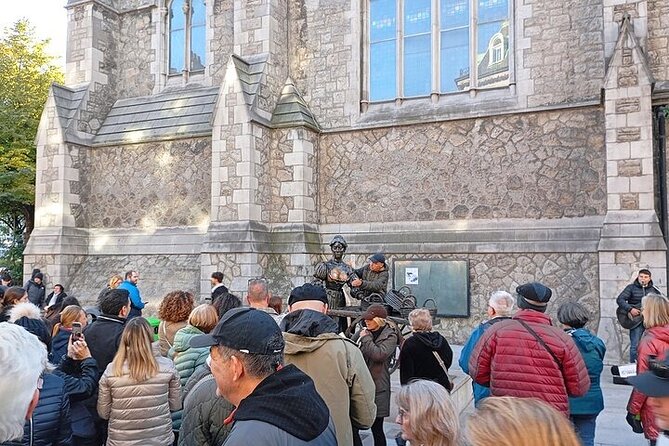
You meet at the Molly Malone statue on Suffolk Street in Dublin 2. It’s one of the most recognizable meeting points in central Dublin, and it’s easy to find compared with many less-obvious corners.
You’ll generally finish at College Green. That matters because College Green sits right where several major sights overlap—Trinity College is close by, and you’re also set up to continue toward other landmarks at your own pace. If you’re juggling a tight schedule (say, you want to connect with another ticketed attraction later), the tour can be adjusted to end somewhere more convenient.
If you like planning, this ending spot is practical. It gives you a natural “last stop zone” rather than an awkward drop-off far from where you’re going next.
You can also read our reviews of more walking tours in Dublin



Dublin Castle Exterior: Where Medieval Power Leaves Traces
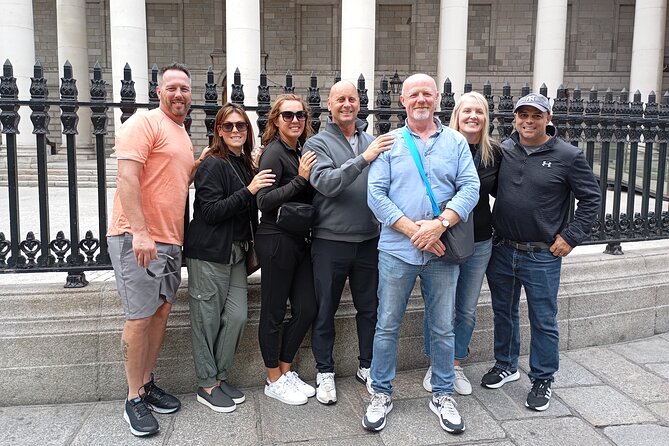
Dublin Castle shows up in postcards as a grand building. On this walk, you learn to see it as an instrument of administration—one that dates back to the early 1200s, when the first stone was laid in 1204.
Even when you’re only seeing the exterior, the storytelling gives you something useful: you understand why the castle matters in Irish history and how Dublin’s political center shifted over centuries. That makes it easier to read the city as you move away from the castle, not just as random streets and stonework.
A small practical note: the stop is brief, with time focused on context. If you’re hoping for a deep dive into interiors, you’ll likely want to add separate ticketed time.
Molly Malone Statue: More Than a Pretty Photo Spot
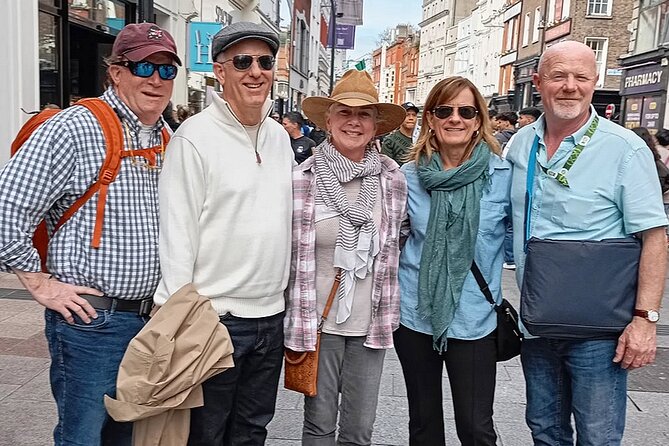
Molly Malone is based on Dublin’s unofficial singing anthem. The statue has become the most visited and photographed in Dublin, and that popularity makes it a good start for your walk—because you’ll soon spot how Dublin uses music, character, and storytelling as public memory.
What’s satisfying here is that you don’t just get a description of the statue. You learn the character’s place in Dublin’s culture and why this figure stuck so hard with people. It’s a small stop, but it sets a tone: Dublin isn’t only monuments. It’s also songs and everyday myths that people pass around like local currency.
Trinity College Dublin and College Green: The University-City Link

Next you move into the Trinity College Dublin orbit. Trinity College dates to 1592, founded by Queen Elizabeth I, and it’s Ireland’s oldest university. On this tour you take an exterior stroll through the campus, so you can absorb the feel of the place without committing to a longer internal visit.
This stop pairs well with College Green. College Green is a three-sided plaza in the heart of Dublin, and it’s a handy “geometry lesson” for the city: you see the Bank of Ireland building on the north side, you connect back toward Trinity, and you notice how Georgian and Victorian architecture frames the open space.
You also learn how College Green relates to Irish governance and national life over time—plus the plaza has monuments tied to Irish history. Even with limited time, you’ll leave with a mental map of how the city’s civic and academic areas relate to each other.
Temple Bar and Ha’penny Bridge: Icons With Real Context
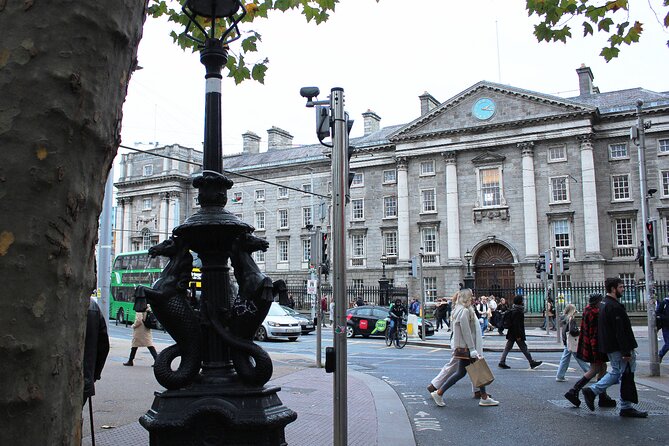
Temple Bar is famous for its pub reputation, but this tour treats it as more than a party zone. The Temple Bar area is about 28 acres, and you walk through a maze of eateries and public houses where you can catch the vibe of Irish traditional music and local storytelling.
If you’re worried it will feel like a tourist trap, don’t. A good guide helps you read Temple Bar as a neighborhood with history and street-by-street character, not just a single pub sign.
Then you hit Ha’penny Bridge, one of Dublin’s oldest foot bridges. It’s linked to a long span of history—over 200 years—and it’s also known for being one of the oldest wrought iron bridges in the world. You pause long enough to take in views east and west, so you can understand how the river sections the city into directions and neighborhoods.
You can also read our reviews of more private tours in Dublin




Powerscourt Townhouse Centre: A Quiet Stop Most People Miss

This is one of the places that turns a “highlights tour” into a more memorable walk. Powerscourt Townhouse Centre is originally an 18th-century residence built for Richard Wingfield, the 2nd Viscount Powerscourt, and his wife, Lady Elizabeth. It used to be a social hub for Dublin’s wealthy, with lavish parties and events.
Today it’s still striking, but the key benefit for you is that it feels like a secret you can brag about. You get a sense of how Dublin’s elite lived, gathered, and influenced city culture—without the crowds of the biggest landmarks.
If you like architecture and you enjoy finding places that aren’t on every postcard, you’ll appreciate this stop.
St Stephen’s Green: An Urban Pause With Garden-Scale
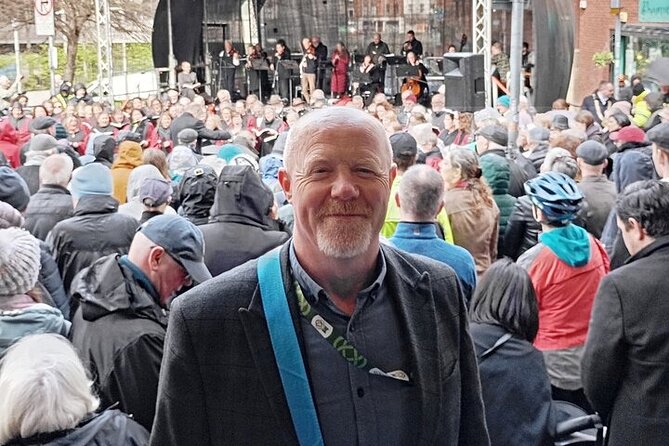
St Stephen’s Green Park is about 22 acres, right in the city center. This walk gives you time to understand it as more than a pretty park: you notice winding paths, gardens, flower beds, lakes, and wildlife, plus sculptures and monuments tied to Irish history.
The practical value here is simple. After several strong historic stops, this is where you recharge. It’s also a great moment to catch your breath and reset your eyes before you move into heavier topics later in the route.
If you’re traveling in shoulder season or you hit bad weather elsewhere, this park stop often still feels good because it’s outdoors and you can take it slowly.
Dubh Linn Gardens: Small-Scale Detail That Sinks In
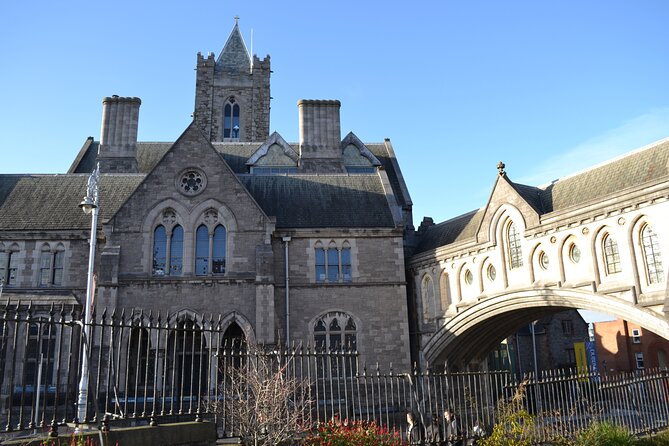
Dubh Linn Gardens is a quieter green space in the heart of Dublin, and it’s often overlooked. You learn the history behind it, and you get to notice the distinctive brickwork and Celtic patterns.
This is the kind of stop that pays off if you like small details. Instead of trying to photograph every major landmark, you start spotting craft—patterns, materials, and design choices that tell you Dublin didn’t get built by one big moment. It got built by layers of taste and memory.
It’s short, but it’s memorable in the way “busy” sights rarely are.
Edward Delaney’s Famine Memorial: A Serious Stop You’ll Remember
Then the route shifts tone. Edward Delaney’s Famine Memorial is a powerful tribute to more than one million victims of the Great Irish Famine of 1845.
The memorial includes haunting sculptures of emaciated figures. The goal isn’t to shock you for entertainment. It’s to make sure the scale of suffering—and the long consequences for migration and diaspora—stays present in your mind.
It’s a heavy stop, and it’s worth handling with your full attention. If you’re the type who likes to understand Ireland beyond the pub and the street music, this is a key moment of the walk.
Parliament House and the House of Lords Interior Moment
Parliament House is an architectural anchor in Dublin’s past. The original House of Lords is associated with this site, and the building was constructed in the early 18th century. In modern times, it connects to what you see today, including the Bank of Ireland building.
On this walk, you may enter the House of Lords, but it depends on times and opening. That means you should treat this as a possible bonus rather than a guaranteed indoor stop.
Even from the outside, the framing helps: you start understanding where law and power sat, and how Dublin’s political story is written into the buildings. If you want the inside view, plan your timing so you can be flexible.
Wall of Fame, Wolfe Tone, and Dame Lane: Politics and Music in the Same Footsteps
Dublin doesn’t separate its public identity into neat boxes. This part of the walk shows that mix.
The Wall of Fame is a tribute to legendary Irish bands and singers who shaped Irish and world music. It’s an easy stop on the route, but it carries meaning: Dublin’s identity isn’t only built through politics. It’s also built through sound.
Then you see the Theobald Wolfe Tone statue. Wolfe Tone is tied to Irish nationalism and is called the father of Irish nationalism. You learn about his role in the 1798 rebellion and why his story became part of public memory.
Finally, Dame Lane connects you to the Easter Rising. You view a copy of the original Irish Proclamation, issued April 24, 1916. It declared an independent republic and laid out core ideas like equal citizenship and respect for people’s rights. This moment helps you see how national identity became written words you can point to, not just vague historical “events.”
What Makes the Guide Experience Matter (David’s Style)
This is where the tour earns its top marks. The guide’s approach is hands-on: you get an expert historical overview that moves from medieval roots to modern Ireland, and it’s delivered with energy and humor, not just facts.
A standout detail: the guide shows up prepared with facts and dates, plus additional songs and photos carried in a portfolio. That might sound like “extra,” but it changes the feel of the walk. It turns landmarks into scenes, and it helps your brain store the information instead of letting it slide off.
You also get practical help after the tour, too. The provided digital PDF includes recommendations for the best cafes, restaurants, pubs, and venues for Irish traditional music. On top of that, you get orientation advice for getting around and planning your stay.
Price and Value: Is $144.03 per Person Worth It?
At $144.03 per person for a roughly 3-hour private walking tour, you’re paying for three things: a licensed guide, time focused on interpretation (not just sightseeing), and your own dedicated attention.
The value improves if:
- you’re traveling as a couple or small group and want privacy without splitting time across multiple tours
- you want history and culture explained in a way that sticks
- you appreciate local recommendations that help you spend your remaining hours well
It’s less of a value play if you only want a quick photo circuit. This tour rewards curiosity—especially if you care about how Dublin’s identity formed through power, music, and public memory.
Also remember what’s not included: food and drink, and entrance to paid attractions. Most stops are free to view, but if you want museum-style interiors, you’ll likely pay those separately and plan them around your walk.
Who Should Book This Dublin Private Tour
Book this if you want:
- a first-rate Dublin orientation in a short time
- a private experience with a guide who can answer questions
- a route that mixes major landmarks with quieter corners
- a strong connection to Ireland’s political turning points (Famine memorial, Easter Rising proclamation area) and cultural identity (music stops)
You might skip or modify if:
- you need a lot of indoor museum time
- you’re traveling with very young children (it’s not recommended for babies or children under 5)
- you’re hoping for a full day of ticketed attractions included in the price
The walking pace is part of the deal, and the tour works best when you’re ready for city-center strolling.
Should You Book This Dublin Private Walking Tour?
If your goal is to leave Dublin with more than photos—if you want the why behind the streets—this tour is a strong bet. The private format, the guide’s energy, and the mix of iconic stops with off-the-radar details makes it feel efficient, not rushed.
I’d book it if you’re the type who likes learning on foot and you want a guide to help you plan what comes next with real local suggestions. Skip it only if your dream day is mostly ticketed interiors or you don’t want to walk for three hours.
FAQ
Where does the tour start and end?
The tour starts at the Molly Malone statue on Suffolk St, Dublin 2. It generally ends at College Green, though you can choose an end point that fits your itinerary.
How long is the Dublin private walking tour?
It’s about 3 hours. The exact pace can vary, but the schedule is built around short stops at each location.
Is pickup available?
Pickup can be arranged at hotels listed by the provider, from city-center accommodations, or you can meet at the central meeting point at Molly Malone.
Is this tour private?
Yes. It’s a private tour/activity, so only your group participates.
What’s included, and what isn’t?
Included are a certified guide for the 3-hour tour, expert historical overview, dedicated personal attention, digital PDF recommendations, and Dublin orientation advice. Food and drink are not included, and entrance into ticketed/paid attractions is not included.
Can I cancel for a full refund?
Yes. You can cancel for a full refund if you cancel up to 24 hours in advance of the experience’s start time. If you cancel less than 24 hours before, the amount paid isn’t refunded.