REVIEW · DUBLIN
Bike Tour Along The Historic Waterways Of Dublin
Book on Viator →Operated by MYBIKEORHIKE · Bookable on Viator
Dublin by bike feels like cheating traffic. I like the way this waterways-and-parks route gets you out of the crush, yet still hits big names like Croke Park and Kilmainham. I also like the storytelling style you get from guides such as Ben, who connects transport, sports, and memorial sites into one easy-to-follow ride.
For a long day, the only thing to plan around is that lunch isn’t included and bike comfort can be a bit hit-or-miss on longer stretches, so consider bringing a small snack and expecting urban cycling.
In This Review
- What makes this Dublin bike route worth your time
- The ride plan: why Dublin’s waterways work so well on two wheels
- Price and value: getting a lot of stops for about $198.25
- Meeting point and pickup near Capel Street
- The start along Dublin Bay: new cycle lanes and transport stories
- Bull Island and the 200-year-old sea wall with Captain Bligh
- Guinness family park and the calm cruise through tree-lined lanes
- Croke Park and the GAA story under an 83,000-seat roof
- Glasnevin Cemetery: a guided public tour with famous and quirky figures
- John Kavanagh The Gravediggers pub: lunch stop that’s part of the story
- Tolka Valley Park and newer paths through green space
- Phoenix Park feel: red deer origins from 1662
- Irish National War Memorial Gardens along the River Liffey
- Kilmainham Gaol: a quick look at a World-changing prison site
- Royal Hospital Kilmainham views and the modern museum connection
- Croppies Acre Memorial Park: the 1798 Rebellion story in two directions
- Bike comfort and pacing: what to expect over 5 to 8 hours
- Who this tour suits best (and who should think twice)
- Should you book this bike tour?
- FAQ
- FAQ
- How long is the bike tour?
- How much does it cost?
- What’s included in the tour price?
- Is lunch included?
- Are any tickets or admissions included?
- What pickup options are available near the start?
- What fitness level do I need?
What makes this Dublin bike route worth your time
- Dublin Bay and Bull Island by bike, with a sea-wall stop linked to Captain Bligh
- Park-hopping that stays mostly car-light, including Guinness-family grounds and newer cycle paths
- A memorial-focused stretch along the River Liffey with a World War I salute and stories you don’t see on postcards
- Big landmarks with human context: Croke Park and the GAA story, plus Glasnevin Cemetery’s mix of famous and lesser-known characters
- A private-group feel (only your group), run in English with helmets and high-vis provided
The ride plan: why Dublin’s waterways work so well on two wheels
This isn’t a random “see everything” loop. The route threads Dublin’s waterways and green spaces into a logical line, so your day has variety without feeling stop-and-start. You’ll shift from sea air and coastal views to river-side cycling and then into park and heritage areas.
What makes it work is the mix of surfaces and settings. You get time on cycle lanes and paths, but also enough city texture to understand how Dublin grew—especially around transport corridors and major institutions.
You can also read our reviews of more cycling tours in Dublin



Price and value: getting a lot of stops for about $198.25
At $198.25 per person, this sits in the midrange for a guided, bike-based half-to-full-day outing. You’re paying for more than wheel time: you’re getting a guide, a bike, and safety gear, plus guided-style context at several major stops.
Also, many stops are free of admission charges, which helps you keep the day from turning into a string of paywalled attractions. Just note that Glasnevin Cemetery has a guided public tour that isn’t included, so you should budget for that piece.
Meeting point and pickup near Capel Street
The tour starts at 37 Capel St, North City, and ends back at the same spot. If your accommodation is within 1 km, your guide can meet you up to 20 minutes before the start time and walk you to the official starting point.
That matters because Capel Street is central and easy to reach, but it can still be a hassle to find a rendezvous spot when you’re traveling on jet lag and looking for a sign that isn’t there. This setup reduces that stress.
The start along Dublin Bay: new cycle lanes and transport stories
Right away you’ll head out along the newly completed cycle lane. The guide uses this moment to talk about Dublin’s transport infrastructure—how the city built and rebuilt movement corridors over time.
It’s also a smart warm-up. You get views of Dublin Bay, sea air, and a changing sense of space as the ride shifts away from the tightest streets. Even if you’re not a “cyclist cyclist,” the early pace is usually the part that lets you settle into the day.
Bull Island and the 200-year-old sea wall with Captain Bligh

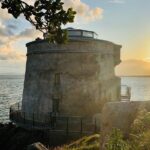
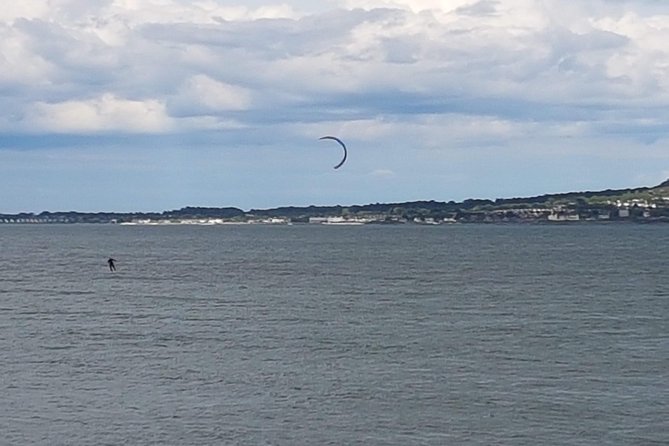
Stop one is Bull Island, and it’s built around a simple idea: sit, breathe, and look. You’ll have about 30 minutes to relax with a cuppa’ and a snack at a café perched on a sea wall dating back roughly 200 years.
Here’s the fun part you’ll want to remember: Captain Bligh of Mutiny on the Bounty fame is tied to the sea-wall origin, and that’s your bridge to the bigger nature story. You’ll also learn how Dublin Bay’s nature reserve was formed in a way that wasn’t strictly planned—often the best environmental history is the accidental kind.
Practical note: this stop is a good moment to check your legs and your comfort before the day gets more memorial-heavy later.
You can also read our reviews of more historical tours in Dublin





Guinness family park and the calm cruise through tree-lined lanes
After the sea air, the route shifts into parks and smoother cruising. You’ll pass through an elegant park owned and developed by the Guinness family, then roll along tree-lined laneways at your leisure.
This stretch works because it slows the day down without stopping it. You’re still moving, so you stay warm and relaxed, but the setting feels like a mini reset between the more intense cultural stops.
If you like city history but hate feeling rushed inside museums, this park section gives you “breathing room with context.”
Croke Park and the GAA story under an 83,000-seat roof
Next up is Croke Park Stadium. You’ll park and stand beneath a venue with an 83,000 capacity, described as the third-largest in Europe. Even from outside, it has that “how is this even in a city” scale.
The guide focuses on the history of the Gaelic Athletic Association, explained as something tied to Irish identity, clubs, and community. You’ll also hear a tragic element involving a nearly forgotten man credited with helping kickstart and shape the organization.
Time here is short—about 15 minutes—so treat it as a orientation stop rather than a full stadium experience.
Glasnevin Cemetery: a guided public tour with famous and quirky figures
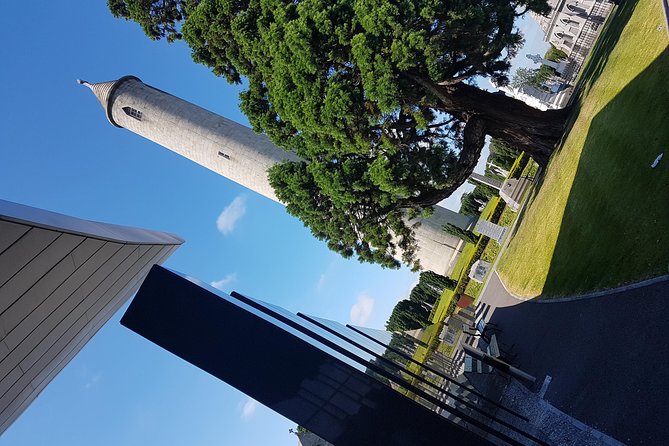
Then you’ll head to Glasnevin, Ireland’s national cemetery. Expect about 1 hour 30 minutes, and plan your budget since the admission ticket isn’t included.
This stop is a good fit if you like history that doesn’t act sterile. The tour-style approach lets you meet a mix of characters—famous, obscure, quirky, and also sombre—without needing to read every placard yourself.
One more practical thing: cemetery tours tend to work best when you can hear the guide clearly, so arrive ready to listen, not just to photograph.
John Kavanagh The Gravediggers pub: lunch stop that’s part of the story
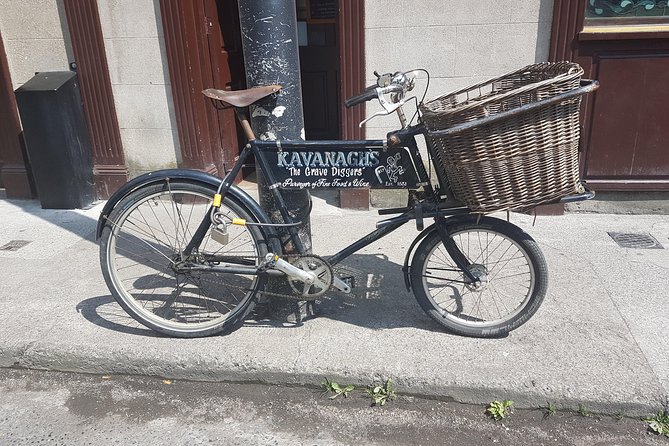
About 45 minutes later, you’ll reach John Kavanagh The Gravediggers, a pub named for the working people who frequented it after opening in 1833.
Lunch is available here, but the tour package itself doesn’t include it, so think of this as your chance to fuel up rather than a fully included meal. If you don’t like making decisions while hungry, do yourself a favor and glance at the food options once you arrive.
The charm is that the pub name and history don’t feel random. The day has been moving through memorial and heritage sites, so a stop with local roots fits the mood.
Tolka Valley Park and newer paths through green space
Next you get Tolka Valley Park, with about 10 minutes to cycle and explore a recently constructed route through lush greenery. This is one of the smoother “recovery” segments of the day.
Why it matters: newer paths usually mean fewer awkward turns and less stop-start navigation, which helps on a multi-hour ride. It’s also a nice way to break up longer heritage zones so you don’t feel like you’re only walking in formal, heavy places.
Phoenix Park feel: red deer origins from 1662
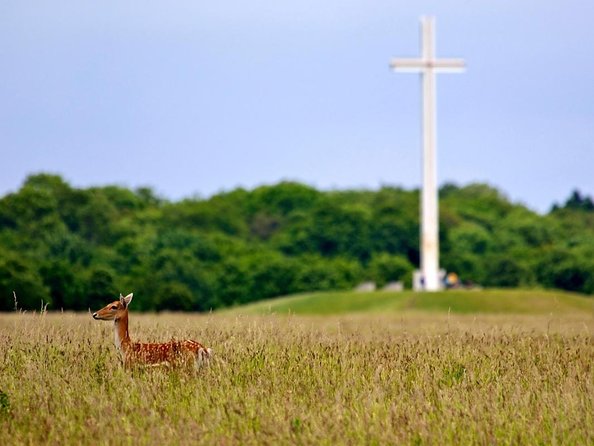
From there, you’ll cycle through a large enclosed park where the story starts in 1662, when red deer were introduced—and the deer still roam there today.
This is your “Dublin as a living system” stop. The setting is open and spacious, so it’s a mental shift from cemeteries, prisons, and memorial gardens. You’re still learning, but the learning comes with space to see and breathe.
For many people, this is the moment they stop thinking of the trip as just a tour and start enjoying it as a day outside with culture on the edges.
Irish National War Memorial Gardens along the River Liffey
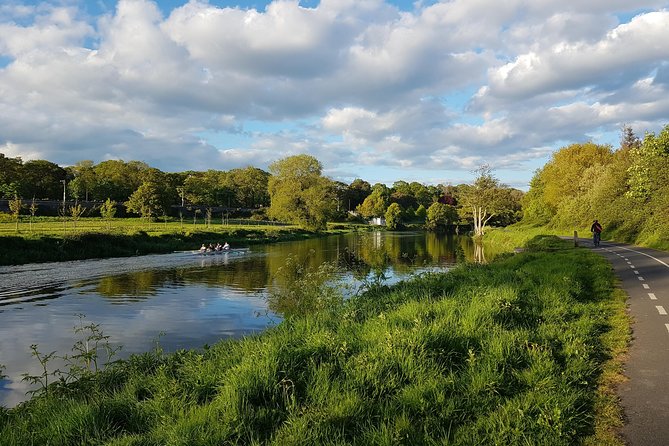
One of the most meaningful segments is the ride to the Irish National War Memorial Gardens. You’ll cycle near Dublin’s River Liffey, watch the rhythm of rowers pulling in the water, and stop to salute the 49,400 Irishmen who fought in World War I.
The guide also shares lesser-known stories tied to Irish nationalism and a clever escape from execution. You’ll also learn about the significance of two swans, which makes the memorial feel specific rather than generic.
Time here is short—around 10 minutes—but it’s the kind of stop that sticks because the day has been about movement, and suddenly it asks you to slow and remember.
Kilmainham Gaol: a quick look at a World-changing prison site
Next is Kilmainham Gaol, and the stop is brief—about 10 minutes outside. The guide covers what the gaol became over time, from public executions through the great famine, and later the executions connected to the leaders of the 1916 Rising.
The attraction itself isn’t included here, so you’re getting the orientation story, not a full museum-grade visit. If gaols and political history are your thing, you’ll probably want to come back later for a longer look.
Even as an outside stop, it hits hard because of the historical weight, and because it’s placed in the ride like a pivot point.
Royal Hospital Kilmainham views and the modern museum connection
You’ll then reach Royal Hospital Kilmainham for about 5 minutes. The view focuses on public gardens laid out as a replica of the original 17th-century design.
The site also links military use to a modern function: it began as a military hospital and now connects to the Irish Museum of Modern Art. That blend helps explain how places in Dublin evolve instead of staying stuck in one era.
This is a short stop, but it’s visually rewarding if you like tidy architectural order and a clean line of sight across gardens.
Croppies Acre Memorial Park: the 1798 Rebellion story in two directions
Your final stop is Croppies Acre Memorial Park. You’ll get about 5 minutes here, and you’ll hear the legend of it as a mass burial grave tied to victims of the 1798 Rebellion.
What gives it power is its positioning: you’ll see Collins Barracks National Museum on one side and the Guinness Brewery on the other. Even if you’re not a museum person, that “history on both sides” feeling is hard to forget.
Then the tour winds down by cycling back to the starting point.
Bike comfort and pacing: what to expect over 5 to 8 hours
This ride is built for people who can handle urban cycling. You’ll need a reasonable level of fitness and you should be comfortable in city traffic environments, even if the route uses cycle lanes and paths.
Bikes are provided with a helmet and high-visibility vest, which helps you feel safer and more visible. Still, I’d plan for the fact that bike comfort can be variable on longer days—especially seat padding and shifting—so bring patience and consider wearing cycling-friendly clothing.
If you’re doing this on a day when you already walked a ton, it’s smart to treat the bike as the workout and the stops as your decompression.
Who this tour suits best (and who should think twice)
This is a strong choice for you if:
- you want Dublin’s history told while you move through the city
- you like off-the-beaten-path parks as much as famous sites
- you’re comfortable cycling in an urban setting for 5–8 hours
- you want a private-group feel rather than a crowded pack
It may be less ideal if you hate long seated periods or if you’re looking for fully guided, indoor time at every stop. The route includes brief heritage moments and orientation-style stops, not a deep, museum-by-museum day.
Should you book this bike tour?
I’d book it if your ideal Dublin day includes bike lanes, sea air, parks, and memorial context—without sitting in traffic or chasing buses between far-flung sights. At $198.25, the value is best when you treat it as a full “connect-the-dots” day that blends big names (Croke Park, Kilmainham) with meaningful places (Glasnevin, War Memorial Gardens).
I’d hesitate only if you’re sensitive about bike comfort or you can’t handle an all-day ride with no included lunch. If that’s you, plan snacks, bring water, and consider arriving rested.
FAQ
FAQ
How long is the bike tour?
The ride runs about 5 to 8 hours depending on the flow of the route and stops.
How much does it cost?
The price is $198.25 per person.
What’s included in the tour price?
You get a bicycle, plus a safety helmet and high-visibility vest.
Is lunch included?
No. Lunch isn’t included, though you’ll have time at a pub stop where you can eat.
Are any tickets or admissions included?
Some stops are free, but Glasnevin Cemetery has admission not included, and Kilmainham Gaol is also listed as not included. Other stops are marked free.
What pickup options are available near the start?
If your accommodation is within 1 km of 37 Capel St, your guide can meet you there up to 20 minutes prior and walk you to the start.
What fitness level do I need?
You should have a strong physical fitness level and be comfortable cycling a bike in an urban environment.