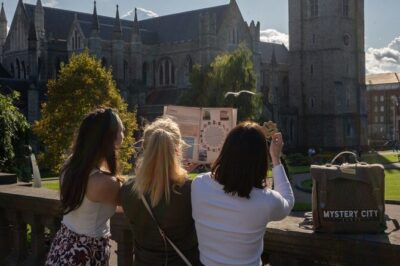
REVIEW · DUBLIN
Dublin, in a day, on foot. History, culture & architecture!
Book on Viator →Operated by Dairine Nuttall - Ireland Tour Guide · Bookable on Viator
Dublin on foot is a great kind of chaos. This private day-style walk lets you shape the pace with guide Dairine Nuttall, while hitting real anchor sights like Dublin Castle and St Patrick’s Cathedral. I especially love the stop at Sweny’s, a Joyce connection you won’t stumble into by accident, and the way the tour threads literature and architecture together in a single line. One consideration: since it’s a full walking day, you’ll want sensible shoes and you’ll still be paying for a couple major sites once you’re inside.
You start near the buzz of Grafton Street and end there too, so you can keep your own plan rolling before or after the tour. It’s built for first-timers, but it doesn’t treat you like a checklist. You’ll get insider stories, context, and the kind of practical directions that help you move around Dublin without second-guessing every turn.
In This Review
- Key highlights you’ll actually feel on the ground
- Why this Dublin walk makes sense for a one-day visit
- Starting at Grafton Street: easy meeting point, smart first moves
- Merrion Square: Georgian Dublin plus the big names—Yeats, Joyce, Wilde
- Why this stop is worth your time
- Potential drawback
- Sweny’s Joyce Centre: history you can smell (and possibly hear)
- Practical tip
- Grafton Street stretch and the pub break that actually helps
- Why this matters for your day
- Dublin Castle: British rule legacy, State Apartments, and St Patrick’s Hall
- What you should know about admissions
- St Patrick’s Cathedral (from 1195): Swift, tombs, and the meaning locals attach
- A small “street-to-cathedral” context moment
- Admissions note
- St Stephen’s Green and Marsh’s Library: gentle beauty plus a Harry Potter–style twist
- Ending where you started
- Pricing: what $520.57 per group really means
- The value you’re buying
- What I’d pack and plan for an 8-hour Dublin walking day
- Who this tour fits best
- So… should you book it?
- FAQ
- How long is the Dublin walking tour?
- What does the price include?
- Are admission tickets included for Dublin Castle and St Patrick’s Cathedral?
- How many people are in the private group?
- Where do we meet, and where do we end?
- What day(s) is the tour offered?
- Is confirmation provided after booking?
- Is the tour suitable for most travelers?
Key highlights you’ll actually feel on the ground
- Georgian Dublin at Merrion Square, with literature stops tied to WB Yeats and Oscar Wilde
- Sweny’s Joyce Centre (the historic chemist shop scene connection), with a chance of a song
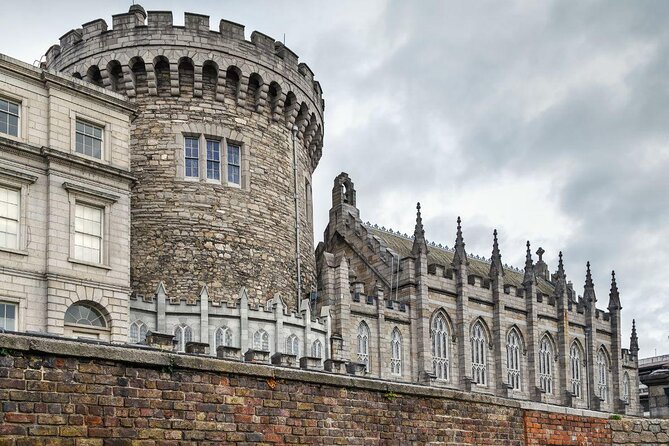
- Dublin Castle focus, including the State Apartments and St Patrick’s Hall
- St Patrick’s Cathedral from 1195, plus Jonathan Swift’s connection
- Marsh’s Library, including the famous book-borrowing cages story
- Private freedom, so you can adjust the day to your interests in real time
Why this Dublin walk makes sense for a one-day visit

If you only have a day in Dublin, the biggest risk is wasting time trying to piece together “where do I go next?” The best tours fix that fast. This one does, because it links neighborhoods and landmarks so you’re not backtracking all afternoon.
I also like how the route is built around story, not just sightseeing. You’re not simply being told where to stand. You’re learning why these buildings matter, and how the city’s layers (Georgian Dublin, British rule legacy, Irish independence-era pride) show up in stone and street layout.
Finally, it’s private and flexible. That matters in Dublin, where weather can flip a plan in an hour. Your guide can shift priorities so you still leave with the sense that you made a smart, complete day—not a rushed compromise.
You can also read our reviews of more historical tours in Dublin



Starting at Grafton Street: easy meeting point, smart first moves

You meet at Grafton Street, a central spine of Dublin where it’s easy to orient yourself. That’s a practical win. If you’re later wandering on your own, you’re dropped back in the same place at the end, which saves time and reduces stress.
From the first stretch, you’ll notice the tour’s rhythm: short, focused looks into places; walking that keeps you moving; and storytelling that explains what you’re seeing as you see it. It’s not the kind of tour where you spend 30 minutes listening before you’ve even looked at anything.
Because it’s up to 10 people per group, it stays personal. You can ask questions without feeling like you’re herding cats, and you can steer the day toward your interests—literature, architecture, politics, or the little human quirks that make a city feel lived-in.
Merrion Square: Georgian Dublin plus the big names—Yeats, Joyce, Wilde
The walk starts in the gorgeous Georgian quarter around Merrion Square, and this is where the tour really shows its value. Georgian streets are beautiful on their own, but the guide turns the neighborhood into a mini classroom about Ireland’s cultural life.
Here’s the kind of detail that changes a visit:
- You’ll get quick highlights across museums, galleries, and library-type Dublin.
- You’ll hear specific literature-world references, including a Nobel medal for literature and a passport connection to WB Yeats.
- If you’re interested in James Joyce, you’ll be pointed toward Sweny’s later, where the Joyce history is part of the building’s identity.
You’ll also make a stop tied to Oscar Wilde. The point isn’t to overstuff you with facts. It’s to show how these writers aren’t just names in books—they’re part of Dublin’s street-level memory.
Why this stop is worth your time
Georgian Dublin can feel like pretty facades if you’re not given context. This is where you get that context quickly, so later landmarks land harder. When you reach darker political history in places like Dublin Castle, you’ll understand the contrast with what came before.
Potential drawback
The museums and galleries here can be time-sensitive and may not all be ideal depending on what’s open that day. The guide keeps the stop short and intentional, but if you’re hoping to spend extra time inside one specific museum, you’ll need to pick that focus early and communicate it.






Sweny’s Joyce Centre: history you can smell (and possibly hear)
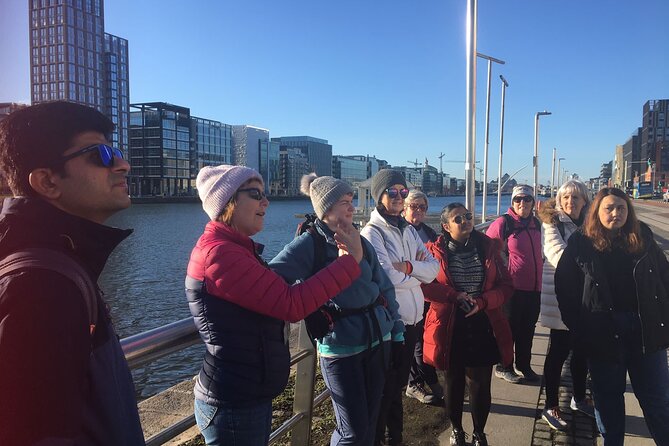
One of the tour’s most distinctive moments is Sweny’s, a chemist shop that opened in 1847 and has changed very little. It’s tied to a scene from Joyce’s work, and today it operates as a Joyce Centre run by volunteers.
What makes this stop special is that it feels like a place, not a themed set. You’re seeing an old shop that still carries the identity of its past, and that’s exactly how Dublin makes literature feel real.
The guide also notes that occasionally there’s a song sung here. Even if it doesn’t happen on your day, you’ll still enjoy the human tone—this isn’t presented like a museum label. It’s presented like living heritage.
Practical tip
If you love Joyce, ask your guide to slow down just a touch here. This is one of the stops where you’ll probably want an extra minute to absorb the details without moving at full stride.
Grafton Street stretch and the pub break that actually helps
Between Georgian squares and the castle area, the walk takes you across central Dublin with an “in-between” route. This is where you get to see the everyday Dublin layer: shops, pubs, restaurant life, and heritage details like Georgian ceilings.
There’s also usually a break during this section at an atmospheric old pub known for food. That’s not a random suggestion. It’s strategically timed so you refuel before the longer, more formal sites later.
Why this matters for your day
Dublin’s top sights are partly about endurance. Your best chance of enjoying them is keeping energy up without turning the tour into a snack run.
If you want to keep your day moving, use this pub break to regroup:
- Water + something salty
- A quick sit so your legs reset
- One last question before you head into the formal history zone
Dublin Castle: British rule legacy, State Apartments, and St Patrick’s Hall
Dublin Castle is one of those places where you feel the weight immediately. It served as the seat of British rule for over 700 years, and that long timeline shows up in how the complex is organized: multiple buildings, multiple eras, and lots of rooms that tell different stories depending on where you stand.
When you visit the castle, you can see the State Apartments, including the former throne room, and St Patrick’s Hall, where Irish Presidents are inaugurated. That last point is important. It frames the site as more than “old empire”—it’s also a modern ceremonial space.
You can also check out the Revenue Museum if you’re into the story of taxes and administration. Even if you’re not, it’s a good reminder that governments run on paperwork long before they run on speeches.
And don’t skip the gardens. The rear gardens give you a needed breath of calmer air. If you’re sightseeing on foot, a small moment of quiet like that can make the rest of the afternoon feel easier.
What you should know about admissions
Admission for Dublin Castle is not included, so you’ll pay an entry fee on site. Because that cost isn’t buried, you can plan your spending and avoid surprises. It also means you’re choosing to spend time where you’ll actually get context, rather than just walking past a fenced landmark.
St Patrick’s Cathedral (from 1195): Swift, tombs, and the meaning locals attach

Next comes St Patrick’s Cathedral, and this stop delivers both scale and story. The cathedral dates from 1195, which gives it that rare feeling of being physically old enough to hold multiple generations of emotion.
You’ll spend time here looking at:
- Tombs and monuments
- A mix of happy and sad history
- The deep meaning the building holds for many Irish people
The guide also points out Jonathan Swift, author of Gulliver’s Travels, who served as Dean for many years and is buried here. That detail makes the place feel personal even if you’ve never set foot in an Irish cathedral before.
A small “street-to-cathedral” context moment
On the walk toward the cathedral, you’ll pass reminders of everyday Dublin culture too—like Burdocks, the famous fish and chip shop. There’s also mention of a long list of famous folk who enjoyed it. It’s a fun palate cleanser before you step into the gravity of the cathedral.
Admissions note
Like Dublin Castle, admission is not included for this stop. Plan to pay so you can spend time inside where the guide’s context really pays off.
St Stephen’s Green and Marsh’s Library: gentle beauty plus a Harry Potter–style twist

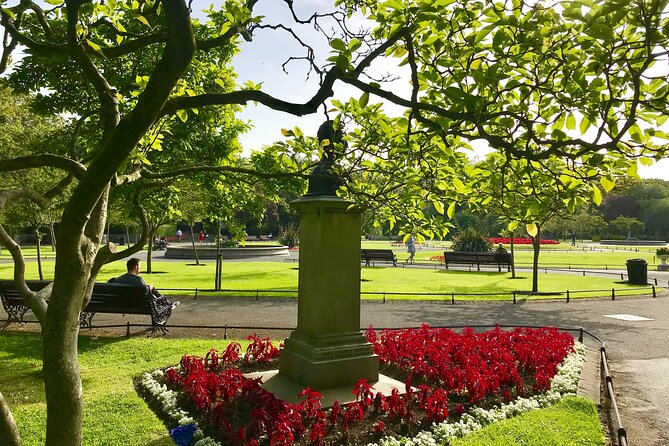
After the big history hits, the tour eases you back toward the center via St Stephen’s Green. This is a good counterbalance. You get the green space energy, plus a break for your legs without leaving you stranded away from the story.
You’ll also pass through Marsh’s Library, which is described as the oldest public library in Ireland, founded by Archbishop Narcissus Marsh. One of the memorable details here is the story of book-borrowing cages—basically the idea of being physically held to the library’s rules.
The guide frames it with a cinematic comparison because it really does have that medieval, sheltered feel. Even if you don’t care about libraries, it’s a great place to pause and absorb Dublin’s slower, quieter side.
Ending where you started
The tour returns you to the same meeting spot on Grafton Street unless you choose a different destination. That flexibility is handy if your day includes an evening plan—dinner reservations, a pub you picked out, or just time to wander without feeling tied down.
Pricing: what $520.57 per group really means
The price is $520.57 per group, up to 10 people, for about 8 hours on foot. That’s private tour pricing, which means two things:
1) You’re paying for a dedicated guide for your group.
2) Your cost per person depends heavily on whether you fill the group.
If you book with fewer people, the cost per person rises. If you bring a full group up to 10, the effective cost per person drops a lot. Since private pricing can feel steep for solo travelers, this is often best when you have at least a small group—family, friends, or a couple plus extra.
The value you’re buying
You’re not just paying for someone to point. You’re paying for:
- A tight route that hits major landmarks
- Context that makes those landmarks click
- Flexibility so you can shape the day instead of suffering through a rigid checklist
For a one-day Dublin visit, that’s the kind of value that can actually save you time and money, because it reduces the odds you’ll waste half your day figuring things out.
What I’d pack and plan for an 8-hour Dublin walking day
Even with a good route, you’re on foot for most of the day. Dublin weather is also Dublin weather—quick shifts, damp pavement, wind that seems personal.
I’d plan like this:
- Wear shoes you can walk in for hours, not just for museums
- Bring a layer that works even if it rains
- Keep a small snack option in your bag in case you want to top up beyond the pub break
The good news: the tour structure is built for real life. It includes breaks, and it mixes formal history stops with spaces that help you reset.
Who this tour fits best
This is a great match if you:
- Are a first-time visitor who wants key sights without chaos
- Like culture and architecture more than just “photo stops”
- Want a guide who can explain story behind places like Dublin Castle and St Patrick’s Cathedral
- Prefer a private experience where you can ask questions and adjust as you go
It’s also a smart choice if you’re short on time. For example, if Dublin is a quick stop between bigger travel plans, this gives you a concentrated overview without feeling like you skipped half the city.
So… should you book it?
If you want a one-day Dublin plan that feels organized but not rigid, I’d book this. The big reason: you get both structure and flexibility. You hit the headline places—Georgian Dublin, Dublin Castle, St Patrick’s Cathedral—while also learning the kind of literary details (WB Yeats, Joyce via Sweny’s, and Jonathan Swift) that make Dublin more than a set of famous buildings.
Book it if your goal is to understand the city, not just mark it off. Skip it only if you’re trying to do a very relaxed day with minimal walking, or if you’re comfortable building your own plan and paying for admissions on your own with no guide-led context.
FAQ
How long is the Dublin walking tour?
The tour runs for about 8 hours.
What does the price include?
The tour guide is included. A mobile ticket is also provided.
Are admission tickets included for Dublin Castle and St Patrick’s Cathedral?
Admissions are not included where applicable, so you’ll pay entrance fees for those sights.
How many people are in the private group?
It’s a private tour/activity, with up to 10 people per group.
Where do we meet, and where do we end?
You meet on Grafton Street in Dublin and end back at Grafton Street.
What day(s) is the tour offered?
The listed opening hours are Tuesday through Friday, 9:00 AM to 5:30 PM.
Is confirmation provided after booking?
Yes. Confirmation is received at the time of booking.
Is the tour suitable for most travelers?
Most travelers can participate, and service animals are allowed.