REVIEW · DUBLIN
Dublin Jewellery Forge a Hammered Silver Ring: Drury Street
Book on Viator →Operated by Silver Works · Bookable on Viator
Ring making beats another souvenir shop stop. In Dublin’s Drury Street studios, you’ll create a sterling silver ring from scratch with close, step-by-step guidance. What makes it fun is that you actually do the work: sawing, shaping, soldering, filing, texturing with a planishing hammer, and choosing a finish.
I particularly love the small-group instruction (intimate, max 6), because you can ask questions while you’re mid-step instead of waiting your turn. I also love the payoff: you get a ring you can wear every day, not just a craft you have to hide in a drawer. One thing to consider up front is logistics—there are plenty of stairs, no lift, and if you arrive more than 10 minutes late you won’t be allowed in.
In This Review
- Quick Hits Before You Go
- The Core Experience: Sterling Silver Ring Making on Drury Street
- Your Ring-Making Flow, Step by Step
- Tools You Actually Use (Not Just Watch)
- The Soldering and Filing Stages: Where the Craft Gets Real
- Personalize It: Texture Choices and Polish Options
- What the Small-Group Setup Changes for You
- Drury Street Location: A Dublin Day That Doesn’t Drag
- Price and Value: Why $104.05 Can Feel Like a Good Deal
- Who This Is Best For (And Who Should Skip It)
- Should You Book Dublin Jewellery Forge a Hammered Silver Ring?
- FAQ
- How long does the ring-making experience take?
- What’s included in the price?
- Do I get to keep the ring I make?
- What group size should I expect?
- What language is the experience offered in?
- Is the workshop wheelchair accessible?
- Are children allowed?
- Is there luggage storage?
- What happens if I arrive late?
Quick Hits Before You Go
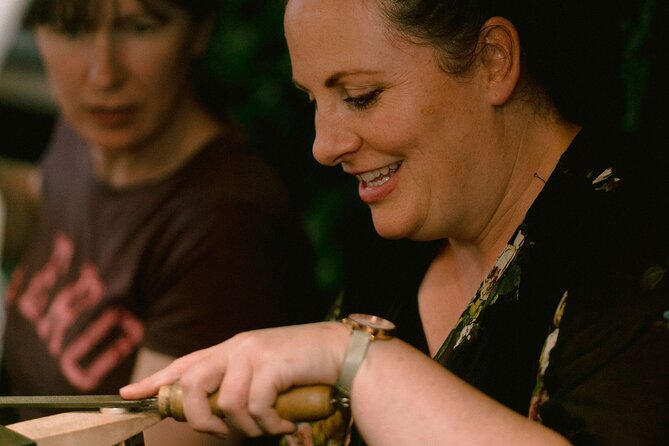
- You keep the ring: polished or rustic, with your own textures and curve choices
- Small-group pace: instruction is built for an intimate class, and it’s capped at 12 overall
- You use real metalworking tools like a handsaw, mallet, mandrel, and planishing hammer
- Multiple customization points: choose finger length, ring curve, texture (three options), and polish style
- Included treats: coffee and/or tea plus lots of chocolate to keep the session relaxed
The Core Experience: Sterling Silver Ring Making on Drury Street
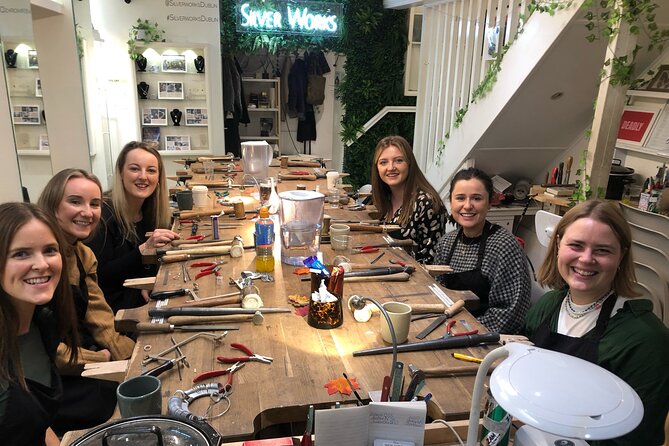
This is the kind of Dublin activity you’ll remember because it ends with something you can put on your hand. You start with raw sterling silver and leave with a finished ring—hammered texture and all.
The experience runs about 2 hours, and the vibe stays focused. It’s not a lecture with a craft project at the end. It’s more like a guided build, where each step leads directly to the next.
You’ll also like that the workshop is set up so you’re not getting lost. You have clear stages—from marking and cutting to filing and texturing—so you always know what the tool is for and what the goal is.
You can also read our reviews of more tours and experiences in Dublin.



Your Ring-Making Flow, Step by Step
Here’s what the class feels like, in the real order you’ll do it.
First, you mark the silver to the length you need by choosing which finger you want the ring on. That sets the size early, so the shaping later makes sense instead of feeling random.
Next, you cut it to size with a handsaw. This is the first moment where you go from planning to action. It also forces you to pay attention—small changes now affect the fit later.
After cutting, you form the ring using a mallet to shape it around a ring mandrel. This is where you’ll see the silver start becoming a band rather than a flat piece. The instruction is meant to keep your hands steady and your expectations realistic: you’re learning a metalworking skill, not just making a circle.
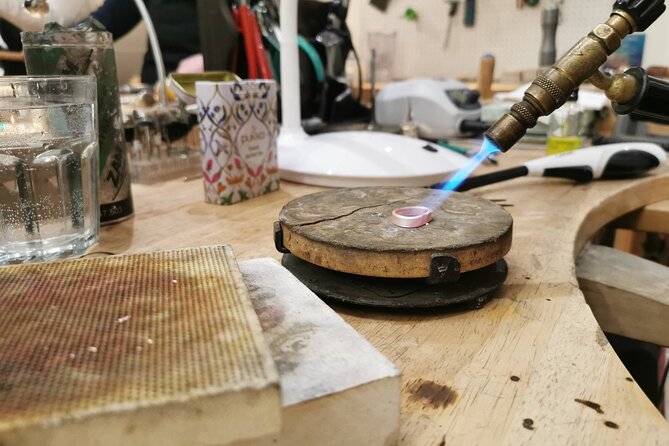
Then comes soldering. You’ll watch as it happens in front of you, and your tutor explains what they’re doing while you’re in the room. Even if you’re not the one holding the torch, this part matters because it explains why the ring becomes durable enough to wear.
After soldering, you file it using different hand files. This stage is equal parts craft and personalization. Filing is where the ring shape and edges start to feel comfortable and wearable.
Then you add your own curve. You decide what curve you want, and that choice can change the feel of the finished ring a lot. One of the best parts of a class like this is that you’re not just copying a sample—you’re making a version that fits your idea of what looks right.
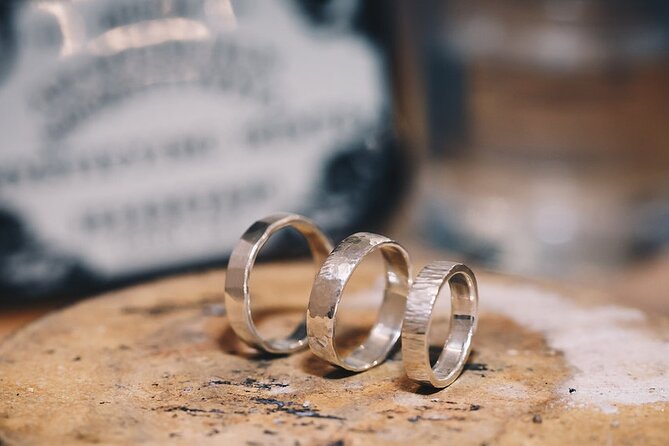
Finally, you choose from three different textures. This is where the hammered look becomes yours. You’ll use a planishing hammer to create the texture you choose, and this tends to be the most memorable segment for most people.
At the end, you choose your polish finish:
- Polished only on the inside for an artistic, rustic look
- Fully polished if you want the classic bright sparkle
And yes, you get to keep the ring.
Tools You Actually Use (Not Just Watch)
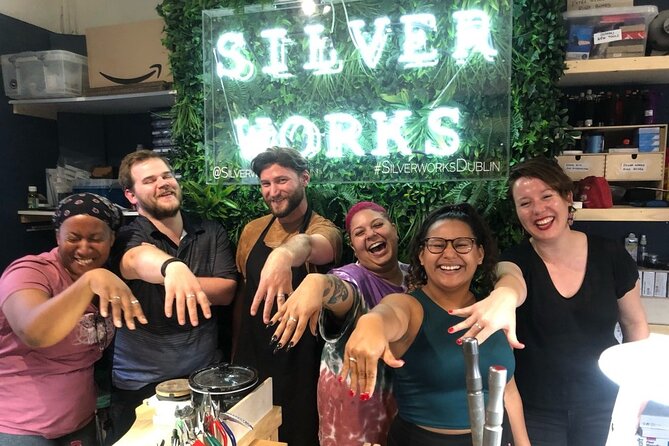
A big part of why this workshop gets such strong marks is that you’re not stuck on the sidelines. You’ll touch and use the tools that shape the silver.
You’ll work with:
- A handsaw to cut your silver to size
- A mallet and mandrel to shape the band
- Hand files to refine the ring
- A planishing hammer to create the texture you selected
That sequence is important. Each tool teaches a different job: cut to length, form the shape, solder to strengthen, file to refine, then texture to personalize. If you like learning by doing, you’ll get real satisfaction here.
Also, the workshop setup is designed for close attention. One of the consistent themes is the guide walking you through each step and being happy to answer questions during the process. Instructors mentioned in class experiences include people like Lucy, Luke, Kate, Trish, and Holly, so you know the instruction tends to be hands-on.
The Soldering and Filing Stages: Where the Craft Gets Real
Some crafts are mostly decorative. This one has real technique moments.
Soldering is one of those stages. You’ll see the expert handle the solder while it’s happening, and you’ll get explanation on what they’re doing. That matters because soldering is what turns a shaped piece into something that can actually hold up as a ring.
Filing is the other stage that separates a ring that feels good from one that feels sharp or uneven. You’ll use different hand files, and the way you work here affects the edges and comfort. If you like the idea of making a wearable object—not just a pretty one—this is where you’ll feel the difference.
And then there’s the curve decision. It’s not just cosmetic. A curve can change how a ring sits and feels on your hand, and it’s one of the few points where your taste directly drives the outcome.
Personalize It: Texture Choices and Polish Options
You get two big customization moments: texture and polish, plus your curve choice earlier.
Texture: you choose from three very different options, then create the pattern using the planishing hammer. This is the part where you can stop thinking like a student and start thinking like a maker. The “hammered” look is the signature of the experience, and your specific texture choice keeps the final ring from looking like everyone else’s.
Polish: you decide the finish style.
- If you polish only the inside, you get a more artistic, rustic look
- If you fully polish, you get that bright, classic shine
This finish choice is also practical. If you want a ring that looks crisp under daylight and photos, fully polished is the move. If you prefer character and a slightly more lived-in feel, the inside-only polish can look great.
A nice bonus: people love wearing the results. One class experience notes a ring that’s been worn daily and didn’t break or tarnish. That’s not a guarantee for your exact outcome, but it speaks to the overall quality of the process and what a good souvenir can be.






What the Small-Group Setup Changes for You
The workshop is built for small groups. The experience highlights an intimate group (max 6), and the overall class cap is listed at 12 travelers. Either way, it’s not a giant factory line.
That size matters because you’ll be actively working at stations. More people means more waiting, less attention, and more stress when you’re trying to nail a step like sizing or shaping. In this format, you can ask questions while the instructor can still adjust guidance in time for the next phase.
It also helps with learning. When you’re in the middle of cutting, shaping, or filing, you want feedback right then—before you continue to the next step.
Drury Street Location: A Dublin Day That Doesn’t Drag

You meet at Silver Works, 24 Drury St, Dublin (D02 V658), and the activity ends back at the same meeting point.
Drury Street is a good place for fitting this into a day in the center of Dublin. It’s near public transportation, so you’re not forced into a complicated plan just to get to the workshop.
One practical detail: the studio space is small, and there’s no luggage storage. If you’re moving around Dublin with bags, plan to travel light for this one.
Also, you’ll want to arrive early because of a strict timing rule. If you arrive more than 10 minutes late, you won’t be permitted entry to the workshop, and you’re not entitled to a refund or reschedule. So I’d treat this like a ticketed appointment, not a casual drop-in.
Price and Value: Why $104.05 Can Feel Like a Good Deal
The price is listed at $104.05 per person for an experience that runs about 2 hours.
Here’s what you’re paying for that often makes it feel like real value:
- Sterling silver is included, so you’re not buying materials separately
- You get coffee and/or tea plus lots of chocolate
- You leave with a finished ring you keep
- The class is hands-on, with equipment used directly during the session
A review notes that this can compare favorably to some higher-priced options in the US, which is a useful reality check if you’re used to paying more for similar craft experiences.
It’s also worth looking at the “cost per outcome.” A lot of activities are fun but end with a small item or a photo. Here the souvenir is wearable, personal, and made by you—so it’s easier to justify.
Who This Is Best For (And Who Should Skip It)
This is a great pick if you want:
- A real hands-on craft instead of watching from afar
- A souvenir with personal choices (size, curve, texture, polish)
- A fun date idea or family activity where both people can do the same build
It’s also a strong choice if you like learning one specific skill without committing to a multi-day course.
Who should consider other options:
- Kids under 10 aren’t suitable
- If anyone in your group needs wheelchair access, the buildings are not wheelchair accessible and there are plenty of stairs with no lift
- If you’re traveling with heavy luggage, the studio can’t store it
- If you tend to run late, this one has a hard rule after 10 minutes
And age note: under 16 needs to be accompanied by a paying adult.
Should You Book Dublin Jewellery Forge a Hammered Silver Ring?
If you want a Dublin souvenir that feels personal and wearable, I’d say book it. The combination of small-group attention, the chance to use the tools, and the clear chain from raw silver to finished ring makes this one of the rare craft experiences that actually teaches you something—and ends with something you’ll keep.
I’d book especially if you’re celebrating something (anniversary, milestone, or just a great trip) or if you’re the type who loves making choices, like texture and polish style, rather than following a fixed template.
If you’re worried about stairs, arriving exactly on time, or having room for bags, factor that in now so the experience stays smooth.
In short: if you can show up a little early and you’re happy to get your hands working, this is a very solid use of your time in Dublin.
FAQ
How long does the ring-making experience take?
It’s listed as about 2 hours.
What’s included in the price?
The price includes sterling silver for your ring, plus coffee and/or tea and lots of chocolate.
Do I get to keep the ring I make?
Yes. The experience is designed so that you keep your handcrafted ring.
What group size should I expect?
The experience is described as an intimate group with a maximum of 6, and the overall maximum is listed as 12 travelers.
What language is the experience offered in?
It’s offered in English.
Is the workshop wheelchair accessible?
No. The buildings used for the workshop are not wheelchair accessible, and there’s no lift.
Are children allowed?
Children under 10 are not suitable. For those under 16, they need to be accompanied by a paying adult.
Is there luggage storage?
No. The studio is small and can’t offer luggage storage.
What happens if I arrive late?
If you arrive more than 10 minutes late, you won’t be permitted entry, and you’re not entitled to a refund or reschedule.