REVIEW · DUBLIN
Dublin Sightseeing Cruise on River Liffey with Local Guide
Book on Viator →Operated by Dublin Discovered Boat Tours · Bookable on Viator
Bridges. Stories. And a fast look at Dublin.
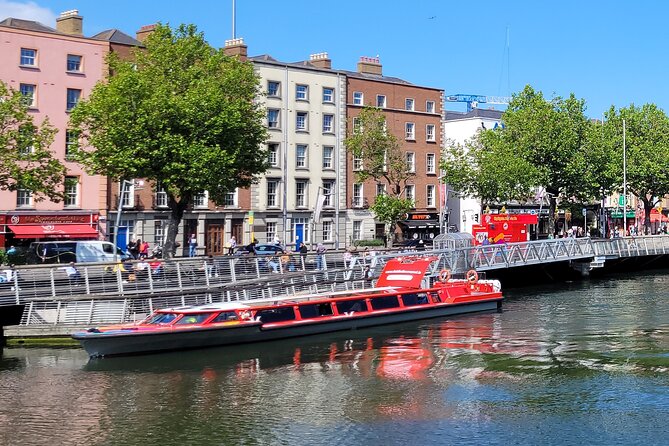
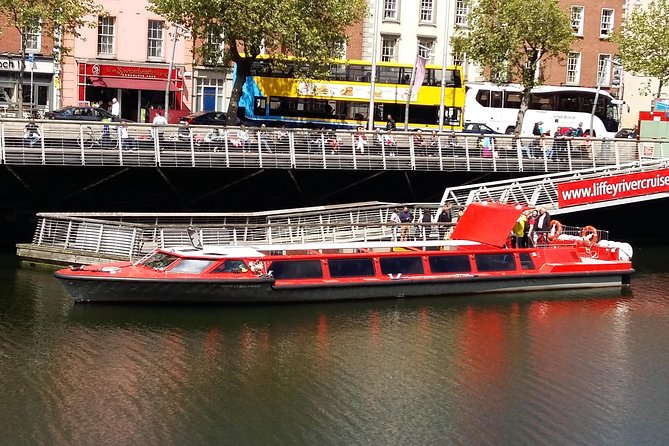
This River Liffey cruise is a simple way to see Dublin from the water, with a local guide sharing what you’re looking at as you float under major spans. You’ll also get a quick hit of the city’s key neighborhoods without the stress of buses or standing in traffic lines.
I especially like the live commentary—delivered with humor and clear focus—because it turns scenery into something you can picture on a walk later. I also like that you pass major landmarks like the Jeanie Johnston Tall Ship and the wrought-iron Ha’penny Bridge, so you get variety in one short outing.
One thing to keep in mind: it’s about 45 minutes, so you’re not going to get long stops or deep dive explanations. And if the weather is rainy and windows get wet, views can feel limited.
In This Review
- Key things I’d mark as highlights
- Getting Oriented at Seán O’Casey Bridge
- What the 45 Minutes Feels Like on the Liffey
- Gliding Past the Jeanie Johnston Tall Ship
- Samuel Beckett Bridge: Dublin’s Modern Icon From Below
- Ha’penny Bridge and the Wrought-Iron Story
- Docklands: From 18th-Century Shipping to the New Centre
- Live Commentary That Uses Humor, Not Lectures
- Price and Value for a Short River Ride
- Practical Tips for a Better Cruise Experience
- Who Should Book This Dublin Liffey Cruise?
- Should You Book This Dublin Liffey Cruise?
- FAQ
- How long is the Dublin Sightseeing Cruise on the River Liffey?
- Where does the cruise depart from?
- Is there a local guide and live commentary on board?
- What language is the tour offered in?
- Are children allowed on the cruise?
- How many people are on the tour at once?
Key things I’d mark as highlights
- Small group size (max 22), which keeps the narration feeling personal rather than crowd-control loud.
- Jeanie Johnston Tall Ship on the waterline, linking shipbuilding and famine-era history to the modern dock area.
- Samuel Beckett Bridge from below, a great photo moment and a memorable design break from older buildings.
- Ha’penny Bridge’s wrought-iron detail, plus the story of how Dublin’s oldest pedestrian crossing became part of daily life.
- Docklands evolution in one loop, from 18th-century shipyards to today’s working-and-living riverfront.
- Humor and energy from the crew, with guide-and-captain banter noted in multiple experiences (including names like Jerry, Terry, Gerry, and Dave).
Getting Oriented at Seán O’Casey Bridge
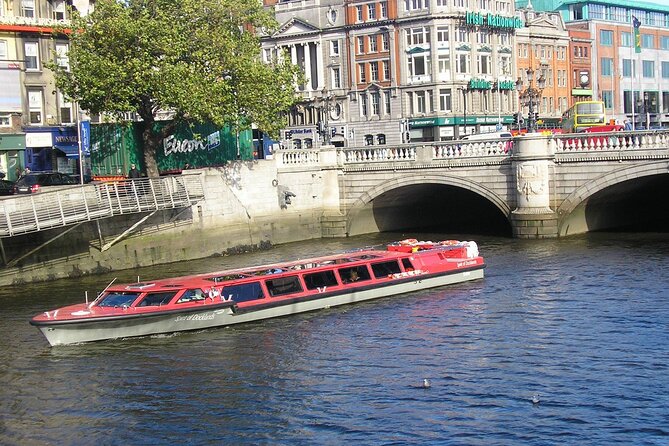
Most people miss Dublin’s river rhythm because they only see the Liffey from the bridges. Starting at Seán O’Casey Bridge puts you right in the middle of it, on the north side of the river, where you can watch the city’s two halves talk to each other.
The meeting point is convenient if you’re already moving around central Dublin. The activity also notes it’s near public transportation, which matters here because the cruise is short—about 45 minutes—so you don’t want to arrive late and cut your time.
This is also a good format if you like “arrive, see, go.” You board, the guide starts telling stories right away, and the cruise ends back at the same place you boarded. No endless transfers. No half-day commitment.
If you’re traveling with kids, the tour requires children to be accompanied by an adult, and the company allows service animals. And since most travelers can participate, this one often works as a low-effort activity compared with long walking tours.
You can also read our reviews of more boat tours in Dublin

What the 45 Minutes Feels Like on the Liffey
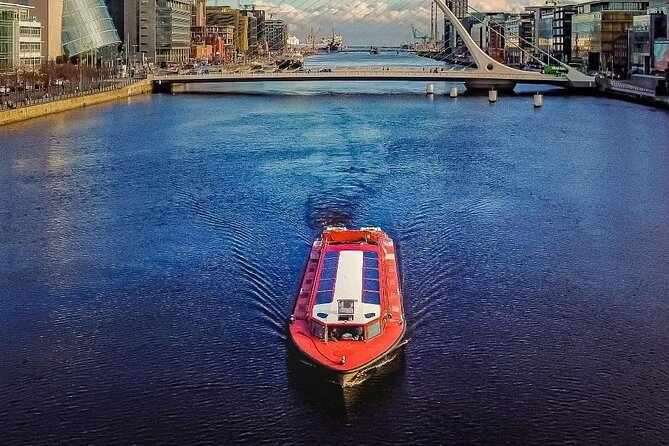
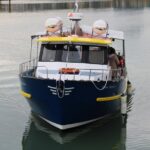
This cruise is built for the visitor who wants a fast orientation. The vibe is relaxed: you’re in a comfortable pontoon setting, moving through central Dublin waters while the guide narrates what you’re passing.
The biggest practical win is how much you can see without thinking too hard. In one outing you get multiple neighborhoods and several landmark bridges. That’s why this tour clicks for first-time visitors, or for anyone who’s got only one free block of time.
That said, it’s short. A few negative comments point to the sense that the cruise can feel like a quick sail with limited time for extra surprises. I agree with the logic: you’ll enjoy it most if you treat it as an intro ride—a way to get oriented—then follow up with walking or another longer tour later.
Also, plan around the weather. The experience notes it requires good weather. Rain can change the whole mood because wet windows can blur what’s outside. If Dublin gives you a gray, drizzly day, pack a rain layer and be ready for lower visibility.
Gliding Past the Jeanie Johnston Tall Ship
One of the first big moments is seeing the Jeanie Johnston Tall Ship from the river. This isn’t just a boat you pass—it’s a museum tied to the Great Famine story, which makes your cruise feel grounded in real Dublin history rather than generic sightseeing.
Approaching it from water level helps you understand why shipbuilding and shipping mattered here. The Liffey wasn’t just scenic—it was a working route, and the dock area tells that story. When the guide connects what you see to the famine-era context, it gives the landmarks meaning beyond their appearance.
A small caution: because the cruise is time-limited, you won’t linger long. The value is in the passing view plus the narration. If you’re the kind of traveler who wants to read every sign, you’ll likely want to pair this with a separate museum visit later.
Even without extra time, the Jeanie Johnston stop works well as an emotional pivot. You go from everyday bridges and buildings into a chapter of Ireland’s past that still shapes how people talk about Dublin.
Samuel Beckett Bridge: Dublin’s Modern Icon From Below
If you only remember one bridge moment from this cruise, make it Samuel Beckett Bridge. It’s the striking Santiago Calatrava design, and seeing it from the water gives you a different angle than the usual street-level views.
Bridges in a city are often treated like background. From the river, you notice the geometry. From below, you notice how the structure cuts across the sky. That makes it a strong visual anchor during a short tour: even if you space out for a minute, you can look up and instantly recognize you’re somewhere with a clear “now” identity, not just old stone.
This also helps explain why this cruise is popular for photographers. You’re not just taking pictures of skyline buildings; you’re photographing a designed object in motion with the river as the stage.
If you’re thinking about timing, you’ll do best sitting where you have a clear view toward the bridge as you approach. In rain, you may need to wipe glasses or lenses—some people reported that moisture on windows made sightlines tougher—so keep that in mind.
Ha’penny Bridge and the Wrought-Iron Story
Dublin’s Ha’penny Bridge is the one that feels like it belongs to the everyday city. This cruise passes it with narration about the wrought-iron work and the bridge’s origins, and that context changes how you think about it.
Here’s why this matters for you: when you understand a landmark’s age and purpose, you start spotting similar details everywhere else. You’ll probably walk away noticing old ironwork and thinking about how people moved across the river before modern bridges and modern transit.
Also, seeing it from the river reinforces the scale. It’s older pedestrian infrastructure, close to daily foot traffic. From the deck, it reads as a living part of the city, not a distant tourist prop.
Downside? Again, it’s a pass-through. You won’t get a long stop to get your bearings on foot. But if your goal is to get your Dublin map in your head quickly, this bridge moment does the job.
You can also read our reviews of more guided tours in Dublin





Docklands: From 18th-Century Shipping to the New Centre
The cruise doesn’t just throw random monuments at you. It connects Dublin Docklands to the bigger story of change—how the area grew out of 18th-century shipyards and became the cosmopolitan center you can recognize today.
That evolution is exactly what I look for on short tours: a simple narrative arc. The river is the thread, and the Docklands are the proof. You can see why the Liffey mattered for trade and industry, and you can also see why the riverfront now serves residents, visitors, and commerce in different ways.
This part of the cruise works especially well if you plan to explore further after. You’ll have better instincts about where the city’s energy is now, and you’ll know what to look for when you walk the quay areas later.
One more practical note: if you’re hoping to spend your whole day in the Docklands, this won’t be enough on its own. Treat it as the orientation layer. Then you can choose where to go next based on what caught your attention from the water.
Live Commentary That Uses Humor, Not Lectures
The best thing about this cruise isn’t the boats. It’s the narration. Multiple experiences highlight guides who are passionate about Dublin and who mix history with Irish sense of humor. Names that came up include Jerry, Gerry, Terry, and Dave, and the consistent theme is lively storytelling.
That matters because you’re hearing history while actually seeing the landmarks. When the guide ties a bridge design or a dock area to the bigger story, it sticks. You don’t have to read plaques or guess at meaning—you get a guided lens.
I also appreciate that the tone feels more like a conversation than a classroom. In a few accounts, the guide-and-skipper combo brought real banter, and that keeps the shorter time from feeling like a drag.
Still, live narration has one risk: it’s live. If you’re sensitive to unexpected audio or crowd dynamics, you’ll want to come with that in mind. One unhappy account mentioned poor behavior on the microphone, but most experiences point to friendly, entertaining delivery.
Price and Value for a Short River Ride
At about $27.15 per person for roughly 45 minutes, this sits in the “worth it if it fits your day” category. It’s not a bargain like free sightseeing from a bridge, but you’re paying for three things you’d otherwise need to arrange separately:
- Guided interpretation while you’re on the water
- Landmark coverage (multiple bridges plus Docklands) in one sweep
- Convenience: easy start and end at the same meeting point
If your plan is “one quick Dublin activity,” this can be a strong value. If your plan is “I want to spend half a day learning every detail,” you’ll likely feel constrained by the time.
Think of it as a high-impact orientation tool. Then use your energy for walking, pubs, and neighborhood wandering where you can linger.
One more value note: with a maximum of 22 travelers, you’re not in a huge cattle-car situation. That helps the guide stay audible and keeps the experience from feeling purely transactional.
Practical Tips for a Better Cruise Experience
Here are the things that make the difference, based on what people actually report and what the tour format implies.
Bring rain gear if the forecast looks iffy. If windows get wet, visibility can suffer. A few reports describe rain dropping outside the window and moisture inside reducing what you could see.
Arrive a bit early and take the meeting point seriously. This one runs on a tight schedule. Some negative experiences involved boarding issues when people arrived later than they should have.
Expect light on food and drink. Food and drinks aren’t included, so decide where you want your snack before or after.
Dress for a river breeze. Even when it looks fine on land, being on the water can feel cooler, especially if there’s wind.
If you have mobility limits, this may be a friendly option. The experience notes most travelers can participate, and at least one report specifically praised it as easy for mobility needs.
Who Should Book This Dublin Liffey Cruise?
Book this if you want a quick, organized way to learn what you’re seeing in Dublin. It’s ideal for:
- First-time visitors who need orientation fast
- People who want a low-effort activity between longer walking days
- Travelers who like history explained clearly with humor
- Anyone short on time but eager to see bridges plus Docklands in one outing
If you’re the type who hates short tours, or you get annoyed when you can’t linger, you might prefer a longer guided option. And if you’re traveling on a cold, rainy day with low visibility, you may have to mentally adjust expectations about what you can clearly see through the windows.
Should You Book This Dublin Liffey Cruise?
Yes, I’d book it if you’re aiming for a fast Dublin orientation with strong storytelling. The combination of landmark coverage and live guide narration is the real payoff, especially when you treat it as the first chapter of your Dublin day.
I’d skip it or pick a different day if you’re likely to face steady rain and you really want crisp views the whole time. Also, if you hate short experiences, you may feel it’s over quickly.
FAQ
How long is the Dublin Sightseeing Cruise on the River Liffey?
It runs for about 45 minutes (approx.).
Where does the cruise depart from?
The start point is Seán O’Casey Bridge on the north side of the River Liffey in Dublin. The cruise ends back at the meeting point.
Is there a local guide and live commentary on board?
Yes. You get a local guide and live commentary during the cruise.
What language is the tour offered in?
The tour is offered in English.
Are children allowed on the cruise?
Children are allowed, but must be accompanied by an adult.
How many people are on the tour at once?
The experience has a maximum of 22 travelers.