REVIEW · DUBLIN
Dublin: Irish Rock ‘N’ Roll Museum with Tour in English
Book on GetYourGuide →Operated by The Irish Rock 'N' Roll Museum Experience · Bookable on GetYourGuide
Rock ’n’ roll in Temple Bar feels strangely real. This English guided tour takes you through Ireland’s only Rock N Roll Museum Experience, built around the Wall of Fame area and the stories behind Irish chart-makers. I especially liked how it pairs museum-style exhibits with access all areas inside actual music spaces, not just glass cases.
Two things I liked a lot: the Thin Lizzy and U2 exhibition focus gives you clear threads through Irish rock history, and the tour’s “behind-the-scenes” stops mean you see how recordings and rehearsals happen in real life. One thing to consider before you go: it’s guided in English only, and it isn’t suitable for children under 5 or wheelchair users.
In This Review
- Key reasons to put Irish Rock ’N’ Roll Museum Experience on your Dublin list
- Starting at Curved Street: Temple Bar’s Wall of Fame setting
- The 75-minute tour rhythm and what you’ll actually do
- Thin Lizzy and U2: why these exhibits matter more than the band names
- Visiting a top venue plus rehearsal rooms and a recording studio
- Memorabilia and photo exhibitions: how the displays build the big picture
- Meet your guide: storytelling style you can feel in the group
- Price and value check for a $25, 75-minute experience
- Who this tour is best for (and who should skip)
- Tips to get the most out of Irish Rock ’N’ Roll Museum Experience
- Should you book this tour?
- FAQ
- How long is the Dublin Irish Rock ’N’ Roll Museum tour?
- Where does the tour start?
- Is the tour guided, and what language is it in?
- What’s included besides museum exhibits?
- Is video recording allowed?
- Is it suitable for children or wheelchair users?
Key reasons to put Irish Rock ’N’ Roll Museum Experience on your Dublin list
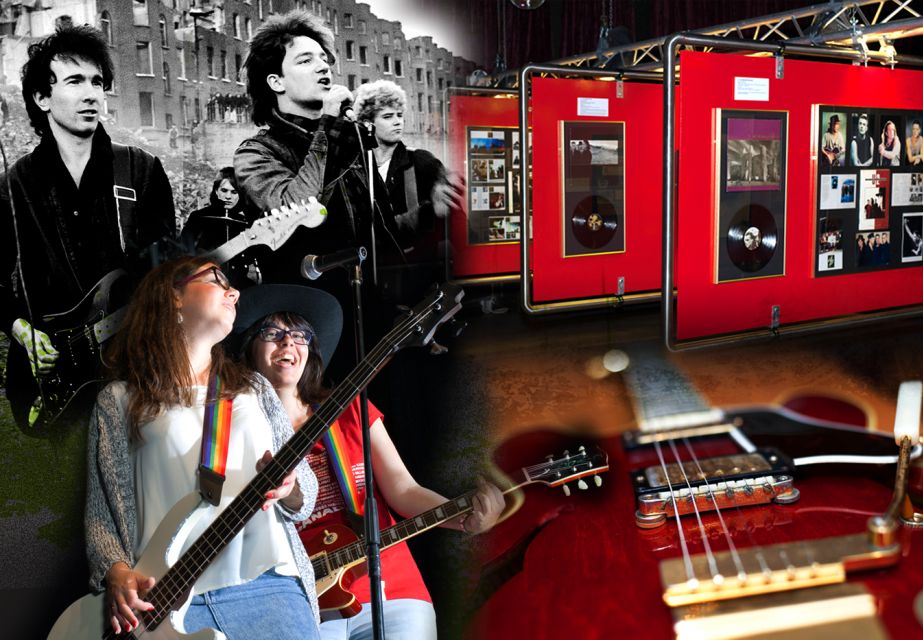
- Thin Lizzy and U2 exhibitions that give context, not just memorabilia
- All-areas access to a top Dublin music venue plus rehearsal spaces and a commercial recording studio
- Wall of Fame location in Temple Bar’s Cultural Quarter, so you get the setting that Irish music history actually lives in
- Memorabilia and photo displays tied to major artists like U2, The Pogues, The Script, and even Michael Jackson items on show
- Fun interaction mixed with guided storytelling, so it doesn’t feel like a quiet school tour
- Real working spaces where famous Irish acts have rehearsed or recorded, including names like Van Morrison, Hozier, Sinead O’Connor, and more
Starting at Curved Street: Temple Bar’s Wall of Fame setting
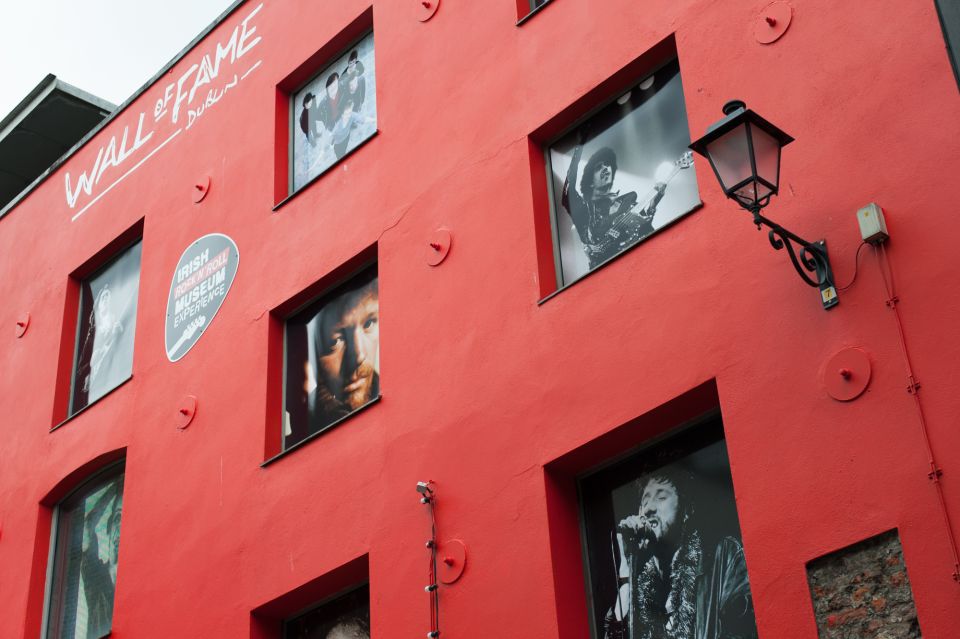
The tour begins at Curved Street in Temple Bar (Dublin 2). That matters, because this is not a hidden museum in a side street. You’re in the exact neighborhood where tourists take photos and where Irish live-music culture is part of the daily scene.
What you’re walking into is housed around the famous Wall of Fame vibe. The guides work it like a storybook. You’re basically touring behind the Wall of Fame itself, with the guide explaining the careers and personal moments of Irish music heroes as you go. It’s a clever way to use the location to set the mood fast.
You’ll also learn quickly that this is an “experience,” not just a collection of objects. The museum portion is only one piece. The bigger payoff is that you’re granted access to working music spaces connected to recording and rehearsal.
You can also read our reviews of more museum experiences in Dublin

The 75-minute tour rhythm and what you’ll actually do
The tour runs about 75 minutes, so it’s a good fit if your day is already packed. It isn’t long enough to feel like a whole afternoon commitment, but it’s long enough for the guide to connect the dots between bands, big milestones, and why Irish rock took the shape it did.
From the way the tour is structured, you can expect a guided flow like this:
- You start with the museum/exhibition area tied to the Wall of Fame theme.
- Then you move into dedicated artist displays, including special attention to Thin Lizzy and a broader Irish rock narrative that touches major names.
- After the museum storytelling, you shift into the “how it’s made” side, where the tour includes access to music venues, rehearsal spaces, and a commercial recording studio.
A practical note: video recording isn’t allowed, so plan on using your eyes (and your phone photos only, if they’re permitted by the space rules). If you’re a person who likes to document everything, this one is about watching and listening instead of filming.
Thin Lizzy and U2: why these exhibits matter more than the band names
Plenty of Dublin music stops list famous artists. This one uses them as anchors. The Thin Lizzy and U2 exhibitions aren’t just walls of history. They’re set up like signposts in an Irish rock timeline, which makes the whole tour feel more coherent.
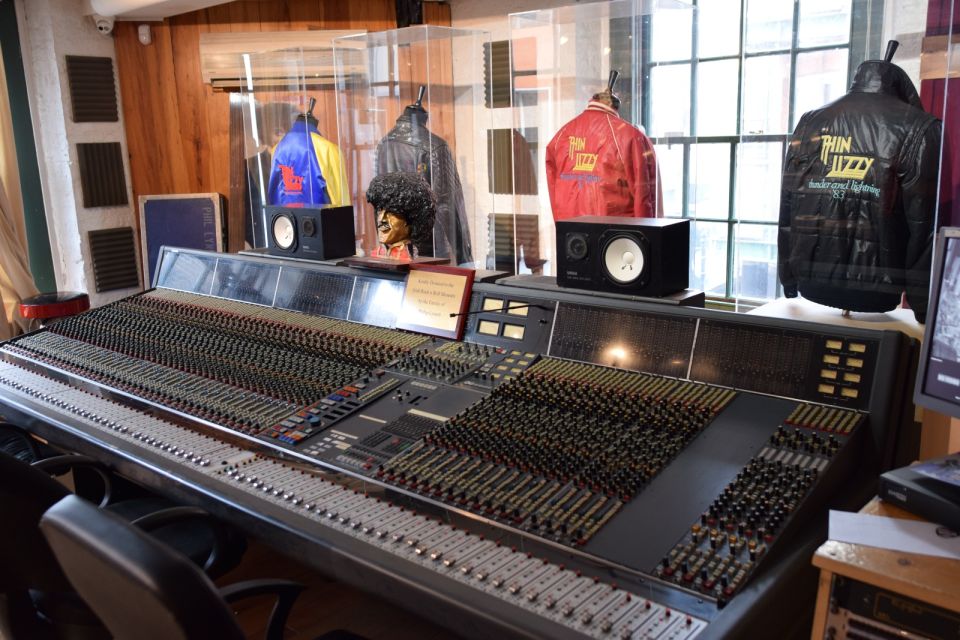
Thin Lizzy gets a dedicated exhibition. If you’re into classic rock energy—guitars, attitude, and the kind of songwriting that can cross generations—this is the part that likely hits hardest. You’re not just seeing that they were successful. You’re being shown why they mattered in the story of Irish rock reaching wider audiences.
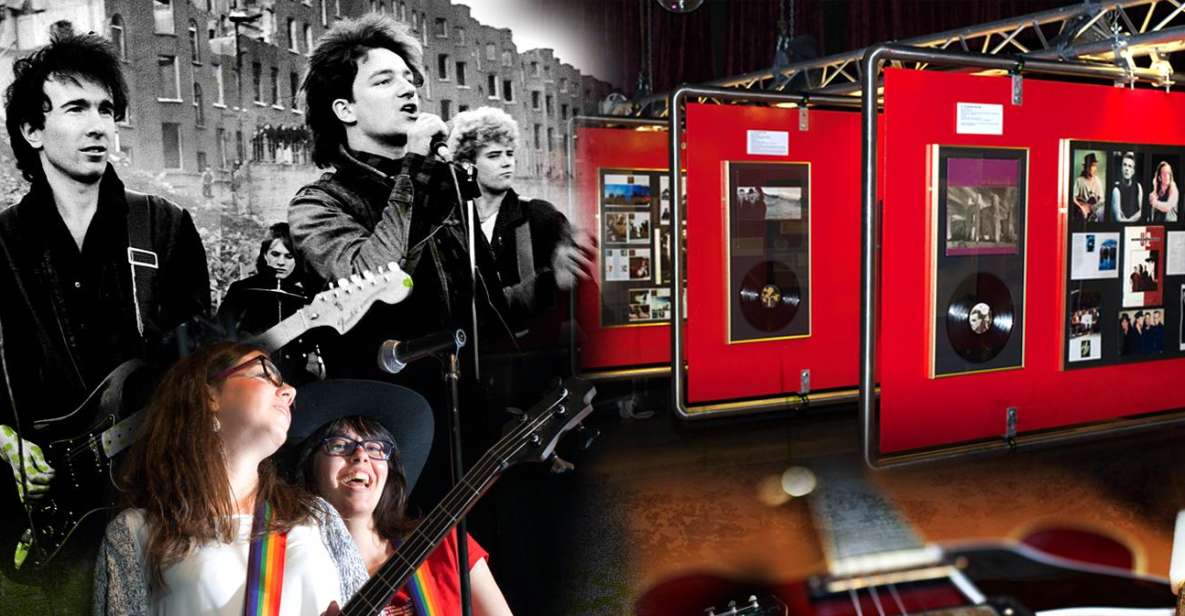
U2 is treated as more than a global brand. The tour includes memorabilia on display connected to U2 (and other bands), plus photo and exhibition materials that help you understand how Irish rock grew from local scenes into internationally recognized acts. That helps if you’re a fan who wants context, not just name recognition.
If you’re not a die-hard for either band, don’t panic. The broader point of the tour is Irish Rock ’N’ Roll’s story—how styles, scenes, and venues fed one another. Thin Lizzy and U2 are simply two major chapters that make the book easier to read.
Visiting a top venue plus rehearsal rooms and a recording studio

This is where the tour earns its keep.
The experience includes access all areas to one of Dublin’s top music venues, plus working rehearsal spaces and a commercial recording studio. That means you’re not only learning about music history—you’re being shown the kinds of spaces where history gets made.
For I-like-to-see-how-things-work people, this is a win. You’ll get a sense for the difference between:
- a venue built for live performance energy,
- rehearsal rooms where bands shape their sound over time, and
- a recording studio where the technical side turns performance into a product.
Even if you’re not a musician, you’ll probably notice how rehearsal and recording spaces carry their own vibe—more focused, less “show,” more process. That contrast is part of the authenticity. It’s one thing to read about the industry. It’s another to stand where Irish artists have worked.
The tour is also positioned as having played host to famous names such as Thin Lizzy, Van Morrison, Hozier, The Script, Sinead O’Connor, and many more. You’re not being asked to imagine it. You’re being guided through the real environment where that work took shape.
Memorabilia and photo exhibitions: how the displays build the big picture
Inside the museum experience, you’ll see memorabilia connected to major acts. The tour includes items from U2, The Pogues, The Script, and even Michael Jackson memorabilia on display. It’s an interesting mix, and the guide’s job is to connect it to Irish rock’s wider network of influence and ambition.
You’ll also find photographic exhibitions of Irish rock stars. Those photos aren’t just decorative. When your guide explains the background, pictures turn into timeline anchors. You start to link faces, eras, and musical shifts.
One more detail I appreciated: the museum approach is paired with interaction and guidance. So instead of wandering alone and hoping to connect the dots yourself, you get a push through the story. That’s especially helpful if you’re the kind of visitor who wants the highlights but also wants enough context to feel satisfied afterward.





Meet your guide: storytelling style you can feel in the group
Guides make a real difference on tours like this. The experience is heavily guided, and it relies on the guide’s pacing and personality to keep the museum sections lively and the studio/venue access meaningful.
In the reviews I saw, names like Alan and Bryan come up often. You might find yourself with a guide who shares lots of small tidbits and makes the tour feel like a conversation with someone who actually cares about Irish music.
That said, a balanced expectation is useful. One review mentioned a guide who spoke more quietly and slowly, and another mentioned a guide’s personal take on U2 that didn’t land for a big fan. Translation: you’re signing up for a human voice, with human opinions. If you’re sensitive to commentary style, consider choosing a time slot and matching tour vibe that fits your preferences.
If you go in curious—ready to learn and not only to judge the guide’s taste—you’ll probably get more from it.
Price and value check for a $25, 75-minute experience
At about $25 per person for roughly 75 minutes, you’re paying for three things at once:
- A guided museum experience inside the Wall of Fame setting.
- Dedicated artist exhibitions, including Thin Lizzy and U2.
- Access that you can’t easily DIY, including rehearsal spaces and a commercial recording studio.
Museums are often slow, and guided tours are often just a lecture in nicer clothes. Here, the backstage access changes the value equation. Studio and rehearsal spaces are the kind of places that are usually off-limits. Even if you’ve visited music attractions before, this “working spaces” angle is a strong reason to pick this over a standard exhibit-only stop.
Also, because the duration is compact, it’s a practical add-on. You don’t have to block a whole half day, and it pairs well with other Temple Bar sights.
A quick practical note: if you’re very particular about audio and storytelling volume, don’t expect a hype show. This is education with interaction, not a concert.
Who this tour is best for (and who should skip)
This one is ideal if you:
- love rock music and want Irish rock history in plain English,
- enjoy guided context more than self-guided wandering,
- like the idea of seeing how studios and rehearsals work, even at a visitor level,
- want a compact activity in central Dublin that doesn’t swallow your day.
It’s also a good choice if you’re a fan of Irish success stories across the decades, since the experience includes memorabilia and stories tied to multiple major Irish acts.
You might want to skip it—or at least rethink it—if:
- you need a tour designed for very young kids (it’s not suitable for children under 5),
- you use a wheelchair (not suitable for wheelchair users),
- you’re planning to record lots of video (video recording isn’t allowed),
- you only want a purely neutral, academic museum style with no guide personality.
If your goal is to feel like you stepped into music-making culture, this fits. If your goal is to collect footage and move fast with zero guided commentary, it might not.
Tips to get the most out of Irish Rock ’N’ Roll Museum Experience
- Arrive ready to listen. The experience is built around the guide’s storytelling, and the time is tight.
- Wear comfortable shoes. Temple Bar is walk-heavy, and you’ll be moving between areas.
- Bring your Irish rock curiosity, even if you’re not a deep specialist. Thin Lizzy and U2 anchor the story, but the tour’s purpose is the broader Irish rock ’n’ roll arc.
- If you’re a big fan of one of the featured artists, go with an open mind. The guide’s perspective can shape how the material feels.
- Turn off your need to film. Since video recording isn’t allowed, plan to use photos sparingly and rely on memory.
Also, the meeting point is clear: Curved Street Temple Bar Dublin 2. That makes it easier to plug into a day of walking around the Cultural Quarter.
Should you book this tour?
If you’re in Dublin and you care about music stories that connect names to real places, I think you should book it. The best reason is simple: you’re getting more than a museum. You’re getting guided access to the spaces where Irish artists rehearse and record, plus a tightly paced tour anchored in Thin Lizzy and U2 exhibitions.
I’d especially recommend booking if you want a central, 75-minute activity that feels authentic instead of generic, and if you enjoy learning in a lively guided format. If English-only tours work for you and you’re okay with the fact that the guide will have opinions and a specific delivery style, this is a strong value at about $25.
If those factors don’t fit your preferences, you might prefer a more independent museum experience. But for most music lovers, this is one of those Dublin stops where the setting and the access make the difference.
FAQ
How long is the Dublin Irish Rock ’N’ Roll Museum tour?
It lasts about 75 minutes.
Where does the tour start?
The tour starts on Curved Street Temple Bar Dublin 2.
Is the tour guided, and what language is it in?
Yes, it’s a guided tour in English.
What’s included besides museum exhibits?
Besides guided museum/exhibition time, you get an access all areas pass to a top Dublin music venue, working rehearsal spaces, and a commercial recording studio.
Is video recording allowed?
No, video recording isn’t allowed.
Is it suitable for children or wheelchair users?
It’s not suitable for children under 5, and it’s not suitable for wheelchair users.