REVIEW · DUBLIN
Macabre, Ghostly & Bloody Walking Tour
Book on Viator →Operated by Yellow Umbrella Tours Ltd · Bookable on Viator
If you like your Dublin history with a chill, this works. This 2-hour walking tour strings together macabre street stories from across the city, mixing famous monuments with lesser-known corners. I especially liked the way the guide uses real Dublin landmarks to set the mood, and the stop at the General Post Office where you hear the story of the Death of Cuchulainn.
You’ll also get a strong sense of place by shifting between the Victorian bits and the grim stuff tied to streets like Fishamble Street and St Michan’s. One consideration: the subject matter is dark—Black Death quarantine cages, a man-eating rats story, and mummified remains—so you’ll want to know what kind of mood you’re signing up for.
In This Review
- Key things I’d bet on before you go
- Value and vibe: what this Dublin macabre walk really costs
- Meeting at the Spire: how to start without stress
- Stop-by-stop: the macabre itinerary and why each stop works
- The Spire (meeting point): 120 metres of Dublin attitude
- An Post General Post Office: the Death of Cuchulainn
- Wolfe Tone Park: grave robbers and Arthur Guinness’s wedding venue
- Oxmantown by the old fruit and vegetable market: Viking ritual with bite
- Father Matthew Bridge: a soldier and man-eating rats
- St. Audoen’s Church and the old city walls: Black Death quarantine cages
- Fishamble Street: a brothel keeper and death at the stake
- St. Michan’s Church: mummified corpses and a legless serial killer
- What makes the tour fun, beyond the “creepy” label
- Who this tour suits (and who might want to pick something else)
- How to make the most of it on the night
- Should you book this Macabre, Ghostly & Bloody Walking Tour?
- FAQ
- How long is the Dublin Macabre, Ghostly & Bloody Walking Tour?
- What time does the tour start?
- Where do I meet the guide?
- Where does the tour end?
- Is the tour offered in English?
- How much does it cost?
- Do I need a printed ticket?
- What’s the group size limit?
- Are there any additional admission fees at the stops?
- Can I cancel for a full refund?
- Are service animals allowed?
Key things I’d bet on before you go

- Two hours, evening start: 6:00 pm departure keeps it in that perfect Dublin night-lighting zone.
- Small-ish group: up to 25 people means you’re not lost in a crowd.
- Landmarks you’ll actually recognize: the Spire, the General Post Office, bridges, and major churches.
- The stories connect to the street: Vikings, grave robbers, plague-era cages, brothel lore, and mummies.
- Professional guides with real energy: guides like Peter and Rob have a voice that feels built for performance.
Value and vibe: what this Dublin macabre walk really costs
This tour is priced at $20.43 per person for about 2 hours, and that’s a pretty fair deal when you compare it to what you usually pay for a themed walking tour that actually uses multiple real sites. The value comes from the pacing and the guide. You’re not just “walking and listening.” You’re hitting a sequence of stops where each one tees up the next story, so the time passes fast.
Also, it’s scheduled for early evening, starting at 6:00 pm. Dublin at that hour can feel cinematic—street corners, stone buildings, and darker lanes starting to show their age. If you’re trying to mix a first-day orientation with something more entertaining than a museum room, this fits.
One more plus: the tour uses a mobile ticket, and everything is in English. In other words, you can show up without printing and you won’t be stuck waiting for translations.
You can also read our reviews of more walking tours in Dublin

Meeting at the Spire: how to start without stress
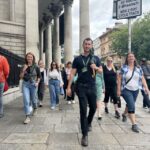
You meet by the Spire on O’Connell Street Upper, in North City. The Spire is a huge, 120-metre landmark in the middle of Dublin, so you can treat it like your visual anchor. If you’re the type who hates wandering right before a tour begins, this is ideal. You’ll likely spot other people clustering nearby—then the group gets moving.
Plan to arrive a few minutes early. That way you get settled, meet the guide, and you’re ready when the first story starts. The tour runs around 15 minutes per stop, so there’s no time to feel confused or behind.
Stop-by-stop: the macabre itinerary and why each stop works
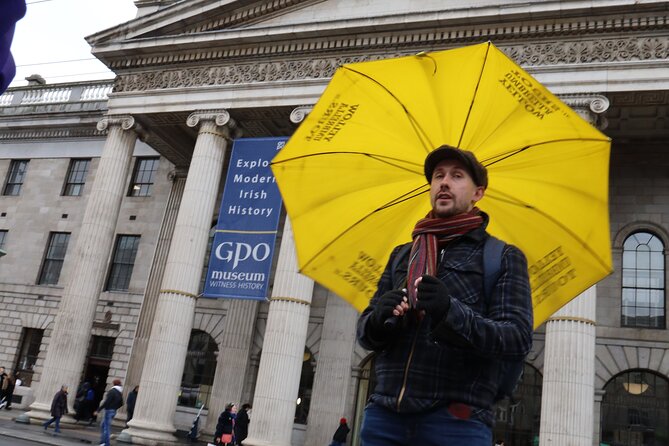
This route is built like a playlist for people who enjoy dark stories with sharp edges. You get a mix of myth, Victorian era grimness, plague-era fear, and the kind of street legend Dublin is famous for. Here’s how the stops feel in real time, and what you should pay attention to.
The Spire (meeting point): 120 metres of Dublin attitude
The tour starts beside the Spire, the 120-metre sculpture that dominates O’Connell Street. It’s not just a meeting point. It’s a statement of scale. You get the sense that Dublin’s modern center is right next to the older layers—fast, and built on top of older fear.
At this stage, I’d focus on two things. First, listen for how the guide frames Dublin’s history as a series of places people remember for unusual reasons. Second, get your bearings. The Spire location makes the rest of the evening easier to follow on foot.
An Post General Post Office: the Death of Cuchulainn
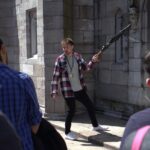
From the Spire you move to the An Post General Post Office area. The guide looks at a statue there and tells the story tied to the Death of Cuchulainn. This stop is a good reminder that Dublin’s “macabre” isn’t only about crime and ghosts. It also lives in legend.
What I like about this moment is the way it broadens your idea of what the tour is. Instead of one-note horror, you get myth and drama. If you’re the kind of person who enjoys stories where the emotion matters as much as the creep factor, you’ll appreciate this.



Wolfe Tone Park: grave robbers and Arthur Guinness’s wedding venue
Next is Wolfe Tone Park. Here you hear about Victorian-era grave robbers, and you also get a practical, unexpected detail: it served as a wedding venue connected to Arthur Guinness.
That combination matters. A walking tour like this needs variety so the dark theme doesn’t become repetitive. Grave robbers are plenty grim on their own, but bringing in the wedding-venue story gives you a fuller Dublin view—people doing everyday life next to what society tried to hide.
Oxmantown by the old fruit and vegetable market: Viking ritual with bite
At Oxmantown, outside the old fruit and vegetable market, the stories shift again. You get the history of the Vikings in this area, plus some of the gorier aspects of Viking ritual.
This stop is for you if you like your “dark history” grounded in place and time. You’re not just hearing about Vikings in general terms. You’re hearing that the neighborhood has a specific Viking thread, and that the violence around ritual wasn’t only background noise. The guide’s job here is to keep it intelligible, not sensational.
My practical tip: if you’re someone who gets squeamish about gore talk, don’t assume you’ll be immune. This tour uses the word “gorier” directly through its storytelling theme, so mentally prepare.
Father Matthew Bridge: a soldier and man-eating rats
At Father Matthew Bridge, the guide tells the story of a soldier whose end is tied to man-eating rats. Bridges are perfect for this kind of tale. They’re transition points. You cross them, and the story crosses into a new mood.
This stop also tends to stick with people because it sounds like street theatre, but it fits Dublin’s habit of attaching frightening narratives to very normal city objects. So yes, it’s odd. That’s the point.
St. Audoen’s Church and the old city walls: Black Death quarantine cages
Then you reach St. Audoen’s Church, where you see the quarantine cages at the old city walls from the Black Death.
This is one of the moments where the tour feels more than just spooky entertainment. It touches real fear: disease, isolation, and the way cities handled outbreaks before modern medicine. Even if you’re not a history buff, you’ll get why this story was worth preserving.
If you want to learn something concrete, this is the stop. Look at how the guide connects fear to architecture, and how a city’s layout can show you what people were protecting—or trying to stop.
Fishamble Street: a brothel keeper and death at the stake
Fishamble Street is where the tour leans hard into notorious Dublin lore. You hear the tale of an infamous brothel keeper and her death by fire at the stake.
This stop has two layers. First, it’s a street story: the kind of character-driven narrative that makes a city feel alive. Second, it’s about punishment and public spectacle—what a community did when it decided to make a warning out of one person.
If you like stories with strong personalities, this is likely your highlight. It’s also one of the stops that helps you understand why tourists keep hearing dark tales about Dublin long after the tour is over.
St. Michan’s Church: mummified corpses and a legless serial killer
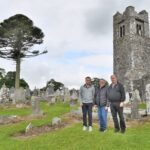
The final stop is St. Michan’s Church, where the guide talks about mummified corpses in the cellar and a legless serial killer.
This is the tour’s final emotional beat. By this point you’ve already heard about plague, violence, and survival. So the shift to mummified remains lands with full context. It’s not just shock. It’s a closing argument about Dublin’s habit of storing its past in visible places.
Practical note: since the tour ends beside Christchurch Cathedral and the Temple Bar District, you’re set up perfectly to keep walking afterward. You’ll be in the lively zone, but you’ll carry the mood with you.
What makes the tour fun, beyond the “creepy” label
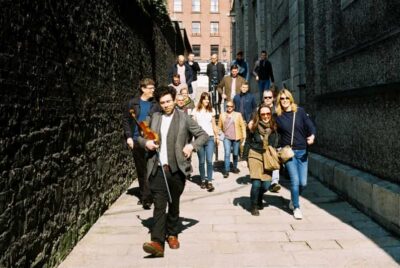
The best part of this experience isn’t the topic. It’s the delivery. In guides like Peter and Rob, I like the energy. They don’t just list facts. They shape the stories so they’re funny, captivating, and paced.
And the laughs matter here. Dark stories can turn heavy fast if the guide never eases off. But this tour keeps its footing, mixing grim topics with a lighter tone so you stay engaged for the full 2 hours.
Also, I appreciate how the route uses real landmarks as story anchors. The Spire, the General Post Office, bridges, churches—these aren’t random backdrops. You leave with a map in your head. That’s a real travel win.
Who this tour suits (and who might want to pick something else)
This is a strong match for you if you:
- Want a 2-hour walking plan that helps you see Dublin at night without committing to a full day.
- Like character-driven history, folklore, and street-level stories.
- Prefer tours where the guide brings personality, not just narration.
You might want to skip or choose a milder option if you:
- Don’t handle themes tied to plague-era fear, violence, or graphic-sounding tales well.
- Are hoping for a “ghosts and vibes only” experience without darker content.
How to make the most of it on the night
A few practical moves will help:
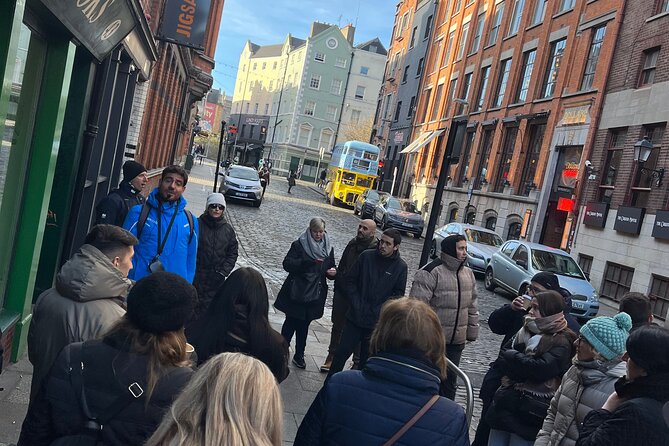
- Wear shoes you can walk in comfortably. This is a city stroll with multiple stops, so your feet will do the work.
- Bring a light layer. Evening in Dublin can shift fast.
- If you’re taking photos, use short pauses at each stop. The tour moves quickly, and you’ll want to stay with the group.
If you’re going on a first visit, pair this with something calmer later in the evening—like a proper sit-down drink or dinner—so you get a mood reset.
Should you book this Macabre, Ghostly & Bloody Walking Tour?
If you want a guided walk that feels like good storytelling rather than a lecture, this one is an easy yes. At $20.43 for roughly 2 hours, you’re paying for a professional guide, a tight route, and a sequence of Dublin sites that are recognizable even if you’re new to the city.
I’d book it if you like dark street history, enjoy a guide with energy, and want your Dublin evening to feel different from the usual sightseeing loop. It’s one of those tours where the theme actually fits the city, and you walk away with stories you can repeat.
If the topic is too heavy for you, that’s the only real reason to hesitate. Otherwise, it’s a fun, focused way to spend your time in Dublin.
FAQ
How long is the Dublin Macabre, Ghostly & Bloody Walking Tour?
It runs for approximately 2 hours.
What time does the tour start?
The start time is 6:00 pm.
Where do I meet the guide?
You meet by the Spire on O’Connell Street Upper, North City, Dublin.
Where does the tour end?
It finishes beside Christchurch Cathedral and the Temple Bar District, near Fishamble St, Wood Quay.
Is the tour offered in English?
Yes, it’s offered in English.
How much does it cost?
The price is $20.43 per person.
Do I need a printed ticket?
No. You’ll get a mobile ticket.
What’s the group size limit?
The maximum group size is 25 travelers.
Are there any additional admission fees at the stops?
The tour information lists Admission Ticket Free at each stop.
Can I cancel for a full refund?
Yes. Cancellation is free up to 24 hours in advance for a full refund. Cancel at least 24 hours before the start time.
Are service animals allowed?
Yes, service animals are allowed.