REVIEW · DUBLIN
Dublin: Bucket List Sights Walking Tour
Book on GetYourGuide →Operated by Yellow Umbrella Tours Ltd · Bookable on GetYourGuide
Dublin’s big sights in just two hours. I like how this walk connects Vikings to independence-era Dublin and ends with Trinity’s Book of Kells zone, and I also love that the guide ties the stops together into a clear story of how the city changed. One consideration: it’s built for walking and sight views, so you’ll need good shoes and you may hit busy sections around Temple Bar.
What makes it work is the pacing. You start near Christchurch Cathedral, hit major landmarks in a tight loop through the center, and come back to the same area. It’s also the kind of tour where a guide like Peter actually answers follow-up questions and gives practical suggestions for the rest of your stay, not just recites dates.
In This Review
- Quick hits you’ll care about
- The real value: a tight 2-hour route that connects the dots
- Meeting point and how to spot your group at Christchurch Cathedral
- Christchurch Cathedral: from Viking beginnings to Henry Roe’s money
- St Patrick’s Cathedral: patron saint legend and Jonathan Swift’s resting place
- Dubh Linn Garden and the Chester Beatty Library connection
- Dublin Castle: centuries of rule and the 1922 handover
- Temple Bar without losing the plot
- Over the Liffey: from the Celtic settlement to Silicon Docks views
- Central Plaza and the brutalist turn by Sam Stephenson
- College Green, banks and parliament: Georgian government energy
- Molly Malone outside St Andrew’s Church: the fun stop with a purpose
- Trinity College finish and the Book of Kells preview zone
- What you really get from a guide like Peter
- Price and value: $19 for major stops in one loop
- Who should book this tour, and who should consider alternatives
- Should you book the Dublin Bucket List Sights Walking Tour?
- FAQ
- How long is the Dublin Bucket List Sights Walking Tour?
- Where do I meet the guide?
- What main sights does the tour cover?
- Is the tour in English and is it wheelchair accessible?
- Can I reserve now and pay later?
- What is the cancellation policy?
Quick hits you’ll care about
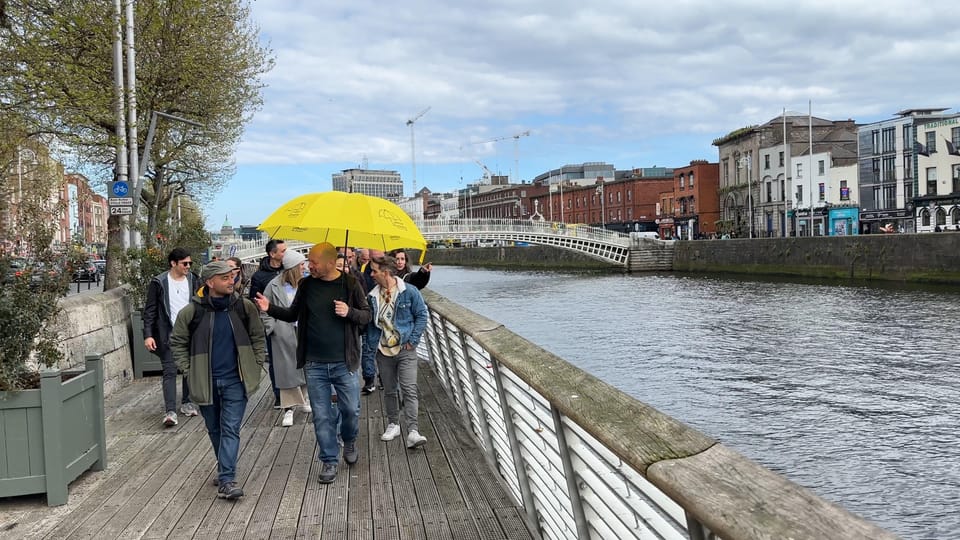
- Yellow umbrella meet-up makes it easy to find your group by Christchurch Cathedral
- Two hours covers multiple “top of Dublin” sites without eating your whole day
- Christchurch to Trinity gives you a clean storyline from early settlement to modern Dublin
- Peter-style guiding means you can ask questions and get tips that fit your English level
- Big exteriors, not deep museum time: perfect for orientation, smart if you plan separate entries
The real value: a tight 2-hour route that connects the dots
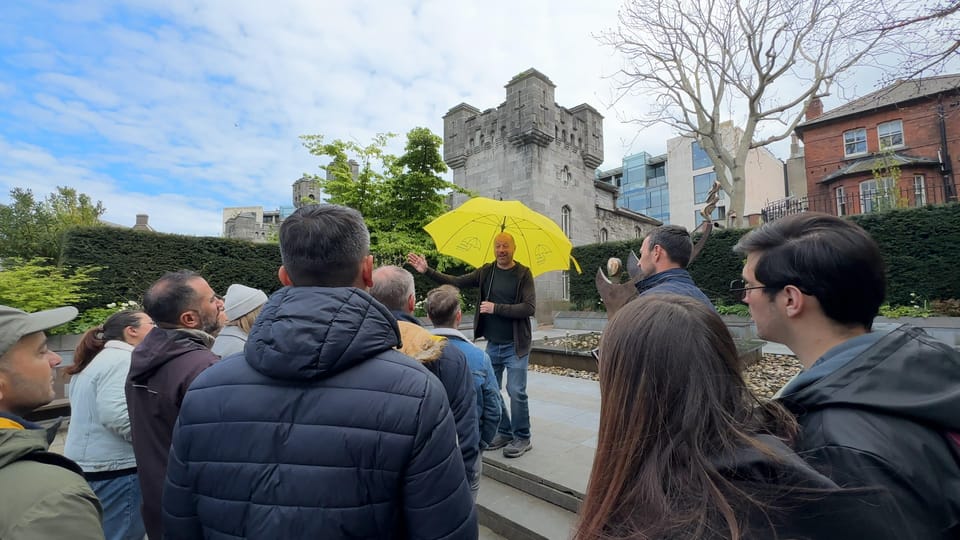
For a city as layered as Dublin, “bucket list” can quickly turn into “too much running around.” This tour does the opposite. You get a concentrated walking route that hits the most recognizable landmarks in the Old City, then the guide makes the links between them feel logical.
The best part, in my view, is the time efficiency. Two hours is long enough to understand what you’re looking at, but short enough that you can still build the rest of your day. And since the tour ends back near the start, you’re not trapped across town when you finish.
You’re also getting a guided story of change over time. You’ll move from early settlement and religious Dublin, into centuries of British administration, then toward the modern global influence hinted at from the north bank view. That “then and now” thread is what turns landmark photos into something you’ll remember.
You can also read our reviews of more walking tours in Dublin


Meeting point and how to spot your group at Christchurch Cathedral
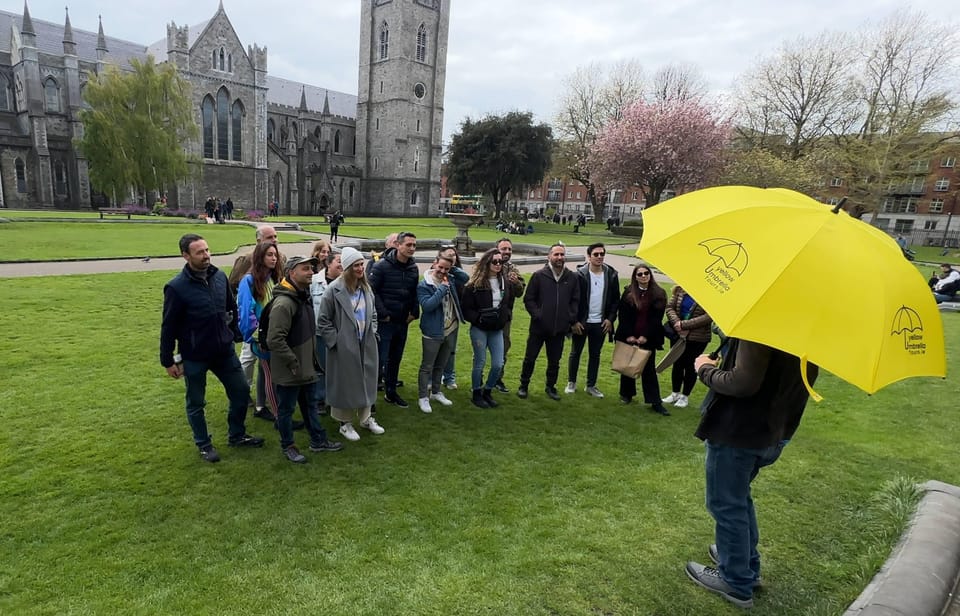
The tour starts across the road from Christchurch Cathedral, outside the Bull and Castle. Look for the yellow umbrella, which is a nice small detail that prevents the usual awkward minute-long waiting dance.
This is also a good practical choice for you. Christchurch Cathedral is easy to orient around, and ending back at the meeting point means you can pop into a nearby café or plan your next stop without recalculating your whole day.
The tour runs in English and is wheelchair accessible, so you should be able to enjoy it without feeling like you’re doing a one-off tour that only works for certain travelers.
Christchurch Cathedral: from Viking beginnings to Henry Roe’s money
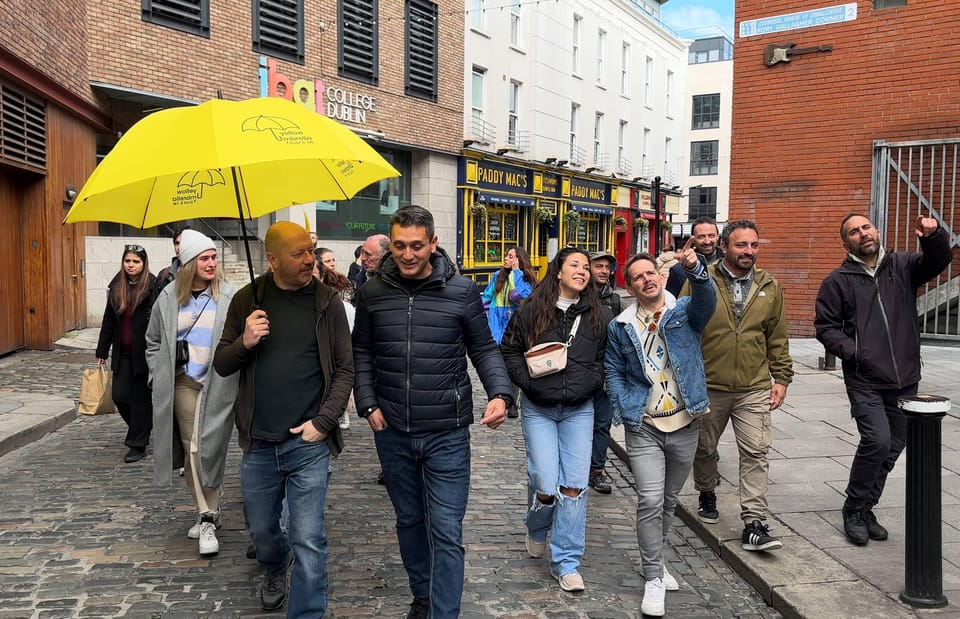
Christchurch Cathedral is where the tour gets its strongest “how Dublin became Dublin” start. You begin at Christchurch Place and stand in front of a cathedral that carries multiple eras in plain sight.
Here’s the story the guide helps you connect:
- The earliest version is tied to Vikings and an initial wooden build.
- Later, the Normans recast the cathedral in stone.
- The cathedral you see today reflects major 19th-century rebuilding, including the support connected to Henry Roe’s whiskey money.
If you like architecture, this stop is more than a photo op. It’s a lesson in how power and wealth show up in building styles. The move from Viking origins to Norman stone, then to a neo-gothic look shaped in the 1800s, shows you how Dublin’s identity kept resetting across different rulers and eras.
Possible drawback to keep in mind: cathedrals can mean uneven outdoor surfaces and crowds around the entrances. If you’re sensitive to that, plan to take your time at this first stop.
St Patrick’s Cathedral: patron saint legend and Jonathan Swift’s resting place
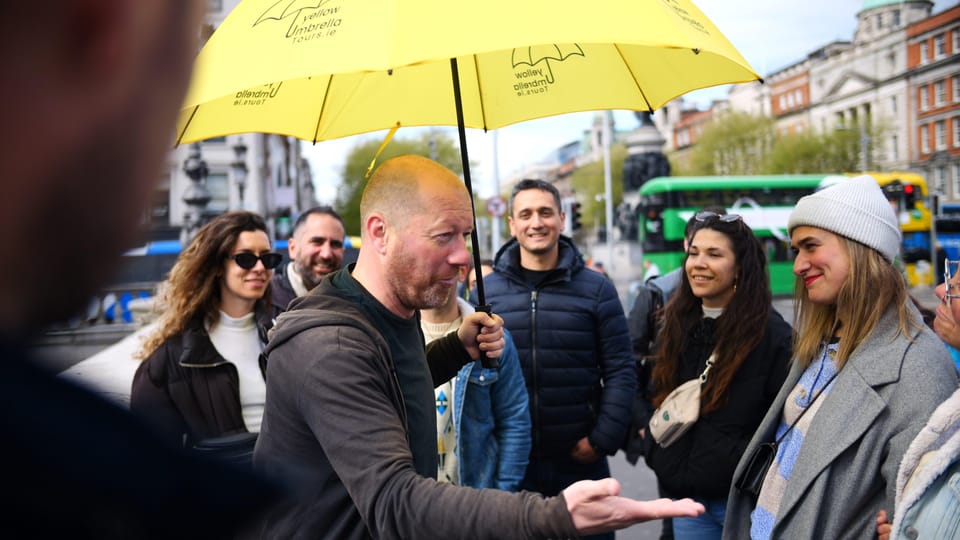
Next comes St. Patrick’s Cathedral, named for Dublin’s beloved patron saint. You’ll hear the well-known legend tied to Saint Patrick banishing snakes from the island, which is a quick way for you to understand how religion and local identity got stitched together here.
Then the guide adds Dublin’s literary connection. You’ll also learn that the cathedral is the burial place of the former Dean, Jonathan Swift, the writer behind Gulliver’s Travels. That detail matters because it turns the building from “pretty landmark” into “place where major Irish minds were anchored.”
Finally, the restoration story brings in a real person you’ll recognize if you know Irish brewing history: the cathedral was wonderfully restored thanks to the generosity of Sir Benjamin Lee Guinness in the 1860s. So you’re not just getting myth and fame; you’re getting how upkeep and patronage helped shape what survives.
Dubh Linn Garden and the Chester Beatty Library connection
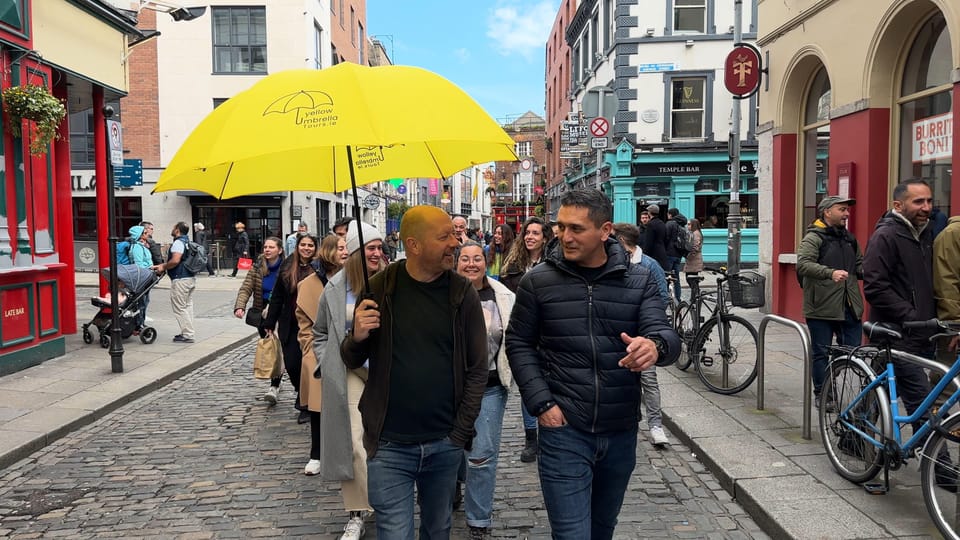
After the cathedral stops, you move toward the Dubh Linn Garden, and this is where the tour quietly adds something that many “walk past it” itineraries skip: a sense of location and arrival.
This stop links to two ideas at once:
- The area is associated with the outstanding Chester Beatty Library
- It’s also tied to where Vikings moored their long boats when they arrived in Dublin about twelve hundred years ago
Even if you don’t go inside the library, this is one of the most interesting “standing in the right spot” moments. It helps you picture how the city began in a physical way—arrival by water, settlement nearby, then growth into the streets and institutions you’ll see next.
If you’re a photo person, this is also a good place to slow down for a minute. The vibe shifts from towering religious buildings to the softer, park-like space where the guide’s story can land.






Dublin Castle: centuries of rule and the 1922 handover
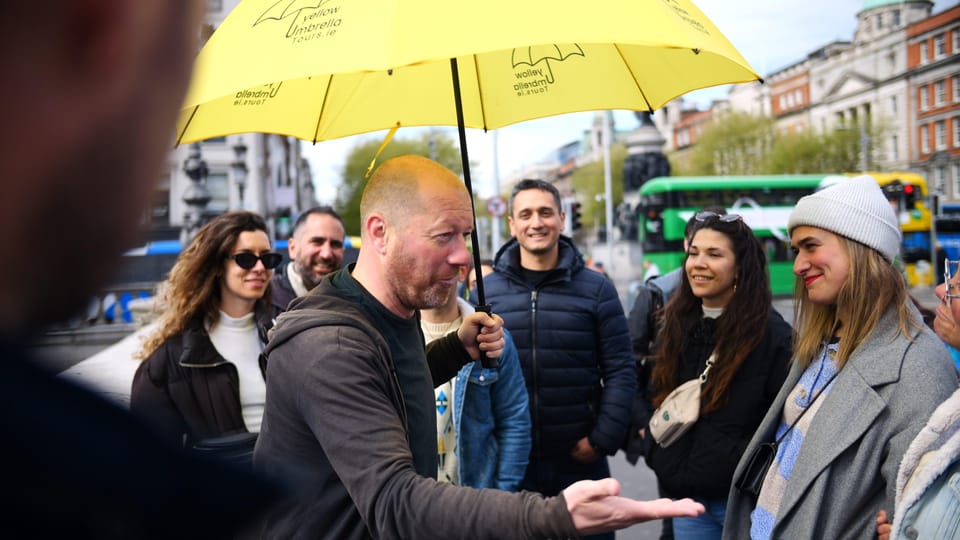
Then you hit the big political landmark: Dublin Castle. The tour spends time on what you can see and what it meant.
You’ll explore both lower and upper courtyards, and the guide points out the stunning mix of medieval and Georgian architecture. That matters because it explains why the place feels like different eras collided in one building complex, instead of being one uniform style.
The historical framing is the centerpiece:
- Dublin Castle was the seat of British government in Ireland for 700 years
- It was handed over to Michael Collins and the Irish Free State upon independence in 1922
That’s a lot of cause-and-effect packed into one site. If you’re traveling with limited time, this stop is one of the highest “understanding-per-minute” moments of the whole walk because it connects laws, administration, and who held power to a set of real stones you can still stand in front of.
Temple Bar without losing the plot
Next comes Temple Bar District. This area gets your attention fast: pubs, live music energy, and that classic Dublin nightlife atmosphere.
The tour also adds context so it doesn’t feel like you’re just walking through a party zone:
- You’ll see one of the oldest parts of the city dating from the Tudor Conquest in the 16th century
- Then you’ll understand why it became the modern hub for pubs and live music
In practical terms, the guide helps you move through Temple Bar in a way that doesn’t turn into “stuck in crowds.” You’ll get to see what makes it famous, but you’re not left to figure out the history yourself while people jostle for bar space.
Possible consideration: if you’re sensitive to noise or crowds, Temple Bar can feel loud and busy during peak hours. Wear earplugs if that’s your thing, and remember this is still a walking tour focused on sights and stories, not a long sit-down pub experience.
Over the Liffey: from the Celtic settlement to Silicon Docks views
One of my favorite parts of this kind of itinerary is when it refuses to stay in a single era. Here, you cross to the north side for a view that spans Dublin’s timeline.
You’ll look from the area connected with the original Celtic settlement dating back about 2,100 years, and the view is framed all the way toward the Silicon Docks idea—modern influence connected to Americans in the 21st century.
Even if you don’t go into any specific modern tech story (nothing here is presented like a lecture), the point is clear: Dublin didn’t stop evolving after independence or after the medieval walls. It kept changing, and you can see the layers.
After the view, you come back over Ha’penny Bridge and go through Merchant’s Arch toward Crown Alley. This helps keep your walking path interesting instead of repetitive.
Central Plaza and the brutalist turn by Sam Stephenson
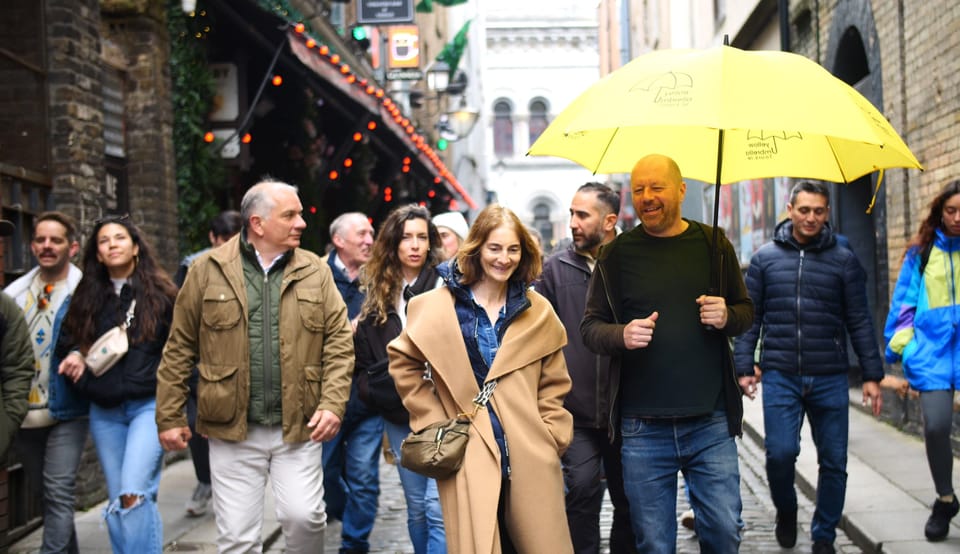
Between the classic landmarks, the tour also throws in a different kind of architecture: you’ll consider Sam Stephenson’s brutalist behemoth at Central Plaza.
That stop is useful for two reasons:
1) It shows you that Dublin’s story includes modern design choices, not only old stone and churches.
2) It gives you a break from the heavy “historic” feel so the walking doesn’t become one long museum-like sequence.
Brutalist architecture can be polarizing. But even if you don’t love the look, the guide’s framing helps you understand it as part of the city’s continuing evolution.
College Green, banks and parliament: Georgian government energy
From there you head to College Green, rewarded by some of the finest neoclassical Georgian architecture in the center. The tour frames this as the area tied to banks and parliament, and it emphasizes that it was a hub for government and finance—Dublin’s version of power corridors.
You’ll learn about the city’s self-image too: Dublin considered itself the 02nd city of the Empire. That line may sound odd in print, but as context it helps you see why so many serious-looking buildings gathered here.
This is also a good transition moment. After Temple Bar’s noise and Dublin Castle’s political weight, College Green feels more controlled and official. If you need a mental breather before the final stretch, this is where it happens.
Molly Malone outside St Andrew’s Church: the fun stop with a purpose
Before you reach the finish, the tour includes a moment that’s almost guaranteed to make you smile: Molly Malone outside St Andrew’s Church.
Even though this is more playful than administrative, it still fits the guide’s story approach. Folklore and street characters are part of how a city markets itself and remembers itself, and Dublin is especially good at blending legend with real streets.
It’s a quick stop, but it gives you a local touch you won’t get from only staring at cathedrals and government buildings.
Trinity College finish and the Book of Kells preview zone
The tour ends outside the front gate of Trinity College, home to the famous Book of Kells exhibition.
This matters for you because it gives you a clean next-step option. The walking tour itself doesn’t position Trinity as a long sit-in. Instead, it sets you up at the moment you’re ready to add a ticketed visit if you want the full experience inside.
If you’re thinking about timing, this is the reason I like ending here: it’s an easy “choose your own adventure” finish. You can keep exploring nearby streets, grab a drink, or plan your Book of Kells visit for later.
What you really get from a guide like Peter
A big reason this tour scores so well is guide style. The name Peter comes up for a reason. The way he guides isn’t just about listing facts; it’s about making the history feel personal and answerable.
You’ll likely appreciate a few specific behaviors:
- He’s kind and takes time to get to know you
- He explains Dublin’s history in a way that’s easy to follow
- He adapts to your English level
- He answers additional questions and gives recommendations for what to do next
That last part is underrated. Many walking tours tell you what you saw. This one also helps you decide what to do after you’re done, which makes the tour feel like part of a plan instead of a standalone event.
Price and value: $19 for major stops in one loop
At $19 per person for a 2-hour guided walk, this is a good value if you want concentration. You’re not paying for a full day of transport or juggling multiple tour bookings. In one session, you hit:
- Christchurch Cathedral
- St Patrick’s Cathedral
- Dublin Castle
- Temple Bar
- Trinity College (as the Book of Kells finish point)
Even without thinking like a spreadsheet, that’s an efficient set of stops. The guide turns those landmarks into a storyline, so you’re not paying just for access—you’re paying for context.
If you’ve got limited time and want to orient yourself in central Dublin, this price feels fair for what you get.
Who should book this tour, and who should consider alternatives
This tour is a great fit if:
- It’s your first time in Dublin and you want the main sights with context
- You like history but prefer it delivered in walking-friendly pieces
- You want a short, focused introduction you can build on later
- You appreciate guides who adapt and answer your questions
You might want a different option if:
- You’re hoping for long indoor time at every stop
- You’re uncomfortable with crowds or long stretches of walking
- You want a deep museum day rather than a curated Old City route
Should you book the Dublin Bucket List Sights Walking Tour?
I’d book it if you want to get oriented fast and understand why Dublin looks the way it does across centuries. The route hits iconic places in a logical order, and the guide approach—especially the Peter-style Q and A and tailoring to your English level—turns “things to see” into “a city to understand.”
If you only have a few hours and you’d rather do one strong tour than several half-baked plans, this one is a solid choice.
FAQ
How long is the Dublin Bucket List Sights Walking Tour?
The tour lasts 2 hours.
Where do I meet the guide?
Meet your guide across the road from Christchurch Cathedral, outside the Bull and Castle. Look for the yellow umbrella.
What main sights does the tour cover?
It covers Christchurch Cathedral, St. Patrick’s Cathedral, Dublin Castle, Temple Bar, and ends at Trinity College (Book of Kells exhibition is located there).
Is the tour in English and is it wheelchair accessible?
Yes. The live tour guide speaks English, and the activity is wheelchair accessible.
Can I reserve now and pay later?
Yes. You can reserve your spot and pay nothing today.
What is the cancellation policy?
There is free cancellation up to 24 hours in advance for a full refund.