REVIEW · DUBLIN
Dublin: Historical and Cultural Historical Walking Tour
Book on GetYourGuide →Operated by Opatrip.comU.S. · Bookable on GetYourGuide
Dublin on foot beats the usual sightseeing. This 2-hour walking tour threads medieval landmarks into modern Dublin energy, starting at Christ Church Cathedral and ending right where you began. I especially liked how the route feels like a guided story, not a checklist.
I also like the way it mixes famous sights with academic Dublin. You’ll move from the cathedral area to Dublin Castle, then toward Trinity College Dublin, where the city’s school-and-research pulse becomes part of the walk.
One catch: it’s on foot with no hotel pickup, so plan for steady walking for the full 2 hours. If you’re short on mobility or you want lots of sitting time, this may feel a bit fast.
In This Review
- Key things to know before you go
- Why this walk works: history, street life, and a tight 2-hour loop
- Meeting at Christ Church Cathedral: your visual “north star”
- Dublin Castle in 10 minutes: where the city’s power shows
- Smock Alley Theatre (10 minutes): culture with a pulse
- Temple Bar (15 minutes) and how to enjoy it without getting trapped
- Ha’penny Bridge (15 minutes): the river crossing you’ll remember
- O’Connell Bridge (15 minutes): a wider city view moment
- College Green (15 minutes) and Trinity College: where the academic vibe takes over
- Price and what the $502-per-group setup really buys you
- Timing, pace, and how to make the most of the 10–15 minute stops
- Who this tour is best for (and who might want something else)
- Should you book this Dublin historical and cultural walking tour?
- FAQ
- How long is the walking tour?
- Where do we meet the guide?
- What are the main stops during the tour?
- Is this tour private?
- What languages are available for the guide?
- How much does it cost?
Key things to know before you go

- Christ Church Cathedral as the start: You begin at the main entrance on Christchurch Pl, Wood Quay—easy to find and dramatic to look at.
- A private group up to 4: Better pacing, more questions, and less waiting around than a big bus-style group.
- Short sight stops, clear focus: Most stops are about 10–15 minutes, so you’ll see a lot without feeling stuck in one place.
- Academic Dublin at College Green and Trinity: You get the student-city vibe right in the middle of the classic downtown route.
- Culture stops beyond the obvious: Smock Alley Theatre adds arts and performance flavor to the history-heavy path.
- Lots of Dublin river-crossing landmarks: You’ll see Ha’penny Bridge and O’Connell Bridge as physical waypoints for the walk.
Why this walk works: history, street life, and a tight 2-hour loop

This is the kind of tour that fits real travel life. You don’t need an all-day plan, and you’re not stuck wandering alone with an app that tells you what you just passed. Instead, you get a guide, a compact route, and enough time at each stop to understand what you’re looking at.
What makes it appealing is the mix. You’ll start with one of Dublin’s best-known medieval church exteriors, then shift to civic power and performance culture, and finally end in the academic core. It’s a nice way to understand Dublin as a city where the past doesn’t sit politely in a museum. It’s built into street corners, bridges, and institutions you pass every day.
Also, since it’s a private group, you’re not squeezed into the loudest end of the herd. For couples, families, or friends who travel together, that matters. You can ask questions without feeling like your voice gets swallowed.
You can also read our reviews of more walking tours in Dublin



Meeting at Christ Church Cathedral: your visual “north star”

You’ll meet your guide at the main entrance of Christ Church Cathedral, Christchurch Pl, Wood Quay, Dublin 8, Ireland. Since this is the first stop and the walk ends back at the same meeting point, it’s a smart anchor: you can keep your bearings and you don’t waste time figuring out where you started.
At the cathedral, plan on about the same time each stop gets—this one sets the tone for everything that follows. In just a short window, a good guide can point out the parts people often rush past, like what makes the church’s look distinctly medieval and how it fits into the broader Dublin setting.
Practical tip: this is a great place to get oriented visually. Once you know what the cathedral area looks like, the rest of the walk starts to connect in your head—religion, politics, arts, and education all show up as you move along.
Dublin Castle in 10 minutes: where the city’s power shows
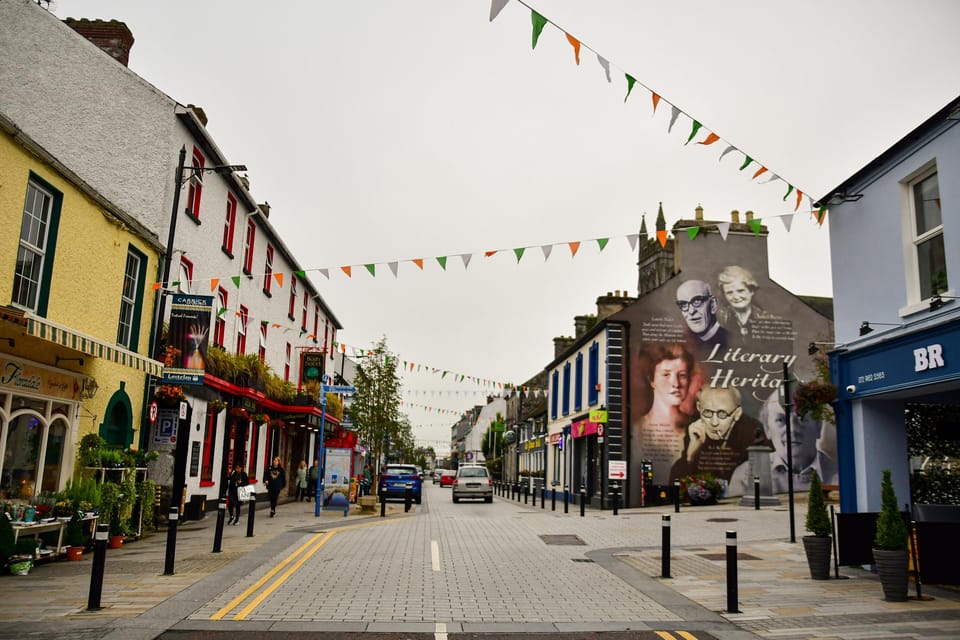
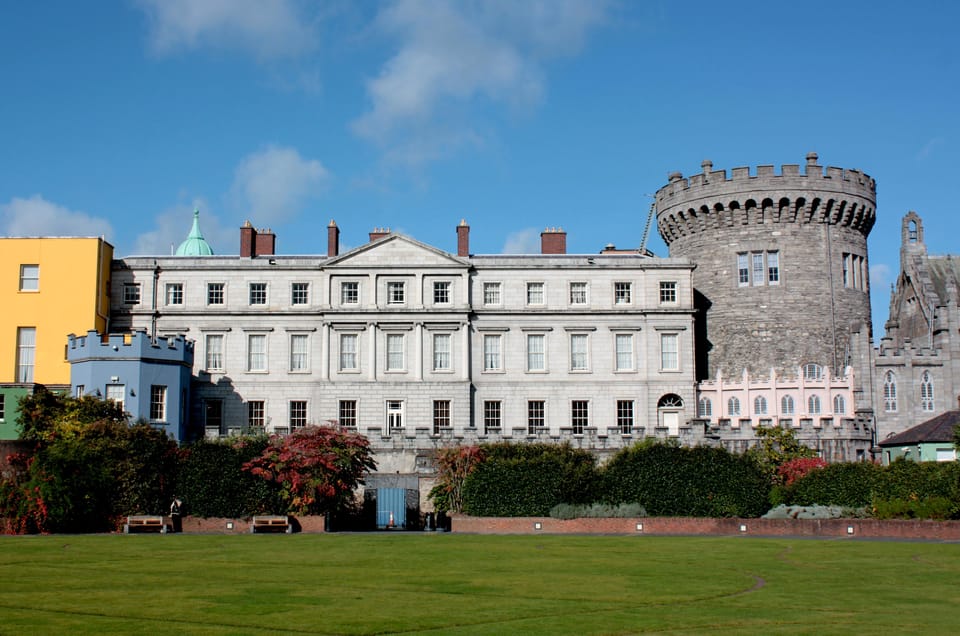
Next up is Dublin Castle, where you’ll spend about 10 minutes. Even if you don’t go deep into every building, the location alone helps you understand Dublin’s “seat of power” role through history. Castles feel obvious on postcards, but on the ground you notice how they shape the surrounding streets.
In a short visit like this, your guide’s job is crucial. You’ll get a sense of why this place mattered, and you’ll likely connect it to other landmarks you’re seeing later. Think of it as a hinge: the cathedral sets the cultural tone, and the castle adds governance and authority to the story.
Time check: 10 minutes is not meant for a long, detailed exploration. It’s more about learning enough to make the next steps meaningful.
Smock Alley Theatre (10 minutes): culture with a pulse
From civic power, you shift to arts at Smock Alley Theatre, Dublin, with about 10 minutes there. This stop is a smart move because Dublin isn’t only churches and government buildings. It has a long relationship with performance and public culture, and Smock Alley gives you that angle without hijacking the whole tour.
In a brief visit, you’ll likely focus on what makes the venue notable and how it fits the surrounding area. The point isn’t to “tick off a theater.” It’s to show that Dublin’s identity includes stages, writers, and audiences—not just stone and signage.
If you care about culture that’s still alive today, this is one of the stops you’ll appreciate most. It adds variety to the walk and keeps the story from turning into only political and religious markers.
Temple Bar (15 minutes) and how to enjoy it without getting trapped
Then you arrive at Temple Bar, with about 15 minutes. Yes, it’s famous. But you can still enjoy it in a grounded way if you treat it as a neighborhood with character rather than a theme park.
In this part of the walk, I’d focus on street rhythm: how people move, how storefronts and pubs shape the sidewalks, and how the area’s identity comes from more than just posters. A guide can help you notice patterns quickly—what feels local versus what feels purely tourist-facing.
This stop also pairs well with what you’ll see on the bridges. Temple Bar’s energy (again, not just its reputation) connects Dublin’s social life to the river crossings that anchor the city’s layout.
Time check: 15 minutes is enough to get the vibe, take a few photos, and move on before you feel like you’re stuck in a single spot.
You can also read our reviews of more historical tours in Dublin





Ha’penny Bridge (15 minutes): the river crossing you’ll remember
Next is Ha’penny Bridge, where you’ll spend about 15 minutes. Bridges sound simple until you actually look at them in the context of the city. Here, the bridge becomes a vantage point—a way to frame views of the river and understand how Dublin’s streets connect across water.
This stop is also a nice mental reset. After Temple Bar’s dense energy, a river view helps you slow down for a moment and take in Dublin’s geography. If you like photography, this is a great place to pause and shoot from a comfortable angle.
Keep in mind: 15 minutes flies if you’re chatting non-stop, so don’t plan to read every sign. Use the time for photos, a quick look around, and a few facts so the bridge sticks in your memory.
O’Connell Bridge (15 minutes): a wider city view moment
After Ha’penny Bridge, you’ll head to O’Connell Bridge for about 15 minutes. This is another river landmark, but it feels different because it’s tied to major movement and larger-scale views.
This stop is useful because it gives you a broader sense of Dublin’s layout. You start to see how your earlier landmarks connect to this crossing—how the walk has been steering you through a “best of downtown” geography instead of just hopping between unrelated sites.
If you want an easy win for the day, this bridge segment is it. It gives you city context, photos that look more cinematic than you expect, and a change of pace.
College Green (15 minutes) and Trinity College: where the academic vibe takes over
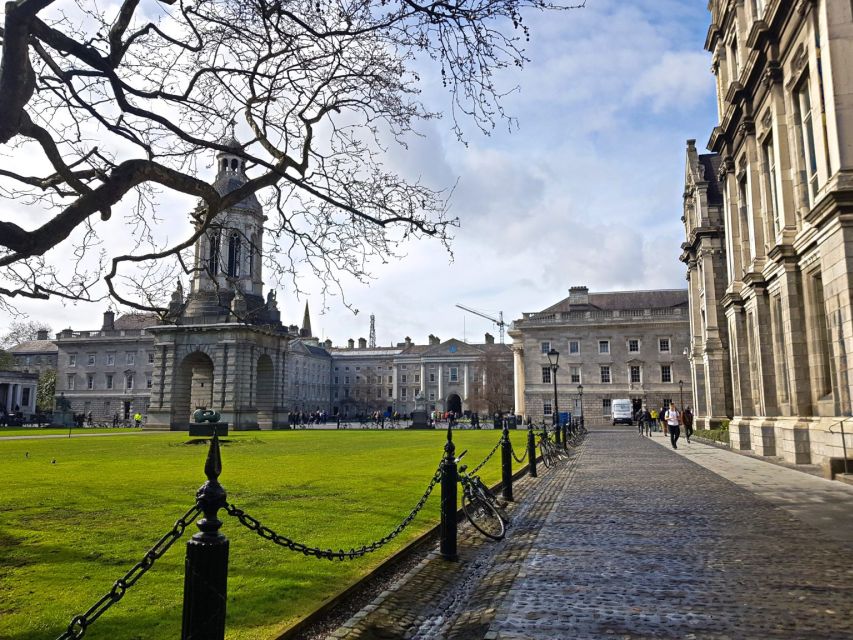
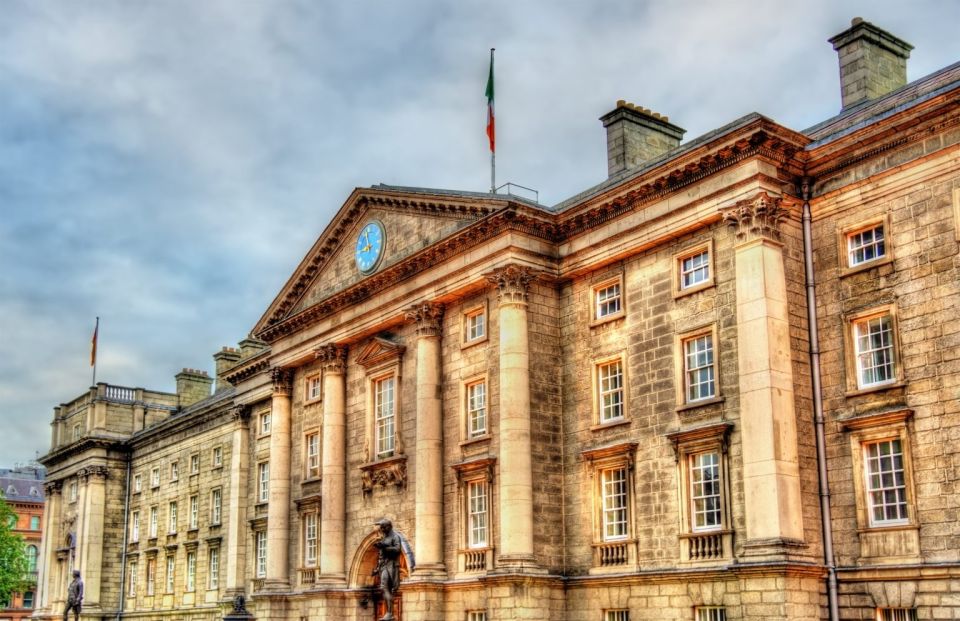
You’ll next visit College Green for about 15 minutes, then step into Trinity College Dublin with another 15 minutes. This is the “academic Dublin” part of the route, and it’s a strong payoff after all the older stone and institutional power you’ve already seen.
College Green works like a threshold. It’s a public-space feel—students, passersby, and that sense that the city’s rhythm changes when schools and libraries are right next door. Then Trinity College adds the cultural weight: it’s an iconic name, and on the ground it feels like an entire world of learning embedded in downtown Dublin.
In a short tour segment like this, you won’t have time to do a full deep-dive into every building on campus. But you will get enough context to understand why Trinity matters and how it influences the neighborhood’s energy.
If you’re the type who likes cities with living institutions, you’ll probably enjoy this most. It’s one thing to see a famous college. It’s another to experience the vibe of a place where education still shapes everyday street life.
Price and what the $502-per-group setup really buys you
The price is $502 per group up to 4, and the tour lasts 2 hours. On the surface, it sounds like a “tour cost.” In practice, it’s a way to control your experience.
Here’s the value math: if you max out the group size (4 people), you’re splitting the cost. That turns it into a per-person rate that’s often easier to justify than solo pricing on walking tours. More importantly, the private format means you get direct interaction with your guide and a pace that’s less rigid.
Also, the tour is short enough that it doesn’t require you to sacrifice your whole day. Dublin has plenty to do after a walk like this—pub stops, museums, or simply wandering. A two-hour, guided starter route is a smart way to “prime” your Dublin day.
One more value point: the guide is live, and the tour is offered in multiple languages, which can make the experience smoother if your group isn’t all English speakers.
Timing, pace, and how to make the most of the 10–15 minute stops
This tour is designed around tight stops: many are 10 minutes, and the others run about 15 minutes. That means you’re not here to read every plaque. You’re here to understand what you’re seeing quickly, then move on with a stronger mental map.
Here’s how to get the most out of that format:
- Keep your photo strategy simple: one main shot per stop beats five half-starts.
- Ask one or two good questions early so you get more from later stops.
- Wear comfortable walking shoes. Dublin sidewalks are not designed for stiff legs and sloppy footwear.
And because you start at Christ Church Cathedral and finish back at the same spot, you can also plan your next move without stress. You’ll already be in the core area, ready to continue exploring on your own.
Who this tour is best for (and who might want something else)
This works especially well if you want a focused orientation to central Dublin. It’s also a good choice for groups up to 4 who prefer a private guide rather than competing for attention in a larger crowd.
It’s a strong fit for:
- First-time visitors who want history plus modern street energy
- People who like “institution stops” (cathedral, castle, theater, college)
- Groups that travel together and want a conversation-driven pace
It might be less ideal if you want lots of time inside major sites or you hate moving every 10–15 minutes. Since the tour is strictly a walking route and ends where it started, it’s built for motion, not lingering.
Should you book this Dublin historical and cultural walking tour?
If you want a clean, manageable way to connect Dublin’s big landmarks—church, government, performance culture, river crossings, and academic life—this tour is a good bet. The private-group setup for up to 4 is especially worth it when you value conversation and pacing over volume.
I’d book it if you’re planning only a part of a day in central Dublin and you want your walking time to feel purposeful. I’d skip it if your ideal day is slow, sit-down heavy, or centered on long indoor visits.
If you do book: arrive on time at Christ Church Cathedral, bring comfortable shoes, and set a simple goal—learn what ties these places together. With that mindset, 2 hours feels like more than enough.
FAQ
How long is the walking tour?
The tour lasts 2 hours.
Where do we meet the guide?
Meet the guide at the main entrance of Christ Church Cathedral, Christchurch Pl, Wood Quay, Dublin 8, Ireland.
What are the main stops during the tour?
You’ll visit Christ Church Cathedral, Dublin Castle, Smock Alley Theatre, Temple Bar, Ha’penny Bridge, O’Connell Bridge, College Green, and Trinity College Dublin.
Is this tour private?
Yes. It’s a private group.
What languages are available for the guide?
The tour offers a live guide in English, French, German, Russian, and Spanish.
How much does it cost?
It costs $502 per group up to 4.