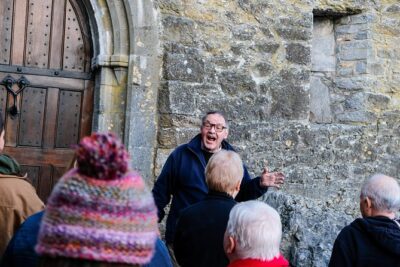
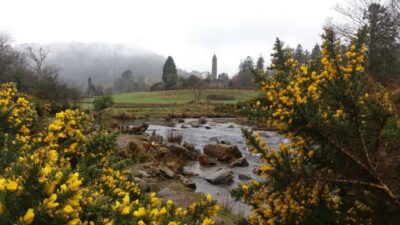
Tallaght is not what you expect in Dublin. This 2-hour walk trades big sights for people, poems, and places tied to major Irish stories, from ancient times to the 1980s. I like that it’s small-group and paced for questions, and I also like how the guide uses letters, poems, and local details to make the area feel connected to the wider world. One thing to consider: it needs good weather, since you’ll be walking between several stops.
You get a clear sense of how Tallaght shifted from mountain-side villages to a fast-growing urban area, without turning it into a lecture. What really makes this tour work is the personal, local way the guide connects Katharine Tynan, W.B. Yeats, and the world of war correspondence to everyday Tallaght streets. If you’re only here for the usual central Dublin highlights, this might feel more niche than flashy.
In This Review
- Key Highlights You’ll Notice Fast
- Price and Timing: Is It Good Value?
- Where You Start: Kingswood Heights to Tallaght Village
- Stop by Stop: What You Learn Along the Walk
- Kingswood Heights: Tallaght’s Early Roots in Ancient Ireland
- Whitehall (near Kingswood): Katharine Tynan and the Irish Renaissance
- Belgard Road: William Howard Russell and War Correspondence
- Belgard Road With Mountain Views: Irish Myth and Oisín
- Belgard Retail Park: Tallaght Aerodrome, Urney Chocolates, and Jacob’s
- TU Dublin, Tallaght Campus: Fast Growth in the 1970s and 1980s
- St Maelruain’s Church of Ireland: From Monastery to Church
- St Maelruain’s Grounds: Alice Furlong and Gaeilge Poetry
- Tallaght Village Green: The 1867 Fenian Rising and Dickens
- End in Tallaght Village: Thomas Joseph Byrne’s Cottages and a Steam Tramway
- What the Small Group Size Changes (For the Better)
- Practical Tips to Make This Tour Easier
- Who This Tour Suits Best
- Should You Book This Tallaght Walking Tour?
- FAQ
- How long is the Dublin Tallaght Hidden Gem walking tour?
- What is the price per person?
- Where does the tour start?
- Where does the tour end?
- Is the tour offered in English?
- Do I need a printed ticket?
- How big is the group?
- Will I get confirmation after booking?
- Is the tour dependent on weather?
- Can I bring a service animal?
Key Highlights You’ll Notice Fast
- Sophie’s local storytelling ties Tallaght names to Ireland’s bigger literary and historical circles
- Letters and poems shared on the walk bring figures like Katharine Tynan and William Howard Russell down to earth
- A bilingual stop includes Oisín I dTír na nÓg in Irish and English
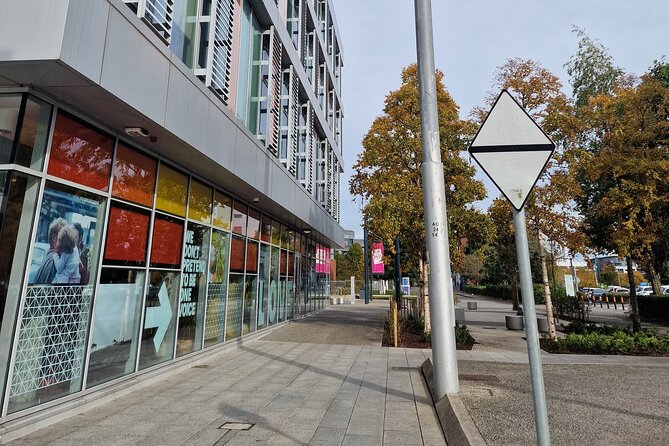
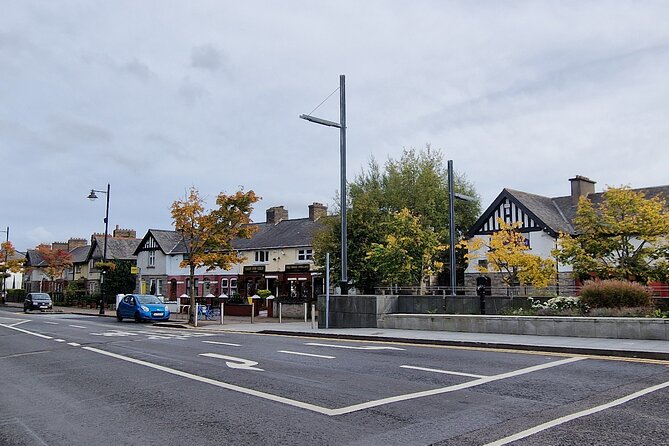
- You’ll see the physical change from rural Kilnamanagh/Kingswood to modern Tallaght growth (1970s–80s)
- Small group size (max 12) keeps the experience conversational and question-friendly
- End in Tallaght Village with a chance to use a little basic Irish at a local bilingual café
Price and Timing: Is It Good Value?
At about $18.05 per person for roughly 2 hours, this tour is priced like a “serious time investment,” not a quick roadside chat. The payoff is that you don’t just get a few landmark photos. You get a guided thread through Tallaght’s history, with short stops and enough story at each one to actually remember what you learned.
The tour runs in English, uses a mobile ticket, and typically has a small headcount (maximum 12). That matters because the guide can slow down for questions, and the whole thing stays human-scale. If you like history that feels grounded in real streets, this price-to-time ratio is easy to justify.
You can also read our reviews of more walking tours in Dublin

Where You Start: Kingswood Heights to Tallaght Village
You begin in Kingswood Kilnamanagh (meeting point is in Dublin, Co. Dublin) and finish in Tallaght Village, right by the bilingual Irish/English café. That end point is more than convenient: you’ll have a natural place to pause, grab a snack, and try out a bit of the Irish phrases the guide teaches at the end.
Because the walk covers multiple neighborhoods along the way, it’s a good choice when you want to see a different side of Dublin without needing a car or a long train ride.
Stop by Stop: What You Learn Along the Walk
Kingswood Heights: Tallaght’s Early Roots in Ancient Ireland
The tour opens in Kingswood Heights with a quick intro to Tallaght and where it fits in Ireland’s older story. Instead of treating Tallaght as an “edge of Dublin,” the guide frames it as part of ancient Irish history. Even at this early stage, the pacing is short and practical: it sets context fast so later names make sense.
If you like when history feels connected (not random dates), this start works well. You’re being asked to look at the area like it already matters, because it does.
Whitehall (near Kingswood): Katharine Tynan and the Irish Renaissance
Next is a stop just outside the former residence of Katharine Tynan, connected to the place known as Whitehall. This part focuses on her life in the literary world and her writing, with references to how AE (George William Russell) described Katharine as an early voice in the Irish imaginative awakening often linked to the Irish Renaissance.
What I find useful here is the way the guide brings in relationships, not just biographies. You’ll hear about Katharine’s friendships with W.B. Yeats and George William Russell (AE), plus you’ll be shown material like letters shared between Katharine, Yeats, and AE. It’s the kind of storytelling that helps you see famous writers as people with real friendships and correspondence, not only book spines.
A possible drawback: if you’re the type who likes lots of visible ruins or dramatic architecture, this section is more about ideas and documents than scenery.
You can also read our reviews of more guided tours in Dublin



Belgard Road: William Howard Russell and War Correspondence
At Belevard Road, the tour shifts into one of Tallaght’s best-known exports: William Howard Russell. He was born in Jobstown (Tallaght) and is described as one of the first war correspondents. The guide connects his early life in Tallaght to his long career reporting for The Times.
Expect a sweep through major conflicts and eras: reporting connected to Daniel O’Connell and the period around the Great Famine, then the Crimean War, and later the American Civil War. The tour also briefly covers his friendship with Charles Dickens, which is a great way to tie local Tallaght to the broader nineteenth-century news-and-literature world.
This stop is a standout for anyone who thinks “history tours are just about kings and battles.” Here, the battlefield is journalism and storytelling—how news traveled, how writers shaped public understanding, and how one person’s life could start in Tallaght and end in global events.
Belgard Road With Mountain Views: Irish Myth and Oisín
Another stop on Belevard Road turns toward Irish mythology. The guide sets a quick myth background, then centers on one of Ireland’s well-known legends: Oisín I dTír na nÓg (Oisín in the Land of Youth). You’ll also get a bilingual version in Irish and English.
Here’s the practical win: you’re not listening to a legend in the abstract. The stop also has a view of the Dublin Mountains, so the myth lands in a landscape you can actually see. It’s one of those moments where even people who aren’t big myth readers usually relax into the story.
Belgard Retail Park: Tallaght Aerodrome, Urney Chocolates, and Jacob’s
At Belgard Retail Park, the tour adds layers: first the past of the former Tallaght Aerodrome and its roles across multiple Irish and European conflict periods, including WW1, the Irish War of Independence, and the Irish Civil War. Then it moves into more everyday history—businesses and local branding that shaped community identity.
You’ll hear about the Gallagher family and how they brought Urney Chocolates into being. Urney became a nostalgia brand for many people in Ireland, and it had a home in Tallaght for decades until it closed in 1980. The guide also touches on how the brand’s life continues.
A quick side thread includes Jacob’s, which also operated in Tallaght for a time. The tour frames these businesses as transformation engines for the area—jobs, identity, and everyday routines tied to a brand name people still remember.
If you love history that mixes politics with daily life, this is a strong stop. If you’re only after medieval church sites, you might find this segment less dramatic—but it’s actually one of the most relatable parts.
TU Dublin, Tallaght Campus: Fast Growth in the 1970s and 1980s
At TU Dublin, Tallaght Campus, the tour zooms out to urban change. The guide looks at how Tallaght transformed over a few decades, with focus on the period when it became one of the largest urban areas in Ireland. The description includes that Tallaght was one of the fastest growing urban centres in Western Europe in the 1980s.
You’ll also learn how that growth affected people against a backdrop of economic difficulty: rising unemployment, high emigration, and a lot of pressure on families. This stop helps you understand why a “new city district” didn’t feel new to everyone. Growth brings opportunity, but it also brings strain.
For me, this is where the tour becomes more than a list of names. You start seeing the connection between places and people’s lived experience.
St Maelruain’s Church of Ireland: From Monastery to Church
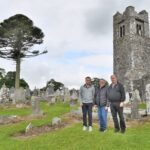
Now you shift into older sacred ground. St Maelruain’s Church of Ireland sits on what used to be a former monastery with major importance in ancient Ireland. The guide mentions it alongside another monastery at Finglas, known as the two eyes of Ireland.
You’ll get a look at St. Maelruain himself and how the current church came into being. This is a good stop for anyone who likes history that’s literally built on top of older sites. Even if you don’t memorize everything, it gives you a stronger mental map of how “Dublin” has multiple layers in a small radius.
St Maelruain’s Grounds: Alice Furlong and Gaeilge Poetry
Staying near St Maelruain’s, the tour turns to Alice Furlong, buried on the grounds. Until recently, her story was described as lost to time. The guide covers her life as a founding member and vice-president connected to Inghinidhe na hÉireann (Daughters of Ireland).
What makes this stop particularly moving is the focus on language. Alice was a poet and writer, and she advocated for the Irish language. The guide shares some of her poetry, with professional translations into English provided. If you want to understand Irish cultural history beyond the big monuments, language activists like Alice Furlong are a smart place to spend time.
Tallaght Village Green: The 1867 Fenian Rising and Dickens
At Village Green, a plaque commemorates the Fenian Rising of 1867. The guide explores Tallaght’s role in that uprising. This is another stop where the tour ties local place to national political movements, and it also brings in Charles Dickens writing connected to the period in Tallaght.
This portion helps you see that “Dublin history” isn’t all centered in the city core. Small places played real roles in major events.
End in Tallaght Village: Thomas Joseph Byrne’s Cottages and a Steam Tramway
The tour finishes in Tallaght Village and includes a look at cottages designed by architect Thomas Joseph Byrne, described as one of the most influential architects of the day. After that, the guide briefly chats about the Dublin and Blessington Steam Tramway (DBST) that ran through the area before closing in 1932.
To close, you’re taught some basic Irish phrases, plus you can use what you learn right after the walk in the local café in Tallaght Village.
This last stretch is a nice “landing.” You leave with words, not just facts.
What the Small Group Size Changes (For the Better)
With a maximum of 12 people, the walk doesn’t feel rushed. That size is big enough for friendly energy, but small enough that Sophie can tailor explanations when questions come up. The reviews hint at this repeatedly, and it matches what this format naturally allows: a guide can manage pacing without losing the thread of the stories.
You’ll also get a feel for how Tallaght connects to well-known names, partly because the guide shares written material and short excerpts, not only spoken summaries. Sharing letters and poems turns abstract figures into characters with paper trails.
Practical Tips to Make This Tour Easier
- Wear shoes you like walking in. This is a street-to-street walk with multiple stops.
- Bring a light layer if weather turns. It’s outdoors and described as weather-dependent.
- If Irish language interests you, this tour is a good entry point: you learn basic phrases at the end.
- If you’re doing a Dublin sightseeing day, treat this as your “other side of Dublin” block. Pair it with a meal in Tallaght Village after, since you’ll end there.
Who This Tour Suits Best
This experience fits best if you want:
- Local stories that connect to famous Irish figures, like W.B. Yeats, AE, and Charles Dickens
- History that includes literature, language, and journalism—not only battles
- A walk that shows how an area changed over decades, especially the 1970s–80s growth
It may be less ideal if you want the big classic Dublin must-sees or if you need lots of free time at each stop to linger.
Should You Book This Tallaght Walking Tour?
I’d book it if you like seeing Dublin from a角度 most people skip. Tallaght’s story here is told through names you might recognize and documents you likely wouldn’t. The pace stays short and manageable, the group is small, and the finish in Tallaght Village makes it easy to keep exploring.
Skip it only if you dislike walking in mixed weather or you’re chasing famous central landmarks. If you want a grounded, human-scale view of Dublin’s history beyond the city center, this is a solid choice.
FAQ
How long is the Dublin Tallaght Hidden Gem walking tour?
It lasts about 2 hours.
What is the price per person?
The price is $18.05 per person.
Where does the tour start?
The tour starts in Kingswood Kilnamanagh, Dublin, Co. Dublin, Ireland.
Where does the tour end?
It ends in Tallaght Village, by R819 (beside a bilingual Irish/English café).
Is the tour offered in English?
Yes, the tour is offered in English.
Do I need a printed ticket?
No. You’ll have a mobile ticket.
How big is the group?
The maximum group size is 12 travelers.
Will I get confirmation after booking?
Yes, confirmation is received at the time of booking.
Is the tour dependent on weather?
Yes. The experience requires good weather, and if it’s canceled due to poor weather you’ll be offered a different date or a full refund.
Can I bring a service animal?
Yes. Service animals are allowed.