REVIEW · DUBLIN
Dublin: Sightseeing Walking Tour in German
Book on GetYourGuide →Operated by Pat Liddy's Walking Tours of Dublin · Bookable on GetYourGuide
Dublin changes fast when you walk it slowly. This German-speaking, small-group tour is a smart way to get oriented without feeling like you’re doing homework. I like that you cover the big-name landmarks and also get room for those quick, unusual stories that make streets feel personal.
I also like the pace and the guide style: friendly, professional, and easy to follow while you’re moving. One thing to consider is that nearly everything you’ll see is external only, so if you want inside visits, you’ll need to plan those separately.
In This Review
- Key highlights worth your attention
- Value For Money: A 2.5-Hour Dublin Walk for $34
- Dame Street Start at the Tree of Gold Statue
- Dublin Castle Grounds and Christ Church Cathedral: Medieval Atmosphere Without the Fuss
- Fishamble Street, Smock Alley, and Theatre-Lane History on Foot
- Temple Bar to the Millennium Bridge: Meeting House Square and River Views
- The Italian Quarter and St Mary’s Church That Became a Café-Bar
- O’Connell Street’s Big Monuments: The GPO and 1916 Rising Aftermath
- From Former Parliament House to Trinity College’s Book of Kells Finish
- Those Small-Group Surprise Moments You’ll Actually Remember
- Who This German-Language Tour Suits Best
- Should You Book This Tour?
- FAQ
- How long is the Dublin sightseeing walking tour in German?
- What does the $34 price include?
- Are visits inside the landmarks included?
- Where does the tour start?
- Where does the tour end?
- What language is the guide speaking?
- Is this tour wheelchair accessible?
- What landmarks are included in the route?
- Is free cancellation available?
- Are gratuities included in the price?
Key highlights worth your attention
- Small-group feel that makes it easier to ask questions and stay with the group
- German-language guiding that keeps the explanations clear while you walk
- A cross-river route from the Viking-and-medieval side through Temple Bar to O’Connell Street
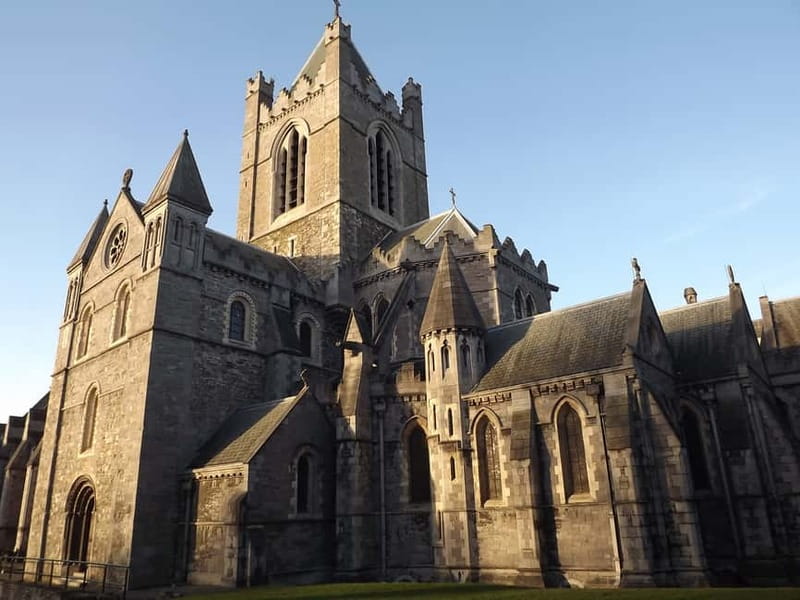
- Landmark-to-side-street mix, including Dublin Castle grounds and Cathedral frontage
- “Feel-it” moments like the bounce on the Millennium Bridge
Value For Money: A 2.5-Hour Dublin Walk for $34
For $34 per person, you’re paying for one main thing: a guide who can translate Dublin’s layout into stories you’ll remember. Two and a half hours is long enough to connect the dots between major sites on both sides of the River Liffey, but short enough that you won’t burn the rest of your day. It’s also an easy-going walking tour, not a sprint.
If you’re the type who likes to see key sights in a logical route, this format is practical. You start on Dame Street, work your way through the former Viking and medieval area, swing through Temple Bar, cross to the northside, and then finish near Trinity College. That means you don’t spend your time zig-zagging or guessing where things are.
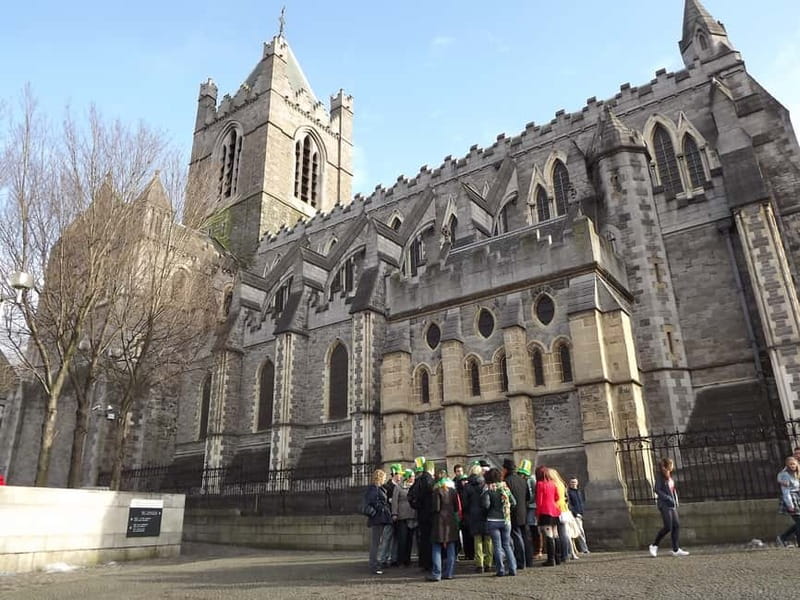
The main tradeoff is the external-views approach. You’ll see Dublin Castle grounds and gardens, Christ Church Cathedral, City Hall, and several historic facades from the outside. If inside access is important for you, treat this tour as your orientation layer, then pick a few specific buildings to go into after.
You can also read our reviews of more walking tours in Dublin


Dame Street Start at the Tree of Gold Statue
You meet at the Tree of Gold statue, on Central Plaza, Dame Street (corner of Dame Street and Fownes Street Upper). This is a good starting point because Dame Street is basically Dublin’s center-line for walking. You’re not starting in some far-out transit hub—you’re starting where the city naturally fans out.
From the beginning, the tour’s goal feels clear: you’ll be able to visualize Dublin’s story as you move. You’ll wind through the former Viking and medieval quarter first, with Dublin Castle and Christ Church Cathedral as early anchors. That matters because it helps you understand why later areas look and feel different.
The tour also sets you up for those quick surprises. The guide doesn’t just read dates off a timeline; you’re told what to look for as you pass streets, squares, and landmark corners.
Dublin Castle Grounds and Christ Church Cathedral: Medieval Atmosphere Without the Fuss
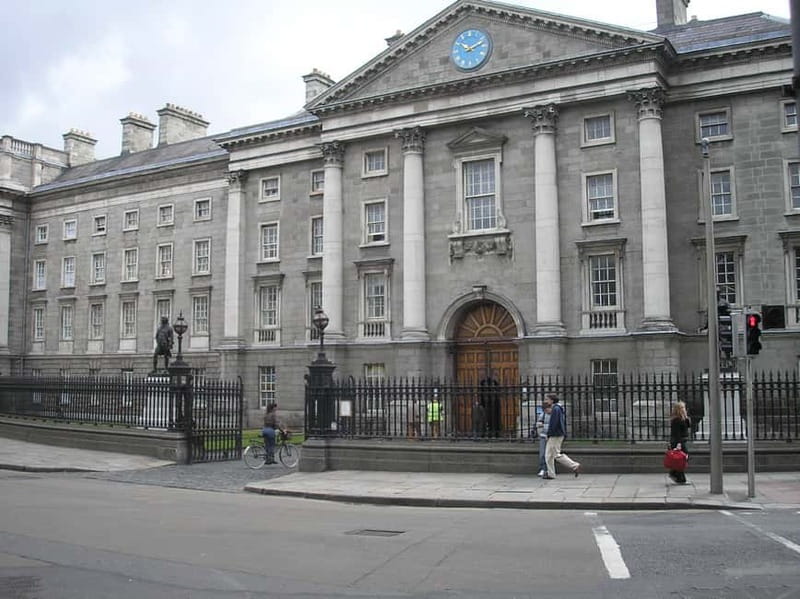
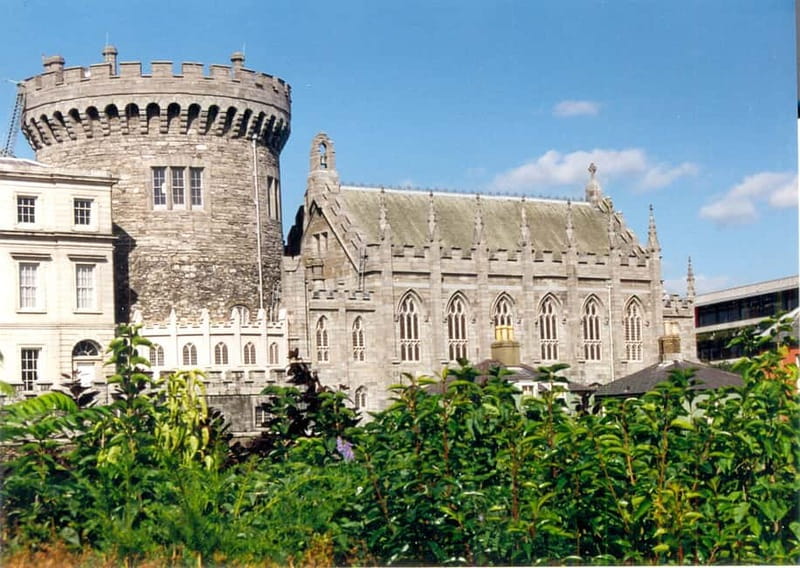
Dublin Castle grounds and gardens are one of the best early stops because they give you scale. From the outside, you can grasp how long Dublin has been a seat of power. The story you hear here helps you connect the castle area to the medieval core you’re walking through.
Then Christ Church Cathedral adds another layer. You’re not just seeing a famous building; you’re seeing how the old city is still part of the walking map. The tour keeps things external, so you can appreciate the architecture and setting without losing time to entry lines.
If you’re thinking ahead to how you’ll plan the rest of your Dublin days, this pairing is useful. Castle grounds tell you about governance and authority, while Christ Church reminds you how deeply religion and community were tied to the medieval city. Together, they give context for the later civic and political landmarks you’ll pass.
Fishamble Street, Smock Alley, and Theatre-Lane History on Foot
After the medieval anchor points, the route swings toward streets that feel more lived-in and creative. Fishamble Street and Smock Alley are the kind of places you can easily walk past on your own without understanding why they matter. With a guide, they become more than just lanes between bigger roads.
This is where the tour starts to feel fun. You’re moving through city-center texture—narrower streets, changing street life, and small-area history. The guide’s job here is to connect what you’re seeing to the why behind it, so that Dublin starts to feel like a place with rhythms, not just a set of photos.
If you like the “how did this become what it is today” angle, this section delivers. It’s also a nice break from only seeing large monuments, because you get to focus on street-level detail.
Temple Bar to the Millennium Bridge: Meeting House Square and River Views
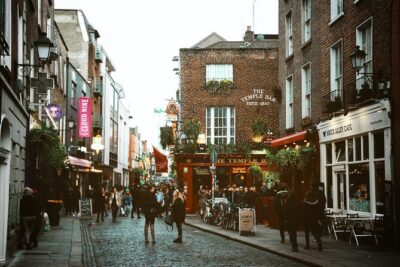
When the tour reaches Temple Bar and Meeting House Square, you’re stepping into Dublin’s most recognizable entertainment district. The value here isn’t just the atmosphere—it’s the way the tour uses this area as a pivot. You go from the medieval-left-side story to a new direction on the walk.
Then you cross toward the River Liffey and reach the Millennium Bridge. This part is visually rewarding and (very usefully) helps you orient Dublin in space. Once you’ve crossed, you can stop thinking in terms of random landmarks and start thinking in terms of two sides of the city and how they connect.
Also, there’s a memorable moment built into this bridge area: you’ll get to feel the bounce of the wobbly bridge. That’s the kind of physical detail that locks a place in your memory, even if you usually forget “bridge facts.”






The Italian Quarter and St Mary’s Church That Became a Café-Bar
As you move into the Italian Quarter, the streets change feel. Even before you fully understand the neighborhood character, the tour helps you notice that Dublin isn’t one single vibe; it’s a stack of identities layered across a compact center.
St Mary’s Church is another “look closer” stop because it’s famous specifically for what it became. On this walk, you’ll hear about St Mary’s as a church that’s now operating as a well-known café/bar. In other words, you’re not just watching a building—you’re seeing Dublin’s ability to repurpose historic spaces for modern life.
The tour also passes Henry & Moore Streets, which keeps you in the city-center mix of architecture, street energy, and small visual surprises. This section is where the walk stays lively, because you’re going from landmark fronts to neighborhood flavor without stopping your momentum.
O’Connell Street’s Big Monuments: The GPO and 1916 Rising Aftermath
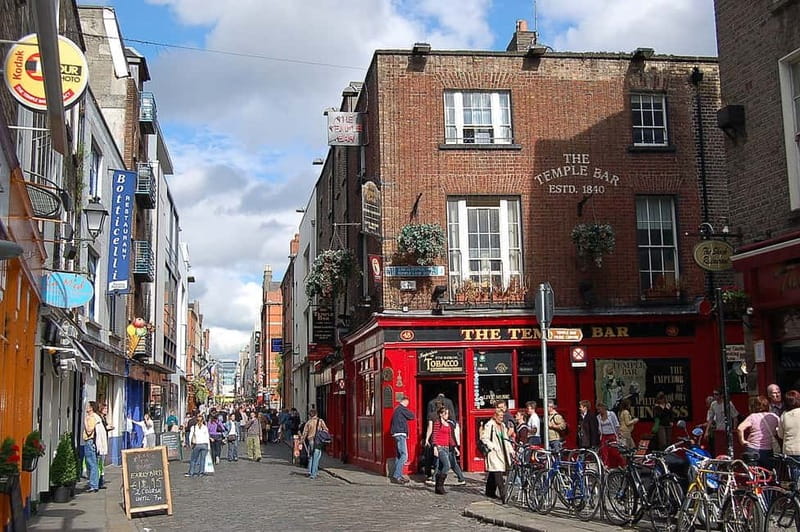
O’Connell Street is the long, main-axis feeling of Dublin. It’s also where the tour leans into one of the city’s most defining moments. You’ll pass the General Post Office (GPO), which housed the headquarters of the rebels of the 1916 Rising. You’ll learn that the building and much of the surrounding street area were destroyed at the time.
That’s not just historical detail—it’s practical context. When you later walk O’Connell Street on your own, you’ll understand why certain parts feel like they were shaped by conflict and rebuilding. The guide’s job is to connect what you see on the street today to what happened here in the past.
As you continue, you’ll reach the O’Connell Monument. This is another major sight where the tour doesn’t just name it. It helps you place it into the broader political story, so it doesn’t become a random stop.
The tour also includes a clue-like moment involving a post-box that represents Ireland’s transition to independence. You’re meant to notice it and absorb the meaning, not just pass it like street furniture.
From Former Parliament House to Trinity College’s Book of Kells Finish
One of the smart parts of this itinerary is that it doesn’t stop at “monuments and squares.” You also get civic history. The tour passes the former Parliament House, now the Bank of Ireland. It’s a striking example of how Ireland’s governmental story has shifted through the centuries, and how buildings can change roles while staying anchored in place.
Then you finish around Trinity College, outside the area with the famed Book of Kells. The key detail here is that you end outside, which keeps the walk moving and avoids turning the tour into an entry-ticket checklist. From that endpoint, you’re positioned well to decide what to do next based on your interests.
Finishing near Trinity is also useful because it’s a naturally walkable hub. If you want to continue exploring on your own, you’ve landed somewhere that’s easy to build a plan around.
Those Small-Group Surprise Moments You’ll Actually Remember
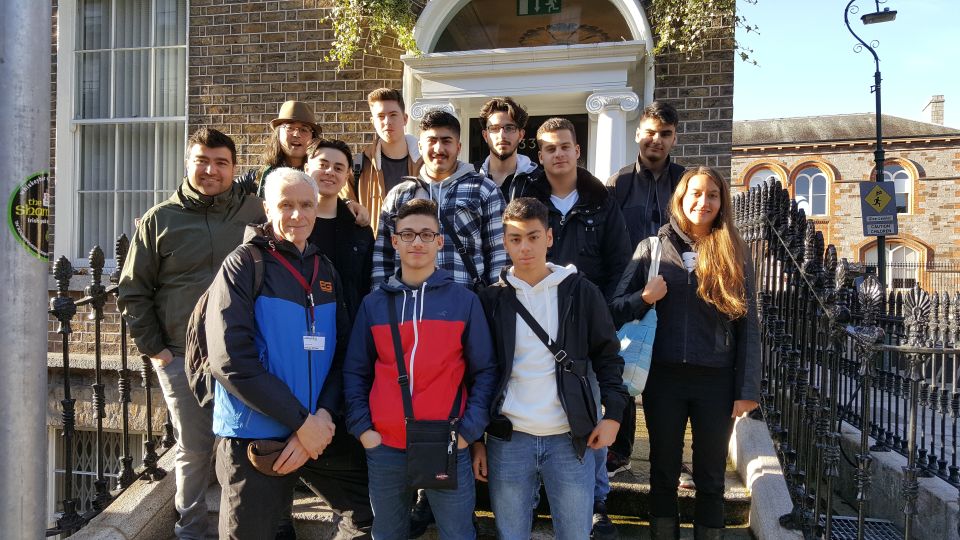
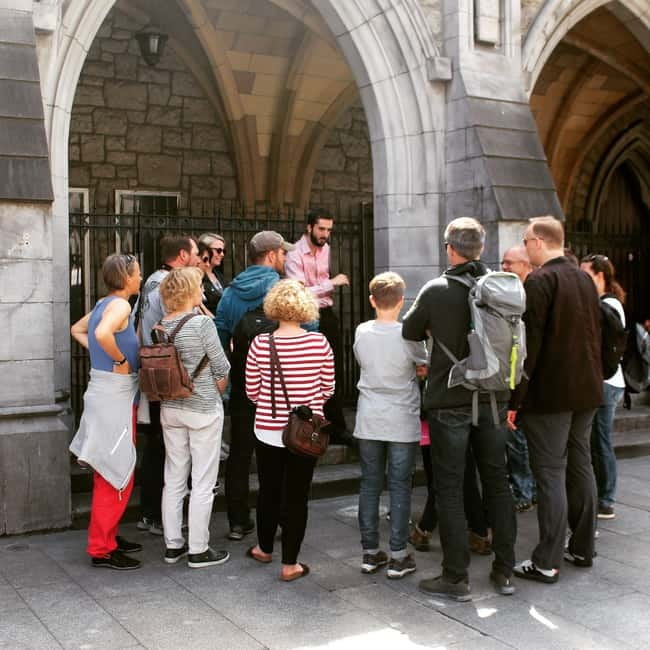
This tour earns its strong reputation for one thing: the surprises aren’t random. They’re chosen to help you notice Dublin in a different way.
You’ll hear about Dublin’s first but now defunct full-time cinema. You’ll also get the story of a church that’s not a church anymore—St Mary’s—so you understand how places evolve instead of freezing in time. Another fun detail is a former Lisbon tram now serving as a café, which is the kind of fact you’d never guess from the street view alone.
There are also more playful, street-level moments that make the walk feel animated. The guide points out an amusing representation of a da Vinci painting. Along the route, you’ll encounter a tale tied to a post-box marking Ireland’s transition to independence. And yes, you’ll get a stark-naked representation of a very famous 18th-century composer—another example of why Dublin’s public art can be oddly funny.
I like that these moments break up the heavier historical stops. You’re not only taking in events; you’re experiencing the city’s personality as you go.
Who This German-Language Tour Suits Best
This is a strong fit if you want a guided city-center route that hits the big themes: medieval roots, civic landmarks, and 20th-century political turning points. It’s also ideal if you prefer a small-group pace, where the guide can explain clearly while you’re still walking.
Because the tour is German-language, it’s best for German speakers (or anyone who just prefers German explanations). If you’re traveling with a mixed-language group, you’ll need to think carefully about who can follow the guide.
It’s also a good match if you like learning by seeing. This tour is built around external viewing, so it works well for people who don’t want to spend their whole trip stuck in queues or deciding on one-ticket-at-a-time priorities.
Should You Book This Tour?
I’d book it if you want a clear first pass through Dublin’s center with a guide who keeps things friendly and understandable. The route is smart: it ties together Dame Street, Temple Bar, O’Connell Street, and the Trinity finish, so you leave with a mental map that helps you explore later.
I would skip it (or plan it differently) if your top priority is interior access to major sites. Since the tour focuses on external visits only, you’ll get views and context, but not full entry experiences.
If you’re happy to treat this as orientation plus memorable street stories, it’s a great value at $34 for a 2.5-hour walk—especially with a German-speaking professional guiding the whole way.
FAQ
How long is the Dublin sightseeing walking tour in German?
The tour lasts about 2.5 hours.
What does the $34 price include?
It includes a professional, well-trained guide.
Are visits inside the landmarks included?
All visits are external. Opportunities for such visits may be available after the tour.
Where does the tour start?
It starts at the Tree of Gold statue on Central Plaza, Dame Street, at the corner of Dame Street and Fownes Street Upper.
Where does the tour end?
The tour ends back at the meeting point area, around Trinity College and outside where the Book of Kells is associated.
What language is the guide speaking?
The live tour guide speaks German.
Is this tour wheelchair accessible?
Yes, the tour is listed as wheelchair accessible.
What landmarks are included in the route?
You’ll see stops including Dublin Castle grounds & gardens, City Hall, Christ Church Cathedral, Fishamble Street & Smock Alley, Meeting House Square (Temple Bar), Millennium Bridge and the River Liffey, the Italian Quarter, St Mary’s Church (now a café/bar), Henry & Moore Streets, O’Connell Street, the General Post Office, O’Connell Monument, and the former Parliament House (Bank of Ireland).
Is free cancellation available?
Yes, free cancellation is available up to 24 hours in advance for a full refund.
Are gratuities included in the price?
No, gratuities are not included.