REVIEW · DUBLIN
Dublin Traditional Irish Music Walking Tour with Live Performance
Book on Viator →Operated by Original Dublin · Bookable on Viator
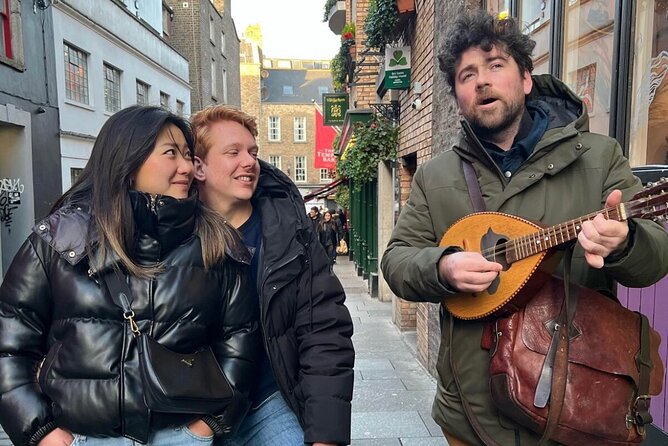
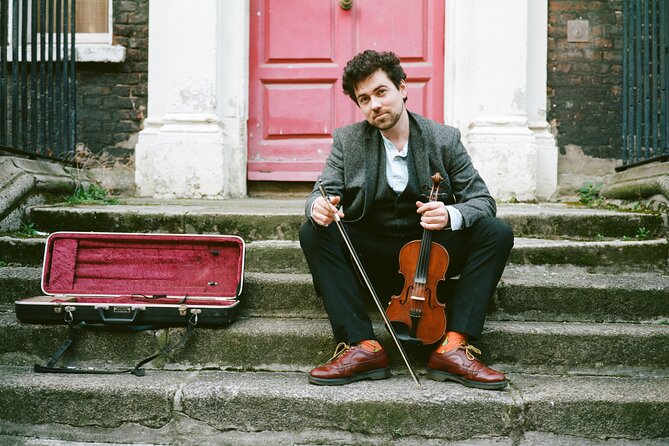
Dublin has a way of singing back, and this tour lets you hear why. A musician-guide turns the city into a living story, using traditional folk songs to connect Temple Bar, cathedrals, bridges, and old streets into one smooth, memorable walk. I especially love the pairing of music with on-the-ground storytelling, and the fact that guides (including Ciarán, Dylan, Sean, and Shaun, based on past guides) really know how to perform for a small group.
I’m also a fan of how active and human it feels. You’re not just watching from the sidewalk; you may get sing-alongs and the occasional dance moment if your guide and group are in the mood.
One possible drawback: the experience depends on sound and timing. Temple Bar can be loud, and if the guide is late or your group ends up spread out, it can be harder to catch the lyrics and the point of each song.
In This Review
- Key Highlights Worth Your Time
- A Music-Led Walk Through Dublin’s Old Streets
- Temple Bar Start: How to Find Your Group Fast
- Smock Alley Theatre 1662: Theatre History Without the Museum Labyrinth
- Grattan Bridge and the River Liffey: A Quick Photo Stop That Feels Like Dublin
- Fishamble Street: Vikings, Messiah, and Folk Ballad Logic
- Christ Church Cathedral: Medieval Dublin Told Through Song
- Dublin Castle: Ship Street Gate and Famous Steps on Your Way Through
- Saint Patrick’s Cathedral Finish: Where the Walk Lands
- Why the Music History Connection Feels Different
- Pacing, Group Size, and How to Hear the Lyrics
- Price Check: Is $27.81 Good Value Here?
- Who Should Book This Dublin Music Walk
- Book It or Skip It: My Quick Decision Guide
- FAQ
- How long is the Dublin Traditional Irish Music Walking Tour?
- Where does the tour start and where does it end?
- What time does the tour start?
- What is the price per person?
- Do I need to bring a printed ticket?
- What’s the maximum group size?
- Is free cancellation available?
- Are service animals allowed on the tour?
Key Highlights Worth Your Time
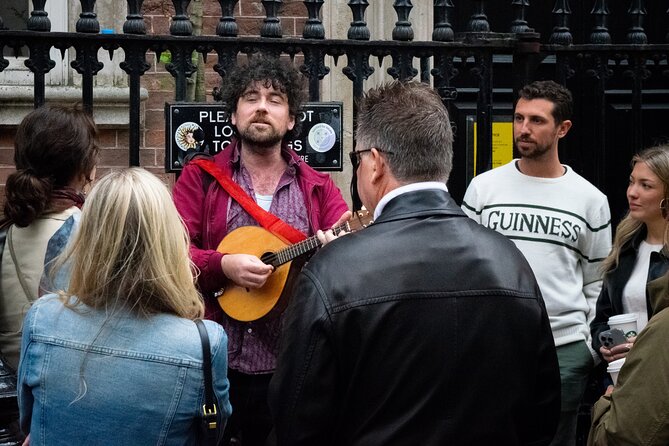
- Live performance led by an Irish musician (often guitar or mandolin, depending on the guide)
- Small group size (max 20) that keeps the stories feeling personal
- Temple Bar as the hub, with easy start and big photo energy
- Medieval Dublin stops with songs attached, not random history facts
- Free entry stops along the route, so you’re paying mainly for the performance
- Interactive moments like sing-alongs and, sometimes, dancing
A Music-Led Walk Through Dublin’s Old Streets
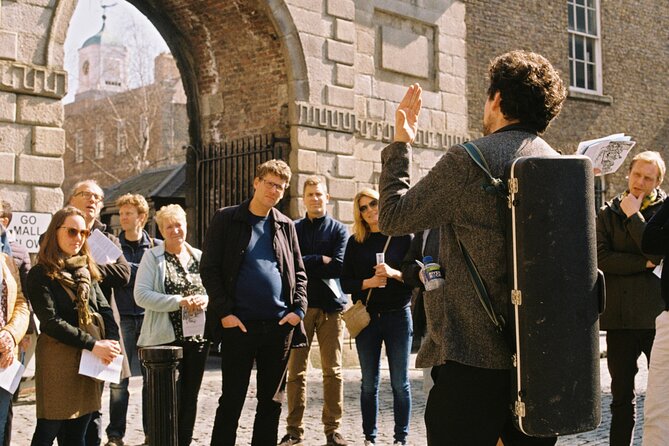
This is a walking tour that treats Dublin like a set list. Instead of only pointing at buildings, your guide uses folk ballads and well-worn lyrics to explain why places matter, and how people lived through different eras. The goal is simple: you walk the same streets people have been using for centuries, and you leave with tunes stuck in your head plus clear context for what you just saw.
At $27.81 per person for about 2 hours, it’s priced like an experience, not a museum visit. You’re paying for a performer who can translate a city’s past into something you can hear and remember. That makes it a strong option if you want history, but you also want it to feel alive.
And the route is built for quick hits. You get a string of landmark photo opportunities, plus short stops where the song actually ties to the place you’re standing in.
You can also read our reviews of more walking tours in Dublin



Temple Bar Start: How to Find Your Group Fast
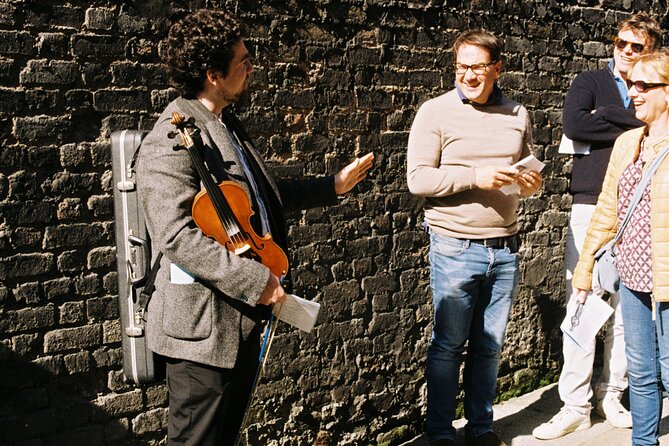
You’ll meet your guide in the centre of Temple Bar at 3 Crown Alley, Temple Bar, Dublin. The tour starts at 1:00 pm, and it ends at St Patrick’s Cathedral on St Patrick’s Close.
Because Temple Bar is busy, I recommend arriving a few minutes early and staying put near the listed meeting spot until your group forms. One review problem you can learn from: when there are multiple tours gathering at the same area, it’s easy to end up with the wrong group or miss the handoff where the musician splits everyone out. If you’re unsure, don’t be shy about checking with the guide staff or re-confirming the tour name before you start walking.
You’ll use a mobile ticket, so have it ready on your phone. That’s one less thing to worry about while you’re trying to hear instructions over street noise.
Smock Alley Theatre 1662: Theatre History Without the Museum Labyrinth
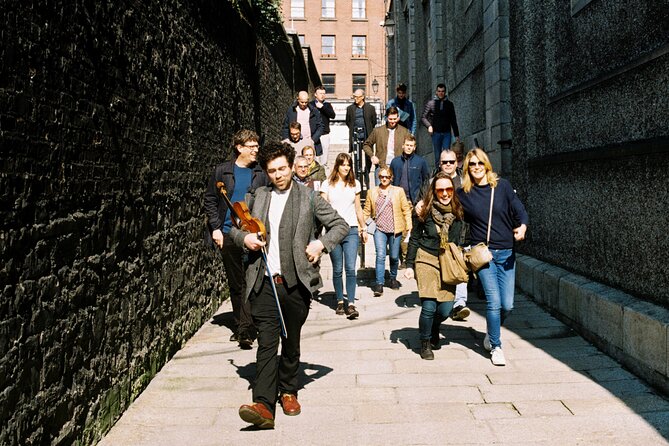
The first stop is Smock Alley Theatre (1662). It’s described as Ireland’s oldest theatre, right in the middle of Temple Bar. This is a clever opener because it sets the tone: Dublin has long been a city where performance and storytelling are part of daily life.
You get around 10 minutes here. That’s not long, so don’t treat it like a slow walk through a building. Instead, use the stop to orient yourself to the area and listen for how your guide connects theatre culture to the songs you’ll hear later.
Admission here is free, so you’re not paying extra to get the historical footing. The downside is the same as any theatre-and-street moment: if the group is larger or if you end up slightly off to the side, you may catch the gist but not every lyric.
Grattan Bridge and the River Liffey: A Quick Photo Stop That Feels Like Dublin
Next you’ll cross to Grattan Bridge. The route calls out the seahorse lanterns and the bridge’s role as a connection between Capel Street and Parliament Street.
This is one of those stops that works even if you’re not a cathedral-and-castle person. It gives your eyes a break from stone architecture and gives you a classic Dublin river view for photos. It also helps break up the walking rhythm: you’re not pushing through long stretches back-to-back.
You’ll again spend about 10 minutes, and that’s enough for a few good shots plus a short song-linked story. If you’re thinking about what to bring, this is a good place to have your phone/camera charged and ready. The bridge visuals are exactly the kind of thing you’ll want to capture while the crowd is moving but before the group turns to head off.
Fishamble Street: Vikings, Messiah, and Folk Ballad Logic
Fishamble Street is one of the most interesting stops on the route because it stacks eras in a single short segment. It’s often described as Dublin’s oldest street, tied to a major Viking settlement found outside Scandinavia. The listing also notes that it’s the site of the first ever performance of Handel’s Messiah.
This stop is where the tour’s concept really clicks. Your guide uses songs to connect the place to culture across time, and Fishamble Street is the perfect example of how Dublin can hold layers. One street, multiple identities.
As with the theatre stop, 10 minutes means you’re hearing highlights rather than a full lecture. That’s fine. In fact, it can be ideal for first-time visitors because it keeps you moving and keeps the tour from feeling like school.
One practical watch-out: Fishamble Street can be a busy walking corridor. If you’re sensitive to not hearing every word, plant yourself where your guide can clearly project to the group rather than drifting to the edge. In one review, street noise and difficulty hearing were tied to group size and location, so do your part to stay in the audible zone.






Christ Church Cathedral: Medieval Dublin Told Through Song
The tour’s biggest “place-with-a-pulse” moment is Christ Church Cathedral, described as the heart of Medieval Dublin. This stop comes with an extra promise: your guide explores part of the cathedral’s darker side through song.
In practice, this means you’re standing in a major historic space while your guide uses ballads and lyrics to frame the story. It’s not just about what the building looks like; it’s about why it mattered and what people might have experienced—emotion, politics, belief, and tension—wrapped into musical storytelling.
Again, you have about 10 minutes. Cathedral stops can feel crowded or echoey, so the quality of sound varies depending on where your guide positions the group. If you want the best chance of hearing the performance clearly, stand close and don’t assume the guide will move to you.
Admission to this segment is listed as free. That’s a nice value perk, since some sightseeing tours tack on extra fees. Here, your ticket mainly covers the guide’s performance and the interpretive walk.
Dublin Castle: Ship Street Gate and Famous Steps on Your Way Through
After Christ Church, you’ll swing by Dublin Castle, focusing on the Ship Street gate and some of the famous steps in the area. This is a “see it, photograph it, move on” stop.
Ten minutes here is a good use of time because it adds another major landmark without slowing the tour down. If you’ve only got a day or two in Dublin, you’ll appreciate how the route covers big-name sites while still keeping the tour moving at a pace that doesn’t drag.
The trade-off is that this is not a full castle tour. Don’t book expecting guided interior access or a deep architectural walkthrough. The castle portion is about route storytelling and snapshot visuals, and your musician-guide keeps the connection between songs and place going even in a quick stop.
Saint Patrick’s Cathedral Finish: Where the Walk Lands
You’ll finish near the beautiful Saint Patrick’s Park, adjoining Saint Patrick’s Cathedral. This ending is practical and scenic: you reach another major church setting, and the tour naturally closes in the area many visitors want to see anyway.
Depending on the energy level of the group and the guide, you may also get a more upbeat send-off. Several reviews mention interactive moments like sing-alongs and dancing, and those kinds of endings are exactly the sort of thing that works in a cathedral-adjacent setting where people feel free to participate.
From a logistics standpoint, finishing at Saint Patrick’s Cathedral is a helpful final anchor. It’s a place you can easily orient from if you want to continue exploring afterward, grab food, or connect to transit.
Why the Music History Connection Feels Different
Plenty of walking tours in Dublin give you facts. This one gives you rhythm. The big value isn’t only that you hear songs. It’s that your guide explains how the music fits Dublin’s social and cultural story.
The strongest reviews emphasize that the songs aren’t random. They connect to the location’s past and help explain social and political history in a way that’s easier to remember than a timeline. That also explains why some people call it funny or full of banter: the guide is performing, not just reciting.
I also like that the tour doesn’t treat music as a separate attraction. It’s a lens. When your guide links a lyric to a specific street or building, you start seeing Dublin differently. You begin to notice how old places carry old stories, even in modern street life.
And if you’re a music fan, you’ll likely appreciate the variety that past guides have used. Reviews mention songs in Gaelic, well-timed selections, and examples of different instruments like mandolin. You’re not guaranteed a specific instrument, but the through-line is the same: a real performance tied to place.
Pacing, Group Size, and How to Hear the Lyrics
This tour caps at 20 travelers, and reviews repeatedly praise how small-group it feels. With fewer people, your guide can actually shape the moment. It’s easier for the performance to land.
That said, hearing can still be tricky. Temple Bar and nearby streets can be noisy, and cathedrals can bounce sound around. If you want the best listening experience, don’t hang back. Stay near the guide, and be ready for short moments where the group pauses for the song.
One caution from lower-rated feedback: confusion can happen if there are multiple similar tours meeting at the same central area. Another caution: when groups feel too large for the street noise and when energy drops, the tour can feel less engaging. Your best defense is simple—arrive on time, confirm you’re with the correct group, and position yourself where you can hear.
Price Check: Is $27.81 Good Value Here?
At $27.81, you’re paying for three things:
1) a guided walk to major landmarks,
2) multiple short stops at historically significant locations, and
3) live traditional performance.
In most cities, you’d likely spend that on a standard walking tour without a musician attached. Here, the music is the delivery system. That’s why the pricing feels fair. You’re not buying an all-day pass. You’re buying a tight, two-hour performance-focused introduction to Dublin.
The additional value is that the stops listed are free entry for the locations included. That means you’re not hit with extra ticket costs during the walk. You’re basically paying for the guide’s time and talent, plus the walking route linking everything together.
If you’re the kind of traveler who enjoys learning through arts—songs, poems, and performance—this price makes a lot of sense.
Who Should Book This Dublin Music Walk
This tour is a great fit if:
- you want Dublin history but don’t want it in lecture form,
- you enjoy live music and sing-alongs,
- you like “small group” energy and interactive moments,
- you’re visiting for the first time and want an efficient hit list (Temple Bar, bridges, medieval cathedrals, castle area).
It may be less ideal if you:
- hate crowds or street noise,
- need quiet, sit-down explanations rather than walking and performing,
- expect a detailed museum-style breakdown of one site.
This is a curated route with short stops. It’s meant to move.
Book It or Skip It: My Quick Decision Guide
If you like the idea of music that explains place, I’d book this. It’s one of the more memorable ways to see Dublin because it connects culture to real streets, bridges, and churches, not just descriptions of them.
I’d also book if you want a first-day activity that sets context fast. The route covers a lot, and the performance helps those landmarks stick in your memory.
Before you go, do two things: arrive early at 3 Crown Alley in Temple Bar, and be ready for street-level listening (stand where you can hear). If you do that, the chances are strong that you’ll leave humming, not just enlightened.
FAQ
How long is the Dublin Traditional Irish Music Walking Tour?
It runs for about 2 hours.
Where does the tour start and where does it end?
The tour starts at 3 Crown Alley, Temple Bar, Dublin, D02 CX67, Ireland. It ends at St Patrick’s Cathedral, St Patrick’s Close, Dublin, D08 H6X3, Ireland.
What time does the tour start?
The start time is 1:00 pm.
What is the price per person?
The price is $27.81 per person.
Do I need to bring a printed ticket?
No. You’ll receive a mobile ticket.
What’s the maximum group size?
The tour has a maximum of 20 travelers.
Is free cancellation available?
Yes. You can cancel for a full refund if you cancel at least 24 hours before the experience start time.
Are service animals allowed on the tour?
Yes, service animals are allowed.