Two hours to see Dublin your feet can handle. This walking tour strings together Dublin’s big landmarks and street-level atmosphere in a way that’s easy to follow, with a guide who keeps the stories clear from stop to stop. You’ll cover The Spire, Ha’penny Bridge, Temple Bar’s famed streets, Christ Church Cathedral, and end back where you started—plus a few extra surprises along the way.
I especially like the mix of styles: modern Dublin at The Spire, old-city engineering at Ha’penny Bridge, then a serious step into medieval times at Christ Church Cathedral. I also like how Temple Bar is treated as a living cultural quarter, not just a photo backdrop, so you understand why people pack into the area.
One possible drawback: the whole route is timed for a steady pace, so each main stop is roughly 20 to 30 minutes. If you want long, quiet time inside buildings or to linger on every street corner, plan to do a second wander after the tour.
In This Review
- Key highlights you’ll feel right away
- Why this 2-hour walking route is a smart Dublin move
- Where you start: the GPO area and why it matters
- The Spire: modern Dublin’s skyline marker
- Ha’penny Bridge: the half-penny crossing and River Liffey views
- Temple Bar: street life, pubs, and why it’s more than nightlife
- Christ Church Cathedral: medieval crypts and Strongbow legend
- Dublin Castle: a royal setting you can still enjoy quickly
- A price that makes sense for a guided, ticket-included walk
- Group size, pacing, and how to get the most out of it
- What kind of visitor will love this most?
- Should you book this Dublin walking tour?
- FAQ
- How long is the Dublin walking tour?
- How much does the tour cost?
- What does the tour include?
- Is admission included for the main stops?
- Where do I meet the guide?
- Does the tour use a mobile ticket?
- What language is the tour in?
- Are service animals allowed?
- Can I get a refund if I cancel?
Key highlights you’ll feel right away
- A tight, well-paced route that fits in about 2 hours without you rushing through everything
- Free entry included at each major stop, so you’re not doing surprise ticket math on the street
- Central sights on foot, starting and ending near O’Connell St for an easy day-plan
- Temple Bar with context, including what makes the area tick beyond nightlife photos
- A small group (max 15) that makes questions and conversations realistic
Why this 2-hour walking route is a smart Dublin move
Dublin can be surprisingly easy to navigate, but it can also be easy to mis-time. You’ll hit some of the most famous sights in the city center quickly, without spending half your day figuring out where to go next. That’s the real value here: you get a guided path through the “greatest hits” area, but with enough pacing that the places still feel like places—not checklist stops.
This tour also works well if you’re only in town for a short window. With a start near O’Connell St and an end back at the same meeting point, you don’t have to rebuild your plan after the walk. If you’re headed to dinner afterward, you’re already in the right pocket of the city.
And yes, it’s only about 2 hours, but the guide isn’t just reading off a map. You’ll move through a neat timeline arc: a modern monument, a historic bridge, a cultural district with street life, then heavy-hitting medieval architecture and royal-era settings.
You can also read our reviews of more walking tours in Dublin



Where you start: the GPO area and why it matters
You meet at Postmobile GPO, O’Connell St, Dublin 1. This is a good starting point for two reasons. First, O’Connell St is a central artery, so public transport links make sense for most itineraries. Second, it helps you “snap” your orientation quickly—after a short walk, you stop thinking in directions and start thinking in Dublin neighborhoods.
If you’re the type who likes to get your bearings fast, starting near the GPO gives you a simple mental anchor. After the tour, you’ll be back at that same area, which is handy if you’re catching a bus, grabbing a quick meal, or just want to keep roaming without a long commute.
The Spire: modern Dublin’s skyline marker
The tour begins at The Spire, a 120-meter stainless-steel monument built in 2003. It’s the kind of landmark you’d spot from across the street, but the guide’s job is to explain why it’s more than a tall object.
Here’s what I think you’ll enjoy: you’re not starting the day with only ancient stuff. The Spire gives you a feel for modern Dublin—the city updating its identity while staying rooted in older streets. Even if you’re not a “monument person,” it’s still a visual reset. From there, it’s easier to understand how Dublin can feel both classic and contemporary in the same day.
You’ll spend about 20 minutes here. That’s usually enough time to look around, take photos, and hear the story without the stop stretching out. If you arrive with cloudy weather or evening light, you’ll still get a solid view. (And if the sky cooperates, the metal really pops in photos.)
Ha’penny Bridge: the half-penny crossing and River Liffey views
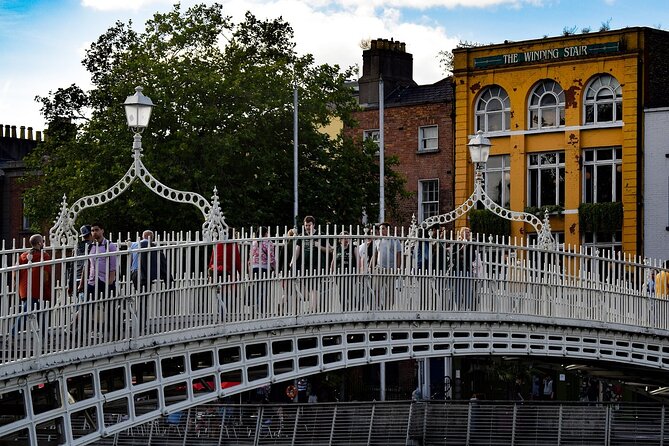
Next up is Ha’penny Bridge, a cast-iron bridge built in 1816. The key detail is the half-penny toll—once upon a time, crossing the river wasn’t free. That little fact adds a punch to the bridge: it’s not just a scenic stop; it’s a piece of Dublin’s everyday history.
Expect another 20-minute window. The point isn’t to treat it like a long sightseeing session. It’s more like a timed breather and a photo moment, with the guide tying it into how people used the river for movement and commerce.
You’ll also get the kind of views that make Dublin feel like Dublin: the river as a thread through the city. If you’re doing other self-guided walks later, this is the stop that helps the rest of your day connect.
Temple Bar: street life, pubs, and why it’s more than nightlife
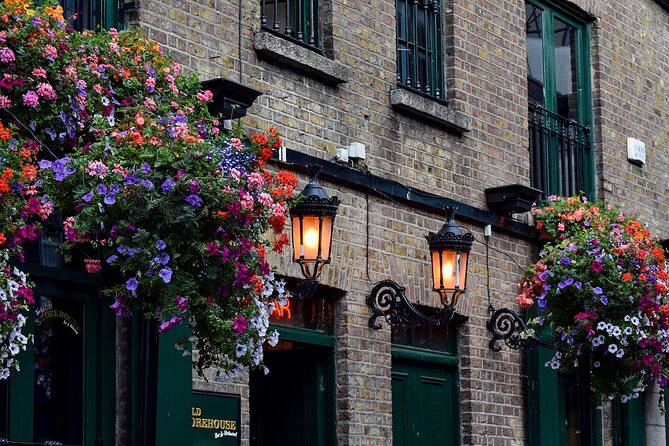
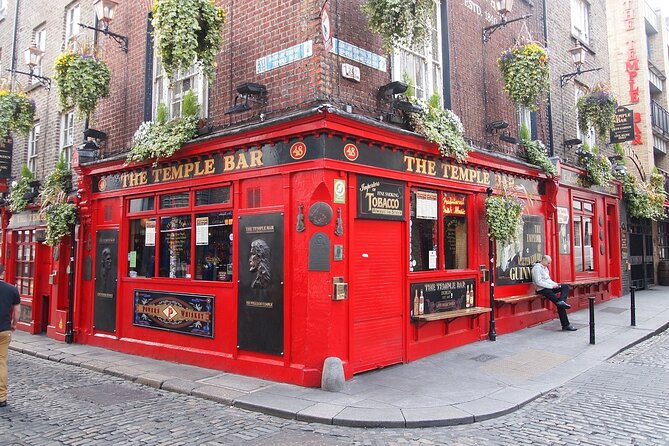
Then you’ll walk through Temple Bar, Dublin’s cultural quarter since the 17th century. The area is famous for pubs, street performance, and galleries. The best part of touring Temple Bar with a guide is that you learn what shaped it—so you’re not just reacting to crowds and music from the sidewalk.
The tour keeps it to around 20 minutes, which is perfect for two types of visitors:
- If you want to see the vibe without spending your whole day stuck in it.
- If you’re curious but don’t want to plan a separate Temple Bar outing.
A practical note: Temple Bar can feel louder than other parts of the city center, especially later in the day. If you’re sensitive to noise, you might prefer earlier timing. But with a guide steering the flow, you’ll still get what you came for—an understanding of the place, plus enough time to soak up the streets.
If music is playing nearby during your stop, let it be a bonus. The guide’s context is what turns the scene into something you’ll remember.






Christ Church Cathedral: medieval crypts and Strongbow legend
This is one of the big “slow down” stops: Christ Church Cathedral. You’ll spend about 30 minutes here, which is a sensible amount of time because cathedrals aren’t just exteriors. They’re space, stonework, and layered meaning.
The tour focuses on what’s inside and underneath—especially medieval crypts and Strongbow’s reputed tomb. Even if you’re not a deep-history person, the idea of a cathedral anchored by both visible architecture and older, hidden burial spaces gives you a different kind of connection to the city.
What I like about this stop is how it balances spectacle with story. The cathedral is an impressive building on its own, but the guide helps you understand why it mattered over time—religious power, political connections, and the physical marks left behind.
Admission is free as part of the tour, so you’re not stuck deciding whether it’s worth paying for. You just go in, look around, and let the guide point you toward what matters most. If you care about architecture, this is the stop you’ll likely remember most clearly afterward.
Dublin Castle: a royal setting you can still enjoy quickly
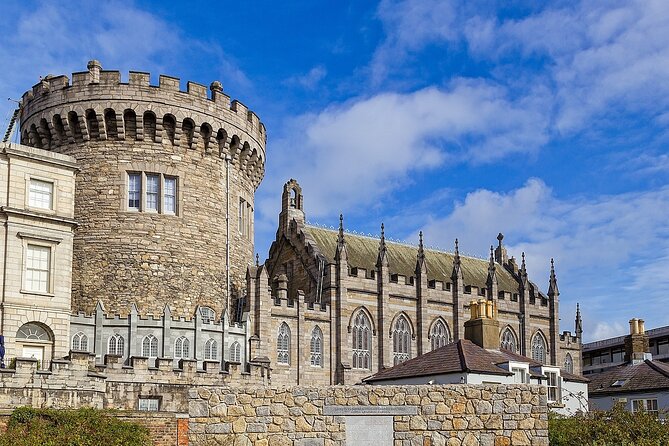
From the cathedral, the tour continues toward Dublin Castle, with roughly 30 minutes at the stop. Dublin Castle is one of those places that can feel intimidating because it sounds official and heavy. The good news is you don’t need hours to catch the meaning.
At this stage, the tour also mentions a few more stops along the way, kept as surprises. That’s a nice touch because it breaks up the walking rhythm and reduces that checklist feeling. You’re not just marching between the biggest names—you’re being guided through the city’s connective tissue.
The castle visit is short enough to be doable even if your legs are tired, but long enough to notice the scale. The guide’s storytelling is key here: you’ll get the human version of the place, not just dates and titles.
A price that makes sense for a guided, ticket-included walk
The tour costs $34.00 per person and lasts about 2 hours. For central Dublin, the real value isn’t only the guide—it’s the fact that you’re getting free admission at the major stops listed during the route.
Add up what that usually means on your own:
- you’d likely pay to enter at least one or two major historical sites,
- you’d still spend time figuring out the order,
- and you might miss the “why” behind what you’re seeing.
Here, the guide stitches it together. Even if you’re a strong self-guided planner, having someone point out the important bits can save you a lot of wandering. You’re also getting a professional guide and a group capped at 15 travelers, which keeps the experience from turning into a rushed cattle line.
In short: $34 buys you structure, story, and included entry, not just movement.
Group size, pacing, and how to get the most out of it
With a maximum of 15 people, you should have a reasonable chance of hearing clearly and asking a question if you want. The downside of small groups is that the guide may keep the pace tight to fit everything in. So your best strategy is to commit mentally to the timing.
Each main stop is around 20 minutes for the first three and about 30 minutes for the cathedral and castle. That rhythm works because it mixes walking time with short “look and learn” blocks. It also means you can keep energy for later—like a pub dinner or a longer stroll afterward.
Practical tip: wear shoes you trust. Dublin sidewalks are manageable, but this is still a walking tour in a concentrated area.
What kind of visitor will love this most?
This tour fits best if you:
- want a quick, guided overview of central Dublin,
- like your history explained in clear language (not buried in dates),
- enjoy mixing famous sights with street-level atmosphere.
If you’re traveling solo, it’s a great way to avoid getting stuck staring at a guidebook. If you’re with friends, it’s also a good shared experience because the stops give you something to discuss right away—bridge history, cathedral interiors, and what Temple Bar became over time.
Should you book this Dublin walking tour?
If you want a smart first pass through the city center, I’d book it. The route is efficient, the guide makes the stops easier to understand, and the included entry saves you both money and decision-making. It’s also an easier option than trying to chain together major sites on your own while guessing which order works best.
If you prefer long, slow visits and independent wandering at each landmark, you might feel constrained by the stop lengths. In that case, still consider booking—but treat it as your kickoff. Let the tour set the scene, then come back later for deeper time in the places that grab you.
FAQ
How long is the Dublin walking tour?
The tour lasts about 2 hours.
How much does the tour cost?
It costs $34.00 per person.
What does the tour include?
You get a 2-hour guided walking tour with a professional tour guide.
Is admission included for the main stops?
Yes. The tour lists free admission tickets for the stops included on the itinerary.
Where do I meet the guide?
You meet at Postmobile GPO, O’Connell St, Dublin 1.
Does the tour use a mobile ticket?
Yes, the tour offers a mobile ticket.
What language is the tour in?
The tour is offered in English.
Are service animals allowed?
Yes, service animals are allowed.
Can I get a refund if I cancel?
Free cancellation is available. You can cancel up to 24 hours in advance for a full refund.