REVIEW · DUBLIN
Dublin City Center Walking Tour
Book on Viator →Operated by Irlanda Oculta- by Paseando por Irlanda · Bookable on Viator
Three hours, and Dublin makes sense. This city-center walk ties together pubs, power, poets, and Vikings with a guide who keeps the facts moving and the mood light, so you leave with stories you can repeat. You’ll also get practical local talk like what to order and how to spot Ireland’s music culture in everyday life.
What I like most is how the guide blends history with humor without turning it into a long lecture. Two more wins: the stops are all timed for momentum (short, focused looks at major sights), and the whole route is built around places you can recognize again later on your own.
One drawback to consider: you’re seeing a lot in a short time. Several points are brief (some around 15–25 minutes), so if you want deep museum-style time inside buildings, you’ll need to add that separately after the tour.
In This Review
- Key moments you’ll remember
- Why this Dublin walk feels more like a good conversation than a history lecture
- Where you start, how you end, and the walk’s overall vibe
- Price and group value: what you’re really paying for
- Stop 1: Temple Bar, plus the beer and music talk you’ll use right away
- Stop 2: Dublin Castle, history signals, an escape story, and a few Irish-language starters
- Stop 3: Dubh Linn Gardens, a calm reset on the Viking story path
- Stop 4: The 40 Steps, Jonathan Swift, and how a medieval wall shows up in modern life
- Stop 5: St Patrick’s Cathedral and the gardens worth noticing
- Stop 6: Christ Church Cathedral (outside), Viking roots, and a curiosity about the environment
- Stop 7: Trinity College Dublin without guided-group admission, plus what you can do instead
- Stop 8: The Molly Malone Statue and the song finish that follows you
- The overall pace: lots of stops, short windows, and how to handle it
- The guides: what to expect from the experience style
- What’s included, and what you’ll need to plan for
- Small practical tips before you go
- Should you book this Dublin city-center walking tour?
- FAQ
- How long is the Dublin City Center Walking Tour?
- Is the tour guided in Spanish?
- Do I need to pay entry tickets for the stops?
- What is included in the price?
- What is not included?
- Where do the tour start and end?
Key moments you’ll remember
- A Spanish guide with high energy that keeps the group engaged
- Free-entry stops spread across Dublin’s top landmarks
- Temple Bar beer and music chat that helps you plan the rest of your trip
- Cathedrals plus Trinity College curiosities without needing a separate guide for everything
- Molly Malone ending with the song that sticks in your head on purpose
Why this Dublin walk feels more like a good conversation than a history lecture
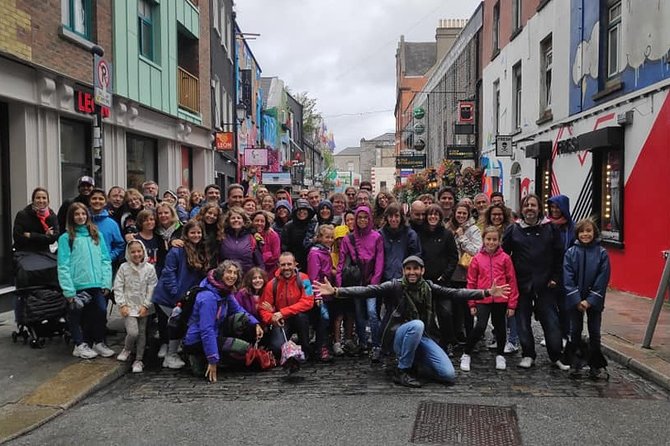
This tour works because the guide doesn’t just point. You get a rhythm: story, context, then a quick human detail that makes the place feel real. One of the most praised parts in the experience is the guide’s energy and the way they keep everyone entertained while staying serious about the information they share.
If you’re doing Dublin for the first time, this style helps you get your bearings fast. You learn what matters and why it matters, but you don’t have to work to keep up. The jokes and humor are the delivery system. The historical facts are the payload.
And you’re not stuck with a one-size-fits-all script. The tour is described as customizable around your preferences. That means you’re more likely to get the Dublin that fits your trip, not only the Dublin that fits a brochure.
You can also read our reviews of more walking tours in Dublin



Where you start, how you end, and the walk’s overall vibe
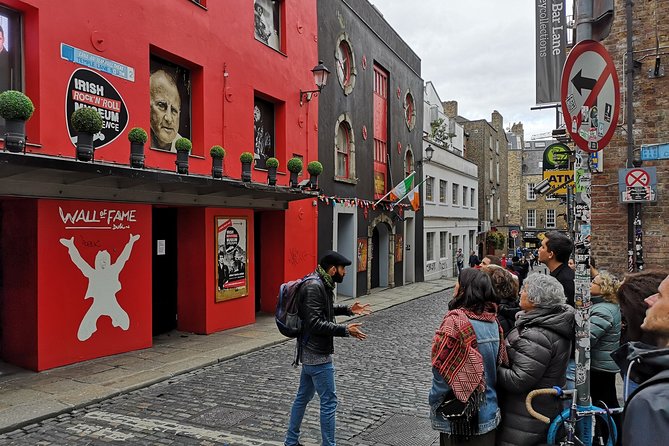
The tour starts at the Big Tree Pub on Dorset Street Lower (DO1A2Y5). The finish is at the Generator Dublin Chimney Viewing Tower area on Arran Quay, Smithfield (D07 F2VF). You’ll also finish with a surprise next to the old Jameson distillery tower area.
That start-to-finish flow matters. You’re not doing the classic “back to the beginning” loop. You move across central Dublin, and the ending is placed so it feels like a natural capstone to the day’s stories about Irish identity, trade, and heritage.
Also note the practical side: it’s a walking tour, so comfortable shoes matter more than anything else you pack. The route is compact enough for a short day, but it still adds up.
Price and group value: what you’re really paying for
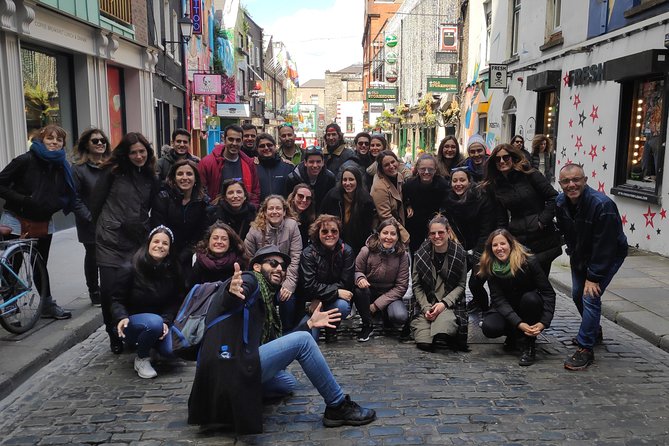
The price is listed as $417.09 per group (up to 15) for about 3 hours. That pricing model is actually a big clue about what you get: a guided, story-rich experience designed for a small group where you can hear clearly and interact.
What I consider “good value” here is not the math of a per-person rate (since group size changes). It’s that you’re paying for:
- a guide who can keep attention for the full 3 hours
- multiple major Dublin landmarks in one route
- free admission at the listed stops (so your budget doesn’t get hit by entry fees)
If you travel with friends or family, this style becomes even easier to justify. You can split the group cost and still get a structured tour that doesn’t feel crowded.
Stop 1: Temple Bar, plus the beer and music talk you’ll use right away
You kick off at Temple Bar, and the guide doesn’t treat it like a single photo spot. Expect the origin story of the Irish pub and a practical conversation about types of beer—including recommendations that can help you make easy choices later.
Temple Bar also becomes a doorway into Irish culture. Music is framed as part of daily life, not only nightlife. That’s useful because Dublin’s pub music scene can feel overwhelming if you don’t know what to look for. By the time you leave this stop, you’re more likely to choose places that match your mood instead of guessing.
How to get the most from this stop: arrive ready to listen. Even if you’ve heard of Temple Bar, the “why pubs exist, why music matters” angle makes it more than a landmark.
Stop 2: Dublin Castle, history signals, an escape story, and a few Irish-language starters
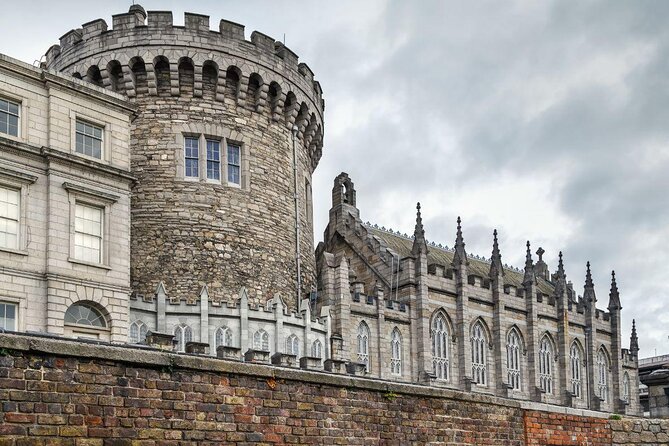
Next up is Dublin Castle. You start with a historical introduction to the island of Ireland—then shift into the castle’s story and a specific “famous prisoner” angle, including the prison escape thread.
This is one of the stops where the tour’s tone matters. A castle can become dry fast, but the way it’s presented here keeps the timeline moving and connects the dots to the culture around it. You’ll also talk about the strong relationship between Spain and Ireland, which is the kind of detail that makes Dublin’s history feel bigger than local street corners.
A small but smart touch: you learn basic words of the Irish language during the stop. It’s not meant to turn you into a speaker in one afternoon. It’s meant to give you real prompts—so when you later see Irish text on signs or hear Irish words in conversation, you recognize patterns instead of feeling lost.
Time at this stop is about 45 minutes, so it’s one of the longer segments. If you like context, this is the place to pay extra attention.
You can also read our reviews of more city tours in Dublin






Stop 3: Dubh Linn Gardens, a calm reset on the Viking story path
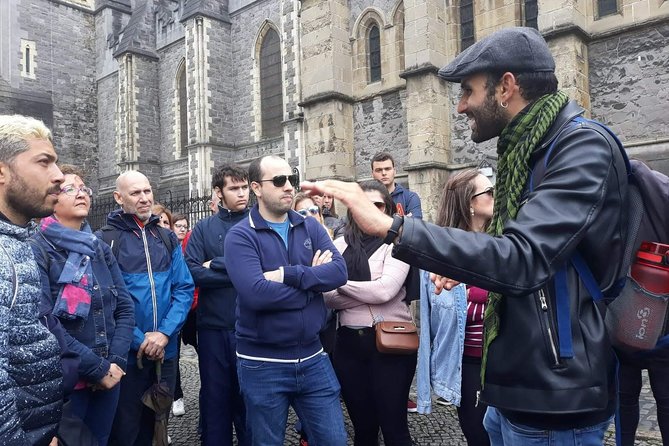
Then you get a breather at Dubh Linn Gardens. The tour frames it as an oasis of tranquility in the middle of the city, built on the story of a former pond where Vikings docked their ships.
This stop is short—around 15 minutes—but the point is big. It breaks up the heavier history stops and gives you a chance to look around without rushing through crowds. If Dublin feels loud to you (it can), this garden segment is a mental reset.
Also, you’re positioned near things you might want to pair next, like the Chester Beatty Library, which sits nearby and is an easy add-on if you want culture with a slower pace.
Stop 4: The 40 Steps, Jonathan Swift, and how a medieval wall shows up in modern life
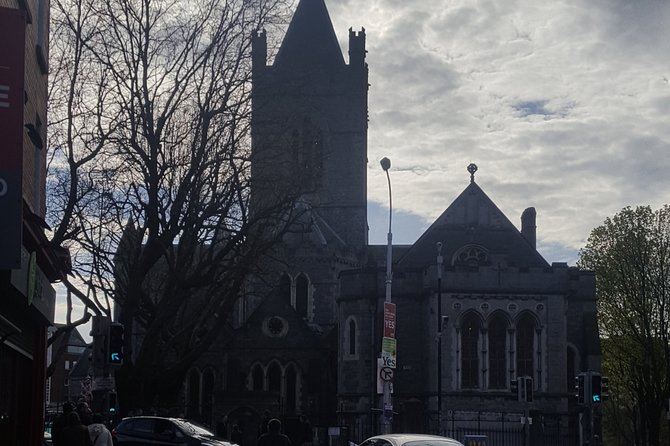
At The 40 Steps, the tour goes literary. You connect the site to Jonathan Swift and hear how he fits into Ireland’s bigger writing tradition.
You’ll also see a piece of the medieval wall and hear about a scene from a film shot in Ireland. The benefit of this approach is that it makes “old Dublin” feel current. You’re not only learning dates; you’re learning how places keep being used.
This stop is about 15 minutes. It’s perfect if you like quick hits, but if you’re the type who wants photos from multiple angles and time to linger, you’ll have to do that on your own after the tour.
Stop 5: St Patrick’s Cathedral and the gardens worth noticing
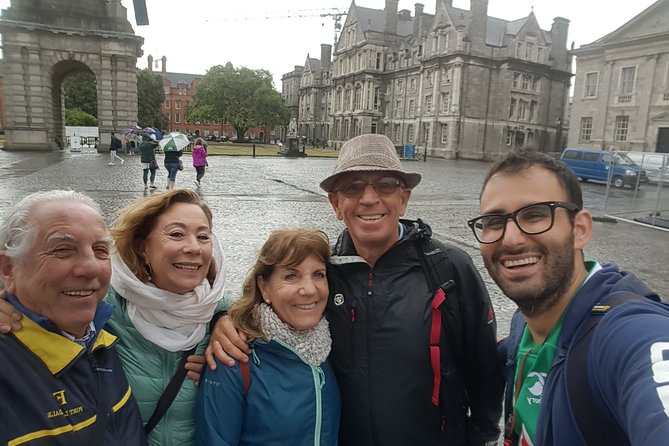
You visit St Patrick’s Cathedral, described as Dublin’s National Cathedral and highlighted for its architecture and beautiful gardens.
The tour keeps this segment short (around 15 minutes), but it’s still valuable. Even without long indoor time, you get an overview of what aspects you should notice when you visit on your own later. That’s a big difference between seeing a building and actually understanding why it’s notable.
If cathedrals don’t usually grab you, the garden component can make this easier to enjoy. It turns the visit into a “walk and look” moment instead of only a “stand and stare” one.
Stop 6: Christ Church Cathedral (outside), Viking roots, and a curiosity about the environment
Next is Christ Church Cathedral, visited from the outside. The tour connects it to Viking settlement roots, showing how Dublin’s layers build over each other.
You’ll also get a curiosity about the environment. The specific angle isn’t spelled out in detail here, but the goal is clear: you’ll learn something that makes you look at the city’s setting with slightly different eyes.
This stop is about 25 minutes, which gives you time to take in both the architecture and the story framing before moving on.
Stop 7: Trinity College Dublin without guided-group admission, plus what you can do instead
Trinity College Dublin is a special case. Guided groups can’t enter the way you might expect, so the tour focuses on curiosities you can enjoy without needing a guide inside.
You’ll also hear about the Bank of Ireland building, tied to the seat of the old Irish Parliament.
Here’s the practical value: you’re not wasting time waiting for doors to open or rules to change. You still get the big talking points and then you can explore at your own pace. If you want a guided campus experience, the information says you have the option to purchase a guided tour on campus separately.
In other words, this stop is structured to fit reality, not optimism. That helps the overall flow of the tour stay tight.
Stop 8: The Molly Malone Statue and the song finish that follows you
You end at the Molly Malone Statue. The tour asks the classic question: who was Molly Malone, and why is there a statue?
You’ll hear a version considered more credible than the many other versions. It’s the kind of mystery that makes a statue feel like a story, not a piece of street decoration.
Then you finish with Molly Malone’s famous song, which gets stuck in your head fast. It’s a smart closer. By the time you’ve walked past pubs, cathedrals, castles, and college gates, it’s nice to leave Dublin with something catchy and human.
The overall pace: lots of stops, short windows, and how to handle it
This isn’t a sit-down tour. It’s a “move, look, listen” format with free-entry stops and short time windows at most sights.
That can be perfect if:
- you want a first-day orientation
- you like stories and humor
- you want practical suggestions (especially about pubs and music)
But it can be less ideal if you:
- hate walking segments between points
- need long silent time at each landmark
- want to go deep into indoor exhibits
My advice is simple: treat the tour as your framework. After the walk, you can return to the one or two places that grabbed you most.
The guides: what to expect from the experience style
This tour is built around the guide’s personality and approach. In the feedback, guides like Álvaro and Bea are praised for strong knowledge, clear speaking, energy, and keeping the group entertained.
If you’re the kind of traveler who doesn’t want to “just learn facts,” this is where it pays off. The guide style sounds especially good for people who like asking questions, since the tour is described as close, accessible, and attentive to the group.
What’s included, and what you’ll need to plan for
Included:
- Dublin City Walking Tour
- Guide in Spanish
Not included:
- private transportation
- alcoholic beverages
- bottled water
- foods
So you should plan to buy water if you need it. You should also know that food and drinks aren’t part of the tour. The Temple Bar beer talk is helpful, but you’re not being served along the route.
Small practical tips before you go
- Wear comfortable shoes. You’ll be on your feet moving between central landmarks.
- Bring a phone for photos and for the mobile ticket.
- If you’re sensitive to noise or crowds, start with a calmer mindset. Temple Bar and the city center can get busy.
- If you want more time at any stop, plan to return after the tour. The tour is made for discovery, not slow museum time.
Should you book this Dublin city-center walking tour?
Book it if you want Dublin’s big highlights connected by stories you can remember: pubs, power, poets, and cathedrals in one smooth walk. The Spanish guiding style and the guide energy are a strong match for travelers who like humor with historical context, and for anyone who wants practical advice on what to do next.
Skip it or plan extra time separately if you prefer long indoor visits or you need detailed museum pacing at each stop. Also, because several segments are brief, it helps to be flexible and treat this as your starting point.
If you want a fast, friendly way to understand Dublin, this is the kind of tour that gives you a useful base for the rest of your days.
FAQ
How long is the Dublin City Center Walking Tour?
It runs for about 3 hours.
Is the tour guided in Spanish?
Yes, the tour includes a guide in Spanish.
Do I need to pay entry tickets for the stops?
The listed admissions for the stops are free.
What is included in the price?
You get the walking tour with a Spanish guide. The price is per group (up to 15).
What is not included?
Private transportation, alcoholic beverages, bottled water, and food are not included.
Where do the tour start and end?
It starts at the Big Tree Pub on Dorset Street Lower and ends at the Generator Dublin Chimney Viewing Tower near Arran Quay, Smithfield, with a final surprise near the old Jameson distillery area.