REVIEW · DUBLIN
2 Hour Walking Tour of Dublin’s City Centre
Book on Viator →Operated by Dublin Walking Tours · Bookable on Viator
Dublin fits in your pocket when you know where to start. This 2-hour city-centre walking tour threads together the big landmarks so you get the story behind what you’re seeing, not just a list of stops. I like that it moves at a steady pace without map stress, and I also like the small-group vibe that makes it easy to ask questions. One thing to keep in mind: it is short, so you’ll mostly see highlights outside key buildings, and any interiors that require tickets are not included.
The route also sets you up for the rest of the day. You choose a morning or afternoon start, you meet at the Gaiety Theatre on King Street South, and you end at the Fusiliers Arch in St Stephen’s Green right by the Luas tram stop. The main drawback is simple: with only about 15 minutes per stop, there’s limited time for long photo stops or lingering inside if you want to add optional extras.
You’ll be in good hands with guides who bring the city to life. In the feedback, guides like Alin/Alan (and in one case Leonor Bethencourt) stood out for being funny, engaging, and good at keeping everyone involved with questions, quick quizzes, and story props like notebook photos.
In This Review
- Key highlights worth your attention
- Starting at the Gaiety Theatre, ending at St Stephen’s Green and the Luas
- Why this $28.96 Dublin highlight walk is good value
- Gaiety Theatre: your first Dublin story in 15 minutes
- From St Patrick’s Cathedral to Dublin Castle: religion, power, and building layers
- Christ Church Cathedral: Vikings in 1030 and the Gothic facelift
- Temple Bar and Trinity College: pub streets meet the Book of Kells
- Bank of Ireland and St Stephen’s Green: politics and a park with a Guinness link
- What to expect on the ground (and what to plan for)
- Who this tour suits best
- Should you book this 2-hour Dublin city-centre walk?
- FAQ
- How long is the Dublin city-centre walking tour?
- What does the tour cost?
- Where do I meet the guide?
- Where does the tour end?
- What sites are included on the route?
- Are entrance tickets included?
- Is the tour offered in English?
- How big is the group?
- Is the tour suitable for people with moderate fitness?
- Can I cancel if my plans change?
Key highlights worth your attention
- Small group up to 10 people, which keeps the tour from feeling like a school line
- Gaiety Theatre to St Stephen’s Green is a smart, walkable arc through the centre
- A tight, time-saving highlight plan for first-timers who want the lay of the land
- Mix of eras in every stop, from Viking foundations to Anglo-Norman power and later restorations
- Practical local context, including tips on what to do next after the tour
Starting at the Gaiety Theatre, ending at St Stephen’s Green and the Luas
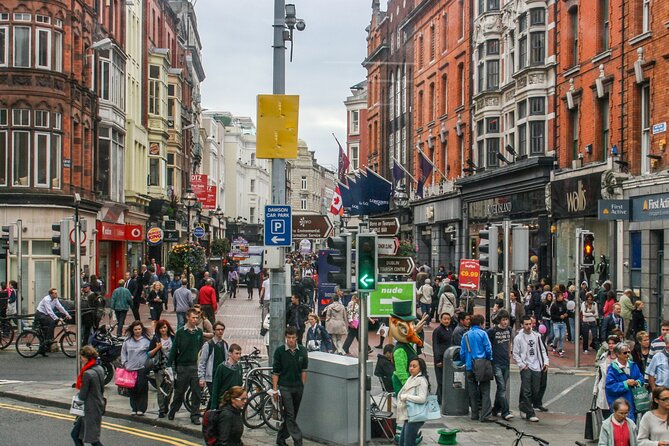
This tour is designed for people who want structure without feeling trapped. You start at the Gaiety Theatre on King Street South, Dublin 2. It’s easy to find, which matters because Dublin’s centre can feel like a maze when you’re arriving with bags, jet lag, or both.
You finish at 3 St Stephen’s Green at the Fusiliers Arch. That arch is the big entrance marking the main way into the park on Grafton Street, and it’s right next to the Luas tram stop. In real life, that means you can drop into shopping streets, cafes, or another neighbourhood with minimal backtracking.
The tour lasts about 2 hours, with roughly 15 minutes at each of eight stops. That pacing is intentional: it gives you a clear “see it, understand it, move on” rhythm. Just know that this is not the kind of tour where you park for an hour at one place and study every stone.
You can also read our reviews of more walking tours in Dublin



Why this $28.96 Dublin highlight walk is good value
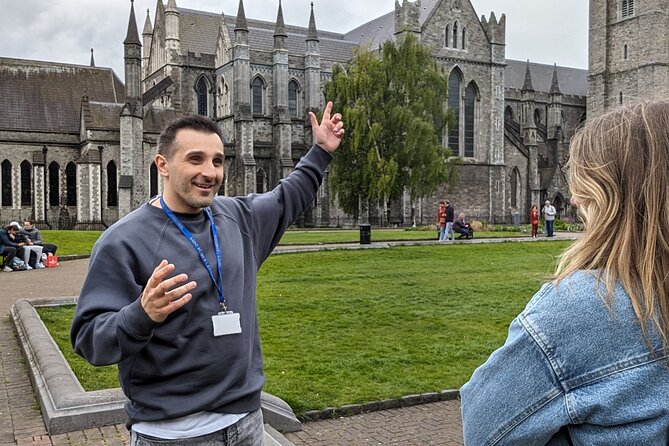
At $28.96 per person for about two hours, the main value is not the buildings themselves. It’s the time you save and the context you get while you’re walking.
If you’re visiting Dublin for the first time, a walking highlights tour is one of the best ways to:
- figure out the layout of the centre fast
- learn what matters so you can choose what to return to later
- avoid the “I saw it, now what” feeling
Also, this one is offered in English, with a mobile ticket, so you’re not dealing with printed passes.
Where you should be mentally ready for a small “gotcha”: the tour includes some stops with admission ticket free, but others explicitly have admission ticket not included. That means you can’t assume everything is included in the price. If you have strong interests in interiors, plan to budget for optional tickets at the stops marked not included.
Gaiety Theatre: your first Dublin story in 15 minutes
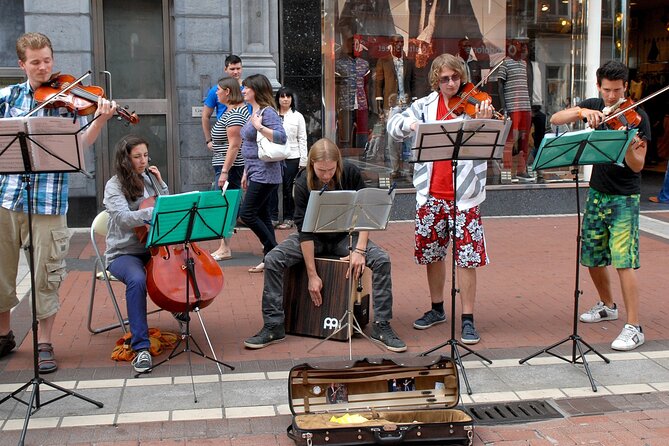
Your first stop is the Gaiety Theatre. Even though it’s a relatively quick stop, it works as a warm-up. You’re not starting with a cathedral or a castle. You start with theatre energy, which helps you understand Dublin as a city that performs its identity through art and public life.
In a two-hour format, that matters. You’re more likely to connect emotionally to the rest of the route when the tour opens with something lively and human. In the feedback, people also liked the guide style that uses questions and interactive moments early, so you’re already thinking before the more historical stops begin.
From St Patrick’s Cathedral to Dublin Castle: religion, power, and building layers

This is where Dublin’s contradictions start to click.
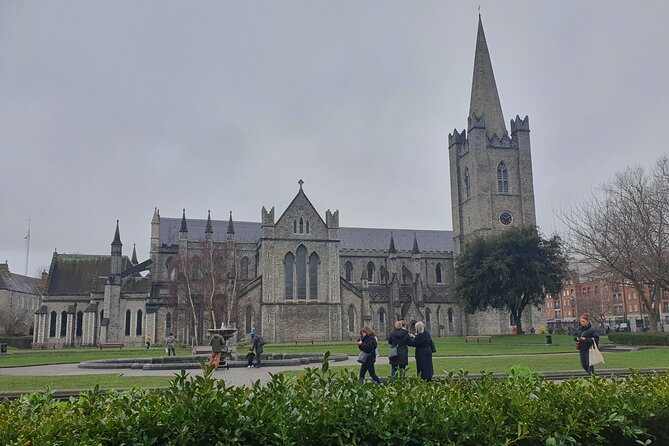
At St Patrick’s Cathedral, the big draw is the timeline twist. The cathedral is linked to St Patrick, and the story moves through Anglo-Norman building phases to a period where it fell into ruin and was later rescued by the Guinness family. That’s a lot of history to pack into one spot, but the stop length is about 15 minutes, so the guide can highlight the turning points without turning it into a lecture marathon.
Then you shift to Dublin Castle, built by the Anglo-Normans. It started as a tower, then grew into a complex that served as a seat of power and even a prison. The castle also comes with an entertaining anecdote: it witnessed a daring jewel heist. That kind of story is why this tour works for people who want facts, but also want the city to feel like a living place.
A practical consideration here: since admission ticket is not included for both St Patrick’s Cathedral and Dublin Castle, treat these stops as “see and learn” moments first. If you want to go inside, you’ll need to arrange tickets separately.
Christ Church Cathedral: Vikings in 1030 and the Gothic facelift
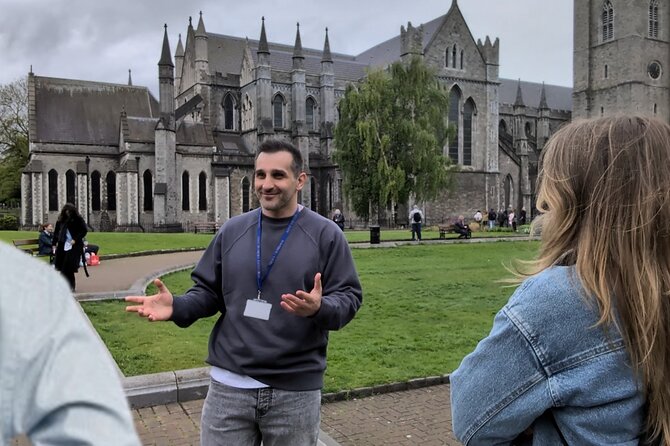
Next is Christ Church Cathedral. The hook is in its origin: founded by Vikings in 1030. From there, the building’s story becomes a timeline of who ruled, who rebuilt, and what architectural fashion looked like over time.
You’ll hear how Anglo-Normans added a Gothic layer, and you’ll also get the angle that the cathedral later received a restoration supported by 19th-century whiskey money. That detail is exactly the sort of contrast Dublin does well—serious architecture powered by an unexpected source.
Again, admission ticket is not included, so think of this stop as a chance to understand what you’re looking at from the outside and the immediate surroundings. If you later decide you want more interior time, this tour makes that choice easier because you’ll know what to focus on.
You can also read our reviews of more city tours in Dublin






Temple Bar and Trinity College: pub streets meet the Book of Kells
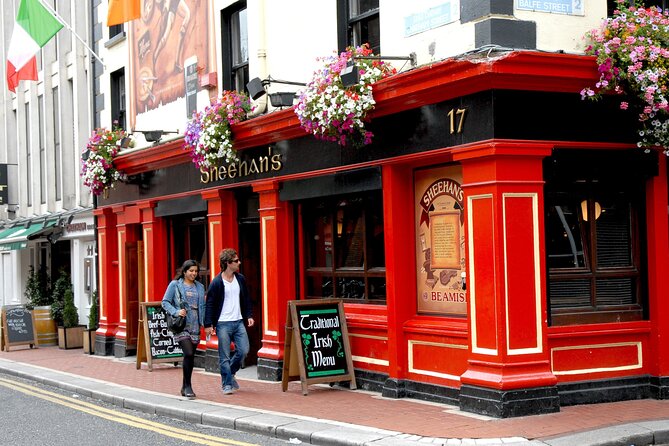
At Temple Bar, the tour tackles a transformation story. It was once a maze-like neighbourhood with a notorious reputation. Today it’s more of a tourist and culture cluster with pubs and art galleries, plus the kind of street energy that comes with nearby nightlife.
This stop is marked as admission ticket free, which helps you keep your budget under control. It’s also a great place to orient yourself. Temple Bar is busy, and even if you don’t want to spend the evening there, it helps to know how the area fits into Dublin’s wider centre.
Then you move to Trinity College Dublin, another highlight that’s admission ticket free on this stop. Trinity is famous for the Book of Kells and for the campus setting. Even if you don’t go inside during the tour, you’ll get the context to decide whether it’s worth returning later with more time.
If you love learning through landmarks, Trinity is the payoff for the earlier stops. You’ve been absorbing the city’s power and belief. Now you’re seeing the education and cultural prestige side of Dublin.
Bank of Ireland and St Stephen’s Green: politics and a park with a Guinness link
After Trinity, the tour turns toward civic life.
At the Bank of Ireland, you get a strong sense of Dublin’s political centre. The Old Parliament House sits in this story, and the stop connects the site to ideas that inspired grand buildings, plus the Act of Union. It’s one of those moments where the guide helps you see the city as more than a postcard: it’s where decisions were made.
This stop is also admission ticket free, which is helpful because it keeps the walking-tour value high.
Then comes St Stephen’s Green, with a history that’s surprisingly personal. The park was once an exclusive green space for Dublin’s elite, thanks in part to the Guinness family. Now it’s a public park you can enjoy, with a more open feel than the stone-heavy streets you’ve been walking.
This is a nice closing note. The tour ends here for a reason: once you’ve learned about power and institutions, you get to land in a space that belongs to everyone.
What to expect on the ground (and what to plan for)
A few practical notes make the experience better:
- Walking pace and timing: expect about 2 hours and a stop-and-go rhythm. With only around 15 minutes per stop, the guide will likely prioritize key stories and quick orientation.
- Photo time: you will have time for photos, but if you’re the type who takes 40 photos at every building, you may feel rushed. In the feedback, guides were patient with photo stops, but the schedule is still the schedule.
- Moderate fitness: the tour calls for moderate physical fitness. It’s not described as a strenuous hike, but you should still wear comfortable shoes and plan for urban walking.
- Weather: Dublin weather likes to change its mind. Bring a rain layer if there’s any chance of drizzle.
- Small group energy: with max 10 people, you’ll get more personal interaction than on large group tours. In one case, the group ended up very small, which made the experience feel more tailored.
Who this tour suits best
This is a strong choice if you:
- are visiting Dublin for the first time and want to get your bearings fast
- like story-based history tied to what you can see right in front of you
- want a guided plan that helps you decide what to do next
It’s also a good fit for mixed ages. In the feedback, families with kids (including teens) said the guide kept attention with games and interactive moments.
If you’re the kind of person who wants to spend long stretches inside cathedrals and castles, this might feel a bit quick. The upside is that you leave with a shortlist of places worth a second visit.
Should you book this 2-hour Dublin city-centre walk?
I’d book it if you want a high-impact first outing. It’s well-priced for a structured loop through the centre, and the best part is the guide-led connections: Viking origins, Anglo-Norman power, Tudor-era echoes you can spot in architecture, and later restorations and political turning points.
Skip it only if you already know Dublin inside out, or if your priority is spending most of the time indoors at ticketed sites. In that case, you may prefer tours that focus on a smaller number of venues with longer time inside.
If you’re new to the city and want to feel confident about where everything is after two hours, this is a smart buy.
FAQ
How long is the Dublin city-centre walking tour?
It runs for about 2 hours (approx.).
What does the tour cost?
The price is $28.96 per person.
Where do I meet the guide?
The meeting point is the Gaiety Theatre, King St S, Dublin 2, Ireland.
Where does the tour end?
The tour ends at 3 St Stephen’s Green, at the Fusiliers Arch by St Stephen’s Green.
What sites are included on the route?
You’ll stop at Gaiety Theatre, St Patrick’s Cathedral, Dublin Castle, Christ Church Cathedral, Temple Bar, Trinity College Dublin, the Bank of Ireland, and St Stephen’s Green.
Are entrance tickets included?
Some stops are listed as admission ticket free, while others are listed as admission ticket not included. Fees and taxes are not included.
Is the tour offered in English?
Yes, the tour is offered in English.
How big is the group?
The tour has a maximum of 10 travelers.
Is the tour suitable for people with moderate fitness?
It’s recommended for people with a moderate physical fitness level.
Can I cancel if my plans change?
Free cancellation is available up to 24 hours in advance of the experience’s start time for a full refund.