REVIEW · DUBLIN
DayTripper Dublin: A Guided City Walking Tour
Book on Viator →Operated by Unearthed Tours · Bookable on Viator
Dublin makes sense on foot. This 2.5-hour guided walk packs Ireland’s story into real city streets, with stops that are easy to remember and fun to compare. I especially like the local guide moments—from practical food and wandering tips to steering the conversation toward what you care about most.
The one thing to weigh: this tour is mostly exterior views. You’ll stand in gardens and courtyards, but you don’t go inside big-ticket sites like St Patrick’s Cathedral, Dublin Castle, Christ Church, or Trinity College.
If you’re arriving with limited time and want an instant Dublin orientation (with Irish music and dance in the mix), this is a strong first- or mid-trip choice. With a small cap of 25 people and lots of question time, it’s also the kind of outing that can feel more personal than you expect—some guides even get described as private-guide level when the group is tiny.
In This Review
- Key takeaways before you set off
- Entering Dublin with a guide (and a plan)
- Price, group size, and what you really get for $27.82
- Meeting at St Stephen’s Green and finishing near College Green
- Stop-by-stop: the Dublin route that ties culture to real places
- Wolfe Tone Statue: orientation plus what to do next
- St Stephen’s Green: Irish history in a park setting
- Grafton Street: a busy high street with a guide’s lens
- Molly Malone Statue: working-class Dublin explained
- Gardens of St Patrick’s Cathedral: outside views, focused context
- Dubh Linn Gardens: the Viking-era reference point
- Dublin Castle courtyards: political history from the edges
- Christ Church Cathedral courtyard: outside architecture, inside meaning
- Temple Bar: the neighborhood walk with a quick hit
- O’Connell Street: 20th-century politics as street markers
- Outside Trinity College Dublin: the Great Irish Hunger context
- What you’ll learn: the themes that keep the tour from feeling random
- Logistics that matter on a walking tour like this
- Who should book DayTripper Dublin?
- Should you book this tour?
- FAQ
- How long is the DayTripper Dublin walking tour?
- How much does the tour cost?
- Is the tour offered in English?
- Where do I meet the guide, and where does the tour end?
- Do I enter St Patrick’s Cathedral, Dublin Castle, Christ Church Cathedral, or Trinity College?
- Are admission tickets included?
- What’s the group size?
- Do I need a printed ticket?
- Can I cancel for free?
Key takeaways before you set off
- Built for first-timers: You’ll cover major landmarks in a logical, walkable arc across central Dublin.
- History with street-level context: Irish politics, the Vikings, and the Famine show up through real places you can see.
- Guide-driven Q&A: Expect answers and recommendations, not just a script.
- You won’t be stuck waiting: Short stop times (5–15 minutes) keep the pace moving and energy up.
- Mostly outside stops: St Patrick’s Cathedral, Dublin Castle, Christ Church, and Trinity are viewed from outside/gardens only.
- Small group size: Maximum 25 people means you’re more likely to get direct attention.
Entering Dublin with a guide (and a plan)
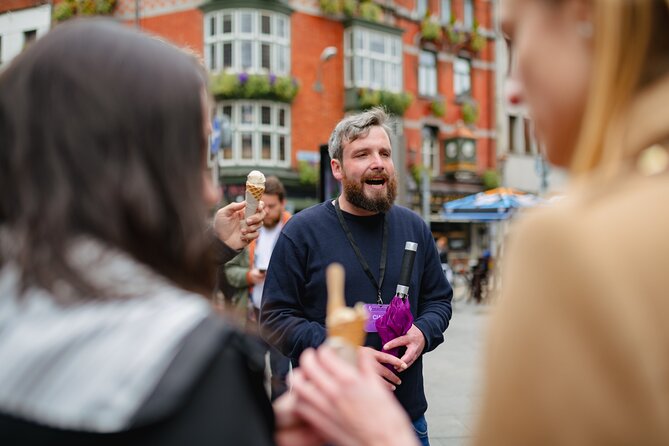
This tour is a smart way to get your bearings fast—without turning the day into a checklist of separate tickets and guided sessions. It’s guided throughout, lasts about 2 hours 30 minutes, and runs in English, so you get both the story and the route in one hit.
The best part is how the guide connects what you see to what you might otherwise miss. One moment you’re at a famous name (Molly Malone), the next you’re hearing how working-class Dublin shaped culture. Then you shift to the bigger forces—politics, independence struggles, and the lasting impact of major historical events—anchored to places you can actually point at.
Price-wise, $27.82 is the kind of number that makes sense for a city orientation tour. You’re paying for time with a local guide plus a route that threads together multiple central sights without you figuring out the best order. If you’re the type who likes to learn as you walk, this is good value. If you’re already deep into Dublin history and want doors-opening access, it may feel a bit more like a high-quality street tour than a full ticketed sightseeing day.
You can also read our reviews of more walking tours in Dublin



Price, group size, and what you really get for $27.82

DayTripper Dublin by Unearthed Tours costs $27.82 per person and is designed to be booked ahead—the average booking window is about 47 days. That’s a clue that people treat it as a must-do for a first visit, not as an optional add-on.
You’ll be in a group of up to 25 people. That matters because smaller groups usually mean less time waiting and more time talking. The feedback I’m using to guide my take also highlights guides who are personable and responsive. In particular, guides named Kyron, Keiron, Ciaran/Ciaron, and Cieran show up in standout experiences, including moments where the guide adjusts to what you want to focus on (like women’s history).
Also note the format: you get a mobile ticket, and confirmation comes at booking. It’s a modern setup that reduces friction when you’re switching between transit, street sights, and cafes.
Meeting at St Stephen’s Green and finishing near College Green
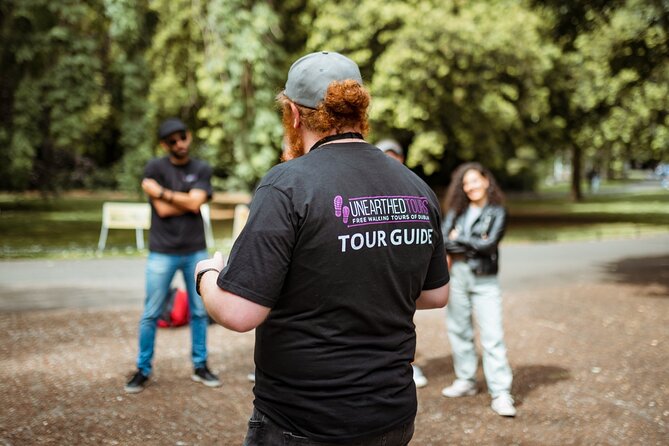
The tour starts at the Wolfe Tone Sculpture area by St Stephen’s Green. The walk ends at College Green, near Grafton Street, with a short stroll to major transit options like Pearse Station and Tara.
That end point is handy. You’re in the core again, close to more dining, more shopping, and more wandering options. It also means you don’t have to rebuild your day from scratch after the tour—you can roll straight into whatever you planned next.
The route also keeps the logistics simple: it’s near public transportation, and the walking demand is listed as moderate physical fitness. That usually means you should be comfortable with a steady pace for a couple of hours, not that it’s a casual stroll with frequent breaks.
Stop-by-stop: the Dublin route that ties culture to real places
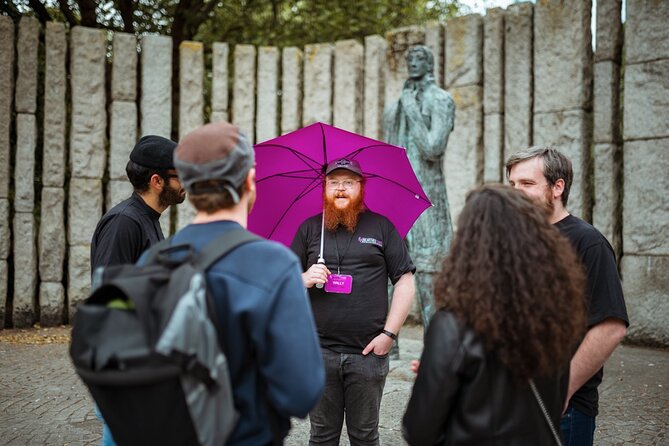
The tour’s stop rhythm is tight: around 5 to 15 minutes each, so you get a quick hit of context and then move on. That’s a feature, not a flaw. You’ll see a lot, but the guide keeps the thread connecting the stops so it doesn’t feel like random wandering.
Wolfe Tone Statue: orientation plus what to do next
You begin in the Wolfe Tone Sculpture area near St Stephen’s Green. This is the kind of start that sets expectations for the rest of the walk. You’ll get context around Ireland’s story and how the city’s identity shows up in streets and landmarks.
A big practical plus here: the guide shares recommendations for what to do after the tour, including where to go and where to eat. I like this because it helps you avoid the common problem of leaving a tour with your head full of facts and no plan for the next two days.
You can also read our reviews of more guided tours in Dublin






St Stephen’s Green: Irish history in a park setting
St Stephen’s Green is where you slow down just a touch. The tour uses the park to introduce Irish history and Irish culture. Parks are good like this: you get open space, a break from street noise, and a chance to absorb atmosphere while the guide explains the deeper meaning behind what you’re seeing.
This stop is also a useful reset. After you’ve walked through city streets, being in a green space helps your brain file Dublin’s story into something more memorable than just names on buildings.
Grafton Street: a busy high street with a guide’s lens
Next up is Grafton Street, one of Dublin’s best-known shopping and walking corridors. The guide walks and talks through it, giving you context for how busy streets reflect daily life and how cultural identity shows up through public space.
Even if you’ve seen Grafton Street photos before, this is where a guide can turn it from background noise into an actual chapter of Dublin.
Molly Malone Statue: working-class Dublin explained
At the Molly Malone Statue, you get a specific lens on working-class Dublin through the legend and its cultural staying power. This is one of those stops that’s quick but memorable, because it connects a recognizable figure to the people and rhythms of the city.
If you like character-driven storytelling—stories tied to real communities rather than just famous buildings—this stop is a highlight.
Gardens of St Patrick’s Cathedral: outside views, focused context
The tour meets around the gardens of St Patrick’s Cathedral. Important: you do not enter St Patrick’s Cathedral, and the admission is listed as not included.
But don’t treat that as a disappointment. Outside views still let the guide talk about origins and history in a way that helps you understand why Dublin’s religious and civic identity shaped the city. You get context without spending extra time inside.
Dubh Linn Gardens: the Viking-era reference point
Dubh Linn Gardens is a quieter pause with a clear payoff. The guide presents it as a picturesque landmark tied to Viking-era Dublin.
This stop is valuable because it gives you a visual anchor for the older layers of the city. Instead of Vikings being a vague chapter from a book, you’re looking at a place the guide uses to explain how the city evolved over time.
Dublin Castle courtyards: political history from the edges
You’ll visit the courtyards of Dublin Castle and get historical context, including political struggles across Ireland. Another key note: you do not enter Dublin Castle, and admission is listed as not included.
Courtyards can be surprisingly instructive. From outside, you still get scale and presence, and a good guide can connect architecture to power—who held it, who lost it, and what that meant on the street.
Christ Church Cathedral courtyard: outside architecture, inside meaning
The tour then moves to the courtyard of Christ Church Cathedral. Again, you don’t enter, and admission is not included.
The guide uses the exterior architecture and location to talk about founding and Viking history. If you’ve got even a mild interest in how older Dublin layers overlap, this stop helps tie the timeline together.
Temple Bar: the neighborhood walk with a quick hit
Temple Bar is included for a short walk through the neighborhood. The stop time is brief (about 5 minutes), and admission is marked free here.
This part is less about long contemplation and more about getting the feel of the area—enough to place it on your map and understand why it’s such a magnet. If you want deeper Temple Bar time, you’ll be well-positioned to choose your own stroll afterward.
O’Connell Street: 20th-century politics as street markers
At O’Connell Street, the guide continues exploring the political landscape of Ireland throughout the 20th century, including statues along the way.
I like this approach because statues are hard to interpret on your own. A guide can explain what you’re looking at and why it matters, turning monuments into a timeline you can actually follow.
Outside Trinity College Dublin: the Great Irish Hunger context
The tour ends with a stop outside Trinity College Dublin and the Central Bank of Ireland, with focus on The Great Irish Hunger (also called the Famine) and the history connected to Trinity.
As with other major sites, you do not enter Trinity College, and admission is not included. You’re not getting ticketed access here—you’re getting a guided storyline that helps you understand why certain institutions are tied to Ireland’s hardest chapters.
What you’ll learn: the themes that keep the tour from feeling random

This walk isn’t just “look at this landmark.” It’s structured around themes: Irish history and culture, Irish dance and music, political struggle, and the city’s layered past.
A few standout theme angles you can expect:
- Irish dance and music talk during the walk—so it’s not only politics and stonework.
- Viking-era references tied to places like Dubh Linn Gardens and the Christ Church context.
- Working-class and cultural identity, especially around Molly Malone.
- Independence and political struggles connected to Dublin Castle and the monuments on O’Connell Street.
- The Great Irish Hunger discussed in the Trinity-area stop, giving the Famine a clearer tie to Dublin’s public institutions.
One practical advantage: when you understand the themes, you can revisit any of these places later on your own and feel like you have the key. That’s what makes an orientation tour worth it—your second look becomes richer, not just repetitive.
Logistics that matter on a walking tour like this
You’re walking a central Dublin route with short stops, so a few planning tips can make it smoother.
Wear shoes you trust. You’ll be on streets and paths across major sights, and the tour is listed for people with moderate physical fitness. If you’re used to city walking, you’ll be fine. If you’re hoping for a mostly sedentary tour, this one is probably not your best fit.
Bring a layer. Dublin weather changes fast, and with only short stops, you don’t want to be stuck shivering through the second half.
If you’re thinking about food: lunch is not included. Plan a meal before or after the tour, especially since the end point at College Green puts you near plenty of options for a quick follow-on dinner.
Who should book DayTripper Dublin?
Book it if:
- You’re visiting Dublin for the first time and want your bearings quickly.
- You like history that’s tied to places, not just a lecture in one building.
- You want a guide to recommend where to go next, including where to eat.
- You’d enjoy a small-group walk capped at 25 people.
Skip it (or at least adjust expectations) if:
- You’re specifically hunting for inside-the-building access. This tour is outside-focused at St Patrick’s Cathedral, Dublin Castle, Christ Church Cathedral, and Trinity College.
- You don’t want to walk much. Even with short stops, it’s still a walking itinerary.
Should you book this tour?
Yes—if you want a strong start in Dublin that connects culture, politics, and everyday landmarks without turning the day into ticket-hopping. At $27.82, you’re paying for a guided thread through central highlights, plus practical guidance from a local.
My call: this is one of the better ways to build context early in your trip. It won’t replace later, deeper visits if you want to go inside museums and historic sites, but it will make everything you do afterward click faster.
FAQ
How long is the DayTripper Dublin walking tour?
It runs for about 2 hours 30 minutes.
How much does the tour cost?
The price is $27.82 per person.
Is the tour offered in English?
Yes, it is offered in English.
Where do I meet the guide, and where does the tour end?
You start at the Wolfe Tone Sculpture area by St Stephen’s Green, Dublin, and the tour ends at College Green (near Grafton Street).
Do I enter St Patrick’s Cathedral, Dublin Castle, Christ Church Cathedral, or Trinity College?
No. The tour does not enter St Patrick’s Cathedral, Dublin Castle, Christ Church Cathedral, or Trinity College. It focuses on the surrounding gardens/courtyards and outside areas.
Are admission tickets included?
Some stops are marked as admission free, while others are marked as admission not included (for the cathedral/castle/trinity-related stops). Lunch is not included.
What’s the group size?
The tour has a maximum of 25 people.
Do I need a printed ticket?
You use a mobile ticket.
Can I cancel for free?
Yes. You can cancel up to 24 hours in advance for a full refund. If you cancel less than 24 hours before the start time, the amount paid will not be refunded.