REVIEW · DUBLIN
Dublin (Dun Laoghaire) Top-Rated Coastal Walking Tour
Book on Viator →Operated by Walk the Coast Tours · Bookable on Viator
Dublin’s coast starts just steps from the train. This 3.5-hour coastal walk threads together Dun Laoghaire harbor history, working villages, and seaside stops, with an easy start at the DART station and a finish in Dalkey. I love how the guide, Marina (Marina Boyle appears in past tours), ties local details to big Irish themes without turning it into a lecture.
Two standouts are the James Joyce Tower & Museum stop (including the spiral staircase climb) and the steady mix of scenery plus stories—harbors, laneways, ruins, and viewpoints. One thing to plan for: you’ll be on your feet for a while on paths that can be a bit uneven, so wear proper walking shoes.
In This Review
- Key Things You’ll Notice on This Dun Laoghaire to Dalkey Walk
- First Step: Finding 1 Harbour Rd and Ending at Dalkey DART
- Dun Laoghaire Harbour Pier: Maritime Stories at the Water’s Edge
- People’s Park and The Metals: Green Breaks and Railway Echoes
- The Sights Around Sandycove: Why People Swim in Windy Cold
- James Joyce Tower & Museum: Spiral Staircase and Rooftop Perspective
- Bulloch Harbour: Seals, Industry, and a Coast That Still Works
- Bulloch Castle and Dalkey’s Castle Stories: Medieval Ruins in a Modern Setting
- Dalkey Village Finish: Viking Roots, Catholic History, and Where to Eat
- How Much Walking Is Involved (and What Shoes to Wear)
- Price and Value: What $114.65 Buys You on the Coast
- Who This Tour Is For (and Who Should Rethink It)
- Should You Book This Dublin Coastal Walking Tour?
- FAQ
- How long is the Dublin (Dun Laoghaire) coastal walking tour?
- What does the tour cost?
- Where do I meet the guide?
- Where does the tour end, and how do I get back?
- What’s included in the price?
- Is train fare included?
- Is the James Joyce Tower & Museum visit included?
- Will I have time in a park and at a market?
- Is the tour only for people who can walk well?
- What’s the cancellation policy?
Key Things You’ll Notice on This Dun Laoghaire to Dalkey Walk
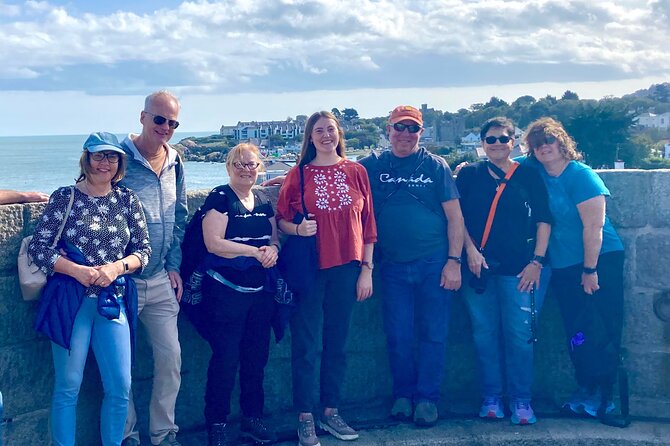
- Easy meeting at the DART station so you waste less time hunting and more time walking
- A small group (max 20) that keeps the pace comfortable and questions welcome
- James Joyce Tower rooftop views after stepping inside and learning the background
- Seaside village stops with real maritime details, including harbors and castle ruins
- Sunday flexibility if you catch it on a Sunday, with extra time for the farmers’ market
First Step: Finding 1 Harbour Rd and Ending at Dalkey DART

The tour starts at 1 Harbour Rd, Dún Laoghaire, and the good news is you can find it quickly if you’re using the DART. Past groups have described it as straightforward to spot near the train station, which matters because nothing kills momentum like arriving late and rushing.
You’ll finish in Dalkey, at Dalkey DART station. That’s a practical gift. When you wrap up, you’re not stuck in the middle of nowhere; you can train back to Dublin city center, return to Dun Laoghaire, or hop to other DART stops along the line.
Also worth knowing: the tour uses a mobile ticket, and it’s run in English. The group size is capped at 20, which helps keep the walk from turning into a shuffle line.
You can also read our reviews of more walking tours in Dublin



Dun Laoghaire Harbour Pier: Maritime Stories at the Water’s Edge
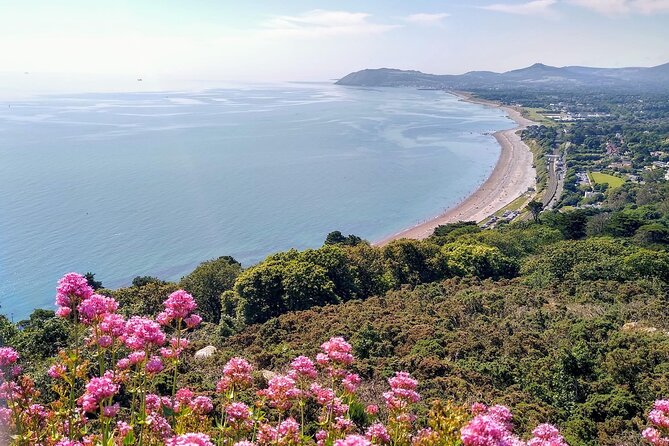
Your first stop is Dun Laoghaire Harbour, where you’ll view and hear the history of the pier and harbor. This works well because you’re starting with the place that shaped everyday life here—workboats, shipping, and the coastline as a job site, not just a postcard.
There’s also time built in for maritime context from outside a museum tied to that theme. You don’t need to be a nautical nerd to enjoy it. The point is to understand why these coastal suburbs feel the way they do: sheltered ports, village rhythms, and a long relationship with the sea.
Potential drawback at this stage: if you’re expecting a long museum visit right away, this is more of a “look and listen” start than a deep indoor dive.
People’s Park and The Metals: Green Breaks and Railway Echoes
Next comes People’s Park, a local green space where you’ll get a breather and a sense of neighborhood life. If you’re doing the tour on a Sunday, you’ll spend extra time here to explore the farmers’ market. That’s a nice way to turn your “walking tour” into something more like a local morning.
Then you head through The Metals, a historic lane associated with railway history. Even if rail isn’t your hobby, this stop helps connect the coast to Dublin’s bigger movement story—how people and goods traveled, and how the suburbs grew around those routes.
In terms of pace, these shorter stops matter. They keep the morning from feeling like one long grind and give you time to catch your breath before the longer wow moments.
The Sights Around Sandycove: Why People Swim in Windy Cold
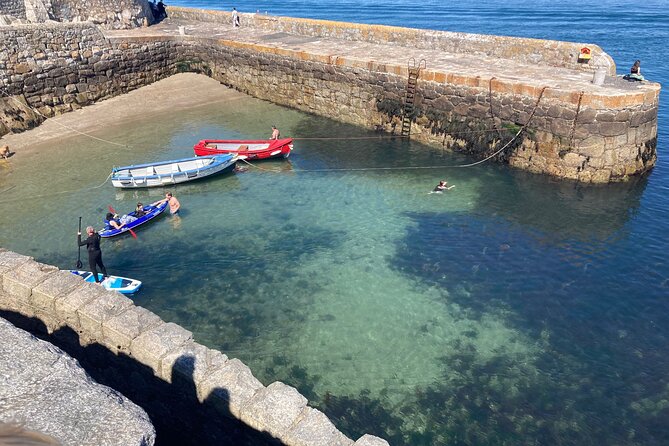
One of the highlights on the route is a stop for Dublin’s most famous swimming point. This is where the tour shifts from “history and architecture” into “how people actually use this coast.”
You’ll learn why this place is known for swimming, and you’ll also get a sense of the local mindset: people do it even in cold, windy conditions. It’s one of those details that makes the whole area feel more real. You can stand there and picture the everyday courage needed to step into the water.
Just keep your expectations aligned. You’re not heading out on a beach day. It’s brief, photo-friendly, and story-driven.
James Joyce Tower & Museum: Spiral Staircase and Rooftop Perspective
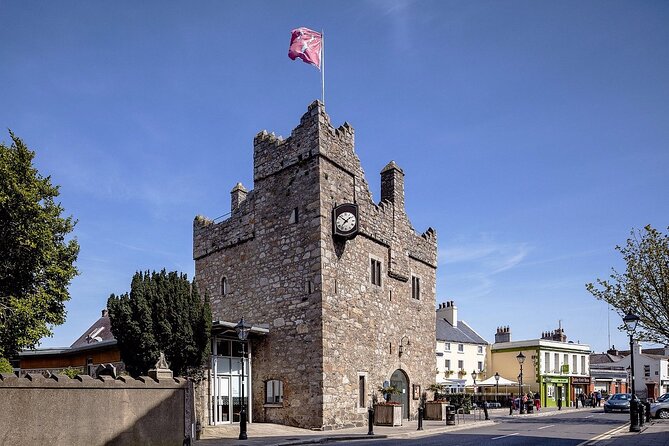
The big featured indoor stop is James Joyce Tower & Museum. You’ll enter the museum, hear the history, and then climb the spiral staircase up to the rooftop viewing point. This is the part where the tour becomes a true viewpoint experience.
Two reasons it’s worth it:
- The spiral staircase gives you a clear “effort for reward” moment. You’ll feel like you earned the view.
- The rooftop perspective helps you understand the coastline’s shape and how the villages relate to each other.
Practical note: the climb is a spiral staircase. If stairs are hard for you, plan around it and take your time on the way up and down.
Also, there’s a real-world scheduling caution. One past group noted the James Joyce Museum was closed on Mondays. So if your dates land on a Monday, it’s smart to double-check what’s open before you commit.


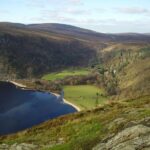


Bulloch Harbour: Seals, Industry, and a Coast That Still Works
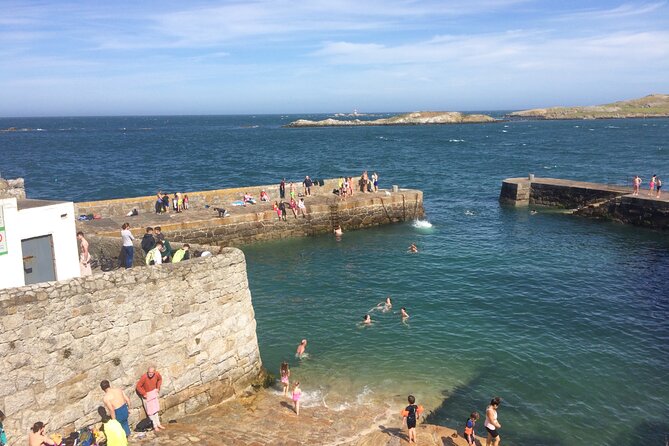
Next up is Bulloch Harbour. You’ll get views of the village harbor and hear about its industrial past and how it’s used today. This stop is especially satisfying if you like your coastal scenery with context—where the old work came from, and what’s different now.
A bonus here is wildlife. The tour often includes the chance to see seals lounging in the water or on the rocks. Even if you don’t spot them, the harbor view itself does the job.
One small drawback to keep in mind: wildlife spotting depends on conditions. Bring your patience, not your stopwatch.
Bulloch Castle and Dalkey’s Castle Stories: Medieval Ruins in a Modern Setting
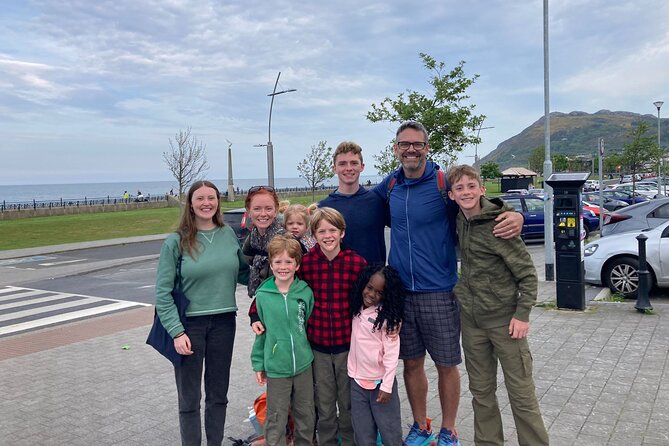
Then you’ll see Bulloch Castle, a medieval ruin. The guide explains how Dalkey once contained seven such castles, and you’ll see three of them during the walk.
This is a different kind of “wow.” It’s not a fully restored site. It’s the texture of old stone in a living neighborhood. You’ll walk past the remains and learn the stories attached to the land—how power, protection, and influence played out here over time.
You’ll also get related castle and heritage details, including mention of a Norman castle story connected to Dalkey’s heritage centre. It’s helpful framing: the ruins aren’t random. They’re evidence of how this coastline was strategically important.
Dalkey Village Finish: Viking Roots, Catholic History, and Where to Eat
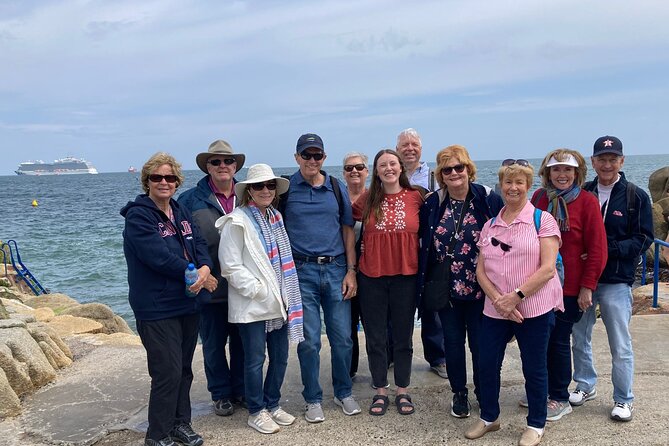
The tour concludes in Dalkey, described as one of the more affluent villages in Dublin. You’ll walk through the village while hearing Viking history tied to the area, plus notes about Catholic history.
This is also where the tour becomes practical. The guide shares recommendations for nightlife and dining in Dalkey, which is useful if you want to turn the end of the tour into an actual plan instead of wandering hungry.
And if you’re the type who likes a final big view, the route includes time for seeing Dalkey’s village island from a railway tour segment, along with notes about its Viking and Catholic past.
How Much Walking Is Involved (and What Shoes to Wear)
This isn’t a sit-and-sip city walking tour. You should expect a solid chunk of time on foot—past groups have mentioned around 10,000 steps and roughly 2.5 hours along the coast portion.
The pathways can be a bit uneven. The advice is simple: wear shoes with grip and support. You don’t need hiking boots, but flip-flops are a bad idea. If you do have concerns about uneven ground, take it slow on the edges and transitions between street and shoreline paths.
Good news: the route has enough stops to reset your legs, and the pace has been described as steady and comfortable rather than rushed.
Price and Value: What $114.65 Buys You on the Coast
At $114.65 per person, you’re paying for a guided experience that includes all fees and taxes, plus a local guide. The standout value item is that admission to James Joyce Tower & Museum is included, not something you have to pay extra for once you arrive.
Also, the tour is only about 3 hours 30 minutes, so you get a full coastal story arc without spending your whole day in transit. And since it’s often booked about 47 days in advance, it’s a popular option—meaning you’re likely joining a group that fits the same schedule needs.
One more value point: the end location at Dalkey DART station makes it easy to build the rest of your day. Train fare back into town isn’t included, but it’s usually a quick, affordable hop. One family reported about €5 for two adults for the return from Dalkey.
If you’re traveling as a group, note that the experience lists group discounts. If you’re booking for more than one person, it can help to ask what’s available for your party size.
Who This Tour Is For (and Who Should Rethink It)
This tour is a strong match for you if:
- You’ve already seen central Dublin sights and want a different slice of the city
- You like your history connected to real places you can see and walk through
- You want a local guide who can explain the coast, villages, and Ireland’s maritime angle clearly
- You’re fitting a trip around a cruise schedule and want something close to the port area (some past groups found the meeting point easy from tenders)
You might rethink it if:
- You hate stairs. The spiral staircase at James Joyce Tower is part of the experience.
- Uneven footing bothers you. The coast paths can be rough in spots.
- You’re looking for a mostly indoor, low-walking option.
Should You Book This Dublin Coastal Walking Tour?
I’d book it if you want a real Dublin shoreline day without the chaos of trying to stitch together transport, viewpoints, and village stops on your own. The combination of harbor-and-castle storytelling plus the rooftop climb gives you variety, and the DART start/finish makes the logistics feel almost too easy.
If you do book, go in with two priorities: wear good shoes, and bring a little curiosity about the sea and the suburbs. You’ll come away with a much clearer sense of how Dun Laoghaire and Dalkey grew into the places they are today.
FAQ
How long is the Dublin (Dun Laoghaire) coastal walking tour?
It’s about 3 hours 30 minutes.
What does the tour cost?
The price is $114.65 per person.
Where do I meet the guide?
The meeting point is 1 Harbour Rd, Dún Laoghaire, Dublin, Ireland.
Where does the tour end, and how do I get back?
The tour ends at Dalkey DART station. From there, you can depart by train to Dublin city centre, Dun Laoghaire, or other DART stations.
What’s included in the price?
All fees and taxes are included, along with a local guide. Admission to James Joyce Tower & Museum is included.
Is train fare included?
No. Train fare is not included.
Is the James Joyce Tower & Museum visit included?
Yes. You enter the museum, learn the history, and climb the spiral staircase to the rooftop viewing point, and the admission is included.
Will I have time in a park and at a market?
Yes. You stop at People’s Park. If you take the tour on a Sunday, you’ll spend extra time exploring the farmers’ market.
Is the tour only for people who can walk well?
Most people can participate. Still, it’s a walking tour with time on foot, and the route can include uneven pathways.
What’s the cancellation policy?
You can cancel for a full refund up to 24 hours before the experience starts. It also notes the tour requires good weather, and if canceled due to poor weather you’ll be offered a different date or a full refund. Free cancellation applies within the stated window.