REVIEW · DUBLIN
Dublin LGBTQ Pride Historical and Cultural Walking Tour
Book on Viator →Operated by Original Dublin · Bookable on Viator
One route, a lot of names and places. This Dublin LGBTQ Pride Historical and Cultural Walking Tour uses major city-center landmarks to tell LGBTQ+ stories in a way most regular sightseeing tours ignore. I like that the route hits famous spots like Temple Bar and Dublin Castle, but the focus stays on people, activism, and cultural impact. I also love that the guide-led storytelling comes with energy and context, including connections to the women’s rights movement. A practical heads-up: the tour is about 2 hours with multiple walking segments, and Trinity College has an admission cost not included.
You’ll start at 3 Crown Alley, Temple Bar, and you’ll end in the upper courtyard of Dublin Castle, so you get a clean, no-hassle sense of where you are. I like that most stops include free admission tickets, so you’re not constantly stopping to pay entry fees. One possible drawback is that a few stops are short (around 10 minutes each), so it’s a whirlwind tour of key themes rather than a slow, museum-style experience.
The best part is how the tour threads queer history through the everyday Dublin you can still see today. Guides such as Deidre and Helena are highlighted for being enthusiastic, highly engaged, and passionate about the stories that often get left out. If you want a quick overview with real local flavor, this hits the mark; if you need long time at indoor sites, you might feel slightly rushed.
In This Review
- Key Things I’d Watch For on This Tour
- A 2-Hour Queer History Route Through Temple Bar and Dublin Castle
- Where to Meet at Temple Bar: 3 Crown Alley Start, Clean Ending Point
- Temple Bar Stops: Headquarters, Photographed Streets, and One Famous Bridge
- GPO Museum and the 1916 Easter Rising: Queer Figures in a Turning Point
- Abbey Theatre: How Irish Stage Work Shaped LGBTQ+ Visibility
- Liberty Hall: Pride’s First Steps and Trans Activism
- Trinity College Dublin and College Green: LGBTQI+ Alumni Under an Old Arch
- Meeting House Square by Sean Harrington Architects: 1980s Hope in 10 Minutes
- Anna Livia Along the River: Straddling Dublin’s Famous Waterway
- The George Bar and Dublin Castle Finish: The Pub, Then the Walls
- Price and Value: Why $29.02 Can Actually Feel Like a Deal
- Who Should Book This Walking Tour (and Who Might Prefer Something Else)
- Should You Book This Dublin LGBTQ Pride Historical and Cultural Walking Tour?
- FAQ
- How long is the Dublin LGBTQ Pride historical and cultural walking tour?
- How much does the tour cost?
- Where does the tour start and where does it end?
- Is the tour offered in English?
- Are admission tickets included?
- Do I need a mobile ticket?
- Is the tour near public transportation?
- Can I cancel for a full refund?
Key Things I’d Watch For on This Tour
- Temple Bar LGBTQ+ headquarters stop with café, disco, cinema, and more
- Abbey Theatre and Irish stage work tied to LGBTQ+ icons
- Liberty Hall and the first ever gay pride parade in Ireland, plus trans activism
- Trinity College Dublin area visit, with admission not included
- The George Bar as Dublin’s oldest operating gay bar
- Meeting House Square (Sean Harrington Architects) and 1980s community hope
A 2-Hour Queer History Route Through Temple Bar and Dublin Castle
This is a compact, city-center walking tour built for people who want context without getting stuck in a lecture. In about 2 hours, you’ll cover a sequence of Dublin’s most recognizable landmarks, then connect them to LGBTQ+ history and cultural change.
You’ll also get a tour format that feels designed for conversation: it’s not a giant bus-style experience. The tour runs with a maximum group size of up to 100 travelers, and the reviews emphasize the difference a smaller feel can make—more back-and-forth, less shouting.
One good thing about a route like this is the “map effect.” You’ll see the city’s queer anchors in the same order you’ll later notice them on your own, which makes the rest of your trip more meaningful.
You can also read our reviews of more walking tours in Dublin


Where to Meet at Temple Bar: 3 Crown Alley Start, Clean Ending Point
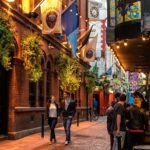
You meet at 3 Crown Alley, Temple Bar, Dublin (D02 CX67), so you’re not guessing at a random street corner. Temple Bar is touristy, sure—but it also makes the start easy to find, especially if you’re already exploring the area.
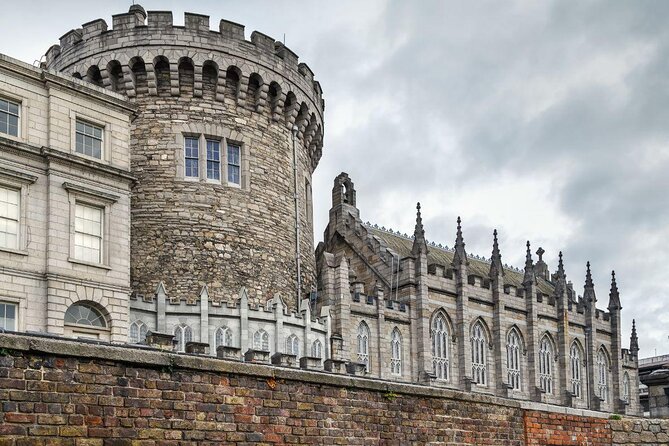
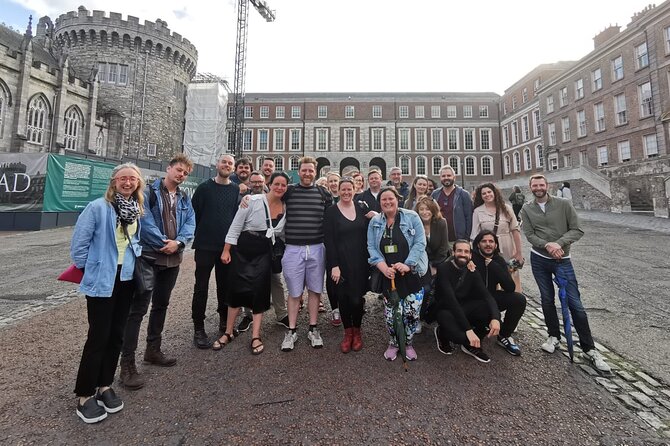
The tour ends at the upper courtyard of Dublin Castle in central Dublin 8, which is a great “finale zone.” You can finish with a stroll around the castle grounds or simply use it as a convenient drop-off point for the rest of your evening.
The tour is offered in English, you’ll receive a mobile ticket, and it’s near public transportation. Service animals are allowed, and the physical level is described as moderate, which usually means you should wear comfortable shoes and plan to keep moving.
Temple Bar Stops: Headquarters, Photographed Streets, and One Famous Bridge
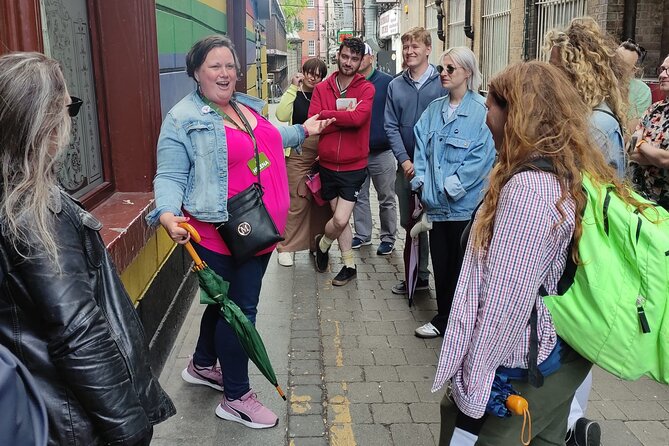
Temple Bar isn’t just a bar district here—it’s part of the story. You start right in the heart of the neighborhood, then you’ll move through the area with the guide pointing out how LGBTQ+ Dublin took shape in visible, community-centered ways.
One of the standout parts is the tour’s Temple Bar focus on a site described as Ireland’s first ever bona fide gay headquarters. You’ll hear what made the place important, and you’ll also get the lived-in details—a café, disco, cinema, and more. That blend of everyday hangout plus activism support is the kind of detail you remember, because it explains what community looked like, not just what it believed.
Between the stops, the tour includes a moment to cross Dublin’s most famous photographed bridge. Even if you’ve seen photos before, it lands differently when someone connects it to the queer history you just learned about.
GPO Museum and the 1916 Easter Rising: Queer Figures in a Turning Point
Next up is the GPO Museum, in a building that sits at the center of the 1916 Easter Rising story. This is one of the most culturally and historically important buildings in Ireland, so you’re not only learning about LGBTQ+ history—you’re learning how LGBTQ+ people intersected with major national events.
The angle here is specific: you’ll explore gay figures who played pivotal roles in the events of that week and how they are remembered today. This is valuable because it avoids the common mistake of treating LGBTQ+ history as separate from the rest of Irish history.
Time at this stop is short—around 10 minutes—so the tour works best if you’re the type who likes a fast, guided “orientation.” If you’re hoping to linger and read every exhibit on your own, plan to come back later after the walking portion ends.
Abbey Theatre: How Irish Stage Work Shaped LGBTQ+ Visibility
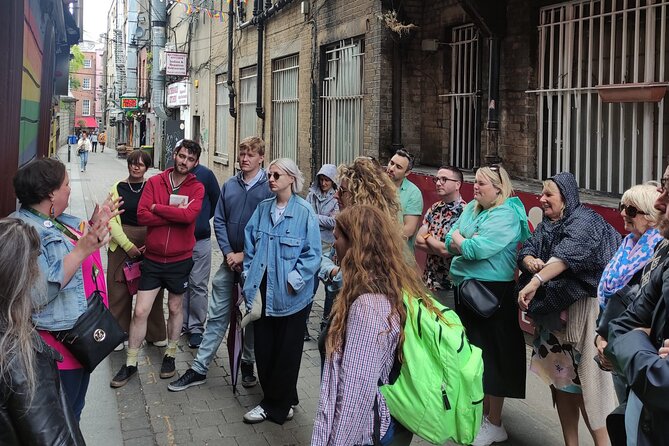
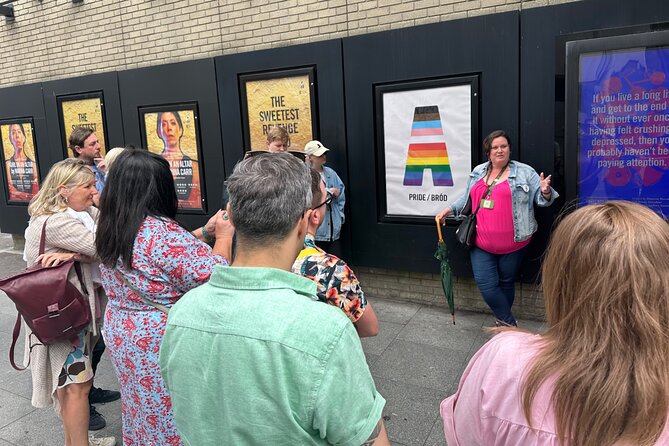
At the Abbey Theatre, you’re in Ireland’s national stage, and the tour uses that setting to connect LGBTQ+ culture with Irish performance and public life. The focus is on one of Ireland’s inspirational contemporary gay icons and the role of LGBTQ+ voices in shaping modern Ireland.
I like that the tour doesn’t only emphasize activism in the street. It also points you toward culture—how stories on stage can change what people can imagine, accept, and discuss.
If you’re a theater person, this stop alone can feel worth the price. If you’re not, it still helps you understand how public visibility works: you don’t just win rights; you also change the story people tell each other.
You can also read our reviews of more historical tours in Dublin






Liberty Hall: Pride’s First Steps and Trans Activism
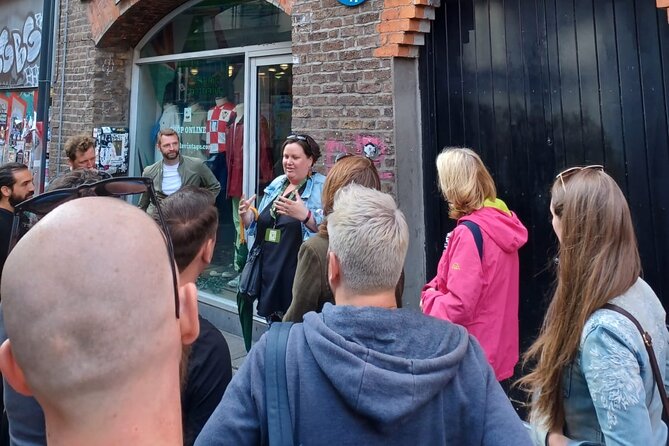
Liberty Hall is where the tour shifts from broader cultural visibility to urgent real-world stakes. You’ll hear about the tragic and tumultuous circumstances around the first ever gay pride parade in Ireland, and you’ll also learn about an inspirational trans activist tied to the story.
This stop matters because it keeps the focus human. It’s not just dates and names; it’s the sense of danger, resistance, and endurance that often gets skipped in casual “pride” framing.
Again, the time here is about 10 minutes, so you’ll want to absorb the main themes as you go. If you prefer deep historical context, use what you learn as a shortlist for follow-up reading later.
Trinity College Dublin and College Green: LGBTQI+ Alumni Under an Old Arch
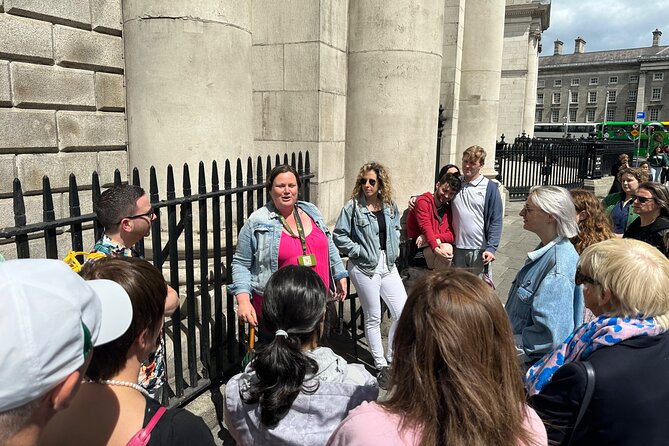
Then comes Trinity College Dublin, the oldest and most famous college in Ireland. The tour uses the iconic old arch as a symbolic marker—beneath it, you’ll hear about famous LGBTQI+ alumni—and you’ll also get a look at the wider College Green area.
One practical point: admission at Trinity College is not included. So even though the tour times this stop like the rest, you may need to factor in extra cost if you decide to spend more time there on your own.
This stop is ideal if you love the “before-and-after” feeling. You’re learning how identity and visibility existed even in institutions that were not built for everyone. And you’re doing it in a place you’ll likely want to revisit anyway while you’re nearby.
Meeting House Square by Sean Harrington Architects: 1980s Hope in 10 Minutes
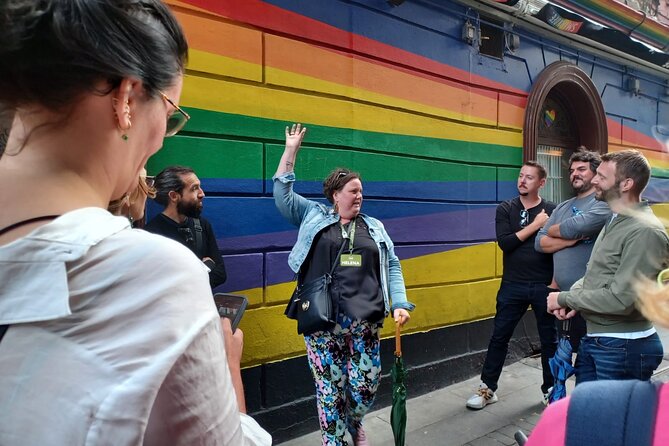
Meeting House Square, associated with Sean Harrington Architects, gives the tour a more modern chapter. Here you circle back through the Temple Bar area and learn about how queer Dublin looked and felt in the 1980s, with attention on people who brought hope and light to the community.
This stop is a good reminder that community support isn’t abstract. It’s built by real people who show up, organize, and keep going—especially when public support is thin.
Because the time is brief, I’d treat this as a “story spark.” Let it guide what you notice next when you walk around Dublin on your own.
Anna Livia Along the River: Straddling Dublin’s Famous Waterway
The tour includes a moment themed around Anna Livia, Dublin’s famous old lifeblood. You’ll straddle the waterway—on both sides—while the guide ties the river into the tour’s sense of Dublin as a living, changing city.
Even if you’ve never heard the Anna Livia framing before, the benefit is simple: it slows you down for a second and gives you a memorable physical landmark to attach to the stories you’ve heard.
This is also a nice break point in the pacing of the tour. After lots of stops and names, a river moment helps your brain organize what you just learned.
The George Bar and Dublin Castle Finish: The Pub, Then the Walls
The tour ends with two of the most satisfying “closing chapters” Dublin can offer.
First is The George Bar, described as Dublin’s oldest operating gay bar. The tour treats the place as a cultural institution—still at the center of the city’s LGBTQ+ community—and that matters because bars often function as more than nightlife. They’re meeting places, social safety valves, and informal community archives.
Then you finish at Dublin Castle, with the tour ending right in the upper courtyard. It’s a fitting end for a tour that moves from street-level identity to national visibility. The setting is grand, but the tour’s angle stays grounded in people and the push for recognition.
If you’re wondering what to do right after: look at where the day leaves you. Castle area locations make it easy to continue walking, grab food, or connect to the rest of the city.
Price and Value: Why $29.02 Can Actually Feel Like a Deal
At $29.02 per person for about 2 hours, the pricing looks modest on paper—and the structure makes it feel better in practice. Many of the stops list free admission tickets, which reduces surprise costs and keeps the tour from turning into a series of paid entrances.
The only clear exception called out is Trinity College Dublin admission, which is not included. If you want extra time inside there, that’s your one spot to budget ahead.
Another value factor is timing. The tour is often booked around 25 days in advance, so it’s not one of those experiences that you can always ignore until the last minute. If your dates are fixed, booking early helps you lock in a good slot.
Who Should Book This Walking Tour (and Who Might Prefer Something Else)
This tour fits best if you want:
- a quick overview of LGBTQ+ and LGBTQI+ landmarks in Dublin
- stories tied to specific places you can return to later
- a guided route that helps you connect the dots without doing all the planning yourself
It’s also ideal if you enjoy a walking format with stops around 10 minutes each. That pacing is great for keeping energy up and staying focused on key themes.
If you dislike walking in busy areas, or if you want long indoor stays at major attractions, this might feel fast. The tour’s described physical fitness level is moderate, but it still means you’ll be on your feet and moving between spots for the full 2 hours.
Should You Book This Dublin LGBTQ Pride Historical and Cultural Walking Tour?
Yes—if you want a smart way to understand queer Dublin without getting lost in trivia. The route hits major landmarks, but it doesn’t treat them like backdrops. It uses each stop to connect names, activism, and cultural change to the city you’re standing in.
Two reasons I’d push you toward booking: the guides named in the reviews—Deidre and Helena—are described as energetic and passionate, and the tour’s focus on people who might otherwise be overlooked feels like the whole point. At the same time, it’s a short tour with brief stop times, so it won’t replace deeper museum visits. Think of it as your best “orientation + story” layer.
If you’re the type who likes walking tours that make you look at familiar places in a new way, this one is a strong choice.
FAQ
How long is the Dublin LGBTQ Pride historical and cultural walking tour?
It runs for about 2 hours.
How much does the tour cost?
The price is $29.02 per person.
Where does the tour start and where does it end?
It starts at 3 Crown Alley, Temple Bar, Dublin, and ends at the upper courtyard of historic Dublin Castle.
Is the tour offered in English?
Yes, it’s offered in English.
Are admission tickets included?
Admission is listed as free for several stops, but Trinity College Dublin admission is noted as not included.
Do I need a mobile ticket?
Yes. You’ll receive a mobile ticket.
Is the tour near public transportation?
Yes, it’s described as being near public transportation.
Can I cancel for a full refund?
Yes. You can cancel up to 24 hours in advance for a full refund.