REVIEW · DUBLIN
Dublin Walking Tour: Top 10 highlights
Book on GetYourGuide →Operated by MP Tour Guiding · Bookable on GetYourGuide
Small time, big Dublin choices. This walking tour strings together the city’s most recognizable stops into a tight 2-hour loop, with an expert guide in French explaining what you’re seeing as you go. I especially like the blend of landmark powerhouses and everyday street life, plus the fact that you stay outside the buildings while still getting the stories behind them.
At $54 per person, it’s also a straightforward value play if you want the highlights without committing to a half-day bus tour.
One thing to keep in mind: it moves at a walking-tour pace, so if you’re hoping for long, inside-the-building time (or you hate crowds on central streets), this route may feel too fast.
In This Review
- Key highlights you’ll feel on the walk
- Quick value check: $54 for a 2-hour highlight plan
- Where you start matters: the Spire and Dublin’s main spine
- O’Connell Street and the Bridge Portal idea
- GPO Museum area: where Dublin’s modern story starts
- Ha’penny Bridge: the Liffey moment you can’t skip
- Temple Bar District: culture on the street, explained without the hype
- The guided “extra stops” that build your map
- Christchurch Cathedral: a major landmark seen from the street
- Dublin Castle and Medieval Dublin: power you can still read
- Guinness Heritage area: cultural Dublin beyond the obvious
- St Patrick’s Cathedral: quiet awe after the city’s buzz
- Trinity College finish area: ending with Dublin’s student heartbeat
- Who this tour suits best (and who should pick something else)
- Should you book the Dublin Highlight Hike?
- FAQ
- How long is the Dublin walking tour?
- How much does the tour cost?
- Where do I meet the guide?
- Where does the tour end?
- Will we go inside buildings?
- What language is the live guide?
- Is the tour wheelchair accessible?
- Is there free cancellation?
- Can I reserve without paying right away?
Key highlights you’ll feel on the walk
- Top sights, organized well: you hit Trinity, Temple Bar, Dublin Castle, major cathedrals, and key city streets in one loop
- Outside-only explanations: you get history and context without waiting for entry lines
- Guide energy that keeps pace human: the tour style is patient, question-friendly, and often laced with humor
- City orientation from the start: beginning at the Spire helps you understand where everything sits
- Perfect for a first visit: you’ll leave with a mental map of how Dublin fits together
Quick value check: $54 for a 2-hour highlight plan
For $54, you’re paying for two things: guided interpretation and a curated route that saves you from guessing. In two hours, you can burn a lot of time wandering without direction. This tour instead focuses on stops that teach you Dublin’s story quickly—then you can decide what deserves extra time afterward.
Also, it’s not just a photo walk. The guide provides information and history for major landmarks as you see them from the street. That’s a big deal in Dublin, where many buildings are visually stunning but also layered with centuries of change. Outside-only access keeps the flow smooth, so you’re not stuck waiting around.
The main trade-off is time. You won’t go inside any sites on this tour, and you can’t fully replace longer cathedral, castle, or museum visits. Think of it as a fast, guided “street-level education” that primes you for deeper stops later.
You can also read our reviews of more walking tours in Dublin



Where you start matters: the Spire and Dublin’s main spine
You begin at the foot of the Spire, on the GPO side. That’s a smart anchor point. The Spire is modern, bold, and instantly recognizable, but it also works like a pointer for the rest of the city center.
From there, you build your orientation along the core axis of Dublin. You’ll understand how O’Connell Street connects major civic life, how pedestrian bridges link neighborhoods, and why the Liffey keeps showing up in Dublin stories—socially, historically, and visually.
If you like getting your bearings fast, this opening segment is designed for you.
O’Connell Street and the Bridge Portal idea
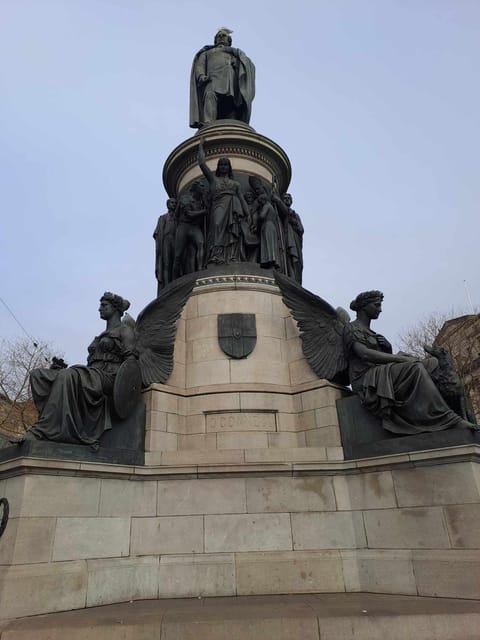
O’Connell Street is where Dublin feels like a capital city: big streets, heavy history, and constant movement. The tour includes guided explanation as you walk, so it’s not just seeing the street—it’s learning why it became the city’s main artery.
As you head toward the bridge area, the tour also ties in the idea of the Portal/Spire concept—how Dublin uses visual markers to guide identity and memory. Even if you’ve never studied Irish history, you’ll start to notice that the city center is laid out for storytelling. Streets lead to symbols. Symbols lead to eras.
This is one of the best parts of the tour for first-time visitors because it gives you a framework you can reuse as you keep exploring.
GPO Museum area: where Dublin’s modern story starts
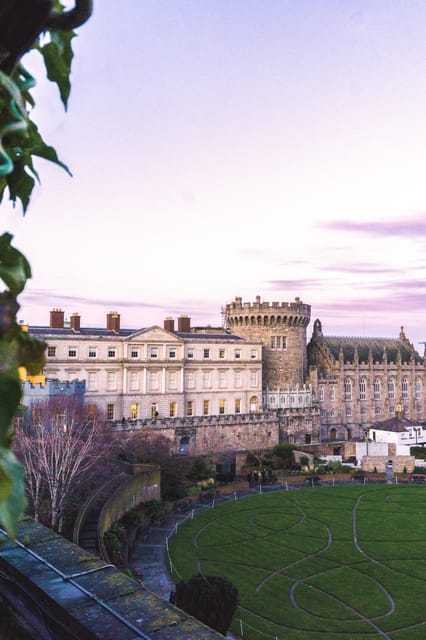
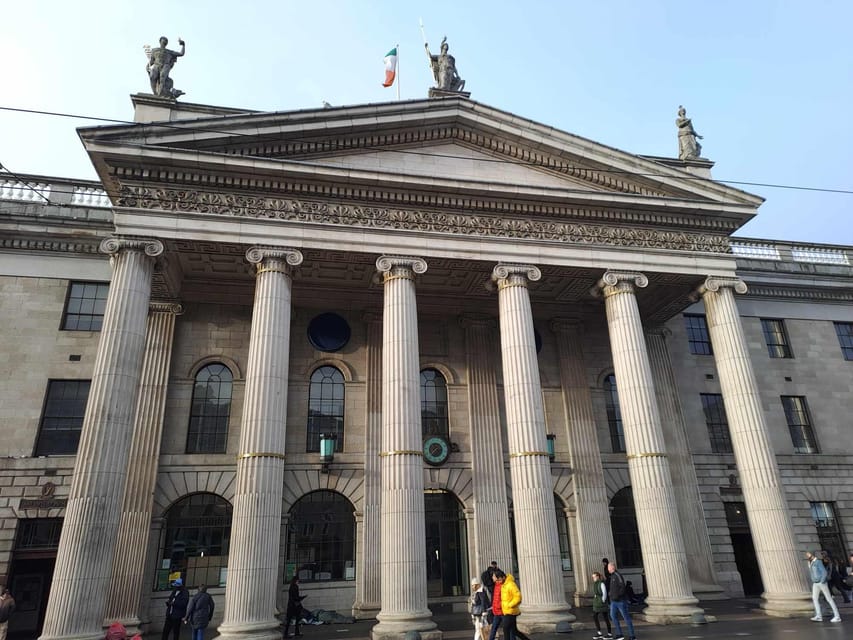
Next up is the GPO Museum area (you’ll have a guided stop there). The General Post Office isn’t just a pretty front—its role in Dublin’s political story is why the building shows up again and again in Irish history discussions.
What I like about this stop is the way it usually lands emotionally. You’re standing in the city’s everyday traffic zone, but the guide frames it as a place where important events unfolded. That contrast—normal street life versus historical impact—is exactly how Dublin hits hardest.
You don’t need to be a history buff to enjoy it. Even if you just catch the big picture, you’ll leave with a clearer sense of how Dublin’s identity became what it is today.
Ha’penny Bridge: the Liffey moment you can’t skip
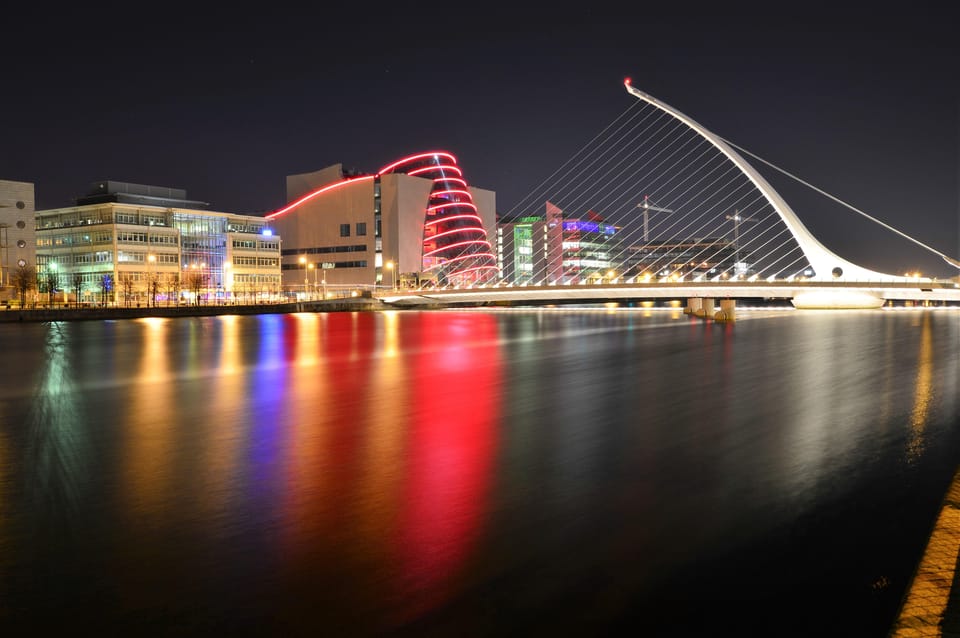
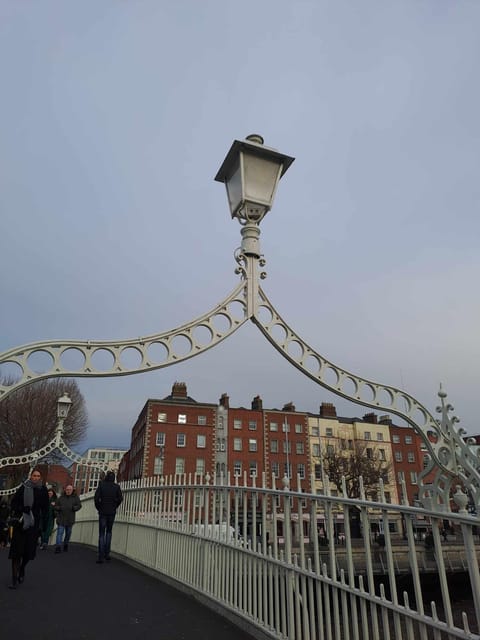
Then you cross to the Ha’penny Bridge area. This is where the Liffey stops being a river and starts feeling like a stage. The guide’s narration helps you read the bridge as more than a postcard crossing.
This section is also a practical win: bridges in Dublin connect you to different moods. One side can feel like civic Dublin; another feels like the start of pub-and-street energy. Even if you don’t go far after the tour, you’ll know which direction gives you which vibe.
If weather’s decent, this is also a great stretch to take a few photos and catch your breath. You’ll be walking again soon, but this is a natural pause point.





Temple Bar District: culture on the street, explained without the hype

The tour heads into Temple Bar and you get guided context for what you’re seeing. Temple Bar is often treated like a party brand, but on this route it’s framed as a neighborhood with history and character—not just a nightlife label.
You’ll learn how the area became culturally famous and how the mix of locals, visitors, and artists shapes what the district feels like today. It’s a good balance if you want the fun part of Dublin without losing the meaning.
Practical note: Temple Bar can get busy. If you prefer quieter streets, you’ll still enjoy this stop because the guide helps you look past the crowds and notice the architecture, streetscape, and how the neighborhood evolved.
The guided “extra stops” that build your map
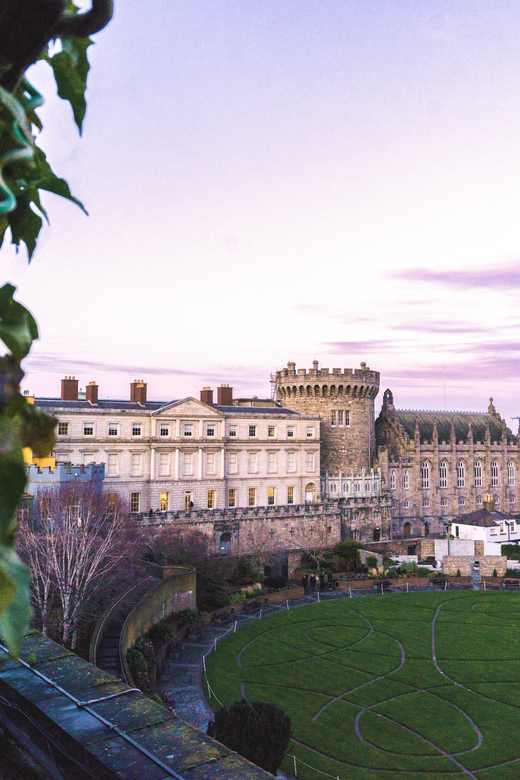
Between the big headline sites, the route includes a couple of additional guided segments labeled as short detours in the plan. They’re there for a reason: they help you connect dots so you understand Dublin as a whole, not just a list of landmarks.
This is where you start to feel the tour’s real value. Instead of rushing from “one famous thing” to “another famous thing,” you get little context boosts that make later self-guided exploring easier. You’ll recognize where you are and why streets look the way they do.
These segments also keep the walk interesting. If you’ve ever done a highlights tour where everything feels repetitive, this pacing is designed to avoid that.
Christchurch Cathedral: a major landmark seen from the street
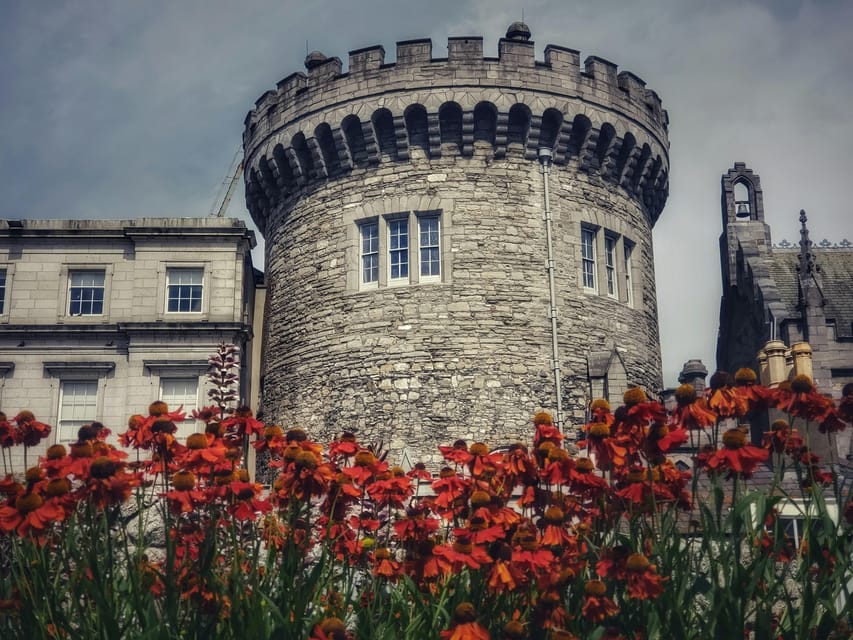
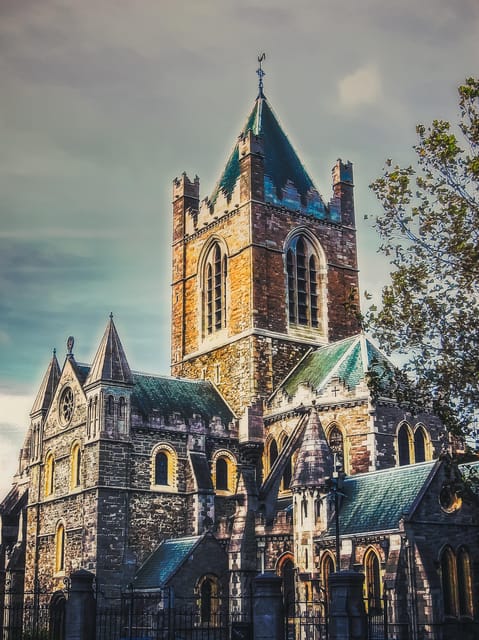
You’ll stop at Christchurch Cathedral, Dublin. Since the tour provides information outside the buildings, you won’t be going in—but you’ll still learn what makes the cathedral important in the city’s story.
Cathedrals in Europe can feel like museum objects if you only focus on the architecture. The guide framing helps you connect the building to the larger arc of Dublin’s development. That way, you’re not just looking upward—you’re understanding why people built and used these places the way they did.
Even from outside, you’ll get a sense of scale and presence. This stop is good for anyone who wants meaning, not just selfies.
Dublin Castle and Medieval Dublin: power you can still read
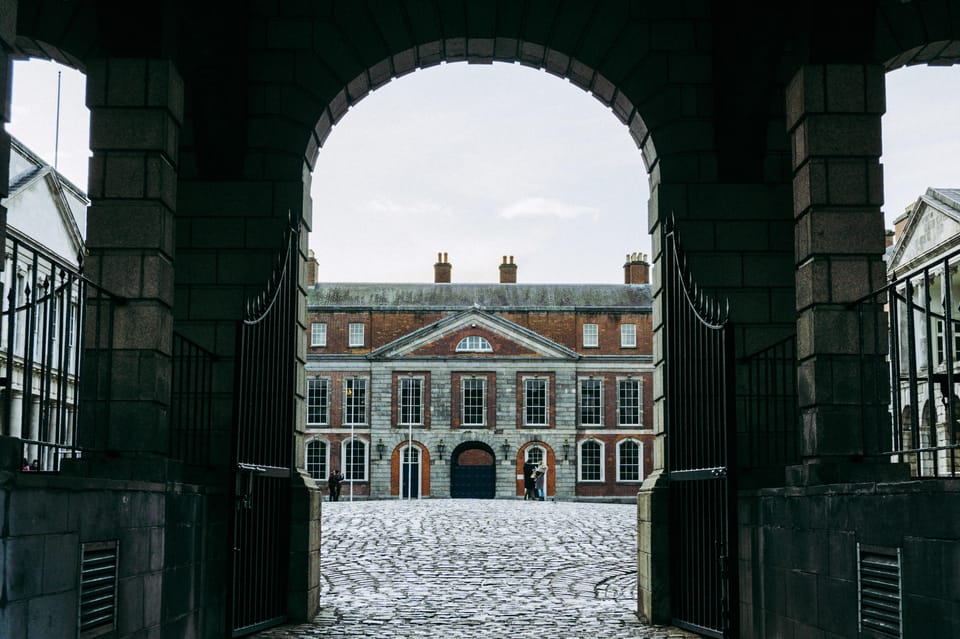
Next is Dublin Castle / Medieval Dublin, one of the tour’s clearest “big story” moments. Dublin Castle isn’t subtle, and the guide helps you interpret what you’re seeing: the idea of authority, governance, and the long timeline of rule.
This stop works because it bridges eras. You get medieval context, but it’s tied to the city you’re currently walking through. You start noticing how buildings and street patterns preserve memory—even when everyday life moves on.
If you like history you can actually see (not just read), this is a standout.
Guinness Heritage area: cultural Dublin beyond the obvious
The tour also includes an explanation for Guinness Heritage. Even if you don’t drink Guinness, Dublin treats brewing like civic heritage, not just business.
From the street, you’ll learn how the brand became woven into Dublin identity over time. This is helpful if you want a fuller sense of “Irish culture,” because it’s easy to think culture equals only churches, castles, and politics. Here, you get a taste of how everyday industry becomes part of the city’s story.
It’s also a good contrast stop after Dublin Castle. Power and monarchy on one side, industry and local identity on the other.
St Patrick’s Cathedral: quiet awe after the city’s buzz
Then comes St Patrick’s Cathedral, Dublin. By the time you reach this stop, you’ve already covered a lot of civic and social energy. That makes St Patrick’s a nice shift: you tend to notice more stillness, more texture in the stone, and more weight in the symbolism.
Again, you won’t enter the cathedral, but you’ll get guided explanation outside the building. This can still be very satisfying if you’re the type who likes to understand what a place represents, then decide later whether to return for an inside visit.
If you want a Dublin itinerary that ends with a calm mental bookmark, this is a strong candidate.
Trinity College finish area: ending with Dublin’s student heartbeat
The tour wraps around Trinity College Dublin. This is a smart ending because it shifts the story toward education and a modern Dublin identity.
Trinity College isn’t only about its famous reputation. It’s also about atmosphere: the student presence, the feeling of long-term learning, and the sense that the city is constantly renewing itself.
Even without going inside, you’ll leave with a clearer sense of why Trinity has become a default stop on visitor lists. It also gives you an easy next step: if you still have energy, this is where you can continue exploring on your own in a more relaxed way.
Who this tour suits best (and who should pick something else)
This Dublin walking tour is a good match if you:
- have limited time and want a smart top-10 route
- like learning as you walk, not before you arrive
- want outside-only sights with guided context
- prefer a guide who answers questions and keeps things moving (the guide style here tends to be patient and humorous)
You might consider a different option if you:
- want to spend a long time inside cathedrals, museums, or the castle
- don’t like walking for two hours through central streets
- need a tour in a language other than French
Should you book the Dublin Highlight Hike?
If your goal is to see Dublin’s main sights in one connected storyline, this is worth booking. The route is central, the pace fits a short visit, and the guided explanations help you understand what you’re looking at rather than just ticking boxes.
I’d book it especially if:
- you’re doing Dublin as part of a longer trip and need a fast orientation day
- you want the “greatest hits” now, then choose later which places deserve a deeper visit
I’d skip it if you only want inside access or you’re chasing a quiet neighborhood vibe for two solid hours. For everything else, it’s a practical way to get value, context, and a much better sense of how Dublin fits together.
FAQ
How long is the Dublin walking tour?
It lasts about 2 hours.
How much does the tour cost?
The price is $54 per person.
Where do I meet the guide?
You start at the foot of the Spire on the GPO side.
Where does the tour end?
The activity ends back at the meeting point, and the plan also places the finishing point around Trinity College.
Will we go inside buildings?
No. The guide provides information outside the buildings only.
What language is the live guide?
The live tour guide speaks French.
Is the tour wheelchair accessible?
Yes, the activity is wheelchair accessible.
Is there free cancellation?
Yes. You can cancel up to 24 hours in advance for a full refund.
Can I reserve without paying right away?
Yes. The option is Reserve now & pay later.