REVIEW · DUBLIN
Small Group-Dublin Walking Tours
Book on Viator →Operated by Damian Dublin Tours · Bookable on Viator
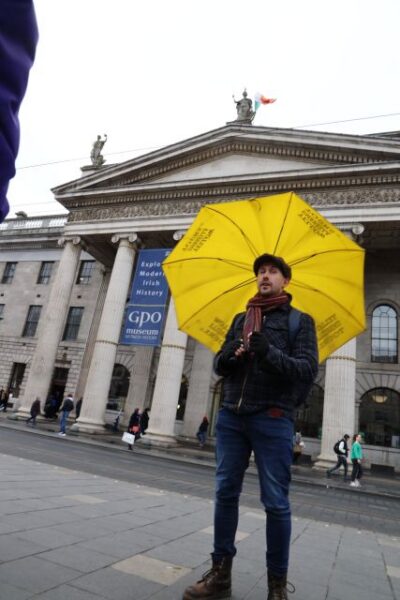
Dublin can feel like a movie set of history and names. This 2-hour, small-group walking tour gives you a fast, street-level way to connect places like Dublin Castle, Trinity College, and Temple Bar into one story. Two things I especially like: you get music and skits during the walk, and the route is built to help you ask questions as you go.
The tour also works hard on comfort and ease. You’ll cover cobblestone streets, so you’ll want comfy shoes, and the pace is deliberately “active” since you’re hitting 10 stops in about two hours. If you hate walking or want long, sit-down time in each location, you may find the tight schedule a bit much.
In This Review
- Key highlights at a glance
- Why this 2-hour Dublin walk is a great first-day plan
- Starting at Chester Beatty Library and Dubh Linn Garden behind Dublin Castle
- Dublin Castle grounds into Christ Church Cathedral: where religion, Vikings, and Handel meet
- Temple Bar and Ha’penny Bridge: nightlife energy plus trade and travel stories
- O’Connell Bridge and the 1916 Easter Rising area: the Liffey Swim and Daniel O’Connell
- Trinity College Dublin: the courtyard moment and the view toward Parliament House
- Bram Stoker and Bram Stoker again: St Anne’s Church, Bewley’s, and Leinster House
- St Stephen’s Green and Grafton Street: Georgian streets and a city pause
- Powerscourt Townhouse Centre finale: architecture plus shopping and café time
- Price, group size, and the value of being shown how to see Dublin
- Who should book this Dublin walking tour
- Should you book it
- FAQ
- How long is the Dublin walking tour?
- How many people are in the group?
- What language is the tour offered in?
- Where do I meet the guide?
- Where does the tour end?
- Do I need to pay for admission at the stops?
- What should I wear for this tour?
- Can I cancel for a refund?
Key highlights at a glance
- Small group cap of 8 so you’re not shouting over a crowd
- Damian’s music interludes and fun storytelling that keep the walk from feeling like a lecture
- A beginner-friendly route for getting bearings on your first day in Dublin
- 10 stops across the city center with quick exterior looks and a real moment in Trinity’s courtyard
- Free admission areas during the walk (the stops are designed around what you can see without ticket costs)
- Clear meeting point at Dublin Castle / Chester Beatty Library for an easy start
Why this 2-hour Dublin walk is a great first-day plan
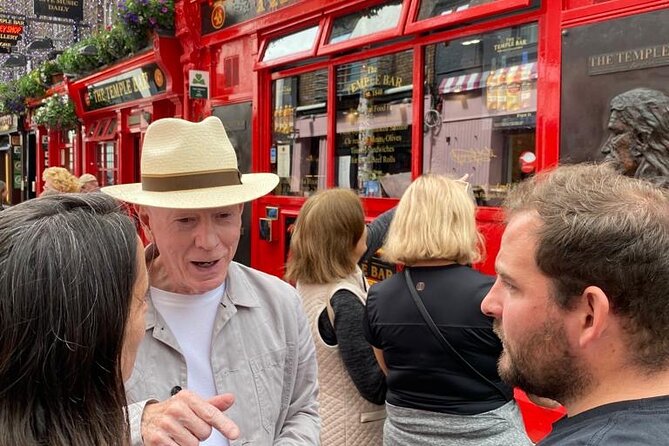
This is the kind of tour you book when you want a solid overview without turning your whole day into sightseeing fatigue. With a duration of about 2 hours and a group limited to a maximum of 8, you get a balance of movement plus time to ask questions.
The value here is not that you’re checking boxes. It’s that you’re connecting the dots: how Dublin’s early identity ties to Vikings, how the city evolved around the river and trade, and how later political events still shape what you see on the street today. A lot of walking tours stop at names; this one tries to explain why those names matter.
And yes, you’ll walk. Cobblestones and short distances add up, but the stop rhythm is quick, which helps if you’re traveling with limited time.
You can also read our reviews of more walking tours in Dublin


Starting at Chester Beatty Library and Dubh Linn Garden behind Dublin Castle
Your tour starts at Dublin Castle, Chester Beatty Library at Castle St, Dublin 2 (D02 AD92). It’s a smart start because Chester Beatty sits inside the green quiet of the Dubh Linn Garden—a calm contrast to the city motion just outside.
At Stop 1, you meet your guide and get the outline of where you’ll go next. Then you explore the area behind Dublin Castle and learn about the origins of the name Dublin and the early landscape of the city’s beginnings. Even though your time here is short, this is a useful grounding moment: it gives you a “why” before you start collecting “what.”
Stop 2 stays close by with another glance at Dublin Castle’s gardens. The practical win is that you’re not wasting your first 15 minutes hunting for the next location. You’re also learning context without a lot of time spent on paid entry or formal museum-style viewing.
Dublin Castle grounds into Christ Church Cathedral: where religion, Vikings, and Handel meet
From Dublin Castle you keep moving toward Christ Church Cathedral, where you’ll pass the building and pick up layered stories. One of the itinerary highlights is that you’ll hear about the history of the Catholic Church in Ireland and get a view of the venue connected to Handel’s Messiah being first performed.
That’s a fun combo because it’s not only sacred architecture. It’s also culture and performing arts—Dublin didn’t just develop politically; it developed creatively in ways that still echo.
You’ll also get an origin story for Dublin that stretches back to Viking invasions from the north and their lasting legacy. This matters because Dublin’s later identity is shaped by those early movements. Once you hear that, places you see later in the tour (bridges, street patterns, the city center) make more sense as outcomes, not random scenes.
Quick time note: this part is mostly viewing and passing along the cathedral area rather than a long interior visit. If you’re hoping for a full cathedral tour with deep explanations of carvings and chapels, this may feel “short.” But as an orientation on Day 1, it’s a strong use of time.
Temple Bar and Ha’penny Bridge: nightlife energy plus trade and travel stories
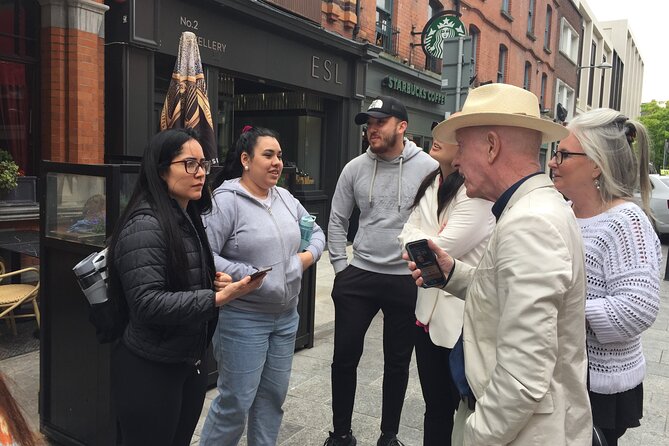
Then comes one of Dublin’s most famous areas: Temple Bar. The idea here isn’t just to show you where people party. It’s to explain why this part of town became a hub—how the central city grew as movement, trade, and travel concentrated around key crossings.
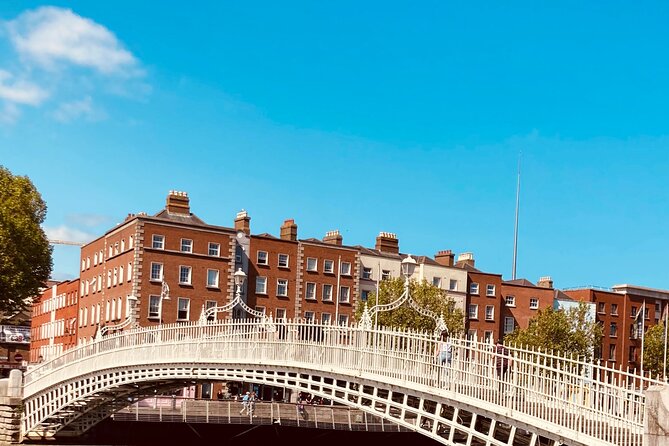
From Temple Bar you cross Ha’penny Bridge, one of those classic city snapshots that you’ll want on your first photo card. The guide uses the crossing as a way to talk about the foundations of Dublin and how trade and travel evolved around the town centre.
This stop is where the walking tour starts to feel like a living map. You’re not just memorizing landmarks; you’re learning how the river and the bridge system shaped what Dublin became. And because Temple Bar is such a well-known name, it’s a helpful reference point. Even if you don’t linger for the nightlife, you’ll understand what the area is doing historically and geographically.
One consideration: Temple Bar is busy by nature. If you prefer quieter streets, you can still enjoy the stop, but you’ll likely want to keep your expectations realistic about crowd levels in this zone.
O’Connell Bridge and the 1916 Easter Rising area: the Liffey Swim and Daniel O’Connell
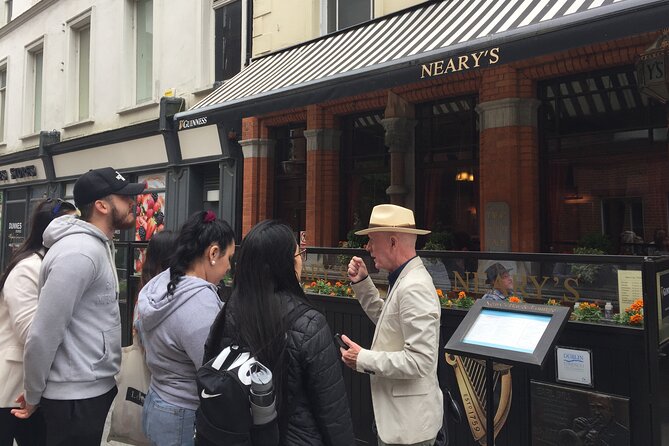
At O’Connell Bridge, the tour shifts into 20th-century Ireland. You’ll approach the area considered the epicentre of the 1916 Easter Rising and get a view tied to the namesake Irish parliamentarian Daniel O’Connell.
If you only know Dublin from pubs and postcards, this is where your understanding gets sharper fast. You’ll also talk about the River Liffey, including its history and the famous Liffey Swim. It’s an example of how Dublin uses the river not just as background scenery, but as something the city actively engages with—even in modern tradition.
This is also a good time to catch your breath for a moment. Bridges give you open space and clearer sightlines, and your guide can point out where later stories play out in the city layout.





Trinity College Dublin: the courtyard moment and the view toward Parliament House
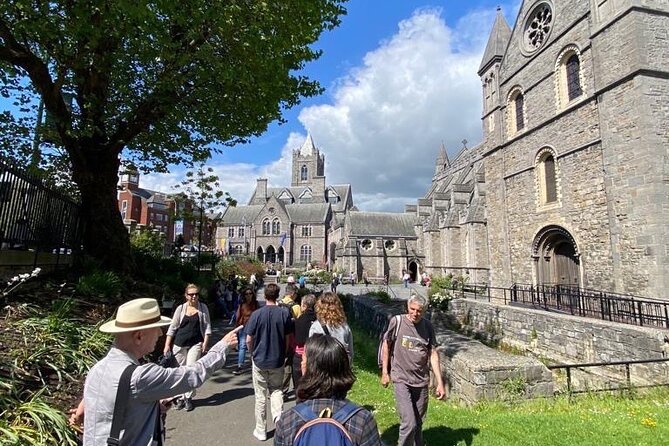
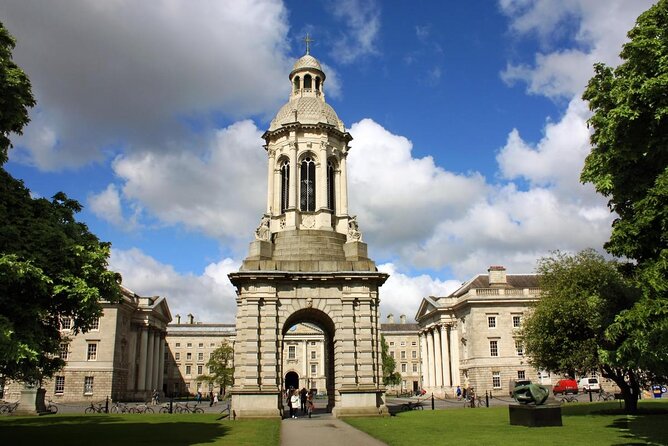
Next is Trinity College Dublin, one of the anchors of Dublin’s “old meets modern” identity. Here you’ll view the university and learn about historical figures who studied there. You’ll also get a brief opportunity to enter the courtyard and see the original architecture up close for a few minutes.
That courtyard stop is a small but meaningful payoff. Exterior-only tours can make big landmarks feel distant. This lets you stand within the space and recognize why Trinity became such a lasting symbol.
You’ll also catch a view of Parliament House, known as the House of Lords along Dame Street. That’s a helpful pairing because your tour connects education and governance in a way that feels natural on a walking route.
Trinity can be a must-see even if you’re not studying history. The time here is short, but it’s timed well: you’re far enough into the tour to appreciate the stories, and still fresh enough to notice architectural details.
Bram Stoker and Bram Stoker again: St Anne’s Church, Bewley’s, and Leinster House
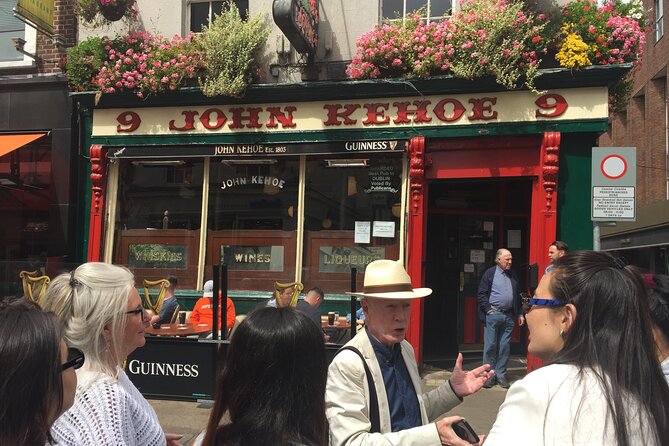
After Trinity, the route heads toward literary Dublin. At St Anne’s Church on Dawson Street, the guide speaks about Bram Stoker’s wedding there. Even if you’ve only heard his name through Dracula, this adds a real sense of place—Stoker isn’t just an author to read about. He lived a life that touched specific Dublin buildings.
From there, you move toward Bewley’s Café on Grafton Street. This is a classic “you’re in the right neighborhood” moment. You may not stop for a long coffee break (the walk keeps moving), but the point is that the route passes through one of Dublin’s signature shopping-and-street-life areas.
Then comes Leinster House along Kildare Street. You’ll learn about its connection to Bram Stoker, its role as the Irish house of parliament, and its relationship to the White House in Washington, DC. There’s also a stop where you pass along the National Museum of Archaeology.
This is a big stop for a simple reason: it ties government and culture together. Dublin’s political heart and its literary mythology are not separate worlds. On this walk, they sit within the same line of streets.
One small practical note: Leinster House is a “look and listen” stop. If you’re hoping to go inside, this tour is not designed as a thorough building-entry experience. You’re getting orientation and context.
St Stephen’s Green and Grafton Street: Georgian streets and a city pause
Next is St Stephen’s Green, where the tour widens out. You’ll include Grafton Street (a main shopping district), a passing glance of Georgian-era architecture, and a look toward the Royal College of Surgeons.
Then you get the park component: St Stephen’s Green gives you a breather. Parks matter on walking tours because they break the “all motion, all time” feeling. Even with only a short stop, it’s the kind of place where you can process what you just learned while you watch people move around you.
If you’re traveling with kids or anyone who gets cranky from continuous walking, this section is often where the group energy levels out. You still keep moving, but the surroundings feel gentler.
Powerscourt Townhouse Centre finale: architecture plus shopping and café time
The tour ends at Powerscourt Townhouse Centre, located between South William Street and Clarendon Street (59 William St S, Dublin 2, D02 HF95). This is a strong ending because it’s easy to remember and easy to re-enter life after the tour—shopping streets, places to eat, and an architectural highlight that feels Central Dublin, not out on the edges.
You visit the Powerscourt Townhouse—described as an architectural gem—with upscale and boutique shops. You’ll also get a view of the atrium where cafés and restaurants sit, which makes the end feel less like a stop and more like a bridge to your next plan.
This ending location is also practical. You’re still close to major pedestrian zones, so you can turn the tour into a half-day flow: coffee, dinner, or a museum visit without needing a big transit plan.
Price, group size, and the value of being shown how to see Dublin
At $60.47 per person, the price isn’t “cheap,” but it also isn’t outlandish for a 2-hour, guided, small-group walk. Here’s how the value holds up:
- Group size is capped at 8, which usually means less time waiting and more time talking.
- Stops are focused on what you can see without heavy ticket costs, keeping the tour experience predictable.
- You get guidance on how to read the city: river patterns, political pivots, and how famous figures connect to specific buildings.
If you’re only in Dublin for a day or two, a tour like this can pay you back fast. You don’t just learn where things are—you learn which areas are worth returning to on your own. Reviews consistently highlight that it helps you understand the city quickly and encourages questions, and that matches what this route is trying to do.
If you have more time than that, you can still benefit. You’ll come away with a “map in your head,” which makes self-guided wandering less random.
Who should book this Dublin walking tour
This tour fits best if you:
- want a first visit city intro without committing to an all-day plan
- like guided storytelling and are okay with quick stops
- want a small group experience where you can ask questions
- prefer learning in the open air, walking between major landmarks
It’s also a good choice if you like playful guide energy. Multiple notes mention music and skits that match the sights, plus a guide who can tailor the pace to the group. If you’re the type who likes history but gets bored by long lectures, this format tends to work.
One caution: it’s a walking tour on cobblestones. If you have mobility limits, go in with realistic expectations and plan to take it slow when you need to.
Should you book it
Yes, if you’re looking for an efficient way to connect Dublin’s big names—Dublin Castle, Christ Church Cathedral, Trinity, Temple Bar, and the bridges—in a single, guided storyline. The combination of small group size and a guide who keeps things engaging with music and short acting bits makes it feel less like a checklist and more like a lively orientation.
Book it especially if this is your first day or you have a tight schedule. You’ll leave with clear next steps for where to spend more time on your own, and the route is designed so you don’t feel lost after you finish.
If you hate walking, dislike quick-view stops, or want a long, ticketed interior day, you might prefer a slower, more museum-heavy plan. But for most people who want Dublin to make sense quickly, this is a strong choice.
FAQ
How long is the Dublin walking tour?
It’s about 2 hours.
How many people are in the group?
The maximum group size is 8 travelers.
What language is the tour offered in?
The tour is offered in English.
Where do I meet the guide?
The meeting point is Dublin Castle / Chester Beatty Library, Castle St, Dublin 2, D02 AD92, Ireland.
Where does the tour end?
It ends at Powerscourt Townhouse Centre, 59 William St S, Dublin 2, D02 HF95, between South William Street and Clarendon Street.
Do I need to pay for admission at the stops?
The itinerary lists each stop as admission ticket free.
What should I wear for this tour?
Wear comfy shoes, since the walk includes cobblestone streets.
Can I cancel for a refund?
Free cancellation is available if you cancel up to 24 hours in advance of the experience start time for a full refund.