REVIEW · DUBLIN
The History of Dublin With Locals: 1916 Easter Rising PRIVATE Tour
Book on Viator →Operated by Withlocals · Bookable on Viator
An uprising story lives in Dublin’s buildings. This private, local-led 1916 Easter Rising tour turns famous landmarks into understandable street-level history. You get two major memorial stops and room for real conversation, not a rushed shuffle with a crowd.
What I like most is the focus on the places that mattered—especially the General Post Office as the Rising’s headquarters—and the way your guide can shape the walk to your pace. One possible drawback: this is still a walking tour, and routes can vary, so you’ll want comfy shoes and a bit of flexibility if a specific site has limited hours.
You’ll meet by Custom House Quay (North Wall) and finish at Collins Barracks in Stoneybatter. It’s about 3 hours 30 minutes, and since it’s private, it only fits you and your guide—great if you prefer questions, pauses, and slower detail over speed.
In This Review
- Key reasons this tour works so well
- The big idea: 1916 becomes real when you walk it
- Start and finish: Custom House Quay to Collins Barracks
- Stop 1: An Post General Post Office (GPO) and why it matters
- Stop 2: Garden of Remembrance for Irish freedom and memory
- Other stops your guide may add (route-dependent, so plan flex)
- Private guide power: questions, pace, and local street detail
- How long is it, really? Walking time and stamina
- Price and value: what $135.16 per person is buying
- Who this tour fits best
- Should you book the History of Dublin With Locals: 1916 Easter Rising private tour?
- FAQ
- How long is the private 1916 Easter Rising tour?
- Is this tour private or shared?
- Where does the tour start and where does it end?
- What stops are included at the start of the route?
- Do I need to buy tickets for the GPO and Garden of Remembrance?
- Is hotel pickup included?
- What should I bring or plan for since it involves walking?
- Is the tour carbon offset?
- What is the cancellation window for a full refund?
Key reasons this tour works so well

- GPO as the Rising’s HQ: learn what this building represented in 1916.
- Garden of Remembrance: a quiet, meaningful stop tied to Irish freedom.
- Private pacing: ask questions and slow down when you need to.
- Local route choices: extra stops may appear depending on your host’s plan.
- Free admissions on two core stops: you’re not paying again to do the main story.
- Carbon-neutral approach: the tour offsets its emissions.
The big idea: 1916 becomes real when you walk it
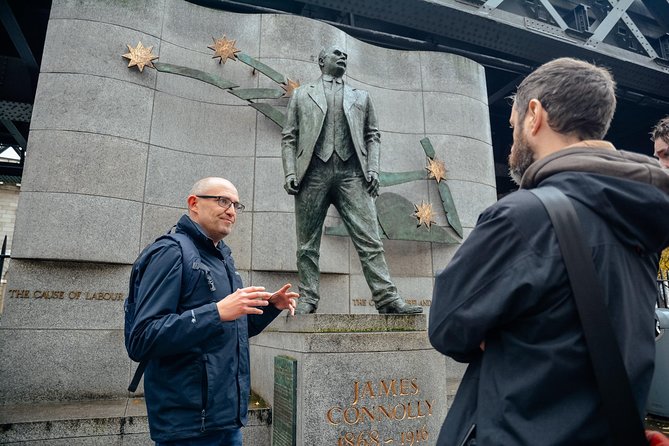
The Easter Rising isn’t just a date on a museum placard. In Dublin, it’s written into doorways, street layouts, and the way people remember the past. This tour is built for that. You move through central areas where the story connects to what you’re looking at—so the history feels like something you can actually point to.
What makes it different from the standard group model is simple: you’re not stuck with a set tempo. With a private guide, you can stop to ask why a building mattered, what a specific message meant, or how one street relates to another. Many people also use the walk to get their bearings for the rest of their trip.
There’s also a practical side. Two of the stops are listed as free admission, which helps value right away. From there, the rest depends on your guide’s route and what entrances (if any) may be needed.
You can also read our reviews of more private tours in Dublin


Start and finish: Custom House Quay to Collins Barracks
You begin at Custom House Quay, North Wall, Dublin. That’s a useful meeting point if you’re using public transport, and the area is easy to reach. You end at Collins Barracks, Benburb St, Stoneybatter (D07 XKV4). That finish point is handy because it gives you a natural “last stop” zone for food, browsing, or continuing your Dublin day.
Hotel pickup and drop-off aren’t included, so I’d plan to arrive by your own means. The tour does say it’s near public transportation, so you shouldn’t need a car to make this work.
Also keep in mind the time window: roughly 3 hours 30 minutes. You’ll want to treat this as a committed block where walking and stopping are part of the deal.
Stop 1: An Post General Post Office (GPO) and why it matters

Your first major landmark is the An Post General Post Office, one of Dublin’s most famous buildings. This is the stop where the tour’s theme clicks into place fast: the GPO served as headquarters for the leaders of the Easter Rising.
It’s also described as the last of the great Georgian public buildings erected in the capital. That detail matters. It helps you see the GPO not only as a symbol, but as a built form—something that existed long before 1916 and then became central to an event that shook everything after.
What you’ll do here is more than “look at a façade.” You should expect your guide to connect the building to the events, explain why this site became a focal point, and point out visual cues you might otherwise miss. If you like history with specifics—who did what, where key decisions were made, and what the space meant—this is where the tour delivers its strongest payoff.
Drawback to consider: since the focus is interpretation and storytelling, you won’t feel like you’re ticking a checklist. If you’re expecting lots of indoor time, this first stop may feel more like a guided walk-around with context than a full museum experience.
Good news: the stop is listed with free admission ticket, so your value starts immediately.
Stop 2: Garden of Remembrance for Irish freedom and memory
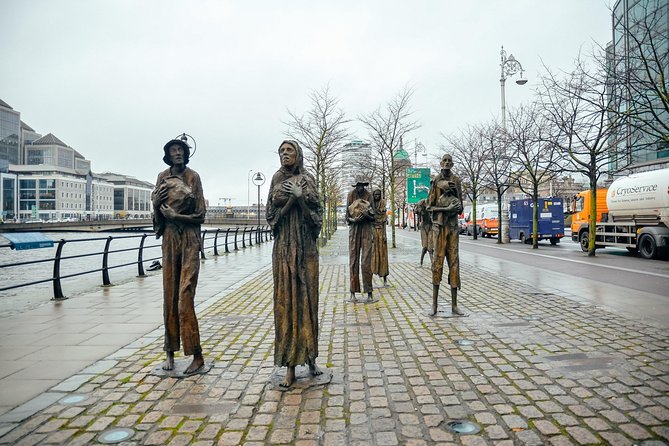
Next comes the Garden of Remembrance, a memorial garden dedicated to the memory of those who gave their lives in the cause of Irish freedom. It sits in the northern fifth of the former Rotunda Gardens in Parnell Square, which is a Georgian square at the northern end of O’Connell Street.
This stop balances the story. After the political and strategic weight of the GPO, the garden gives you a more reflective pause. Even if you already know the major plot points of 1916, memorial spaces like this help you understand how the story was carried forward—how communities chose to remember and what they kept repeating in public life.
Practical note: the tour lists this as free admission ticket too. That’s a nice budget-friendly feature, and it means you can spend more energy on understanding what you’re seeing instead of planning ticket logistics for that portion.
Time-wise, you’re there for about 25 minutes. If you enjoy photography, this is also a good place to take your time—especially in quieter moments between busy street life.
Other stops your guide may add (route-dependent, so plan flex)
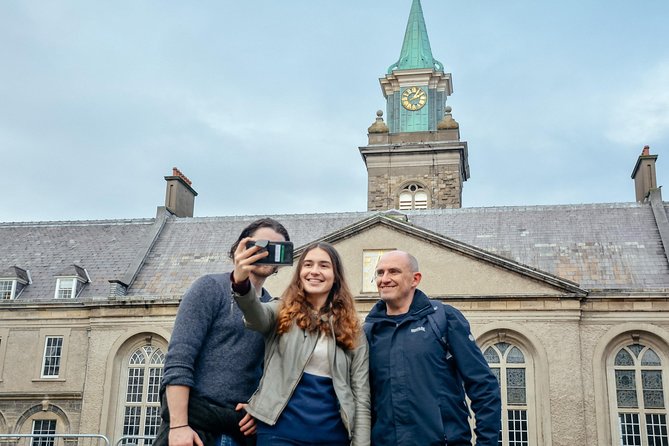
After the two confirmed anchors (GPO and Garden of Remembrance), your route may include additional stops depending on your guide and their chosen plan. The tour description also notes this variation explicitly.
That flexibility can be a strength. Different guides will emphasize different angles of the Rising: lead-up politics, turning points, or the way events changed the city’s streets in the days and weeks that followed.
Still, there are two practical things to keep in mind:
1) Route changes can happen, sometimes tied to access or timing. One person’s experience highlights that a planned jail visit and cemetery timing didn’t line up as expected, leading to extra walking and less time at certain sites.
2) You should expect some walking around central Dublin, with lots of “stop and explain” moments.
If there’s one site you strongly care about (for example, a specific prison or cemetery stop), it’s worth asking your guide at the start whether it’s on their route that day and whether hours could affect it. Private tours give you that chance—use it.
You can also read our reviews of more historical tours in Dublin





Private guide power: questions, pace, and local street detail
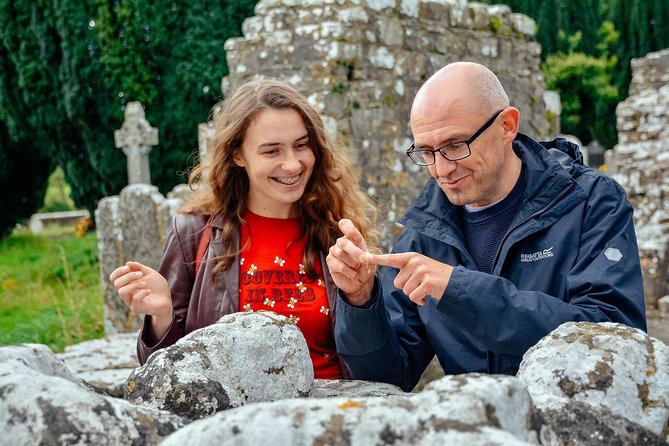
This is the core reason most people book private. You’re not just getting facts; you’re getting a conversation with someone who can tailor what you hear.
The reviews behind this tour make a pattern clear: guides often do more than recite. They answer off-topic questions. They adapt to walking speed. They point out details people miss on their own—back streets, small architectural clues, and the kind of context that helps you interpret Dublin as you move.
Several guide names come up repeatedly, including Hugh, Keelan, Marius, Ruairi, Derek, and Eamon. If you get Keelan, for example, pacing and patience are highlighted—one tour specifically noted slowing down for a partner who had difficulty walking too fast. If you get Eamon, you may notice extra use of visuals (some guests mention him using pictures to explain what you’re seeing) and practical help that can even carry into the rest of your trip (like how to use the Luas system afterward).
Even if you don’t get the same guide, the service style is consistent in the data: ask more questions, take breaks when needed, and let your host steer some of the emphasis.
One caution: since it’s private, the experience is only as exciting as the storytelling that day. A last-minute guide swap is also mentioned in feedback, and one guest felt the story didn’t have the same energy. That doesn’t mean it will happen to you, but it is a reminder that private tours depend heavily on guide delivery.
How long is it, really? Walking time and stamina

The tour runs about 3 hours 30 minutes, and it’s described for people with moderate physical fitness. That usually means: you’ll walk, you’ll stop, and you won’t just glide between sites on a bus.
A real-world tip from the experiences shared: some people clocked closer to 4.5 miles and still felt it was fine because the pace included stops for plaques, context, and questions. Another person wanted a shorter-feeling route because too much walking time reduced time at certain planned sites.
So here’s how to plan smartly:
- Wear comfortable shoes with grip.
- Bring layers. Dublin weather can change quickly.
- If you need a slower pace, tell your guide early. Private tours are better when you give guidance.
If your walking ability is limited, this tour can still work thanks to pacing adjustments, but I’d ask for a route that reduces long stretches. The point is simple: you should feel in control of the tempo.
Price and value: what $135.16 per person is buying
At $135.16 per person for a private tour lasting about 3.5 hours, you’re paying for three things:
1) A dedicated local guide (not shared with strangers).
2) Time for questions and slower pacing—which you can’t replicate in a high-volume group tour.
3) Carbon-neutral handling through offsets.
When the two major stops are free admission, the cost feels easier to justify. You’re not paying admission fees on top of the guide cost for those anchors.
Still, private tours can feel pricey if you expect a lot of indoor entry to museums and paid attractions. This experience is more street-level and interpretation-heavy, centered on outdoor landmarks. If that matches how you like to learn, it’s strong value. If you want heavy museum time and lots of ticketed entries, you may feel like you’re paying for walking rather than closed-door exhibits.
There’s also a timing detail: it’s often booked about 39 days in advance, which suggests it’s a popular slot. If you’re traveling during a busy season, booking earlier can improve your odds of getting your preferred guide and date.
Who this tour fits best
This is a good fit if you:
- Want the Easter Rising story told through real places in central Dublin.
- Prefer private conversation over group pacing.
- Like guides who can tailor what you see to your interests.
- Enjoy history when it’s tied to buildings, street layout, and visible evidence.
It may not be the best fit if you:
- Struggle with walking and long outdoor stretches.
- Need a schedule that guarantees every single optional stop every time.
- Expect mostly indoor museum content.
Should you book the History of Dublin With Locals: 1916 Easter Rising private tour?
I’d book it if you want a guided story you can question, slow down, and relate to the city you’re walking through. The GPO is a must for anyone interested in 1916, and the Garden of Remembrance gives the emotional counterweight that many quick tours skip.
The main “check yourself” points are practical: be ready for walking, and understand that stops beyond the two anchors can vary by route and timing. If you show up with comfortable shoes and ask about any specific sites you care about, this tour style tends to pay off quickly.
If you’re the kind of traveler who likes Dublin as a city you can read—buildings, streets, and memory—this is one of the better ways to understand the Easter Rising without getting trapped in a crowd.
FAQ
How long is the private 1916 Easter Rising tour?
The tour is listed at about 3 hours 30 minutes.
Is this tour private or shared?
It’s a private tour. Only you and your local guide participate.
Where does the tour start and where does it end?
You start at Custom House Quay, North Wall, Dublin, and you end at Collins Barracks, Benburb St, Stoneybatter.
What stops are included at the start of the route?
Two stops are listed: the An Post General Post Office (GPO) and the Garden of Remembrance.
Do I need to buy tickets for the GPO and Garden of Remembrance?
The tour data lists admission ticket free for both the GPO stop and the Garden of Remembrance stop.
Is hotel pickup included?
No, hotel pickup and drop-off are not included.
What should I bring or plan for since it involves walking?
The tour advises a moderate physical fitness level. Plan on walking and wear comfortable shoes.
Is the tour carbon offset?
Yes. The tour is CO2 neutral, with carbon emissions offset.
What is the cancellation window for a full refund?
Free cancellation is available up to 24 hours in advance for a full refund. If you cancel less than 24 hours before the start time, the amount paid is not refunded.