REVIEW · DUBLIN
Vikings In Dublin (Walking Tour)
Book on GetYourGuide →Operated by MP Tour Guiding · Bookable on GetYourGuide
A Viking longboat in Dublin sets a pretty specific mood. This walking tour strings together Viking-era clues and major landmarks, so you can see how Norse life shaped the city you walk through today.
I especially like the way the guide turns big names like Christ Church Cathedral into a story about what came before and after. I also like that you get an overview of Dublin from the Viking period, not just a list of sites. One thing to consider: the live tour guide speaks French, so plan on understanding French (or pick another tour if you need English).
In This Review
- Key highlights you should know
- From Viking longboat sculpture to the street-level story
- Christ Church Cathedral: more than a famous stop
- Saint Audoen’s and the medieval thread of Dublin
- Fishamble Street: where city life fits the Viking story
- Dublin Castle and how power changes the map
- The secret stop and the final stretch by Trinity College
- Price and value: is $45 worth 1.5 hours?
- Who should book this Vikings in Dublin walking tour?
- Should you book Vikings in Dublin?
- FAQ
- How long is the Vikings in Dublin walking tour?
- What is the price per person?
- Where does the tour start?
- Where does the tour end?
- Is there a live guide?
- What language is the tour offered in?
- Which stops are included on the route?
- Is the tour wheelchair accessible?
- What is included in the price?
- Is there free cancellation?
- Is reserve and pay later available?
Key highlights you should know

Start at a Viking longboat sculpture that anchors the whole route
Christ Church Cathedral with a guided visit tied to Dublin’s earlier layers
Saint Audoen’s stop that keeps the medieval thread going
Fishamble Street and the city’s trading vibe from the Viking-era angle
Dublin Castle plus a surprise final section that adds depth beyond the headline sights
From Viking longboat sculpture to the street-level story

The tour starts at Báite – Viking Longboat (1988) by Betty Newman Maguire. It’s a clever first move. Before you hit the famous buildings, you get a visual cue for what longships meant here, and why the Liffey matters in any Viking conversation about Dublin.
From that starting point, the route is built for walking history. You’re not stuck reading plaques. You move through the city, and the guide uses the streets as context: where people would have moved, traded, and gathered, and how Dublin’s older foundations connect to what’s still standing.
The other big plus is how the guide handles nuance. In the feedback, people keep praising the guide’s historical knowledge and his way of explaining motivations and customs without reducing Vikings to a single stereotype. That matters, because it changes how you look at the places—suddenly you’re not just seeing stone, you’re imagining choices: why people came, how they lived, and how they fit into (and affected) Ireland’s capital.
One practical note: the tour duration is listed as 1.5 hours, so you’ll cover several sites, but you shouldn’t expect long “stand and stare” breaks. Bring a small amount of stamina and comfortable shoes.
You can also read our reviews of more walking tours in Dublin



Christ Church Cathedral: more than a famous stop
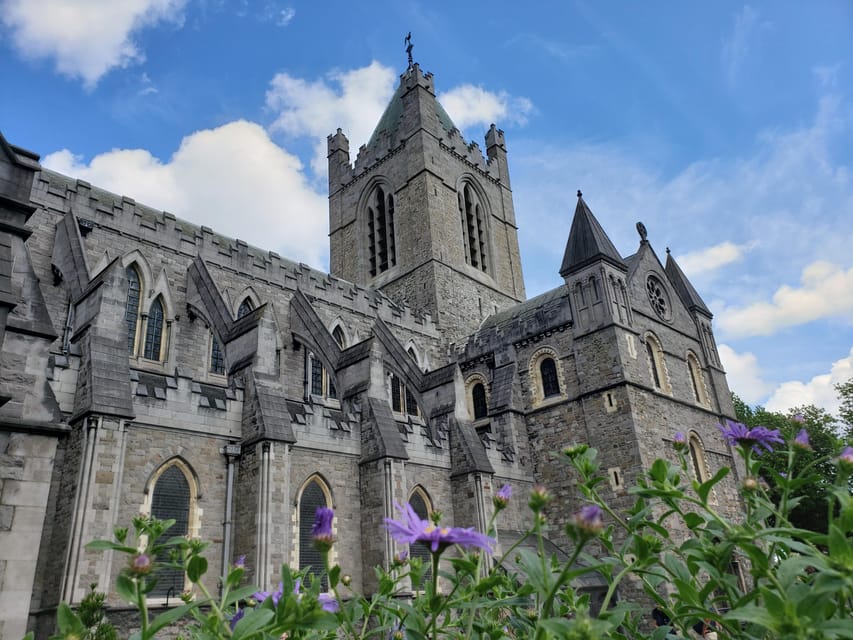
Christ Church Cathedral is a headline Dublin landmark, but on this tour it’s treated like a timeline stop. The guided visit is your moment to connect the architectural presence you see now with the older Dublin that’s under and around it.
Why I like this approach for you: cathedral visits can sometimes feel like museum mode—beautiful, but detached from the human story. Here, the guide frames what the site represents, and then uses that as a bridge to earlier city life, including Viking influence and the way Dublin evolved from those early years.
You also get to experience the building through the guide’s lens, which can be a big difference if you’re the type who enjoys understanding what you’re looking at. The feedback I’m drawing on highlights a clear, concise style, with answers that stay relevant when people ask questions. That kind of guidance makes a cathedral stop more useful than just snapping photos.
Possible drawback: if you’re expecting only Viking-specific ruins, a cathedral can feel like a detour. The key is to go in ready to accept that the Viking period is being explained through Dublin’s later surviving landmarks—not recreated from scratch.
Saint Audoen’s and the medieval thread of Dublin
After Christ Church Cathedral, the tour continues to Saint Audoen’s for another guided stop. This is one of those places that helps you understand Dublin as a layered city. You’re walking from one important historical anchor to another, with the guide keeping the story moving.
Stops like this are valuable for two reasons. First, they keep you from thinking Viking Dublin is a separate chapter you can study in isolation. Second, they show how later Dublin preserved and repurposed the built environment over time. Even if you’re not a history expert, the guide’s explanations can help you spot the difference between what’s original to a period and what’s simply sitting in the same part of town.
From a practical angle, the group is still on foot. That means you’ll want to pace yourself. If you get tired easily, it’s worth noting that one piece of feedback mentions the guide adapting to a minor health issue, which suggests he’s attentive to real-life needs during the walk.
Fishamble Street: where city life fits the Viking story
Next up is Fishamble Street. This is where the tour stops feeling like monuments and starts feeling like everyday city life—especially when the guide ties it to the era of Norse activity and the development of trading in Dublin.
The tour framing emphasizes the Viking connection to the Liffey waters and the idea that longships and markets shaped how the city worked. Even if Fishamble Street isn’t a direct “Viking ship docking point,” it’s a useful way to understand the city’s commercial DNA. You’re essentially being taught to read Dublin as an old port-and-market town, not only as a set of tourist attractions.
This is a good moment to ask questions, because it’s often where guides can explain the practical side of history—what people did day to day, what a settlement needed to grow, and why trade mattered so much. The feedback highlights that questions get answered in a relevant way, and the anecdotes make the tour lively without turning it into chaos.
Possible drawback: if you’re sensitive to crowds or street noise, Fishamble Street may feel busier than the cathedral zones. The tour is only 1.5 hours, so it’s manageable, but you can plan on moving through active city blocks.
Dublin Castle and how power changes the map
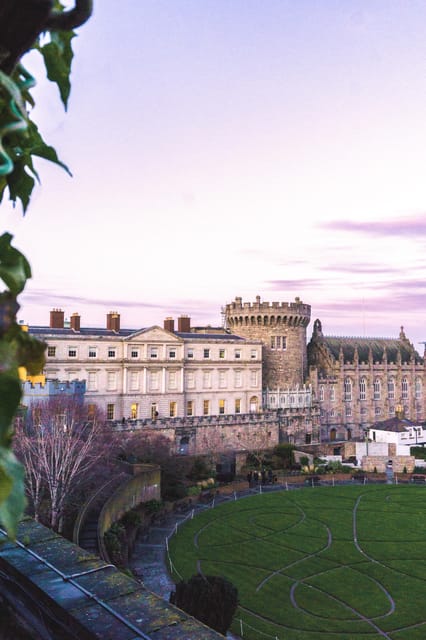
Then you reach Dublin Castle. On a Viking-themed tour, a castle stop might sound like a mismatch. But it’s actually one of the smart pivots. Dublin Castle helps you see how political power and administration became the next big layer after earlier settlement growth.
This is where the tour’s storytelling approach pays off. You’re not just learning about Vikings in isolation. You’re watching how Dublin’s identity shifted over time, and how later institutions sat on the foundations of earlier Dublin life. The guide’s ability to explain impact and influence comes through here—according to the praise, he doesn’t treat Vikings as one-note villains or one-note heroes. He explains them as people with motivations, ambitions, and a role in what Dublin became.
Practical tip: Dublin Castle is a big visual target. Take a moment to orient yourself—look at what’s around you, not only at the main structures. If you do that, the guide’s explanations land better, because you’re mapping the story onto real space.






The secret stop and the final stretch by Trinity College
The route includes a secret stop for a guided segment, plus a later “lesser-visited” style stop described as a standout surprise section. These are the parts I think many people enjoy most, because they’re not as obvious from a guidebook list.
Why these extra stops matter: they prevent the tour from being only a greatest-hits tour. Instead, the guide uses smaller landmarks to show how the Viking era’s influence can show up in subtle ways—through street patterns, proximity to key areas, and the way later Dublin reused earlier city spaces.
One important detail to flag: the meeting point info says the activity ends back at the meeting point, while the itinerary indicates a finish at Trinity College. I can’t confirm which ending you’ll see on the day you book, so it’s worth checking the exact end location in the confirmation. Either way, it’s likely you’ll finish somewhere convenient for walking onward or grabbing a drink afterward.
Price and value: is $45 worth 1.5 hours?

At $45 per person for a 1.5-hour guided walking tour, the price is in line with what you’d expect for a small group city guide who’s covering multiple major stops. You’re paying for more than “getting from A to B.” You’re paying for interpretation: how the guide connects Viking-era themes—settlement, traditions, and impact—to specific Dublin locations you can actually see.
Here’s how I’d judge value for you:
- You want a guided explanation at Christ Church Cathedral, Saint Audoen’s, Fishamble Street, and Dublin Castle, rather than solo wandering.
- You want a Viking-focused tour that also explains complexity, not just battles.
- You’re okay with a short walking format. It’s not a half-day deep history marathon.
Where value might be lower: if you only speak English and can’t comfortably follow French, you’ll lose a big part of what you’re paying for—the live guide’s story and Q&A. Also, if you strongly prefer museum-heavy experiences to walking and street explanations, this format may feel too “on the move.”
Who should book this Vikings in Dublin walking tour?

This tour is a strong fit if you:
- Enjoy history that connects to real places you can stand in front of
- Want an overview of the Viking period in Dublin, including traditions and influence
- Like asking questions and getting direct, relevant answers from the guide
- Prefer a walking route that covers several key sites in a short time
It’s less ideal if:
- You need the tour in English (the live guide listed is French)
- You want a long format with lots of inside time beyond guided visits
One more reason it’s appealing: the feedback emphasizes the guide as friendly and “very cultured,” with a clear, concise way of explaining events and motivations. That’s exactly what you want when a topic gets complicated quickly.
Should you book Vikings in Dublin?
If you want a 90-minute way to make Viking Dublin feel real—and you’re comfortable with French, this is an easy yes. The route hits the major anchors (Christ Church Cathedral and Dublin Castle) while also adding smaller guided segments that help the story feel connected instead of disjointed.
Before booking, do two quick checks: confirm the exact end point you’ll have on the day (Trinity College versus returning to the start), and make sure French is workable for you. If those boxes are checked, you’ll likely come away with a much better sense of how Norse settlers and their traditions fit into Dublin’s evolution—without feeling like you just watched a slideshow of dates.
FAQ
How long is the Vikings in Dublin walking tour?
The tour duration is listed as 1.5 hours.
What is the price per person?
The price is $45 per person.
Where does the tour start?
It starts at Báite – Viking Longboat (1988) by Betty Newman Maguire.
Where does the tour end?
The itinerary says it finishes at Trinity College, while the meeting point details say it ends back at the meeting point. Check your booking confirmation for the exact end location.
Is there a live guide?
Yes, it’s a live guided walking tour.
What language is the tour offered in?
The live tour guide language is French.
Which stops are included on the route?
The guided stops include Christ Church Cathedral, Saint Audoen’s, Fishamble Street, Dublin Castle, plus additional guided Viking-related segments along the way.
Is the tour wheelchair accessible?
Yes, wheelchair accessible is listed.
What is included in the price?
The price includes a guided walking tour of Dublin’s famous places related to Viking history, with information about life at the time and Viking influence.
Is there free cancellation?
Free cancellation is listed: you can cancel up to 24 hours in advance for a full refund.
Is reserve and pay later available?
Yes, reserve now & pay later is listed, with pay nothing today.