Dublin gets spooky after dark. This 1 hour 50 minute, small-group walk links real street corners to Viking Northside legends, with the creepy feeling of history happening right under your feet. You start outside City Hall and move through churches, lanes, and pub landmarks tied to hauntings, fear, and punishment.
One big reason I’d recommend it: the storytelling. Guides named Emma and Lydia are repeatedly praised for staying on time, keeping the group together, and mixing humor with unsettling detail. You also get that satisfying blend of place-based history and supernatural folklore instead of a one-note lecture.
The main consideration is tone and content. It’s not suitable for children under 12, and some of the stories lean disturbing rather than campy.
In This Review
- Key things that make this tour worth your time
- Why the 8pm start and night pacing matter
- Price and what you’re really paying for
- Where you start, how the route unfolds, and what each landmark adds
- Dublin Castle area: stories without the ticket price
- Christ Church Cathedral: darker angles and churchyard storytelling
- St. Audeon’s Terrace and St. Audeon’s Gate: the gate-lore feeling
- St. Michan’s Church: old Dublin gets personal
- Darkey Kelly’s: the witchcraft thread wraps up
- Brazen Head: finishing at one of Dublin’s oldest pub landmarks
- The standout stories: Darkey Kelly and the Hellfire connection
- Darkey Kelly: why this story is the spine of the night
- Hellfire Club and the Hellfire Pub: creep with context
- Small-group format, hearing the guide, and staying warm
- Who this tour is perfect for (and who may not love it)
- Should you book Hidden Dublin’s Haunted History Walking Tour v2.0?
- FAQ
- What time does the tour start?
- Where does the tour meet?
- How long is the tour?
- What’s the price per person?
- Are entrance tickets included for places like Dublin Castle and Christ Church Cathedral?
- Is the tour suitable for children?
- Is there a cancellation option?
Key things that make this tour worth your time
- 8pm timing on real Dublin streets: Darkness adds atmosphere without turning it into a gimmick.
- Northside’s spooky Viking-era setting: You’re walking through a part of the city known for its haunted reputation.
- Witchcraft story of Darkey Kelly: A central thread built around a historical accusation of witchcraft.
- Hellfire Pub and Hellfire Club stops: Expect stop-and-tell moments around some famously eerie lore.
- Pub finale at Brazen Head: You finish at a place with deep old-Dublin pub credibility.
- Small-group feel: It’s listed as limited to 15 people, though the overall cap can be higher depending on scheduling.
Why the 8pm start and night pacing matter
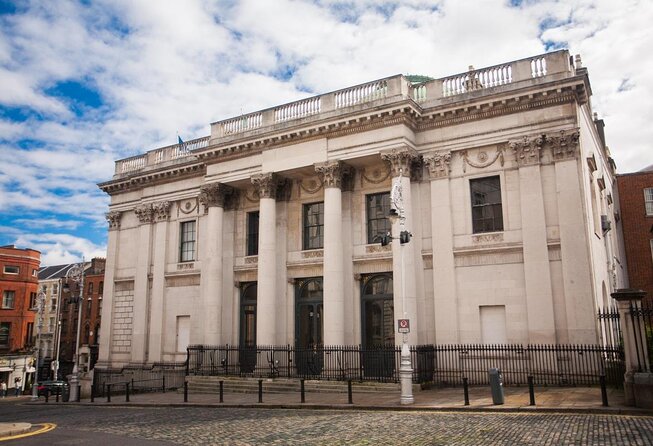
This tour begins at 8:00 pm at the small square outside City Hall, in the area of Dame Street (meeting is given at Barnardo Square, 3 Dame Street). That late start is not just scheduling—it changes the whole vibe. Dublin at night feels quieter and moodier, and when you’re hearing stories of witchcraft, punishment, and hauntings, the setting does some of the work for the guide.
You’ll be walking cobblestone streets and moving between several major sites. The pacing is built for a group to stay together, not speed through photo stops. That matters on a haunted-style walk, because the best part is hearing the story clearly while you’re looking at the building or street the tale is tied to.
Two other practical points I like: it’s offered in English, and the tour runs with a local guide. You also get a mobile ticket, which is handy if you don’t want to juggle paper confirmations while you’re out in the city.
You can also read our reviews of more walking tours in Dublin

Price and what you’re really paying for
At $30.17 per person, this is priced like an evening experience you can fit into a busy Dublin itinerary without going on a day trip or booking expensive attractions. For that money, you’re paying for the guide, the walking route, and the story structure—especially the way the guide connects each stop to darker parts of Dublin’s past and supernatural folklore.
A couple of important value checks before you go:
- Admission isn’t included for major sites like Dublin Castle and Christ Church Cathedral. You’ll get stories tied to them, but you should not expect to enter these places as part of the price.
- The tour includes pub-related and exterior stops, so the cost is mostly for narration and guided pathing rather than ticketed entry.
If you’re expecting a horror movie on foot, you might feel disappointed. If what you want is atmosphere, real locations, and a guided “walk-and-hear” format with stories that actually connect to the city, this price-to-experience ratio makes sense.
Where you start, how the route unfolds, and what each landmark adds
Your walk is set up like a sequence of “stop, listen, move.” You start near City Hall and then work your way through some of Dublin’s most story-rich old spaces: castle-adjacent history, churchyard legends, gate lore, and finally pub landmarks.
Dublin Castle area: stories without the ticket price
The first named stop is Dublin Castle. You won’t have admission included, but that’s not wasted money—because the point here is what the guide ties to the castle grounds and nearby passages. In particular, one highlight mentioned is the portion tied to lepers around castle gates. Even if you’ve read a bit about Dublin’s past, hearing these details pointed to specific spots helps the story land.
The drawback of this style of stop: if you strongly prefer inside-the-building history, you’ll want separate plans for that. Here, it’s more about exterior context and what the guide connects to the location.
Christ Church Cathedral: darker angles and churchyard storytelling
Next comes Christ Church Cathedral. Again, admission isn’t included, so you’re getting interpretation and macabre history rather than a formal visit. The benefit is that a cathedral exterior can frame stories in a way museums can’t—stone, age, and the sense of place do a lot of the heavy lifting.
You can also read our reviews of more historical tours in Dublin





St. Audeon’s Terrace and St. Audeon’s Gate: the gate-lore feeling
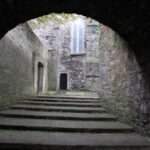
You then move to Saint Audeon’s Terrace and Saint Audeon’s Gate. This is one of those “small stop, big mood” sections. Gate and terrace locations often carry layered meanings—routes people used, places where news traveled, and spots where punishment or fear could become legend.
Even without a ticketed entry, you get a sense of Dublin’s street-level medieval layout: where people could move, hide, or be confronted.
St. Michan’s Church: old Dublin gets personal
Another major stop is St. Michan’s Church. You’re told more history and stories connected with the past, with time set aside to listen before you continue. If you like haunted tours that treat the city like a living archive, this part tends to work well because churches and old street corners hold myths differently than modern sights.
Practical note: listening is easier when you’re not constantly crossing fast roads. If you’re sensitive to crowd noise, position yourself where you can hear the guide clearly at each stop.
Darkey Kelly’s: the witchcraft thread wraps up
The tour ends its story arc at Darkey Kelly’s for a final stop connected to Darkey Kelly, the figure accused of witchcraft and burned in the 18th century. That specific historical anchor is what keeps the walk from becoming purely spooky decoration.
This is also where the tour’s emotional “payoff” tends to land. The guide builds to the story so it feels like you’ve been tracking a thread through the city, not just hopping from one spooky anecdote to the next.
Brazen Head: finishing at one of Dublin’s oldest pub landmarks
You’ll finish at the Brazen Head, described as one of the oldest public houses in Dublin. That ending is a smart choice for atmosphere: you swap from grim legends into the warmth of old-pub culture, even if you’re still thinking about everything you just heard.
There’s also a listed return point at Darkey Kelly’s Pub, noted as about 3 minutes from the original start area. In practice, you should plan on the walk ending around the old Temple Bar area, then using short-distance local navigation if you’re meeting someone or heading to dinner.
The standout stories: Darkey Kelly and the Hellfire connection
Two parts are clearly the emotional center of the tour: the witchcraft story of Darkey Kelly and the Hellfire-related stops.
Darkey Kelly: why this story is the spine of the night
Darkey Kelly’s story isn’t presented as a vague ghost tale. You hear it framed around a real historical accusation of witchcraft and the extreme consequences—accused, convicted in the folklore sense, and burned. That’s heavy material, and the tour stays mindful of that tone.
I like that it’s not handled as a cheap jump moment. It’s more like a lesson in how fear spreads in a community—and how a person’s life can get rewritten into legend. If you’re the type who wants haunted history to feel grounded, this is the section that sells it.
Hellfire Club and the Hellfire Pub: creep with context
You also visit spooky locations tied to the Hellfire Club and Hellfire Pub, plus a stop described as a site considered to be the gates of Hell. Even if you don’t know the lore, those names do something instantly: they make Dublin feel like a place where the “forbidden” has a map.
This is where the tour’s atmosphere really tightens. You’re not just staring at random older buildings—you’re being guided to the points where the city’s darker stories were turned into tradition.
Small-group format, hearing the guide, and staying warm
This tour is designed as a small group experience. It’s listed as limited to 15 people, though the overall maximum can be higher. Either way, the intent is to keep the group tight enough for the guide to keep pace and tell stories with continuity.
That said, one practical reality comes up: busy roads and traffic noise can make it harder to hear. I’d suggest you always keep your spot close to the guide when you stop, and don’t hang back behind someone taller. If you’re with a group, tell everyone to gather at the same side of the street for each story beat.
Also, the tour runs in the evening at 8pm. That means you should plan for chilly air and wet-cobblestone conditions depending on the season. Dress in layers. Bring something warm enough for a steady walk, because you’ll likely be standing still at multiple landmarks while the guide talks.
Who this tour is perfect for (and who may not love it)
This is best for adults and teens who enjoy darker themes: haunted folklore, old Irish church-and-street history, and supernatural legends with a historical backbone.
It’s also ideal if you like a guide who talks like a storyteller rather than reading from a script. Many of the highest marks go to guides who keep things engaging and funny while still respecting the creepy subject matter—people have even called out guides as loud and clear, with enough pacing control that the group doesn’t get left behind.
Not for kids under 12 is clearly stated. If you’re traveling with younger children, you’ll want to choose something lighter.
And if you’re coming for full-on paranormal spectacle—lots of dramatic screaming, props, or a heavy horror vibe—this might not match your expectation. The tour is haunted history first, and the scares come from the stories tied to real Dublin places, not special effects.
Should you book Hidden Dublin’s Haunted History Walking Tour v2.0?
I think you should book it if you want an evening walk that connects Dublin’s landmarks to the darker side of folklore and past events, and you like guided storytelling more than museum wandering. The $30.17 price is fair for a local guide-led route, and the 8pm start gives you atmosphere you can’t fake during daylight.
Book it with a couple expectations set:
- You’ll get stories at major sites, but you should not count on included admissions.
- Some content is disturbing, so it’s adult-focused.
- You may want to plan your clothing and ear position so you can hear clearly at street stops.
If that sounds like your kind of Dublin night, this is a strong choice for your itinerary. If you want comedy ghost-hunting or kid-friendly thrills, skip it and find something more lighthearted.
FAQ
What time does the tour start?
The tour starts at 8:00 pm.
Where does the tour meet?
The meeting point is Barnardo Square, 3 Dame Street, Dublin.
How long is the tour?
It runs about 1 hour 50 minutes.
What’s the price per person?
The price is $30.17 per person.
Are entrance tickets included for places like Dublin Castle and Christ Church Cathedral?
No. Admission tickets for those sites are not included.
Is the tour suitable for children?
It is not suitable for children under 12.
Is there a cancellation option?
Yes. You can cancel up to 24 hours in advance for a full refund. If you cancel less than 24 hours before the start time, the amount paid will not be refunded.