REVIEW · DUBLIN
Private Walking Tour in Dublin
Book on Viator →Operated by Francesca D'Angelo · Bookable on Viator
Dublin is best when you start with the stories. This private walking tour strings together 11 iconic stops in about 2 to 3 hours, so you get a clear mental map fast, plus the meaning behind the sights. I like that it’s tight and practical, and I love how often the tour points out specific details you’d miss on your own, from historical bullet marks to monuments with a real backstory. One thing to plan for: several major buildings have admission tickets not included, so your total cost may rise if you want to go inside everything.
I also really like the private format. You won’t be stuck in a huge group, and the guide can tailor the pace—ideal if you’re traveling with kids, or you simply want to linger at the parts that grab you. In the strongest experiences, guides included Francesca D’Angelo as well as John, Sinead, and Yvonne, and the common theme was clear explanations and room for questions. The main consideration is weather: the tour requires good weather, so have a backup plan for rain.
Here’s the route in a nutshell: university power, the Easter Rising, modern art and bridges, then cathedrals and Dublin Castle—ending at the Molly Malone statue with song-and-history energy.
In This Review
- Quick hits before you go
- Why this Dublin walk works: a tight route with big stories
- Trinity College Dublin: starting in Ireland’s academic heart
- GPO Museum: the Easter Rising lived in the stone
- The Spire and Ha’penny Bridge: modern Dublin with old bones
- Temple Bar and Wood Quay: music now, Vikings then
- Christ Church Cathedral: centuries stacked in one stop
- Saint Patrick’s Cathedral: Gothic style and St. Patrick’s turning point
- Dublin Castle: power that ran Ireland for 700 years
- George’s Street Arcade and Molly Malone: shopping and song in the same breath
- How the timing and pacing feel on foot
- Value and what tickets might cost extra
- Who should book this private tour, and who should skip it
- Should you book this private walking tour of Dublin?
- FAQ
- What’s the duration of the Private Walking Tour in Dublin?
- How much does the tour cost?
- Is this tour private?
- Are admission tickets included for the sights?
- What are the start and end points?
- What language is the tour offered in?
- What’s the weather situation and cancellation policy?
Quick hits before you go
- A smart 2–3 hour loop: short visits at 11 stops so you get bearings without feeling dragged along.
- Lots of real history in small doses: 1916 Easter Rising details, Viking settlement clues, and medieval-to-modern power shifts.
- Iconic free sights: The Spire, Ha’penny/Liffey Bridge, Temple Bar, Wood Quay, George’s Street Arcade, and Molly Malone are included for viewing.
- Cathedrals you can choose to enter: Christ Church Cathedral and Saint Patrick’s Cathedral are major highlights, but admission isn’t included.
- Private group, mobile ticket: only your group participates, and you get a mobile ticket in English.
Why this Dublin walk works: a tight route with big stories
This tour is built for orientation. You walk through central Dublin with a guide who ties dates and names to the places you’re standing in front of. In a city like Dublin—where different eras sit cheek by jowl—that kind of framing makes everything click.
The pacing is also sensible. Each stop gets a short window (often 5–20 minutes), which helps you keep momentum and still absorb the essentials. It’s private, so you can ask questions and get answers without juggling a crowd.
At $90.11 per person for a private tour, the value comes from what’s hard to DIY: someone’s ability to connect what you see—like bullet marks on a building or Viking origins beneath the medieval city—to what it means. You’re not just collecting photos; you’re building context.
You can also read our reviews of more walking tours in Dublin


Trinity College Dublin: starting in Ireland’s academic heart
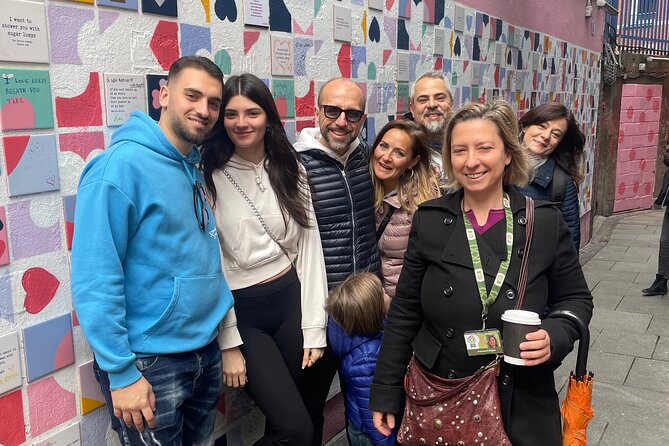
You begin at Trinity College Dublin on College Green, which is a strong first stop because it sets the tone for Dublin as an ideas city. Trinity was founded in 1592 from Queen Elizabeth I, and the campus functions like a little city of its own, with more than 20,000 people working and studying there.
The guide typically uses the famous alumni angle to make the place feel real fast—Oscar Wilde, Bram Stoker, and Jonathan Swift are all part of the conversation. I like this approach because it turns “a historic university” into a story you can remember.
One practical point: admission ticket isn’t included here, and the stop is about 20 minutes. So you’ll get orientation and key highlights, but you’ll likely need to pay extra if you want to go deeper inside.
GPO Museum: the Easter Rising lived in the stone
From Trinity, you head to the GPO Museum, a Georgian building that the tour frames as a symbol of freedom from the British Empire. This is where the 1916 Easter Rising played out—Irish Volunteers and Irish Citizen Army seized the building on Easter Monday.
The detail that makes this stop memorable is physical evidence: bullet marks can still be seen in the front pillars. That’s the kind of thing that’s easy to miss if you only skim, but it lands differently when someone explains what you’re looking at and where it fits into the wider Irish struggle.
The visit is brief (about 15 minutes), and admission isn’t included. If you’re the type who likes museums, you might budget time and money to add the ticket at your own pace.
The Spire and Ha’penny Bridge: modern Dublin with old bones
Two quick, high-impact stops follow, and they do a great job of showing Dublin’s mix of eras.
First is The Spire, officially called the Monument of Light. It’s a modern-art monument built to celebrate the new millennium, and it’s the tallest modern art monument in the world at 120 metres tall and 3 metres in diameter at the base. This is mostly about the sightline—standing near it helps you understand why it became such a signature landmark.
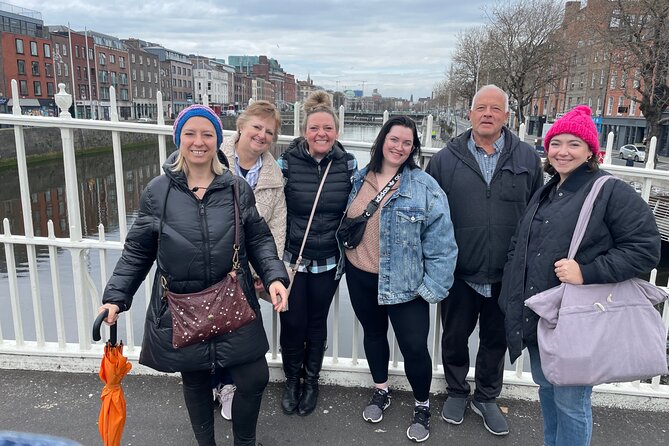
Next comes Ha’penny Bridge (officially the Liffey Bridge). This is Dublin’s first pedestrian bridge, built in 1816. The name Ha’penny connects to the idea of a half-penny crossing that once applied when the bridge still had barriers, and the fact it was tall for more than 100 years is part of why the nickname stuck.
Both stops are short (around 5 minutes each) and ticket-free. I like them because they break up the history-heavy stretches without turning into filler.
Temple Bar and Wood Quay: music now, Vikings then
Then you shift into two very different layers of Dublin—both fun in their own way.
In Temple Bar, the tour focuses on the old neighborhood feel and the living culture. You’ll view famous pubs where traditional Irish music is played every night, plus you’ll get a sense of where to eat traditional Irish food. Even if you’re not planning to party, this stop helps you understand why Temple Bar became such a magnet.
After that, you step into Wood Quay Amphitheatre for the Viking connection. The tour places it at the feet of the hill culminating with Christchurch, where archaeologists discovered the biggest Viking settlements outside Scandinavia. Vikings are described here as marauders and traders who settled more permanently in Dublin in 841 AD.
Both parts are free to view, and the time at each is about 15 minutes. This pairing is clever. You get the Dublin people know today (music, pubs, food) and the Dublin beneath it (Viking roots and archaeology).
You can also read our reviews of more private tours in Dublin




Christ Church Cathedral: centuries stacked in one stop
Christ Church Cathedral is one of the places where Dublin’s layers feel physical. It’s in the medieval district, and the tour notes it began as a Viking church, then kept welcoming pilgrims and visitors for almost 1,000 years.
The highlights you’ll hear about make the cathedral more specific than a generic “old church.” Expect references like Strongbow’s tomb and a copy of the Magna Carta. That’s a strong thread for visitors who care about how Irish history connects to wider European events.
The stop is about 15 minutes, and admission isn’t included. So think of it as orientation plus key points, not a full independent cathedral visit. If you want to go in thoroughly, plan extra time and budget for the ticket.
Saint Patrick’s Cathedral: Gothic style and St. Patrick’s turning point
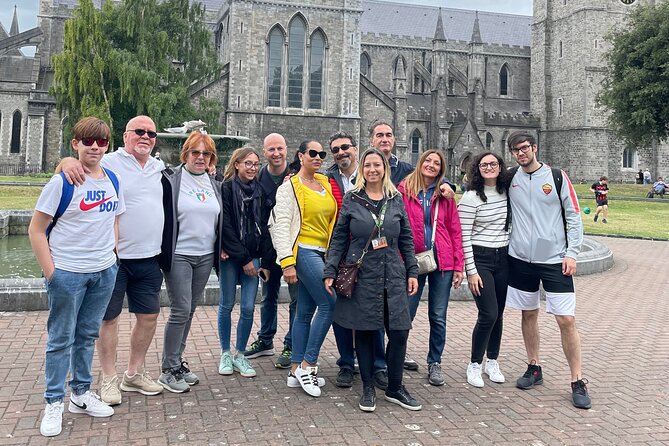
In the Liberties area, you’ll reach Saint Patrick’s Cathedral, completed between 1225 and 1270 and dedicated to Ireland’s patron saint, St. Patrick. This stop is tied directly to the origin story: the site is described as where St. Patrick baptized the Irish Gaelic people, converting them to Christianity.
The tour also connects the cathedral to literature. Jonathan Swift’s tomb comes up alongside other treasures, and that makes the cathedral feel less like a stone box and more like a place where major Irish figures left a mark.
Time is about 15 minutes, and admission isn’t included. If you’re hoping to do a long interior visit, you’ll probably want to treat this as your “add-on ticket” moment.
Dublin Castle: power that ran Ireland for 700 years
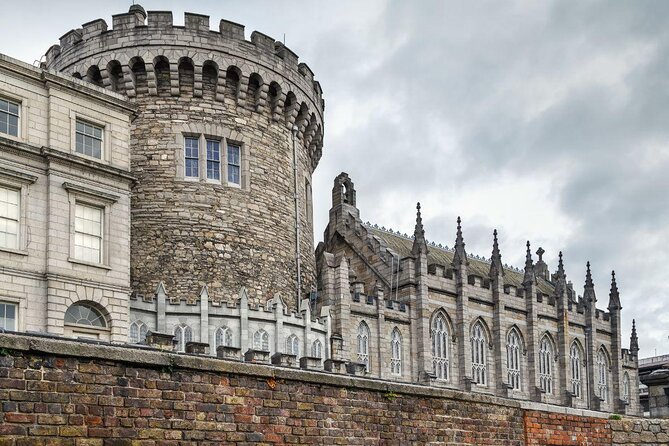
Next is Dublin Castle, which the tour frames as the seat of the viceroy—the monarch’s representative in Ireland—where English rule operated for more than 700 years. That’s a lot of time, and it helps explain why the city’s architecture reflects both authority and change.
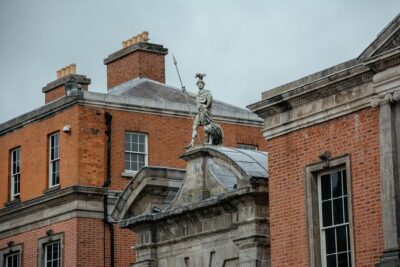
The Record Tower is the key leftover from the original medieval castle. Everything else you see is tied to later State Apartments built in the 18th century. I like that the guide calls out what’s medieval versus what’s newer, because it prevents you from assuming the whole complex is the same era.
The stop is about 20 minutes, and admission isn’t included. You’ll get the essentials and context. If you want deeper rooms or exhibits, you may need to purchase a ticket separately.
George’s Street Arcade and Molly Malone: shopping and song in the same breath
The final stretch ties Dublin’s historical identity to its playful side.
George’s Street Arcade is described as Dublin’s oldest shopping centre and a fine example of Victorian era architecture. The arcade has been open for almost 140 years and sits as part of the South city market buildings. It’s a great last “human-scale” stop before you reach your symbolic finish.
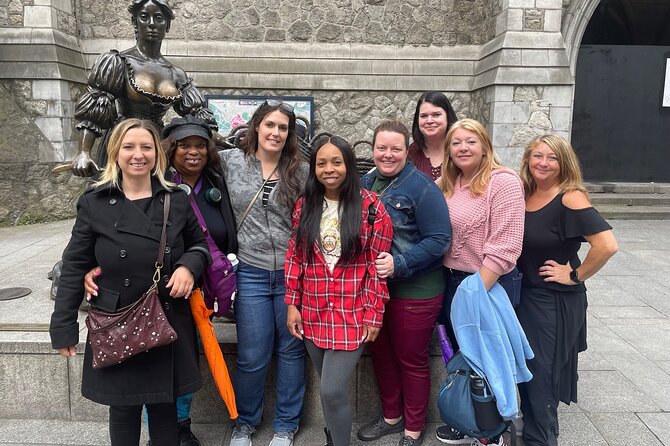
Then you end at the Molly Malone statue at Suffolk St. Molly Malone was unveiled in 1988 to celebrate Dublin’s first millennium. The character inspired the famous song Molly Malone, which became an unofficial Dublin anthem. The tour also brings up an interesting twist: the fact that Molly may have been based on a real woman who died in Dublin in 1699.
This ending works because it reminds you that culture isn’t only in museums. Sometimes a statue and a song are the way Dublin tells you what it values.
How the timing and pacing feel on foot
This is a 2 to 3 hour private walking tour with stops designed to stay readable. Short visits (5 minutes at The Spire, Ha’penny Bridge, Temple Bar’s viewing window, George’s Street Arcade, and Molly Malone) keep the route moving. Longer windows at Trinity, the GPO Museum, and the cathedral-and-castle stops give you enough time to understand what’s important before you keep walking.
Walking any central city route means good shoes matter. Also, because it requires good weather, I’d treat rain as a serious factor, not a minor inconvenience. When conditions are right, this kind of pace feels energetic without being exhausting.
One more plus: the private format makes it easier to adjust. In at least one scenario involving kids aged 6 and 8, the guide was able to keep things engaging while staying respectful of attention spans.
Value and what tickets might cost extra
At $90.11 per person, you’re paying for a guided route through 11 major stops in central Dublin. The tour includes viewing and explanation at multiple landmarks that are free to see, including The Spire, Ha’penny Bridge, Temple Bar, Wood Quay, George’s Street Arcade, and the Molly Malone statue.
The places marked as not included for admission are important ones: Trinity College Dublin, GPO Museum, Christ Church Cathedral, Saint Patrick’s Cathedral, and Dublin Castle. That doesn’t make the tour “expensive,” but it does mean the final budget depends on your priorities. If you’re the kind of visitor who likes to go inside and read everything, your day could cost more once you add those tickets. If you mostly want to walk, look, and understand the story, you can keep the extra spending under control.
To me, that’s the core value question: do you want guided context first, then choose interiors after? This tour is set up for exactly that.
Also, the tour is in English and uses a mobile ticket. Those two details sound small, but they matter when you’re trying to stay flexible and travel light.
Who should book this private tour, and who should skip it
This is a strong fit if you:
- are seeing Dublin for the first time and want a fast sense of where everything sits
- care about cause-and-effect history (Easter Rising, Viking roots, medieval power)
- want a guided route that ends in a fun, photo-friendly payoff at Molly Malone
- prefer the calm of a private group over a busier, larger tour
You might skip or choose something else if:
- you strongly dislike walking for 2 to 3 hours, even at a relaxed pace
- you want only museum time and no outdoor landmarks
- you expect all major sites to be fully included without extra tickets (several key admissions are not included)
Should you book this private walking tour of Dublin?
If you want Dublin to make sense—fast—this tour is a good bet. The route covers big names and big turning points without running all day, and the guide role is what ties it together, especially with concrete details like the GPO bullet marks and the historical significance of each landmark.
Book it if you like a guided “map with stories” and you’re comfortable adding a ticket or two on your own terms. Pass if you’re mostly after one long indoor museum day or if walking and weather uncertainty will stress you out.
FAQ
What’s the duration of the Private Walking Tour in Dublin?
The tour lasts approximately 2 to 3 hours.
How much does the tour cost?
The price is $90.11 per person.
Is this tour private?
Yes. It’s a private tour, and only your group will participate.
Are admission tickets included for the sights?
Admission tickets are not included for some stops, including Trinity College Dublin, GPO Museum, Christ Church Cathedral, Saint Patrick’s Cathedral, and Dublin Castle. The Spire, Ha’penny Bridge, Temple Bar, Wood Quay Amphitheatre, George’s Street Arcade, and Molly Malone Statue are listed as free to visit.
What are the start and end points?
The tour starts at Trinity College Dublin, College Green, Dublin 2, and ends in front of the Molly Malone Statue at Suffolk St, Dublin 2.
What language is the tour offered in?
The tour is offered in English.
What’s the weather situation and cancellation policy?
The tour requires good weather. If it’s canceled due to poor weather, you’ll be offered a different date or a full refund, and you can cancel for a full refund up to 24 hours before the experience’s start time.