REVIEW · DUBLIN
Dublin Private Medieval Walking Tour
Book on Viator →Operated by Travelling Ireland · Bookable on Viator
Medieval Dublin feels close on this 3-hour walk. I love the private setup (it really adapts to your pace and interests), and I love that the Chester Beatty visit is built in. The main drawback to plan for: most big sights are viewed from the outside, and entry into places like Dublin Castle and the cathedrals isn’t included.
You start in Temple Bar at Travelling Ireland on Cecilia St, then move through the old city’s layers—Viking-era place names, 13th-century stonework, and the working neighborhoods that still shape Dublin today. Expect a relaxed, organized route, with umbrellas provided and chances to pause for photos and a restroom break.
I also like the human side here. Guides such as Edward, Pasquale, Conor, Ian, Aurora, Liam, and Cecilia are repeatedly praised for being patient and engaging, including with families and kids. If you want the medieval story told in a way that clicks fast, this tour is a strong bet.
In This Review
- Key Things That Make This Tour Worth Your Time
- Temple Bar Start Point: Easy to Find, Easy to Return From
- Dubh Linn Gardens Behind Dublin Castle: Where the Name Dublin Comes From
- Chester Beatty Library: An Indoor Collection You Can Appreciate Without Rushing
- Dublin Castle From the Street: 13th-Century Architecture Without the Full Ticket
- The Liberties: Where Old Brick Meets Daily Life
- St. Patrick’s Cathedral: The Saint’s Story and the Cathedral’s Role
- Christ Church Cathedral: Medieval Walls and Strongbow’s Burial
- St. Audoen’s Church: Oldest Medieval Church Feel in Dublin
- Cook Street Walls and Isolde’s Tower: Viking-Era Clues in Stone
- Private Guide Energy: Why People Leave Feeling Like They Learned Fast
- Value and Price: What $162.92 Gets You in Real Terms
- Timing, Walking Pace, and Weather: The Day Will Feel Manageable
- Who This Tour Suits Best
- Should You Book? My Practical Take
- FAQ
- How long is the Dublin Private Medieval Walking Tour?
- Is this tour private?
- What does the tour include?
- Do I need tickets for Dublin Castle or the cathedrals?
- Where does the tour start and end?
- What language is the tour offered in?
Key Things That Make This Tour Worth Your Time
- Private guide, private pace: Your group only, so you’re not stuck following a slowest-person march.
- Chester Beatty is the indoor anchor: One included interior stop that’s calm, self-contained, and easy to appreciate.
- Outside-only for most sites: You get views, context, and street-level history without spending the whole trip in ticket lines.
- Vikings + medieval Dublin, in the right order: You’ll connect the name Dublin story to the stone and layout you see afterward.
- Flexibility for families: The tour is designed to work with kids and active groups.
- Small extras that matter on foot: Umbrellas, rest breaks, and practical recommendations for where to eat and what to do next.
Temple Bar Start Point: Easy to Find, Easy to Return From

This tour meets at Travelling Ireland Viaggiare in Irlanda, 8 Cecilia St, in Temple Bar (D02 RW82). That matters because after a few hours of walking, it’s nice to finish back where you started, not in the far end of the city.
The whole experience runs about 3 hours, and you can usually choose among several tour times during the day. If you’re trying to fit Dublin sightseeing between museum time, lunch, and evening plans, that flexibility is a real help.
Also, you’ll get a mobile ticket, and service animals are allowed. In other words: it’s set up for the kind of day where you want simple logistics and good guidance.
You can also read our reviews of more walking tours in Dublin



Dubh Linn Gardens Behind Dublin Castle: Where the Name Dublin Comes From
You begin with Dubh Linn Gardens, tucked behind Dublin Castle. This is the kind of stop that makes the rest of the walk click—because you start with the place-name story instead of jumping straight into the tallest buildings.
The guide focuses on why Dublin is called Dublin and what that has to do with early settlers, including the Vikings. It’s about getting the timeline straight: who was here, what they left behind, and why the city’s layout makes sense once you know the backstory.
This stop is short (about 20 minutes) and doesn’t require paid admission. Even if you only catch glimpses through gates and greenery, it sets the tone: this tour is built for people who want context, not just snapshots.
Chester Beatty Library: An Indoor Collection You Can Appreciate Without Rushing
Next comes the Chester Beatty Library, where you see the private collection of Alfred Chester Beatty in a permanent exhibition. This is the best “sit-and-focus” moment of the walk, and it’s included in the tour.
You’ll have about 45 minutes here, which is usually enough time to see the highlights without feeling trapped. The key value isn’t just that it’s famous—it’s that it’s an indoor pause in the middle of the city streets, so your brain can reset before the medieval stone-and-church section.
Admission is listed as free for the library within the tour structure, and the tour includes entry. That’s a big deal for value: you’re paying the tour price for guidance, and you’re not also paying separately just to access this one major interior.
Dublin Castle From the Street: 13th-Century Architecture Without the Full Ticket
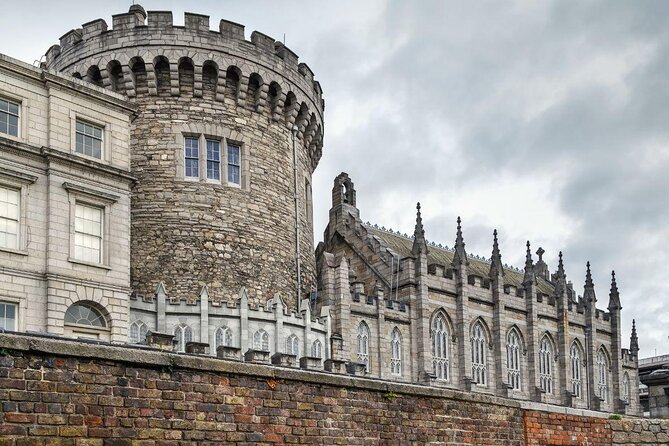
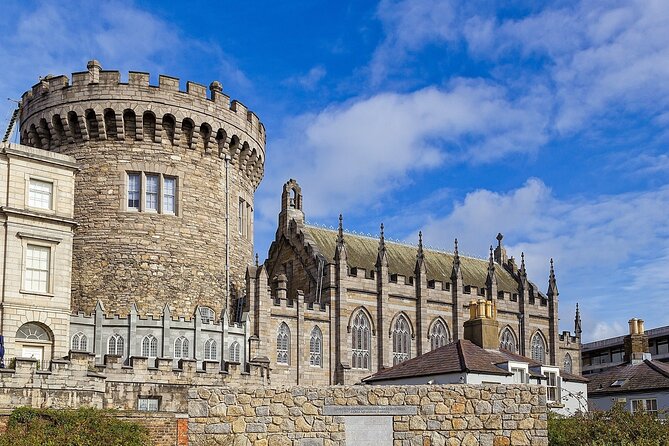
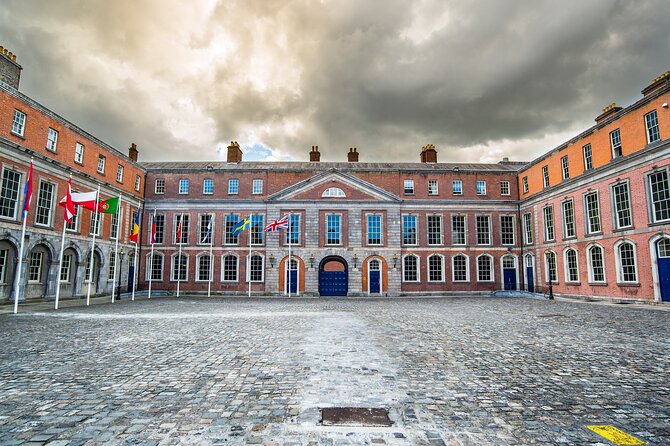
After the library, you move toward Dublin Castle, the medieval power center in the middle of the city. Here you’ll look at the structure dated to the 13th century and the medieval tower from the outside.
Plan for about 25 minutes for this part. Admission to go inside Dublin Castle is not included, so if you want to step in and tour interiors, you’d need to arrange that separately.
The outside approach still works well. From street level, the castle’s scale and placement tell you a lot: the kind of authority it represented, why Dublin grew where it did, and how the castle relates to the civic buildings around it.
The Liberties: Where Old Brick Meets Daily Life
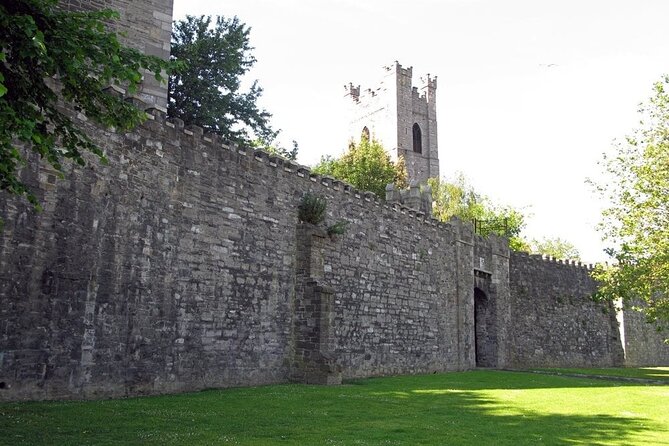
Between the major landmarks, the route passes through the Liberties, described as a mash-up of old and new—trade, culture, ancient brickwork, leafy trees, and street life that’s shaped by multiple generations.
This section is important even if you don’t think you care about “neighborhood vibes.” It’s where the medieval story stops being a diagram and starts becoming a living city. You’ll get a sense of how Dublin’s identity keeps evolving while older textures remain.
Think of this part as the “between chapters” pause. It breaks up the big-name stops and helps you understand how the medieval core connects to the Dublin people actually walk through today.
You can also read our reviews of more private tours in Dublin






St. Patrick’s Cathedral: The Saint’s Story and the Cathedral’s Role
You then reach Saint Patrick’s Cathedral, dedicated to Saint Patrick, the celebrated saint in Ireland. The tour gives you the basic timeline: Saint Patrick came to Ireland in the 5th century.
This stop is about 20 minutes, with an external visit and time to see the garden from outside. Admission isn’t included for entry.
Because it’s outside-focused here, the best way to enjoy it is to look for details the guide points out: the cathedral’s setting in the city, how it dominates the space around it, and how a religious landmark anchors stories over centuries.
Even if you’re not going inside, you leave with a clearer picture of why the cathedral matters beyond tourism photos.
Christ Church Cathedral: Medieval Walls and Strongbow’s Burial
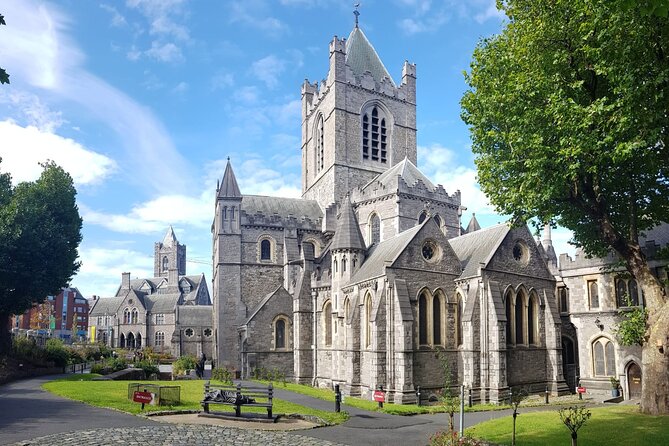
Next is Christ Church Cathedral, approached as a medieval landmark within its own walls. The tour highlights that this is the cathedral where Strongbow has been buried.
You’ll spend about 20 minutes and view it from outside; admission to go in isn’t included. Still, there’s plenty to take in from the outside when you know what to look for—especially the medieval context of being inside walls rather than sitting as a standalone monument.
If you’re the type who likes history that connects to names you’ve heard before, this stop is built for you. Strongbow is one of those anchors that makes the medieval story feel less abstract and more personal.
St. Audoen’s Church: Oldest Medieval Church Feel in Dublin

You’ll then visit St. Audoen’s Church, described as the oldest medieval church in Dublin. This is another external visit stop (about 20 minutes), and it’s tied to a detail many people don’t expect: the oldest bells in Ireland, viewed externally.
The tour also notes an important practical nuance: it’s one of the churches used by both Catholic and Protestant communities. That shared use adds texture to the place—history here isn’t only stone, it’s also present-day practice.
Admission isn’t included for entering. But even from outside, the age of the building and the sound-and-spiritual reputation of those bells give you a strong sense of continuity.
Cook Street Walls and Isolde’s Tower: Viking-Era Clues in Stone
As the walk continues, you reach Cook Street, where you can see medieval city walls and a gate. This segment is about 20 minutes and lists free admission.
It’s a key moment because it helps you visualize how the city defended itself and how people moved through gates. Once you’ve seen walls, a lot of Dublin’s street shape starts to feel intentional.
Finally, you end with Isolde’s Tower, a medieval tower described as the most important Dublin tower. This is shorter (about 10 minutes) with free admission, and it’s a strong “last image” stop: a piece of medieval Dublin you can actually point to and remember.
Private Guide Energy: Why People Leave Feeling Like They Learned Fast
The tour’s biggest strength is the human factor. Over and over, people praise guides for being friendly, patient, and able to explain things in a way that stays interesting for different ages.
For example, Edward and Pasquale show up in praise for being extremely knowledgeable and engaging, while Conor and Liam are mentioned for blending humor and strong explanations. Cecilia is noted for being patient and answering questions, including for families.
If you’re traveling with a toddler or kids, this matters a lot. One of the repeated themes is that the guide doesn’t treat children like an inconvenience; the pace gets adjusted, questions get answered, and the day doesn’t fall apart.
Even better: the tour can be customized to your group’s interests. If you want more Viking emphasis, more cathedral focus, or more street-level storytelling, the guide can steer the conversation so you don’t feel like you’re being forced through a script.
Value and Price: What $162.92 Gets You in Real Terms
At $162.92 per person, this isn’t a budget walk. But it can be good value if you’re the kind of traveler who wants a guide that changes the quality of what you see.
Here’s where the value shows up:
- You get an experienced licensed tour guide who keeps the story organized.
- Chester Beatty entry is included, so you get one major interior stop without extra ticket cost.
- You have a private group experience, which often feels more efficient than joining a larger crowd.
- The tour includes practical extras like umbrellas, restroom/stop breaks, and local recommendations.
If your plan is to mostly look at things from the outside anyway, you’re not paying to recreate a DIY route. You’re paying for context, pacing, and the ability to ask questions while you’re standing in the right place.
The main value warning is the outside-only design. Big interiors like Dublin Castle and several cathedrals are marked as not included, so if you want a “go inside everything” itinerary, budget extra time and money for those separate entries.
Timing, Walking Pace, and Weather: The Day Will Feel Manageable
This is a walking tour, so you should expect to be on your feet. But the duration (about 3 hours) and the ability to adjust pace make it more manageable than longer medieval marathons.
Umbrellas are provided, which is the right kind of preparation for Dublin weather. You’ll also get chances for rest and toilet breaks, plus photo moments along the way.
Because many stops are external, the rhythm is often about looking, listening, and then moving on. That tends to work well if you want history without needing to spend the entire day in queues.
Who This Tour Suits Best
This tour is a strong fit if you:
- Want a medieval Dublin overview without committing to a 6+ hour slog.
- Like hearing the “why” behind what you see—especially the Viking-to-medieval connections and why Dublin grew where it did.
- Travel in a group that benefits from a tailored approach, including families.
It may be less perfect if you:
- Want to go inside most major landmarks and don’t want to add extra entry tickets.
- Prefer a purely self-guided style with no structured stops.
Should You Book? My Practical Take
Book this if you want high-quality storytelling in a short, organized walk. The guide-led structure, included Chester Beatty entry, and outside viewing of major medieval sites create a satisfying route that doesn’t overstay its welcome.
Skip it or adjust your expectations if your dream day is mostly interior sightseeing. Since several key places are external-only (and entry to Dublin Castle and the cathedrals isn’t included), you’ll need separate plans if you want inside tours.
If you’re deciding between several tours in Dublin, this one is a smart choice when your priority is history you can connect to street-level sights—fast, in three hours, with a guide who can slow down for questions and keep kids engaged.
FAQ
How long is the Dublin Private Medieval Walking Tour?
It runs for about 3 hours.
Is this tour private?
Yes. It’s a private tour/activity, and only your group participates.
What does the tour include?
It includes an experienced and licensed tour guide, Chester Beatty entry, umbrellas provided, restaurant/pub/shop recommendations, and rest/toilet breaks if needed. Attractions are visited from outside except Chester Beatty.
Do I need tickets for Dublin Castle or the cathedrals?
Admission tickets are not included for Dublin Castle, Saint Patrick’s Cathedral, Christ Church Cathedral, or St. Audoen’s Church. Chester Beatty entry is included.
Where does the tour start and end?
It starts at Travelling Ireland Viaggiare in Irlanda, 8 Cecilia St, Temple Bar, Dublin, and ends back at the same meeting point.
What language is the tour offered in?
The tour is offered in English.